
Investing for Beginners in Australia
Everyone who invests started at zero. This is the complete beginner's guide to investing in Australia: what investing actually means, how compounding rewards starting early, what you can actually invest in, and the exact steps to make your first move.
Before you read on
This article is general information only, not licensed financial advice. It doesn't take your personal circumstances into account. Consider speaking with a licensed financial adviser before making investment decisions.
Investing in Australia is more accessible than most people think. You don't need a lot of money, a finance degree, or perfect timing. You need a basic understanding of how markets work, a low-fee platform, and the patience to stay the course. This guide gives you the full picture, from first principles to your first trade.
Quick answer
To start investing in Australia, you don't need much: open an account with an ASIC-regulated broker, decide on a simple starting point (a single diversified global index ETF is genuinely enough for most beginners), and set up a regular contribution you can automate and largely ignore. The biggest cost of getting started isn't a bad first pick, it's waiting.
In this guide
- →Why most Australians put off investing, and what waiting actually costs
- →What investing actually is, and how it differs from saving and speculating
- →How super, the ASX and Australian tax rules fit into the picture
- →The handful of concepts that matter most: fees, diversification, time in market
- →What you can actually invest in, from shares and ETFs to REITs and bonds
- →The psychology beginners get wrong, and a practical starting checklist
⏳ Why Most Australians Put Off Investing (and Why That's Costly)
Most people don't avoid investing because they're lazy. They avoid it because it feels risky, complicated, or like something meant for people with more money than them.
The psychological barriers are real and worth naming honestly:
- Fear of losing money
- The belief that investing is only for rich people, when many platforms let you start with $50 to $100
- Complexity overwhelm: shares, ETFs, managed funds, super, bonds, REITs, franking credits, CGT, it's a lot of jargon at once
- Waiting until you have “enough” to start
The real cost of waiting
Compound interest is the process by which your returns start generating their own returns. Say you invest $10,000 at age 25 and earn an average of around 8% a year, roughly in line with the ASX 200's long-run total return (commonly cited at about 8.36% a year including dividends). By age 65, that single $10,000 investment grows to roughly $217,000, without you adding another cent.
Now wait until 35 to invest that same $10,000, at the same return. By 65, you end up with around $100,000. Same money, same return, ten fewer years. That gap is the cost of waiting.
Same $10,000, same ~8% average annual return, both left untouched until age 65
$217k
Invests $10,000 at 25
$100k
Waits, invests $10,000 at 35
Ten fewer years of compounding is roughly the difference between $217,000 and $100,000 by age 65.
The super assumption
Many Australians assume superannuation will take care of everything. Super is genuinely powerful, but the retirement adequacy gap is real. Moneysmart and the ASFA retirement standard put a comfortable retirement for a single person at somewhere around $630,000 by age 67 (this figure is revised periodically for inflation, and by mid-2026 some updates had pushed it closer to $630,000). Meanwhile, the average super balance for Australians aged 60-64 tends to sit well short of that, commonly estimated somewhere in the $260,000 to $350,000 range depending on the data cut and gender, with the more typical (median) balance lower again.
However you slice it, that's often a six-figure gap, sometimes larger, between what people actually have and what a comfortable retirement is estimated to cost. Investing outside super, even in modest amounts, is how most people go about closing it.
🔍 What Investing Actually Is (and What It Isn't)
Saving means putting money in a bank account where it earns interest: safe, liquid, low-return. Investing means putting money into assets, like shares, property or bonds, with the expectation they'll grow in value over time. Returns aren't guaranteed, but historically, markets have rewarded patient investors. Speculating means taking on high risk for a shot at a large short-term gain: day trading, chasing hot-tip stocks, or going all-in on a single cryptocurrency. That isn't investing, no matter how it's marketed.
Risk and return: an honest framing
Every investment carries some risk. The ASX 200 dropped around 37% during the 2008 financial crisis, and recovered. The S&P 500 fell more than 30% in March 2020, and recovered within months. The historical record doesn't guarantee future results, but patient, diversified investors have consistently been rewarded over long time horizons.
The goal isn't to avoid risk altogether, it's to take on a sensible, diversified amount of it for money you won't need in the short term.
🇦🇺 The Australian Investing Landscape
Super vs investing outside super
Super is technically an investment. Your employer contributes a percentage of your salary (the Super Guarantee rate has been rising in steps and sits at 12% from 1 July 2025), invested on your behalf in a tax-advantaged structure. The catch: you generally can't access it until preservation age, which is 60 for anyone born after 1 July 1964. Investing outside super gives you flexibility instead. You pay tax at your marginal rate (with some useful concessions), but you can access the money whenever you actually need it. Both matter, they just serve different purposes.
The ASX
The Australian Securities Exchange (ASX) is where Australian shares and many ETFs trade. It's a top-15 exchange globally by market cap, home to companies like BHP, CBA, CSL and Wesfarmers. When you hear “the market went up today”, that usually refers to the S&P/ASX 200.
Tax considerations: the short version
A franking credit is attached to dividends from Australian companies, offsetting your own tax bill since the company has already paid corporate tax on that profit. Lower-income investors can sometimes even get a cash refund for unused credits. Our dedicated guide to franking credits covers exactly how the maths works.
The CGT discount means that if you hold an investment for 12 months or more before selling, only 50% of the gain is taxed. Our guide to capital gains tax in Australia walks through worked examples. Record-keeping isn't optional either: the ATO expects records of every purchase, sale, dividend and distribution, so it pays to set up a simple system from day one.
🧩 The Concepts That Actually Matter When Starting Out
You don't need to master every corner of finance before you start. A handful of ideas do most of the heavy lifting.
Time in market
Starting early matters more than starting with a lot, as the compounding example above shows. Time is the one input you can never buy back.
Fees
Fees are the silent killer of long-term returns. Modelled out over 20 years, the difference between a 1% and a 0.2% annual fee on a $100,000 balance can cost somewhere in the ballpark of $60,000, purely from lost compounding. Many index ETFs in Australia charge between 0.03% and 0.20% a year, while some actively managed funds charge 1% or more. Our net fees calculator lets you run your own numbers.
Diversification
Owning 200-plus companies through a single fund means no single failure wipes you out. It's the closest thing investing has to a free lunch.
Starting amount
Most platforms let you begin with $50 to $500. Micro-investing apps that round up spare change are a useful on-ramp, not a full strategy on their own.
Dollar cost averaging
Dollar cost averaging means investing a fixed amount at regular intervals. It smooths out volatility and takes the pressure of timing the market off your shoulders entirely.
📦 What Can You Actually Invest In? (Plain-English Overview)
Shares
A share is a small ownership stake in a company. The share price tends to rise with the company's growth and profitability, and many pay dividends on top.
ETFs
An ETF bundles many shares into a single tradeable fund. They're cheap and diversified, and a single global index ETF is a genuinely valid starting portfolio for most beginners. See our ETF glossary page for a quick reference.
Managed funds and robo-advisors
A managed fund is actively managed, usually charges higher fees, and has a mixed track record of beating the index over time. A robo-advisor automates building a diversified portfolio for you, for a small premium over doing it yourself.
Bonds and term deposits
A bond and a term deposit are both lower risk, lower return, useful for capital preservation or for adding stability to a portfolio rather than driving its growth.
REITs
A REIT gives you property exposure without buying an actual property. REITs trade like shares and distribute most of their income to unit holders.
Ethical and ESG investing
Ethical investing lets you align a portfolio with your values. Several Australian ETF providers now offer ESG-screened funds with broadly competitive returns compared to their unscreened equivalents.
🧠 The Psychological Side of Investing Nobody Talks About
Volatility is normal
The ASX 200 has had 19 positive and 5 negative calendar years since 2000. The biggest mistake beginners make is selling during a downturn, which locks in a loss that would likely have recovered given time.
FOMO and hot tips
Chasing last year's winner, crypto in 2021, lithium in 2022, AI stocks in 2023-24, has a poor long-run track record as a strategy. What was hot is rarely still hot by the time most people hear about it.
Boring is often best
A globally diversified, low-cost index ETF held for decades isn't exciting, but it has historically outperformed most actively managed funds after fees.
Automation as defence
An automatic transfer set up on payday removes the decision entirely, so willpower never enters the equation.
🎯 The essential: You don't need to feel confident about markets to invest sensibly. You need a simple system that doesn't rely on your mood on any given day.
✅ What to Actually Do First (A Practical Starting Point)
- Sort out your emergency fund first, generally 3-6 months of expenses in a high-interest savings account, before investing a dollar.
- Understand your super situation: check your balance, your fund, and your investment option. Many default “balanced” options may be too conservative for younger people, and it's worth checking whether voluntary concessional contributions make sense for you.
- Decide your goal and time horizon. Retirement in 30 years and a house deposit in 5 years need very different approaches.
- Choose a platform: ASIC-regulated, low brokerage, and either CHESS sponsorship or a reputable custodial structure. Our broker comparison guide walks through exactly what to check.
- Start simple: a single, diversified global index ETF is a perfectly valid starting portfolio. If you want a more complete framework, see how to build a simple portfolio.
- Automate and ignore: set up regular contributions and resist the urge to check daily.
When you're ready for the practical, step-by-step version, our guide to buying shares in Australia covers choosing a broker, placing an order, and how settlement actually works.
🚀 How to Start Investing in Australia: A Step-by-Step Guide
The practical follow-up to this guide: choosing a broker, opening an account, and placing your first order.
⚠️ Common Beginner Mistakes Specific to Australia
- Ignoring franking credits and leaving money on the table
- Forgetting CGT when selling: waiting a few extra weeks to hit the 12-month mark can halve your tax bill on a gain
- Chasing yield at the expense of growth, when total return matters more than yield alone
- Over-concentrating in Australian shares, when Australia makes up roughly 2% of global market cap
- Not keeping records from day one, which makes tax time far harder than it needs to be
- Treating micro-investing apps as a full strategy, rather than the starting point they're designed to be
🎯 Conclusion
Getting started with investing in Australia doesn't require a perfect plan. It requires an emergency fund, a low-fee platform, a simple starting portfolio, and the patience to leave it alone. Every concept in this guide, from compounding to diversification to franking credits, exists to help you make one decision well: starting, and then not getting in your own way.
🎯 The essential: The single biggest lever you control isn't which ETF you pick. It's how early you start.
SnowLetter
Australia's money news and our best reads, once a week.
❓ Frequently Asked Questions
How much money do I need to start investing in Australia?
+
Very little. Several Australian brokers and micro-investing apps let you start with $50 to $500. The amount you start with matters far less than starting consistently and leaving it alone.
Is investing in Australia safe?
+
No investment is completely risk-free, but a diversified, low-cost index fund bought through an ASIC-regulated broker is a reasonable risk for money you don't need in the short term. It's also worth weighing against the very real risk of not investing at all.
Should I pay off my debt before I start investing?
+
It depends on the interest rate. High-interest debt, like a credit card sitting above 20%, should almost always be paid off first. Low-interest debt, like a mortgage at 5-6%, is less clear-cut, and many people choose to do both at once.
What's the difference between an ETF and a managed fund?
+
Both pool money from many investors into one fund. ETFs trade on the exchange like a share and usually track an index passively for a low fee. Managed funds are typically actively managed, charge higher fees, and don't consistently beat the index over the long run.
Do I need a financial adviser to start investing?
+
Not necessarily, especially for simple, index-based investing. An adviser tends to add the most value for complex situations: tax planning, estate planning, insurance, or when you've got a lot of moving parts to juggle at once.
How does superannuation fit into my investing strategy?
+
Super is generally your most tax-efficient long-term investing vehicle, so it's worth maximising where you reasonably can. But because it's locked away until preservation age, it should sit alongside your outside-super investing, not replace it entirely.
📚 Recommended reading
The Barefoot Investor
Scott Pape
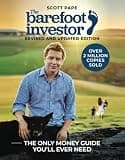
The Barefoot Investor
Australia's best-selling money book ever. A simple system for accounts, budgeting, debt and a real emergency fund in one.
The Simple Path to Wealth
JL Collins
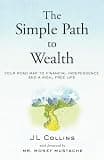
The Simple Path to Wealth
The friendliest on-ramp to index investing there is, born from letters a dad wrote his daughter. It makes 'buy the whole market and chill' feel obvious, just map his US fund picks onto Aussie equivalents and super.
The Quick-Start Guide to Investing
Glen James & Nick Bradley
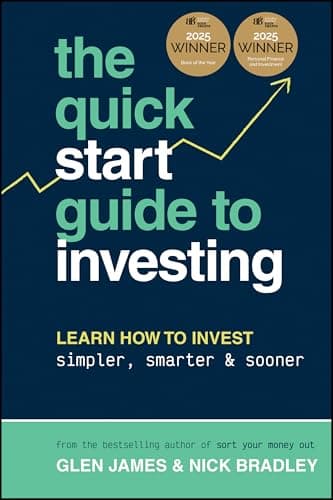
The Quick-Start Guide to Investing
A short, friendly runway from never invested to confidently buying shares and ETFs, tuned for Aussie beginners. Great if Sort Your Money Out left you keen to go deeper.
Some links above are affiliate links. If you buy through them, Snowball Invest may earn a small commission at no extra cost to you. We only recommend books we'd suggest anyway.
Sources
- 1. How much super should I have?, Moneysmart (Australian Government)
- 2. ASFA Retirement Standard Research Note, Association of Superannuation Funds of Australia
- 3. S&P/ASX 200 Net Total Return (historical index data), Market Index
- 4. Average superannuation balance by age in Australia, The Motley Fool Australia
Was this article useful?
Related calculators
Articles in this guide
Short Selling in Australia: How It Works and the Rules
Your gain is capped at the share going to zero. Your loss has no ceiling at all. How covered shorts work, what ASIC requires, and why most people should watch rather than play.
What Is a Share Buyback, and Should You Take the Offer?
Why an off-market buyback can offer less than the market price and still be worth taking, why that depends entirely on your tax position, and why you never have to say yes.

How to Buy CBA Shares (and the Exposure You Already Have)
The mechanics take ten minutes. The part worth reading is why you may already own plenty of CBA through your ETF and your super without realising it.
IVV ETF: What You Actually Own for 0.04% a Year
IVV costs $4 a year per $10,000 and has been on the ASX since 2000. What is inside it, how top-heavy it really is, and where it fits next to an Australian fund.

CommSec Pocket Fees: What It Costs and How It Compares
A$2 a trade up to A$1,000, then 0.20%, on buys and sells. Plus the separate HIN nobody mentions, and the order size where Pocket costs more than main CommSec.

CHESS Sponsorship: HIN, SRN, and Why Your Broker Model Matters
A number starting with X means the shares are in your name. No number at all means someone else holds them for you. What that difference costs if your broker fails.

ASX Settlement: What T+2 Actually Means
Sell on Wednesday and the cash is not yours on Wednesday. How the two business days are counted, why it decides who gets the dividend, and whether T+1 is coming.
Market Order vs Limit Order: Which One Should You Use?
One fills fast at whatever the market charges. The other names your price and might never fill. When each is right, and where the spread quietly costs you.

NDQ vs VGS: Diversifying, or Doubling Down on US Tech?
VGS is already 73% American and its biggest holdings are the same tech names NDQ owns. Adding NDQ is not diversification. It is a bet, and it costs 0.48% a year.

DHHF vs VGS: A Whole Portfolio or One Building Block?
DHHF is a finished portfolio, VGS is one ingredient. Comparing them like for like is the mistake. What each actually holds, and the 0.01% fee gap nobody expects.

VAS vs A200: Two Ways to Own the Australian Market
VAS holds 325 companies, A200 holds 200, and their top ten are nearly identical. What actually separates the two big Australian equity ETFs.

IVV vs VGS: All In on America, or the Whole Developed World?
This is not a fee decision, it is a concentration one. IVV is one country. VGS is 23, and the US is already most of it. How to think it through.

BGBL vs VGS: Which Global ETF Belongs in Your Portfolio?
BGBL charges 0.08% and holds South Korea. VGS charges 0.18% and does not. What actually separates the two big ASX global ETFs, and how to pick one.
SUBD ETF Australia: VanEck's Subordinated Debt ETF Explained
SUBD is VanEck's subordinated bond ETF, paying monthly income with a running yield near 5.75% and a 0.29% fee. What it holds, the risks, and how to buy.

How to Rebalance Your ETF Portfolio in Australia
Your ETF portfolio drifts over time. Learn how to rebalance it in Australia, when to do it, how to sidestep extra CGT, plus a worked example with numbers.

Core and Satellite Investing in Australia
Learn what a core and satellite portfolio is, how to size the split, pick core and satellite ETFs, and whether it suits Australian DIY investors.

The Three-Fund Portfolio in Australia
Three ETFs, thousands of companies, one simple structure. How to build a three-fund portfolio in Australia with VAS, VGS and VAF, and choose your split.
How ETFs Are Taxed in Australia
How ETFs are taxed in Australia: yearly distributions, capital gains, the AMIT regime, AMMA statements, franking credits and foreign income tax offsets.
Franking Credits Inside ETFs (Australia)
Australian-shares ETFs pass franking credits to investors via your AMMA statement. Here is how ETF franking works, what your statement shows, how to claim.

The W-8BEN Form for Australian Investors
Buying US shares or ETFs from Australia? Here is what the W-8BEN form is, when you need one, and how it cuts your US dividend withholding from 30% to 15%.

STW ETF Australia: SPDR's ASX 200 Fund vs VAS and A200
STW is one of Australia's oldest ETFs, tracking the ASX 200. See what it holds, its 0.05% fee, franking, and how STW compares to VAS and A200.
U100 ETF Australia: Global X's US Giants ETF Explained
U100 is Global X's low cost US 100 ETF on the ASX, holding 100 US giants. What it holds, its 0.18% fee, currency risk, and how U100 compares to NDQ.

IWLD ETF Australia: iShares' Global Equity ETF Explained
IWLD is iShares' low cost global shares ETF on the ASX, with an ESG screen built in. What it holds, its 0.09% fee, IWLD vs VGS, and how to buy.

VDGR ETF Australia: Vanguard's Diversified Growth Fund Explained
VDGR is Vanguard's 70/30 growth all in one ETF. Get the asset allocation, 0.27% fee, quarterly distributions, and how VDGR compares to VDHG and VDBA.

VDBA ETF Australia: Vanguard's Diversified Balanced Fund Explained
VDBA is Vanguard's 50/50 balanced all in one ETF. Get the asset allocation, 0.27% fee, quarterly distributions, and how VDBA compares to VDHG and VDGR.
VHY ETF Australia: Vanguard's High Yield Fund Explained
VHY is Vanguard's high-yield Australian shares ETF. What it holds, the fees, the franking credits, and how it stacks up against VAS for income investors.

BGBL ETF Australia: Betashares' Global Shares Fund Explained
BGBL is Betashares' ultra low cost global shares ETF tracking around 1,000 companies. What it holds, its 0.08% fee, BGBL vs VGS, dividends and tax.
VGAD ETF Australia: Hedged Global Shares, and Is It Worth It?
VGAD is Vanguard's hedged international shares ETF. How currency hedging works, VGAD vs VGS, the fees, distributions, and where it fits in a portfolio.

The Rule of 72: How Long Until Your Money Doubles
Divide 72 by your return and you get the years until your money doubles. Worked Australian examples for super, ETFs, savings accounts and fees.
Will the Share Market Crash in 2026?
Nobody can predict a share market crash. What history says about the ASX, what to actually do, and what to avoid if you are worried.
Does the Share Market Trade on Weekends?
Is the share market open on weekends in Australia? When the ASX trades, what you can still do on a Saturday, and which markets never close.

How Often Are Dividends Paid in Australia?
Most ASX companies pay dividends twice a year, but ETFs and some shares differ. How dividend timing works and how to find your own schedule.

Ex-Dividend Date Explained
What is the ex-dividend date in Australia? How it works, why the share price drops, and exactly what you need to do to receive your dividend.
How to Invest in Managed Funds in Australia
Want to invest in managed funds in Australia? A plain-English, step-by-step guide covering how to buy, the minimums, the fees and the tax.

How to Invest in the ASX 200
Want exposure to Australia's 200 biggest companies? How to invest in the ASX 200 simply and cheaply, without picking a single stock.

How to Buy Vanguard ETFs in Australia
Ready to invest in Vanguard ETFs? How to buy VAS, VGS, VDHG and more in Australia, step by step, with or without a Vanguard account.
How to Buy Shares on CommSec
Want to buy shares on CommSec? A step-by-step guide to opening an account, placing your first order, and understanding the fees in Australia.
How Many ETFs Should You Own?
Wondering how many ETFs you should own? Most Australians need just 1 to 3. Here is how to build a simple, genuinely diversified ETF portfolio.
How to Invest in Index Funds in Australia
Want to invest in index funds in Australia? A plain-English, step-by-step guide to what to buy, how to open an account, and what it all costs.

Where to Invest Money in Australia
Not sure where to invest money in Australia? A plain-English map of the main options, the risk and return of each, and how to match them to your goals.
Is Silver a Good Investment in Australia?
Thinking about investing in silver in Australia? An honest look at the pros, cons, how to buy it, the tax, and whether it suits your portfolio.

Is Vanguard a Good Investment?
Is Vanguard a good investment in Australia? We break down Vanguard ETFs, Personal Investor and Super so you can decide what suits you.

Do ETFs Pay Dividends?
Yes, ETFs pay income in Australia, called distributions. How they work, when they are paid, whether franking credits are included, and how to reinvest.
ASX Trading Hours: When the Market Is Open
When does the ASX open and close? The exact trading hours, market phases, state-by-state times, public holidays and the best time of day to trade.
How to Sell Telstra Shares
Holding Telstra shares from the T1, T2 or T3 float? Here is exactly how to sell them, work out your cost base, and understand the tax.

How to Sell Shares in Australia
A plain-English guide to selling ASX shares in Australia: through a broker or an SRN, settlement (T+2), capital gains tax and the mistakes to avoid.
Vanguard S&P 500 ETF Australia: VTS, IVV or V500?
Want S&P 500 exposure in Australia? Compare VTS, IVV and V500, understand the W-8BEN trap and US estate tax, and see which ETF actually suits you.

Dividend Reinvestment Plans (DRP): Should You Use One?
A DRP automatically reinvests your dividends into more shares. Here's how it works in Australia, the tax traps to know, and whether it suits you.
Lump Sum vs Dollar-Cost Averaging: Which Is Better?
Lump sum vs dollar-cost averaging: which strategy wins for Australian investors? See what the evidence says and find the approach that suits you.
Hedged vs Unhedged ETFs: Which Should Australians Choose?
Hedged or unhedged ETF? Learn how currency movements affect your global share returns in Australia and how to decide what suits your goals.

Money Market Funds in Australia: What They Are and What to Look For
Wondering what a money market fund is and whether one exists in Australia? Find out what to look for, how it works, and if it suits you.
What Is a Bear Market? A Plain-English Guide
A bear market is a 20% drop from recent highs. Here's what causes them, how long they last, and what Australian investors should actually do.

What Is ROI? Return on Investment Explained for Beginners
ROI tells you how much you made relative to what you put in. Here's the formula, worked examples, total vs annualised ROI, and what a good ROI looks like.

What Is Inflation? A Plain-English Guide for Australians
What is inflation, how is it measured in Australia, and what does it mean for your savings and investments? A plain-English explainer with real numbers.
Ethical Investing Australia: The Plain-English Guide
What ESG, greenwashing and impact investing actually mean in Australia, how to spot a genuinely ethical fund, and whether ethical investing costs you returns.
How to Buy Shares in Australia: A Step-by-Step Guide for First-Time Investors
The exact step-by-step process for buying shares in Australia: choosing a broker, placing an order, T+2 settlement, and the HIN vs SRN basics of holding shares.
Investing for Kids in Australia: How It Actually Works
How to invest for a child in Australia: minor trust accounts vs your own name, the penalty tax on kids' unearned income, and how it compounds over 18 years.
Micro Investing Australia: How It Works, What It Costs, and When to Move On
Micro investing lets you start with spare change. How it actually works, what the fees really cost on a small balance, and when to move to a standard brokerage.

What Is a REIT? The Plain-English Guide for Australian Investors
A REIT lets you invest in property without buying a house. How Australian A-REITs work, how distributions are taxed, and when they make sense in a portfolio.

Robo Advisor Australia: What It Is, How It Works, and Whether It's Worth It
What a robo advisor actually is, how it differs from a financial adviser and DIY ETFs, the real fee-drag maths, and who it genuinely suits in Australia.

What Is an Index Fund? A Plain-English Guide for Australians
What an index fund actually is, how it tracks a market index, why fees matter, and the difference between unlisted funds and index ETFs.
Capital Gains Tax in Australia: How It Actually Works
How CGT is calculated: the 50% discount, capital losses, CGT on shares vs property, the main residence exemption, and worked examples.

Term Deposit Australia: How It Works, What It Pays, and When It's Worth It
What a term deposit is, how the rate lock works, how it compares to a high-interest savings account, and when it genuinely makes sense.
Passive Investing Australia: The Beginner's Guide to Growing Wealth Without the Stress
What passive investing actually is, what the SPIVA data shows about active fund managers, and how fees and franking credits shape it locally.
What Is a Dividend? A Beginner's Guide for Australian Investors
What a dividend actually is, how dividend yield and the ex-dividend date work, and how it connects to franking credits in Australia.
What Is a Bond? A Beginner's Guide for Australians
What a bond actually is, how bond pricing and yield work, Australian Government Bonds explained, and how to access bonds via ETFs.

How to Invest in Bonds in Australia: The Practical Guide
Exactly how to invest in bonds in Australia, from bond ETFs to government bonds, with real tickers, costs, tax treatment, and how much to hold at every life stage.
What Is a Managed Fund? A Beginner's Guide for Australians
What a managed fund actually is, how it structurally differs from an ETF, active vs passive managed funds, and why fees matter so much over the long run.
ETF vs Managed Fund: Which Structure Actually Suits You?
ETFs or managed funds? We break down the real differences in cost, tax, flexibility and auto-investing so you can pick the right structure for your money.
Geared ETFs in Australia: How They Work (and Why They're Not for Everyone)
What is a geared ETF and is it right for you? A plain-English guide to how internally geared ETFs like GEAR, GGUS and GHHF work in Australia, the real risks, and who they suit.
Raiz Review 2026: Is the Micro-Investing App Worth It for Australians?
An honest, balanced Raiz Invest review for 2026. We break down the fees, portfolios, round-ups, tax treatment, and how Raiz compares to Spaceship and buying ETFs directly.

How Much Should I Invest in ETFs Each Month?
No magic number exists, but there is a smart framework. Here is how to work out how much to invest in ETFs each month as an Australian investor.
What Is Dollar Cost Averaging? A Beginner's Guide for Australians
What dollar cost averaging actually is, the honest truth about DCA vs lump sum investing, and how to set up automatic recurring investing in Australia.
How to Build a Simple Investment Portfolio
How to turn shares, ETFs and everything else you've learned into an actual portfolio: deciding your asset mix, one fund vs several, and why simple usually wins.
What Is Compound Interest? (And Why It's the Whole Point of Investing Early)
A plain-English explanation of compound interest, why starting early matters more than the amount, and how the same effect works against you on debt.
What Are Franking Credits? A Plain-English Explanation
How Australia's dividend imputation system actually works, with a worked example, and how franking credits flow through to you from Australian share ETFs.
How to Start Investing in Australia: A Step-by-Step Guide
The practical, step-by-step version: choosing a broker, opening an account, and placing your first order to buy shares or an ETF in Australia.
What Is a Share? The Absolute Basics
What owning a share actually means, how prices are set, and how shares make you money, explained before you buy your first one.
Index Funds vs ETFs: What's Actually the Difference?
Most ETFs are index funds, so what does the question even mean? Unlisted index funds vs ETFs, and which is simpler for a beginner.
How to Choose an ETF: A Beginner's Checklist
A practical, step-by-step checklist for comparing ETFs: what actually matters, what to ignore, and the mistakes that cost beginners the most.
How to Choose a Share Trading Platform in Australia
Structure, markets, habit, cost, exit fees and tax: the order to judge a share trading platform in Australia, and the fees no pricing page shows you.
VDHG: The Complete Guide to Vanguard's All-in-One ETF
A plain-English guide to VDHG, Vanguard's all-in-one ASX ETF: fees, holdings, the tax drag, performance, and how it stacks up against DHHF and a DIY VAS + VGS portfolio.

DHHF Review: Is the Betashares All Growth ETF Worth It?
A plain-English review of DHHF, the Betashares Diversified All Growth ETF: its holdings, the 0.19% fee, why it's more tax-efficient than VDHG, and exactly who it suits.

VAS ETF: The Complete Australian Investor's Guide
A plain-English deep dive into VAS, Vanguard's Australian shares ETF: what it holds, the 0.07% fee, franking credits, and how it compares to A200 and VGS.

VGS ETF: The Complete Guide to Vanguard's International Shares ETF
A plain-English deep dive into VGS, Vanguard's international shares ETF: what it holds, the 0.18% fee, the ~70% US weighting, no franking, and how it compares to VAS, BGBL, VGAD and IVV.

VAS vs VGS: How to Combine Them (and in What Ratio)
VAS and VGS aren't rivals, they're the classic two-ETF core. How franking, home bias and global growth shape the split, with common VAS/VGS ratios and who each suits.
Best ETFs in Australia: A Plain-English Guide by Portfolio Role
The best ETFs for Australian investors, organised by the job they do in a portfolio: VAS, VGS, VDHG, DHHF and more, plus how to judge any ETF and build a simple portfolio.

NDQ ETF: The Complete Guide to Betashares' Nasdaq 100 Fund
A plain-English guide to NDQ, the Betashares Nasdaq 100 ETF: what it holds, the 0.48% fee, the concentration risk, and why it's a tech tilt, not a core holding.

HACK ETF Australia: The Complete Guide to BetaShares Global Cybersecurity ETF
What is the HACK ETF? A plain-English guide to BetaShares' cybersecurity ETF for Australians: what it holds, the 0.67% fee, the risks, and whether it belongs in your portfolio.
ACDC ETF Australia: The Complete Guide to the Battery and Lithium ETF
What is the ACDC ETF? A plain-English, honest guide to the Global X Battery Tech & Lithium ETF for Australians: what it holds, the 0.69% fee, the boom-bust risk, and where it fits.

VGE ETF Australia: The Complete Guide to Vanguard's Emerging Markets ETF
What is VGE? A plain-English guide to Vanguard's emerging markets ETF for Australians: what it holds, the 0.48% fee, the China/Taiwan concentration, and how it fits your portfolio.
Penny Stocks Australia: The Honest Guide for Beginners
Tempted by cheap ASX shares that could 10x? Here is the honest truth about penny stocks in Australia: the real risks, the survivorship bias, and what to do instead.

Blue Chip Shares Australia: The Beginner's Honest Guide
What are blue chip shares in Australia? What they are, why investors like them, their real risks, franking credits, and whether a broad ASX ETF might suit you better.

ETHI ETF Australia: The Complete Ethical Global Shares Guide
ETHI is BetaShares' ethical global shares ETF. What it holds, how its ethical screens work, its 0.59% fee, performance, and how it stacks up against VGS.
IOZ ETF Australia: iShares Core S&P/ASX 200 Guide
IOZ is BlackRock's iShares Core S&P/ASX 200 ETF. What it holds, its 0.05% fee, distributions and franking, and how it compares to VAS and A200.

VAP ETF Australia: Vanguard's A-REIT Property ETF Guide
VAP is Vanguard's Australian property (A-REIT) ETF. What it holds, the Goodman Group concentration, interest-rate risk, tax, and how it compares to buying property.

Dividend Investing in Australia: A Practical Beginner's Guide
How dividend investing works in Australia: dividends and yield, franking credits with a worked example, the yield trap, ETFs vs shares, DRPs, and who it suits.
IOO ETF Australia: iShares Global 100 ETF Guide
IOO is the iShares Global 100 ETF: 100 of the world's biggest companies. What it holds, its 0.40% fee, the tech concentration, and how it compares to VGS.
QUAL ETF Australia: VanEck MSCI International Quality Guide
The QUAL ETF fact sheet in plain English: what VanEck's quality-factor fund holds, its 0.40% fee, the hedged sibling QHAL, and how it stacks up against VGS.

How to Invest in Commercial Property in Australia
How to invest in commercial property in Australia: A-REITs, unlisted trusts and direct ownership, the yields, the lease and WALE, the risks, and the GST and SMSF rules.
How to Invest in Gold in Australia
How to invest in gold in Australia: gold ETFs, physical bullion, and mining shares compared, plus the costs, the CGT and GST rules, and how to avoid scams.

How to Invest in Startups in Australia
How to invest in startups in Australia: equity crowdfunding, angel investing and VC funds compared, the ESIC tax incentive, and how to manage the very real risks.
A200 ETF: Australia's Cheapest Way to Own the ASX?
A200, the Betashares Australia 200 ETF, charges just 0.04%. What it holds, the franked dividends, and how it compares to VAS and IOZ for your Australian shares core.

Best Dividend ETFs and Stocks in Australia: The Income Guide
The best dividend ETFs and stocks in Australia, honestly: franking credits, the yield trap, VHY vs a broad ETF like VAS, and the mistakes income investors make.
Dividend Yield Explained: The Complete Australian Guide
What dividend yield means, how to calculate it, and the crucial Australian grossed-up yield (with franking). Plus the yield trap and what counts as a good yield.

How to Invest in REITs in Australia (and Whether You Should)
How to actually invest in REITs in Australia: individual A-REITs vs REIT ETFs like VAP and DJRE, the honest pros and cons, the tax traps, and who they suit.

What Is an ETF? A Beginner's Guide (Explained Simply)
A plain-English explanation of what an ETF is, how it works, what it costs, and whether it's right for a beginner starting to invest in Australia.
How to Buy International Shares from Australia (US Shares and Beyond)
How to buy international shares from Australia: choosing a broker, converting AUD, the W-8BEN form, US withholding tax, and whether an ETF is simpler.

VDHG vs DHHF: Which One Should Beginners Buy in 2026?
VDHG and DHHF are Australia's two most popular single-ETF solutions for beginners. This guide breaks down their fees, holdings, and key differences so you can choose with confidence.
Best Gold ETF in Australia: A Beginner's Guide
A plain-English guide to every ASX-listed gold ETF in Australia, covering the crucial difference between physical bullion ETFs and gold miner ETFs, fees, currency hedging, tax, and how to think about gold in a beginner portfolio.
Lithium Stocks on the ASX: Should Beginners Invest?
Australia is the world's largest lithium producer, and ASX lithium stocks attract serious investor interest. But this sector is genuinely volatile. Here's what beginners need to understand before putting money in.
Bitcoin ETF Australia: A Beginner's Guide to ASX Crypto ETFs
A plain-English guide to Bitcoin ETFs in Australia: what they are, every ASX-listed fund compared, fees, risks, tax treatment, and how to buy one.
What Is the ASX 200? Australia's Benchmark Index Explained
What is the ASX 200? It's Australia's main share market index, 200 of the biggest companies on the ASX. Learn how it works, what's in it, and how to invest.

Active vs Passive Investing: What the Evidence Actually Says
Active or passive investing? We break down the SPIVA evidence, the fee maths, and the tax rules so you can decide what works for your money in Australia.

Vanguard vs Betashares: Which ETF Provider Should You Choose?
Betashares vs Vanguard, compared on fees, fund range, platforms and safety. Which of Australia's two biggest ETF issuers deserves your money, and when to hold both.

Do I Need a Financial Advisor? An Honest Australian Guide
Wondering if you need a financial advisor in Australia? An honest breakdown of when advice is worth it, what it costs, and when you are better off DIYing.
Property vs Shares: Which Is the Better Investment in Australia?
Property or shares, which investment wins in Australia? Compare returns, costs, tax, and risk to find the right mix for your goals.
LICs vs ETFs: What's the Difference?
LIC vs ETF explained for Australian beginners. Learn how listed investment companies differ from ETFs on the ASX, NTA, dividends, franking credits and fees.