

IOZ ETF Australia: iShares Core S&P/ASX 200 Guide
IOZ is BlackRock's iShares Core S&P/ASX 200 ETF. What it holds, its 0.05% fee, distributions and franking, and how it compares to VAS and A200.
 By Timothy Hirou GaschereauPublished
 12 min read
Try it yourself
If you have researched how to invest in Australian shares, you have almost certainly run into IOZ. It is one of the most popular ETFs on the ASX, and for good reason. IOZ is the iShares Core S&P/ASX 200 ETF, managed by BlackRock, the largest asset manager in the world. Buy it and you own a slice of the 200 biggest companies on the ASX in a single trade, for a fee of just 0.05% a year.
IOZ sits alongside VAS and A200 as the three go-to options for broad Australian market exposure. We compare all three below. The short version: you cannot go badly wrong with any of them. New to ETFs entirely? Start with what is an ETF.
🎯 The essential: IOZ is BlackRock's iShares Core S&P/ASX 200 ETF: 200 of Australia's largest companies in one trade, for a 0.05% fee. It is large (around $9.6 billion), liquid, and long-running (listed December 2010), pays quarterly franked distributions (yield roughly 3.3%), and tracks its benchmark closely. The catch is concentration: financials and materials make up nearly 60% of the fund, and technology is barely 2%, so IOZ is a focused bet on Australian banks and miners, not a diversified global portfolio. It is one of three near-identical big ASX ETFs (with VAS and A200); the differences are marginal.
What is IOZ?
IOZ is a passively managed, physically backed ETF. Its objective is simple: track the S&P/ASX 200 Accumulation Index before fees. That index is maintained by S&P Dow Jones Indices and represents the 200 largest ASX-listed companies, weighted by market capitalisation. Accumulation means the benchmark assumes dividends are reinvested, so it captures both price growth and income, which is the right way to measure total returns. The fund launched in December 2010 and has grown to roughly $9.6 billion in assets, weathering the 2020 COVID crash and the 2022 rate-rise selloff along the way.
What does IOZ actually hold?
IOZ uses full replication, buying the actual shares rather than derivatives. As at August 2026 the top holdings were BHP (12.3%), Commonwealth Bank (9.5%), NAB (4.2%), Westpac (4.2%), ANZ (4.0%), Wesfarmers, Macquarie, CSL, Rio Tinto and Woodside. The top 10 alone make up roughly 48% of the fund: a lot of concentration in a handful of names.
Here is where the concentration story really lands:
When you buy IOZ you are making a fairly concentrated bet on Australian banks (CBA, NAB, Westpac, ANZ, Macquarie) and miners (BHP, Rio Tinto). That is not necessarily bad, but it is worth understanding clearly: this is the shape of the Australian market, not a globally diversified portfolio.
The fee: what 0.05% actually costs
The management expense ratio (MER) is the annual fee, deducted automatically from the fund's assets so you never write a cheque. 0.05% sounds tiny, and it is:
| Portfolio | IOZ (0.05%) | VAS (0.07%) | A200 (0.04%) |
|---|---|---|---|
| $10,000 | $5 | $7 | $4 |
| $50,000 | $25 | $35 | $20 |
| $100,000 | $50 | $70 | $40 |
| $250,000 | $125 | $175 | $100 |
The gap between IOZ and A200 on $100,000 is $10 a year. Between IOZ and VAS, $20. These are not meaningful numbers. Do not let fee anxiety stop you investing, or push you into switching funds every time a fractionally cheaper option appears.
IOZ vs VAS vs A200: the big three compared
| Feature | IOZ | VAS | A200 |
|---|---|---|---|
| Issuer | BlackRock | Vanguard | BetaShares |
| Index | S&P/ASX 200 | S&P/ASX 300 | Solactive Australia 200 |
| Holdings | ~201 | ~300 | ~200 |
| MER | 0.05% | 0.07% | 0.04% |
| Fund size | ~$9.6B | ~$22.2B | ~$10.9B |
| Distributions | Quarterly | Quarterly | Quarterly |
IOZ vs A200: both target the top 200. IOZ uses the well-known S&P/ASX 200; A200 uses the cheaper-to-license Solactive index, which is how BetaShares shaves 0.01% off the fee. The portfolios are nearly identical. IOZ vs VAS: VAS adds about 100 mid-caps via the ASX 300, but they are only 3 to 4% of the portfolio by weight, so returns have been very similar. VAS is the largest and most liquid of the three.
All three are excellent, low-cost, broadly diversified Australian share ETFs, and the differences are marginal. Pick one, stick with it, and keep investing regularly; that decision matters far more than which of the three you choose. If you already hold one, remember that switching triggers a capital gains tax event that almost certainly outweighs any fee saving. For the wider field, see our best ETFs in Australia guide.
Distributions and franking credits
IOZ pays quarterly distributions, typically in January, April, July and October, with a 12-month trailing yield of roughly 3.3%. On $100,000 that is about $3,300 a year before tax. Distributions carry franking credits: Australian companies pay 30% company tax before paying dividends and can attach credits for that tax already paid, which you use to reduce your own tax bill (and if your marginal rate is below 30%, you may get a refund). Franking varies by period, and the October distribution is usually the most heavily franked because it captures the big banks' reporting-season dividends. See how dividends are taxed and franking credits explained for the detail. A distribution reinvestment plan (DRP) is available through many brokers.
Performance: honest expectations
IOZ tracks its benchmark very closely, trailing by only about 0.1% a year from fees and transaction costs. Over the past decade it returned roughly 8.9% p.a., but a few honest caveats matter. Past returns are not a guide to the future. The ASX 200 is concentrated in banks and miners and light on technology, so it can lag global ETFs for extended periods (through the 2020 to 2024 tech-led run, global funds like VGS significantly outpaced it). Much of the ASX 200's return also comes from dividends and franking rather than capital growth. And markets fall: IOZ dropped about 1% in 2022. A reasonable long-run expectation is 7 to 10% p.a. total return with real year-to-year volatility. Plan accordingly.
How to buy IOZ
IOZ trades on the ASX like any share. Open a brokerage account (CommSec, Pearler, Stake, SelfWealth, CMC Markets), fund it, and search the ticker IOZ (units are roughly $30 to $35, and the minimum is one unit). Use a limit order rather than a market order so you control the price, and ASIC's Moneysmart suggests waiting at least 30 minutes after the open before trading ETFs so the price reflects the underlying value. Read BlackRock's Product Disclosure Statement before investing. If you would rather not manage a separate Australian and global ETF, an all-in-one fund like DHHF or VDHG does the diversification for you.
Frequently asked questions
What index does IOZ track?
+
IOZ tracks the S&P/ASX 200 Accumulation Index, maintained by S&P Dow Jones Indices. It represents the 200 largest companies on the ASX by market capitalisation. The accumulation version assumes dividends are reinvested, which makes it the right benchmark for measuring total returns.
What is IOZ's fee and how does it compare to VAS and A200?
+
IOZ's MER is 0.05% per annum. VAS charges 0.07% and A200 charges 0.04%. On a $100,000 portfolio, IOZ costs $50 a year, VAS $70 and A200 $40. The differences are small enough to be irrelevant for most investors, so do not let a $10 to $20 annual gap drive your choice.
How often does IOZ pay distributions and are they franked?
+
IOZ pays quarterly distributions, typically in January, April, July and October, with a 12-month trailing yield of roughly 3.3%. Distributions carry franking credits from the underlying Australian companies, though the franking percentage varies by period (recent examples ranged from about 28% in July 2026 to about 79% in October 2025, when bank dividends dominate).
What is the difference between IOZ and A200?
+
Both target the 200 largest ASX-listed companies. IOZ tracks the S&P/ASX 200 (S&P Dow Jones Indices); A200 tracks the Solactive Australia 200 (Solactive AG). The portfolios are nearly identical in practice. A200 is 0.01% cheaper per year, about $10 on a $100,000 balance, so the choice is largely a preference for fund manager or index provider.
What is the difference between IOZ and VAS?
+
VAS tracks the broader S&P/ASX 300, which adds roughly 100 mid-cap companies beyond the top 200. Those extras make up only about 3 to 4% of VAS by weight, so returns have historically been very similar. VAS costs 0.02% more per year and is a much larger fund (around $22 billion). If you want slightly broader coverage, VAS wins; if you are happy with large-caps, IOZ or A200 are fine.
Is IOZ a good ETF for beginners?
+
Yes, it is a solid choice: simple, transparent, low-cost, and giving exposure to 200 of Australia's largest companies in one trade. The key thing to understand is that IOZ is Australia-only and heavily concentrated in banks and miners, so most beginners pair it with a global ETF like VGS for a more complete portfolio.
How do I buy IOZ in Australia?
+
Through any ASX brokerage account (CommSec, Pearler, Stake, SelfWealth, CMC Markets), the same way you would buy shares. Search the ticker IOZ, check the price (around $30 to $35 per unit as at 2026), and place a limit order rather than a market order. ASIC suggests waiting at least 30 minutes after the open before trading ETFs so the price reflects the underlying value. Read the PDS first.
Keep reading
Books worth reading
📚 Recommended reading
The Barefoot Investor
Scott Pape
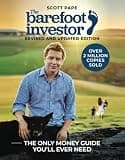
The Barefoot Investor
Australia's best-selling money book ever. A simple system for accounts, budgeting, debt and a real emergency fund in one.
Girls That Invest
Simran Kaur
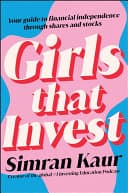
Girls That Invest
A no-jargon crash course from the podcaster behind Girls That Invest that makes the sharemarket feel doable, written especially for women starting out. The perfect first step before you buy your first ETF.
The Millionaire Teacher
Andrew Hallam

The Millionaire Teacher
A schoolteacher built a seven-figure portfolio on a modest salary, and here he lays out nine plain-English rules for doing the same with low-cost index funds. Refreshingly global, so Aussie readers just swap in super and local ETFs.
Some links above are affiliate links. If you buy through them, Snowball Invest may earn a small commission at no extra cost to you. We only recommend books we'd suggest anyway.
Sources
- BlackRock, iShares IOZ product page
- ASIC Moneysmart, exchange traded funds (ETFs)
- ATO, ETFs and their tax treatment
- ASX, IOZ listing page
General information only, not personal financial advice. It does not take your circumstances into account. Fund details, fees and holdings change over time, so verify current figures with the BlackRock fact sheet and PDS before investing. Past performance is not a reliable indicator of future performance.
Was this article useful?
Put it to your own numbers
Every calculator runs entirely in your browser, with nothing stored. See what these numbers look like for your own situation.
Try the Capital Gains Tax calculator →General information only. This article is educational and does not constitute personal financial advice. It does not account for your circumstances. Consider your own situation and seek advice from a licensed adviser before acting. Read our full disclaimer.

Timothy Hirou Gaschereau
Founder of Snowball Invest, not a financial adviser.
I write about what I'm learning myself, because nobody ever taught us how to take control of our own money. It's a skill, not a mystery, and it's never too late to learn it. The best day to start was yesterday, the second best is today.
LinkedIn →Related articles

STW ETF Australia: SPDR's ASX 200 Fund vs VAS and A200
STW is one of Australia's oldest ETFs, tracking the ASX 200. See what it holds, its 0.05% fee, franking, and how STW compares to VAS and A200.

IOO ETF Australia: iShares Global 100 ETF Guide
IOO is the iShares Global 100 ETF: 100 of the world's biggest companies. What it holds, its 0.40% fee, the tech concentration, and how it compares to VGS.

BGBL ETF Australia: Betashares' Global Shares Fund Explained
BGBL is Betashares' ultra low cost global shares ETF tracking around 1,000 companies. What it holds, its 0.08% fee, BGBL vs VGS, dividends and tax.