

What Is an ETF? A Beginner's Guide (Explained Simply)
A plain-English explanation of what an ETF is, how it works, what it costs, and whether it's right for a beginner starting to invest in Australia.
 By Timothy Hirou GaschereauPublished
 12 min read
Try it yourself
You've probably seen ETFs mentioned everywhere, a finance podcast, a colleague's "set and forget" portfolio, an ad for a broker. They get talked about like everyone already knows what they are, which makes it oddly hard to just ask. So here's the plain version: an ETF is one of the simplest ways to start investing, and once the mechanics click, it clicks for good. This is part of a wider guide to getting started with investing on Snowball Invest.
Quick answer
An ETF (Exchange Traded Fund) is a fund that holds a basket of investments, shares, bonds or other assets, and trades on the stock exchange like a single share. Buying one unit gives you a small slice of everything inside it, so you get instant diversification without having to buy each underlying investment yourself.
In this guide
- →What an ETF actually is, stripped of jargon
- →How big and how fast-growing the Australian ETF market actually is
- →How ETFs work behind the scenes, and who the major providers are
- →What ETFs actually cost, with a worked fee example
- →How ETFs compare to individual shares and managed funds
- →The tax treatment, and the risks that diversification doesn't remove
🧺 What an ETF actually is
🎯 The essential: An ETF is a basket of investments you buy and sell as a single unit on the exchange, exactly like a share.
Strip away the jargon and an ETF is just a basket. A fund manager puts a collection of investments inside it, say, shares in the 200 biggest companies on the ASX, and then lists units of that basket on the stock exchange so anyone can buy or sell them, just like buying a share in a single company.
That's the whole trick. Instead of researching and buying 200 individual companies yourself, you buy one ETF and instantly own a small slice of all 200. The "exchange traded" part just means it works like a share: you buy and sell it through a broker, its price moves throughout the trading day, and you can see exactly what it's worth at any moment.
One ETF trade
One purchase, exposure to every company the ETF holds
Buying shares one by one
A separate trade, and a separate brokerage fee, for each one
Need the short version to bookmark or send someone? Our ETF glossary page covers the same basics as a quick reference.
📈 How big the Australian ETF market actually is
Betashares' own annual review of the industry put total Australian ETF funds under management at $330.6 billion at the end of 2025, up $84.3 billion (34.2%) over the year, with $53 billion of that from new inflows, 76% higher than 2024's inflows. Annual trading value on the ASX and Cboe reached a record $198 billion in 2025, up 39% on the year before. There are now 453 ETFs trading across 65 issuers, and the industry is forecast to pass $400 billion during 2026.
Three providers, Vanguard, Betashares and iShares, took more than 70% of all industry inflows between them in 2025, which is worth knowing before assuming the ETF landscape is more fragmented than it actually is.
⚙️ How ETFs actually work
🎯 The essential: Most ETFs simply track an index rather than trying to beat it, which is exactly why their fees are so low.
Most ETFs are passively managed, meaning they simply track an index rather than having someone actively pick stocks. An index is just a defined list, "the 200 biggest companies on the ASX" is an index (specifically, the ASX 200), and "the 500 biggest companies in the US" is another. The ETF holds those exact companies, in roughly the same proportions as the index, and its value moves up and down with them. No one's trying to beat the market, the ETF is just holding a mirror up to it.
A smaller number of ETFs are actively managed, where a fund manager chooses what to hold rather than tracking a fixed index, in the hope of outperforming it. These usually come with higher fees, since you're paying for that active decision-making rather than just administration.
When you place an order, you're buying existing units from another investor on the exchange, the same as buying a share. Behind the scenes, large institutions called "market makers" keep creating and redeeming units to keep the ETF's price closely tracking the actual value of what it holds, so you're not meant to pay much of a premium or discount to what's really inside.
🏦 Who actually offers ETFs
A handful of large providers issue most of the ETFs listed on the ASX: Vanguard, BlackRock (under its iShares brand), Betashares, State Street (SPDR) and VanEck are among the biggest. Between them they cover most of the common categories, broad market, international, sector, bond and diversified ETFs, so in practice you're rarely choosing between one obscure product and nothing else.
Mentioning them here isn't a recommendation of any particular provider, just context so the names stop being a wall of noise once you start comparing factsheets.
💰 What ETFs cost
ETFs charge an ongoing management fee, usually shown as the MER (management expense ratio), a percentage of your investment taken out automatically each year. You won't get a bill for it, it's simply deducted from the fund before its unit price is calculated, so it quietly reduces your return rather than showing up as a separate charge.
Worked example: on $10,000 invested in an ETF with a 0.10% p.a. fee, that's about $10 a year. Broad Australian and international index ETFs are often priced somewhere between 0.10% and 0.40% p.a., actively managed or niche ETFs can run considerably higher, so it's always worth checking a fund's exact MER before investing.
On top of the MER, you'll also pay your broker's brokerage fee each time you buy or sell, a separate, one-off cost that has nothing to do with the ETF itself.
📊 ETFs vs shares vs managed funds
ETFs sit in between buying individual shares and investing through a traditional unlisted managed fund, borrowing something from each:
| ETFs | Individual shares | Managed funds (unlisted) | |
|---|---|---|---|
| Diversification | Instant, one trade | You build it yourself, trade by trade | Instant, one trade |
| How you buy | On the exchange, like a share | On the exchange | Directly through the fund manager |
| Price | Moves all day, every trade | Moves all day, every trade | Set once a day, after markets close |
| Typical ongoing fee | Often 0.10% to 0.40% p.a. | None, just brokerage per trade | Often 0.50% to 2%+ p.a. |
| Typical minimum | Price of one unit | Price of one share | Often $500 to $5,000 |
None of these is universally "better", they're different tools. A single broad-market ETF gets a beginner diversified fastest with the least effort, which is exactly why it's such a common starting point. If you've heard "index fund" and "ETF" used like they mean the same thing, there's a reason for that, we untangle it here. A different close cousin worth knowing about is the LIC (listed investment company), also traded on the ASX but structured as a company rather than a trust, which changes its pricing and dividends in ways worth understanding before you choose between them, see our LIC vs ETF guide for the details.
🎯 Types of ETFs you'll come across
Once you start looking, ETFs exist for almost every slice of the market. The broad categories worth knowing:
- Broad market index ETFs track a wide index, like the ASX 200 or a global share index, giving you exposure to hundreds of companies across many industries in one trade.
- Sector ETFs focus on one industry, like technology, healthcare or resources, useful if you want to tilt toward a specific area rather than the whole market.
- International ETFs give you exposure to companies listed overseas, without needing a separate international brokerage account. If you'd rather hold the overseas shares directly, see our guide to buying international shares from Australia for what changes.
- Bond ETFs hold government or corporate debt instead of shares, generally lower risk and lower expected return, often used to balance out share-heavy portfolios.
- Diversified ETFs hold a fixed mix of shares and bonds in one fund, aiming to be a genuine one-fund portfolio rather than just one asset class. Two of the most popular in Australia, VDHG and DHHF, take genuinely different approaches to this, see how they compare.
- Commodity ETFs track the price of a physical asset like gold, silver or oil, either by holding the physical commodity or through derivatives. Gold ETFs are the most common example on the ASX, see our guide to the best gold ETF in Australia for how the physically-backed and mining-shares versions differ.
This isn't investment advice on which to pick, what fits depends entirely on your own timeframe and risk tolerance, but knowing the categories makes the rest of the ETF world far less overwhelming to browse. Once you're comparing specific options, a simple checklist covers what actually matters.
💵 Do ETFs pay dividends?
If the ETF holds shares that pay dividends, yes, it passes those payments through to you as a "distribution", usually every quarter or every six months, depending on the fund. For ETFs holding Australian shares, those distributions often come with franking credits attached, the same tax credit you'd get holding the underlying shares directly.
Bond ETFs distribute interest income instead of dividends, and some ETFs let you automatically reinvest distributions into more units rather than receiving cash, worth checking with your broker if you'd rather compound it straight back in.
🧾 Tax on ETFs, the short version
ETF units are taxed the same way as most other investments in Australia. Distributions (including any dividends and franking credits passed through) count as income in the year you receive them. When you eventually sell your units for more than you paid, the profit is a capital gain, and if you held them for 12 months or more, only half the gain gets added to your taxable income under the standard CGT discount for individuals.
📉 See what CGT would actually look like
Plug in a purchase price, sale price and your other income to see an estimate.
⚠️ Risks worth knowing about
🎯 The essential: Diversification protects you from any one company failing, it doesn't protect you from the whole market or sector falling.
Diversification through an ETF reduces the risk of any single company sinking your whole investment, but it doesn't remove risk altogether. If the entire market or sector the ETF tracks falls, the ETF falls with it.
What ETFs are genuinely good at
- ✓Instant diversification across many holdings in a single trade
- ✓Lower ongoing fees than most actively managed funds
- ✓Easy to buy and sell during trading hours, same as a share
- ✓Transparent, you can usually see exactly what a fund holds
What they don't protect you from
- ✕A broad market downturn still drags the ETF's price down with it
- ✕Currency movements if the ETF holds overseas assets
- ✕Tracking error, small gaps between the ETF's return and its index
- ✕Niche or thinly-traded ETFs can be harder to buy or sell at a fair price
One risk that's easy to miss: "diversified" is relative. The ASX 200 spreads you across 200 companies, but the Australian market itself leans heavily toward banks and miners, so an ETF tracking it isn't as evenly spread across industries as the number 200 might suggest. The sector breakdown on a fund's factsheet gives a truer picture of how diversified you actually are than the holding count alone.
🖱️ What placing your first trade looks like
Here's the whole process, end to end: open an account with an online broker, a short application that's usually approved within a day or two. Transfer money in, the same way you'd transfer to any bank account. Search for the ETF using its ASX ticker code, a short code printed on its factsheet, the same way companies have one. Enter how many units you want, or how much you want to spend, and place the order.
It settles within a couple of business days, and from that point you own those units the same way you'd own shares, tracked in your name. There's no separate "ETF account", it all happens through the same broker you'd use to buy an individual share. For the full walkthrough, including opening an account, here's how to start investing in Australia step by step.
What I actually use
Pearler
This is the broker I personally use. Do your own research and form your own opinion, but I genuinely recommend it, it's built for long-term investors rather than day traders, and makes it easy to automate regular investing. Sign up through my link or with the code TIMOTHY269825 and you'll both get a $20 cash bonus once you make your first investment (Pearler's current offer, T&Cs apply).
Sign up to Pearler →This is a referral link. If you sign up through it, I get a bonus too, at no extra cost to you.
📈 See what regular investing could grow into
Whether it's ETFs or anything else, the maths of investing regularly works the same way. Try your own numbers.
When you eventually sell at a profit, tax applies: see capital gains tax on shares and ETFs.
Chasing US exposure specifically? Read Vanguard S&P 500 ETF Australia: VTS, IVV or V500 before you buy, VTS is not what most people think.
SnowLetter
Australia's money news and our best reads, once a week.
❓ Frequently asked questions
What does ETF stand for?
+
Exchange Traded Fund. It's a fund, a pooled collection of investments, that trades on a stock exchange like a share, rather than being bought and sold directly through a fund manager.
Do ETFs pay dividends?
+
Most do. If the ETF holds shares that pay dividends, it passes those payments on to you as a distribution, usually quarterly or half-yearly, often with franking credits attached for ETFs holding Australian shares.
How many ETFs should I invest in?
+
There's no fixed number. Plenty of people start with a single broad-market ETF, since it already spreads your money across hundreds of companies in one trade, and only add more if they specifically want to tilt toward a region, sector or asset class.
How do I actually invest in ETFs in Australia?
+
Open an account with an online broker, transfer money in, then buy units in the ETF you want using its ASX ticker code, the same way you'd buy a share. The whole process usually takes less than a day to set up.
Are ETFs safe?
+
No investment is risk-free, an ETF's unit price moves up and down with whatever it tracks. But the structure itself spreads company-specific risk across many holdings, and your units are registered to you, not sitting on the ETF provider's own balance sheet.
What's the minimum amount to start investing in ETFs?
+
Usually just the price of one unit, often somewhere between $30 and $150 for a popular broad-market ETF. Some brokers also offer fractional investing, which lets you start with a smaller amount than a full unit costs.
Who are the main ETF providers in Australia?
+
A handful of large issuers, including Vanguard, BlackRock (under its iShares brand), Betashares, State Street (SPDR) and VanEck, list most of the ETFs on the ASX between them, covering most common categories.
Does a higher number of holdings always mean better diversification?
+
Not necessarily. An ETF can hold 200 companies and still be concentrated if a handful of sectors dominate the index, like banks and miners often do in broad Australian indices. Check the sector breakdown, not just the holding count.
Reading about ETFs only gets you so far. The fastest way to actually understand one is to see how a small, regular amount compounds over real time, and to know your own numbers before you put a dollar in.
🔍 Money Myths Quiz
Test yourself on common investing misconceptions, including one about ETFs.
Where to next
📚 Recommended reading
The Simple Path to Wealth
JL Collins
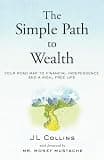
The Simple Path to Wealth
The friendliest on-ramp to index investing there is, born from letters a dad wrote his daughter. It makes 'buy the whole market and chill' feel obvious, just map his US fund picks onto Aussie equivalents and super.
The Little Book of Common Sense Investing
John C. Bogle
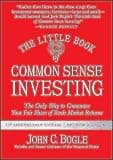
The Little Book of Common Sense Investing
From the man who invented the index fund, this is the short, sharp case for low-cost investing that has aged like fine wine. The maths on fees is universal, just think ETFs and super instead of his US funds.
The Millionaire Teacher
Andrew Hallam
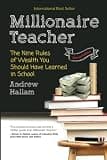
The Millionaire Teacher
A schoolteacher built a seven-figure portfolio on a modest salary, and here he lays out nine plain-English rules for doing the same with low-cost index funds. Refreshingly global, so Aussie readers just swap in super and local ETFs.
Some links above are affiliate links. If you buy through them, Snowball Invest may earn a small commission at no extra cost to you. We only recommend books we'd suggest anyway.
Sources
Was this article useful?
Put it to your own numbers
Every calculator runs entirely in your browser, with nothing stored. See what these numbers look like for your own situation.
Try the Compound Interest calculator →General information only. This article is educational and does not constitute personal financial advice. It does not account for your circumstances. Consider your own situation and seek advice from a licensed adviser before acting. Read our full disclaimer.

Timothy Hirou Gaschereau
Founder of Snowball Invest, not a financial adviser.
I write about what I'm learning myself, because nobody ever taught us how to take control of our own money. It's a skill, not a mystery, and it's never too late to learn it. The best day to start was yesterday, the second best is today.
LinkedIn →Related articles
VDHG: The Complete Guide to Vanguard's All-in-One ETF
A plain-English guide to VDHG, Vanguard's all-in-one ASX ETF: fees, holdings, the tax drag, performance, and how it stacks up against DHHF and a DIY VAS + VGS portfolio.

DHHF Review: Is the Betashares All Growth ETF Worth It?
A plain-English review of DHHF, the Betashares Diversified All Growth ETF: its holdings, the 0.19% fee, why it's more tax-efficient than VDHG, and exactly who it suits.

BGBL ETF Australia: Betashares' Global Shares Fund Explained
BGBL is Betashares' ultra low cost global shares ETF tracking around 1,000 companies. What it holds, its 0.08% fee, BGBL vs VGS, dividends and tax.