

Property, Mortgages and Debt
Property and debt are the two biggest financial forces in most Australian lives. This is the foundation guide for our Property & Debt series: the honest picture on affordability, the real sequence of decisions a first home buyer faces, how to think about debt more broadly, and the psychological side of carrying a large mortgage that almost nobody talks about.
Before you read on
This article is general information only, not personal financial or lending advice. Every lender's numbers are different, and a mortgage broker or licensed financial adviser can work through your specific situation. If debt is feeling unmanageable, a financial counsellor is free and confidential via the National Debt Helpline on 1800 007 007.
Ask most Australians what keeps them up at night, financially, and the answer usually comes back to one of two things: will I ever be able to buy a place, or how do I get on top of what I already owe. Both questions deserve a straighter answer than most content gives them.
Quick answer
Buying property in Australia is genuinely harder than it used to be, but it isn't a closed door. The path runs through a clear sequence: set a deposit target, clean up your credit score, get pre-approved, choose a broker or bank, search within budget, decide on LMI, pick fixed or variable, then exchange and settle. Alongside that, not all debt is equal. A mortgage and HECS-HELP behave very differently to a credit card or BNPL balance, and knowing the difference changes what you should pay off first.
In this guide
- →What Australian housing affordability actually looks like right now, with real numbers
- →The financial foundations to sort out before you start house-hunting
- →The eight-step home-buying sequence, in the order it actually happens
- →Fixed vs variable and offset vs redraw, the decisions that quietly cost or save you thousands
- →Good debt vs bad debt, and the grey area in between
- →The psychological weight of carrying a large mortgage, and what actually helps
- →What to do with HECS-HELP, credit cards and consolidation once the mortgage is in place
- →The steps most new owners skip after settlement
🏠 The Honest Truth About Australian Housing Affordability
Housing affordability in Australia is genuinely difficult, and it has been getting harder for most of the past decade. By mid-2026, the national median dwelling value sits somewhere around $920,000 to $930,000, having eased slightly after a strong run through 2025 as interest rates and affordability pressure weighed on the market again. These figures move month to month, so treat any single number as a snapshot rather than a fixed line.
The gap between cities is stark. Sydney's median house price sits well above $1.5 million, and Brisbane, once considered the affordable alternative, has pushed past $1.1 million and overtaken Melbourne's median house value along the way. A 20% deposit on a median-priced home nationally now works out to somewhere in the vicinity of $185,000 to $190,000, before you add stamp duty, conveyancing, building and pest inspections, and the cost of actually moving.
How long does that take to save? Estimates vary a lot depending on the assumptions used, income level and whether it's a single or dual income, but recent analyses such as the ANZ CoreLogic Housing Affordability Report have put the national figure at somewhere around a decade for a typical household saving a 20% deposit, stretching out considerably further in Sydney, especially on a single income. Meanwhile, wage growth of roughly 3-4% a year hasn't come close to keeping pace with house prices, which rose 8.6% nationally over the 2025 calendar year alone, the strongest annual gain since 2021, before growth slowed and even reversed in parts of the market through 2026.
None of this means buying is impossible. It means the path usually requires more planning and patience than it used to, or a different strategy altogether: rentvesting, buying with a partner, leaning on a government scheme, or looking at a different market entirely. We go deep on the numbers, city by city, in Housing Affordability in Australia: The Honest Picture.
🧱 Before You Buy: Getting Your Financial Foundation Right
Most first home buyer content jumps straight to open homes. Two things matter more, and both take months to sort out properly.
Your deposit target
Conventional wisdom is 20%, which keeps your loan-to-value ratio (LVR) at 80% or below and avoids Lenders Mortgage Insurance, a one-off premium that protects the lender, not you, if you borrow more than that. But 20% isn't the only door in. Eligible buyers can purchase through the government's First Home Guarantee with as little as a 5% deposit and no LMI payable, the government guarantees the gap. From 1 October 2025 the scheme moved to unlimited places and removed its income caps, alongside higher property price caps in every state and territory, which meaningfully widened who can use it. We break down exactly how the deposit maths and government schemes work in How Much Deposit Do You Need to Buy a House in Australia?.
Then there's stamp duty, which varies by state and can run to tens of thousands of dollars on a median-priced home. First home buyer exemptions help here too: NSW currently exempts first home buyers from stamp duty up to $800,000, with a tapering concession up to $1 million. Victoria's exemption threshold sits at $600,000, tapering to $750,000. Queensland exempts established homes up to $700,000, with concessions up to $800,000, and has gone further for new homes, offering a full exemption with no price cap at all. The full state-by-state breakdown, including every other state and territory, is in Stamp Duty Australia: The Complete State-by-State Guide. If your deposit ends up under 20%, it's worth understanding exactly what LMI will cost you before you commit, which is what What Is LMI? Lenders Mortgage Insurance Explained walks through.
Your credit score
Your credit score affects both whether you get approved and the rate you're offered. A score below roughly 600 limits your options significantly, while a score above 750 puts you in a strong negotiating position. You can check yours for free through providers like Equifax or Experian, and it's realistic to improve it over 6-12 months by paying bills on time, reducing unused credit limits, and avoiding a flurry of loan or credit card applications in a short window, since each one leaves a mark. We cover what actually moves the number in Your Credit Score in Australia.
🗺️ The Home-Buying Sequence, Step by Step
Most first home buyers approach this backwards: they fall in love with a property first, then try to make the finances fit around it. The order that actually works looks more like this.
Deposit target
Set a number and a timeline
Credit score
Clean it up 6-12 months ahead
Pre-approval
Lasts around 90 days
Broker vs bank
Compare who'll actually lend
Search on budget
Not the pre-approval ceiling
The LMI call
Pay it, or wait and save more
Fixed vs variable
Or split the two
Exchange & settle
Conveyancer, inspections, insurance
A few of these steps deserve more than a label. Pre-approval typically lasts around 90 days and tells you what a lender will actually lend, which is often a different number to what you'd like to borrow. Choosing between a mortgage broker and going direct to a bank matters here too: a broker has access to dozens of lenders and can shop your situation around, while going direct can suit you if you already bank with a lender offering a competitive rate.
🎯 The essential: Search with a budget, not a dream. Your pre-approval ceiling is the maximum a lender will go to, not a target to aim for, and leaving a buffer below it gives you room for rate rises and life changes.
The LMI call is a genuine decision, not just a fee to avoid on principle. Paying LMI to get into the market with a smaller deposit sometimes makes sense if prices are rising faster than you can save, and sometimes it's cheaper to wait and keep building your deposit. There's no universally right answer, it depends on your market and your timeline. Once you've settled on a lender, you'll also need to decide between fixed and variable, which we unpack next, before a conveyancer handles the legal transfer at exchange and settlement, alongside building and pest inspections and home insurance that needs to be in place from the moment contracts exchange.
⚖️ Fixed vs Variable, Offset vs Redraw: The Decisions That Actually Matter
Two choices inside the loan itself quietly make a bigger difference than most people expect.
Fixed vs variable
A fixed rate locks in your interest rate for one to five years. It's predictable, which is genuinely valuable for budgeting, but it gives you no benefit if rates fall, and most fixed loans restrict extra repayments or attach break costs if your circumstances change. A variable rate moves with the market, which cuts both ways, but usually comes with more flexibility: unlimited extra repayments, an offset account, and no break costs. Plenty of borrowers split their loan between the two, fixing a portion for certainty and keeping the rest variable for flexibility. The full comparison, including how splitting works in practice, is in Fixed vs Variable vs Split Home Loans.
Offset vs redraw
An offset account is a linked, everyday transaction account. Every dollar sitting in it reduces the balance your interest is calculated on, and you can access the money whenever you need it. A redraw facility lets you pull back extra repayments you've already made, but access can be restricted or delayed by the lender, and some charge a fee per withdrawal. For most borrowers, an offset account gives more flexibility for the same interest saving, which is why it's the more common choice on variable loans. The trade-offs are covered in full in Offset Account vs Redraw.
💳 Good Debt, Bad Debt, and Everything in Between
Not all debt behaves the same way, and lumping it all together is how good decisions get made for the wrong reasons.
| Type | Examples | Why it's different |
|---|---|---|
| Good debt | Home loan, investment property, HECS-HELP | Secured against an appreciating asset (or, for HECS, indexed to CPI rather than a commercial rate, and only repaid once income clears a threshold) |
| Grey area | Car loan for work, debt consolidation loan | Can be genuinely useful or just shuffling the deck, depends entirely on the purpose and the rate |
| Bad debt | Credit cards, BNPL, personal loans for discretionary spending | High interest, usually attached to a depreciating purchase or nothing at all |
Good debt
A home loan is good debt in the sense that you're borrowing to acquire an appreciating asset at a comparatively low rate. An investment property loan works similarly, secured against the property, with potentially favourable tax treatment through negative gearing if the numbers stack up for your situation. And HECS-HELP, while it's technically a debt, doesn't behave like a commercial loan at all: it's indexed to CPI rather than charged interest, it's only repaid once your income crosses a threshold, and it doesn't appear on your credit file.
Bad debt
Credit cards sit at the other end, with interest rates commonly around 20% per annum. BNPL arrangements can encourage spending beyond what you'd otherwise commit to, personal loans for discretionary purchases and car loans on depreciating assets round out the list. Australians collectively owe around $44 billion in credit card debt across more than 12 million accounts, with average balances per cardholder commonly cited at somewhere between $3,000 and $3,600 depending on the survey. The rule of thumb is simple: pay off high-interest consumer debt before making extra mortgage repayments. Paying off a 20% credit card is a guaranteed 20% return. Paying off a 6% mortgage early is only a guaranteed 6% return.
The grey area
A car loan for a vehicle you genuinely need for work is a different proposition to one for a luxury upgrade you don't. A debt consolidation loan at a meaningfully lower rate can be genuinely smart, or it can just be shuffling the same debt around while new charges quietly build up on the accounts you've supposedly cleared.
🧠 The Psychological Weight of a Mortgage
This part rarely makes it into a home-buying checklist, but it's worth saying plainly: carrying a $700,000 debt for 30 years is heavy. Research links mortgage-holding to higher psychological distress and poorer sleep compared with owning outright, and during the rate-rising cycle of 2022 to 2024, a large majority of borrowers surveyed reported an increase in financial stress.
A kind of low-level hypervigilance around money, sometimes called "mortgage brain", is common in the first year or two of a big loan. It doesn't mean you made the wrong decision. It means your brain is adjusting to genuinely being on the hook for a large number for a long time.
What actually helps:
- Know your buffer, how many months of repayments your savings could cover if you lost income tomorrow
- Automate your repayments so the decision isn't made fresh every fortnight
- Separate the loan from your identity, it's a number on a page, not a verdict on your worth
- Talk about it, the shame around financial stress is real and it makes the stress worse, not better
- Revisit your rate, if you haven't reviewed your home loan in the last 12 months, there's a reasonable chance you're overpaying
Feeling the weight of a mortgage doesn't mean you're bad with money. It means you're carrying a large, long-term financial commitment, and it's meant to feel like something.
🧾 Managing Debt Beyond Your Mortgage
HECS-HELP
The average HECS-HELP balance sits at roughly $27,000 to $28,000, reflecting the government's one-off 20% reduction applied to outstanding balances in 2025. The debt is indexed to CPI each 1 June, and repayment happens automatically through the tax system once your income crosses the repayment threshold, which was lifted substantially for the 2025-26 income year to $67,000, up from roughly $54,000 the year before, alongside a new marginal repayment system that only applies the repayment rate to income above the threshold rather than the whole amount. Unless you're close to a threshold where the interest-free nature of the debt stops being an advantage, it's usually not worth paying it off faster than required. The full mechanics, including how indexation and repayments interact, are in How HECS-HELP Repayments Actually Work.
Credit cards and BNPL
A credit card balance carrying around 20% interest is the highest financial priority after essential living costs, above your mortgage and above HECS. BNPL providers generate revenue through merchant fees and late charges, and by design they encourage spending beyond what you'd otherwise commit to in one go.
Debt consolidation
Rolling several debts into one loan at a lower rate can reduce total interest and simplify your repayments, but it only works if you don't let new debt build up on the accounts you've just cleared. We cover when consolidation genuinely helps, and when it doesn't, in Debt Consolidation: How It Works.
✅ Once You Own Property: The Steps Most People Skip
Settlement day feels like the finish line, but a handful of things genuinely matter once the keys are in your hand.
- Review your home loan annually. Lenders rarely call to offer existing customers a better rate, you have to ask, or refinance.
- Build an emergency fund of 3-6 months of expenses before aggressively making extra mortgage repayments.
- Consider income protection insurance. Your mortgage repayments don't pause just because your income does.
- Get your will and estate planning sorted. Without a valid will, the state decides where your assets go, and it's slower and more expensive for the people you leave behind. If you own property jointly, understand the difference between joint tenancy and tenants in common, since it directly affects what happens to your share. The four documents worth having are covered in Estate Planning in Australia.
📚 Where to Go From Here
This article is the foundation of our Property & Debt series. Everything else we cover branches out from the framework above:
- On buying: deposit sizes and government schemes, stamp duty state-by-state, LMI, mortgage broker vs bank, fixed vs variable, offset vs redraw, and housing affordability.
- On investment property: negative gearing and rentvesting.
- On managing debt: your credit score, HECS-HELP repayments, and debt consolidation.
- On protecting what you've built: estate planning and wills.
🏡 How Much Deposit Do You Need to Buy a House in Australia?
The real deposit maths, LMI, and how the government schemes actually work.
🎯 Conclusion
Property and debt aren't separate topics, they're two sides of the same decision most Australians eventually face. The honest version is that buying is harder than it used to be, debt isn't inherently good or bad, and carrying a large loan is allowed to feel heavy sometimes. None of that is a reason to avoid the topic. It's a reason to go in with a clear sequence, a realistic budget, and an honest sense of what you can actually manage.
🎯 The essential: Start with the foundation: your deposit target and your credit score. Everything else in this series builds on that.
SnowLetter
Australia's money news and our best reads, once a week.
❓ Frequently Asked Questions
How much deposit do I need to buy a house in Australia?
+
The standard rule of thumb is 20%, which lets you avoid Lenders Mortgage Insurance (LMI). Eligible first home buyers can purchase with as little as a 5% deposit under the government's First Home Guarantee, with the government guaranteeing the rest and no LMI payable. Either way, budget separately for stamp duty (unless you qualify for a first home buyer exemption), conveyancing, building and pest inspections, and moving costs.
How long does it take to save a house deposit in Australia?
+
It depends heavily on the data source, the city, and whether it's based on a single income or a household. Recent analyses (like the ANZ CoreLogic Housing Affordability Report) have put the time to save a 20% deposit nationally at somewhere around a decade for a typical household, and considerably longer again in Sydney, especially on a single income. It shortens with a dual income, a smaller deposit target, or a government scheme like the First Home Guarantee.
What is the difference between a fixed and variable home loan?
+
A fixed rate locks in your interest rate for a set period, usually one to five years, which gives you predictable repayments but no benefit if rates fall, and often restricts extra repayments or attaches break costs. A variable rate moves with the market and usually comes with more flexibility, including unlimited extra repayments, an offset account, and no break costs. Some borrowers split their loan between the two to get a bit of both.
Is HECS debt considered when applying for a home loan?
+
Yes. Lenders factor your HECS-HELP repayment obligation into their serviceability assessment because it reduces your take-home pay once your income crosses the repayment threshold. A typical HECS balance can meaningfully reduce your borrowing capacity, the exact amount depends on your income, your balance, and the lender's own calculator.
What is the difference between an offset account and a redraw facility?
+
An offset account is a linked everyday transaction account. Every dollar sitting in it reduces the balance your mortgage interest is calculated on, and you can access the money anytime. A redraw facility lets you pull back extra repayments you've already made, but access can be restricted or delayed by the lender, and some lenders charge a fee per withdrawal. For most borrowers, an offset account offers more flexibility for a similar interest saving.
Do I need a will once I own property?
+
Yes, and as soon as possible. Without a valid will, intestacy laws decide how your assets are distributed, and the process is typically slower and more expensive for the people you leave behind. If you own property jointly, it's also worth understanding the difference between joint tenancy and tenants in common, because it directly determines what happens to your share of the property.
📚 Recommended reading
The Barefoot Investor
Scott Pape

The Barefoot Investor
Australia's best-selling money book ever. A simple system for accounts, budgeting, debt and a real emergency fund in one.
Ditch the Debt and Get Rich
Effie Zahos

Ditch the Debt and Get Rich
One of Australia's most trusted money journalists shows you how to crush debt and build real wealth without giving up your flat white. Clear, doable steps you can start this week.
The Armchair Guide to Property Investing
Ben Kingsley & Bryce Holdaway
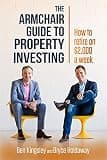
The Armchair Guide to Property Investing
Two of Australia's most trusted property voices lay out a plain-English roadmap to building a portfolio on an average income. Practical, local, and refreshingly free of get-rich-quick hype.
Some links above are affiliate links. If you buy through them, Snowball Invest may earn a small commission at no extra cost to you. We only recommend books we'd suggest anyway.
Sources
- 1. Cotality (formerly CoreLogic) Home Value Index, monthly housing chart pack
- 2. ANZ CoreLogic Housing Affordability Report
- 3. Housing Australia, unlimited places and higher price caps for the First Home Guarantee
- 4. Australian Government, Making Student Repayments Fairer (HELP repayment reform)
- 5. Finder, Australian credit card statistics
- 6. Revenue NSW, First Home Buyers Assistance scheme
Was this article useful?
Related calculators
Articles in this guide
How to Transfer Property After Someone Dies in Australia
Transferring a house after someone dies in Australia? A step by step guide to probate, transmission applications, CGT, stamp duty and realistic timelines.

Building and Pest Inspection: What You Need Before You Buy
What building and pest inspections cover, how much they cost in 2025-26, when to book one, and what to do if the report finds problems. Read before you buy.

Conveyancing in Australia: What It Is and What It Costs
What is conveyancing, how much does it cost in Australia, and do you need a conveyancer or solicitor? Plain-English guide with 2025-26 cost ranges.

First Home Owners Grant SA: What You Get and How to Claim
The SA First Home Owner Grant is $15,000 with no property value cap on new homes. Eligibility, the stamp duty abolition, and how to apply for 2025-26.

First Home Owners Grant WA: What You Get and How to Claim
The WA First Home Owner Grant is $10,000 for a new home. Eligibility, the 26th parallel value caps, the stamp duty concession, and how to apply for 2025-26.

First Home Owners Grant VIC: What You Get and How to Claim
The Victorian FHOG is $10,000 for new homes up to $750k. Check eligibility, how to apply, and what else you can stack it with. Updated for 2025-26.

First Home Owners Grant NSW: What You Get and How to Apply
NSW's First Home Owner Grant gives eligible buyers $10,000 on a new home. Who qualifies, what the traps are, how it stacks with other schemes, and how to apply.

Salary Sacrifice Mortgage: Who Can Do It and How Much You Save
Can you salary sacrifice your mortgage in Australia? Most people can't, but hospital and charity workers can save thousands. Here's exactly how it works.

EV Novated Lease Australia: Tesla, BYD and the FBT Exemption
The EV FBT exemption makes novated leasing a battery electric vehicle one of Australia's best tax breaks. How it works, eligible models, and a worked example.

Capital Gains Tax on Inherited Property in Australia
Inheriting property does not trigger CGT, but selling it might. The 2-year rule, cost base, pre-CGT property and the main residence exemption, explained.

The CGT 6-Year Rule: Keep Your Main Residence Exemption When You Move Out
Moved out and renting your old home? The capital gains tax 6-year rule could save you thousands. How it works, who qualifies, and the traps to avoid.

How to Get Your Rental Bond Back in Full (Australia)
Want your full rental bond back? Learn what landlords can and can't deduct, how to dispute a claim, and the exact steps to protect your money.

Breaking a Lease Early in Australia: What It Actually Costs
Thinking about breaking a lease early in Australia? Find out what it actually costs, when you can leave penalty-free, and how to reduce the bill.

Should I Pay Off My HECS Debt Early?
Wondering whether to pay off your HECS debt early? We break down indexation, borrowing power, and opportunity cost so you can decide.
How Much Can I Borrow for a Home Loan in Australia?
Wondering how much you can borrow for a home loan in Australia? Learn what drives borrowing power, what quietly cuts it, and how to improve it before you apply.

First Home Guarantee: Buy Your First Home With a 5% Deposit
The First Home Guarantee lets eligible buyers in Australia buy with just a 5% deposit and no LMI. See how it works, what changed, and if you qualify.

Stamp Duty Concessions for First Home Buyers in Australia
Stamp duty concessions for first home buyers can save tens of thousands in Australia. See how each state works and check your eligibility.

Land Tax in Australia: A State-by-State Guide
Land tax in Australia varies by state, and your home is usually exempt. Find out what it is, who pays it, and how to check your obligations.
Debt Recycling in Australia: How It Works, Who It Suits, the Risks
Debt recycling in Australia explained plainly: the steps, tax rules, risks and who it suits. Learn how it works, then get advice before you start.

Capital Gains Tax on Property: The Plain-English Guide
Capital gains tax on property in Australia: the main residence exemption, the 6-year rule, the 50% discount, and how to calculate your CGT, with a worked example.

Reverse Mortgage Australia: How They Work, What They Cost, and Who They Suit
Unlock your home equity without selling. Here's how reverse mortgages work in Australia, what they cost, and what to check before you sign anything.

Joint Tenants vs Tenants in Common: What Every Australian Co-Owner Needs to Know
Joint tenants vs tenants in common: the key differences for Australian property buyers, including CGT, stamp duty, wills, and how to switch between them.

Buying Off the Plan in Australia: Risks and What to Know
Buying off the plan in Australia can save on stamp duty, but valuation gaps, sunset clauses, and finance risk are real. Here's what every buyer needs to know.
Construction Loans in Australia: How They Work
Building a new home? Learn how construction loans work in Australia, from progressive drawdown and interest-only repayments to the 5 build stages. Plain-English guide.

Property Depreciation Schedule: How It Works for Investors
Learn how a property depreciation schedule works in Australia, Division 43, Division 40, the 2017 rule change, and how much tax you could save.
Salary Sacrifice a Car: How a Novated Lease Works (and Is It Worth It)
Salary sacrifice a car the smart way. How a novated lease works, the real tax benefit, GST and EV savings, the residual, and who it actually suits.

Novated Lease vs Car Loan vs Paying Cash: Which One Actually Wins?
Novated lease, car loan or paying cash? A plain-English guide to the tax savings, the catches, and exactly who each option suits when financing a car in Australia.

Pay Off Mortgage or Invest? The Honest Australian Guide
Should you pay off your mortgage or invest your spare cash? We break down the real maths, the tax angle, offset accounts, super, and a worked example for Australian homeowners.

Estate Planning in Australia: The Four Documents Most People Never Get Around To
What is estate planning in Australia? The four documents you actually need, what they cost, and what happens if you die without them.

How to Write a Will in Australia (Without Necessarily Paying a Lawyer)
How to write a legally valid will in Australia: your real options from DIY kits to solicitors, what actually makes a will valid, and the mistakes that void one.

Investment Property Tax Deductions: What You Can (and Can't) Claim in Australia
A complete guide to investment property tax deductions in Australia: what you can claim, what you can't, and the depreciation trap that catches new investors.

Stamp Duty Australia: The Complete State-by-State Guide
How stamp duty (transfer duty) works across every Australian state and territory: rates, first home buyer exemptions, a worked example, and upfront cost tips.

How to Use Equity to Buy an Investment Property in Australia
How to use equity in your home to buy an investment property: usable equity explained, a worked example, and the real risks involved.

Offset Account vs Redraw: What Every Australian Homeowner Needs to Know
Offset account vs redraw: same interest saving, very different tax outcomes if your home becomes an investment property. The structural difference explained.
Mortgage Broker vs Bank: The Honest Australian Guide
Broker or bank for your home loan? Real commission figures, what Best Interests Duty means, and a plain-English decision checklist for Australian borrowers.

Cross-Collateralisation: Why Banks Love It and Why It Can Trap You
Cross-collateralisation bundles your properties as security for multiple loans. Learn the real risks, a worked example, and the standalone alternative.

Home Loan Top-Up vs Refinancing: Which Gets You Cash Cheaper?
Top-up or refinance? We break down the real costs, timelines, and worked examples so Australian homeowners can make the smarter call.

When Should You Refinance Your Home Loan in 2026?
A practical, numbers-first guide to refinancing your home loan in Australia in 2026, covering real costs, the break-even calculation, step-by-step process, and when not to bother.

Housing Affordability in Australia: The Honest Picture (and What You Can Actually Do)
The current state of housing affordability in Australia, why it got structurally harder, and the real options available to buy anyway.

Your Credit Score in Australia: What It Means, What's Good, and How to Improve It
What a credit score actually is in Australia, why you have two (Equifax and Experian), what counts as good, and specific steps to improve it.

Debt Consolidation: How It Works (and When It Actually Helps)
How debt consolidation actually works, when it genuinely helps, when it backfires, and how it compares to the debt avalanche and snowball methods.

How to Pay Off Your Mortgage Faster
The real levers: extra repayments, offset accounts vs redraw, lump sums, and refinancing, plus the honest trade-off with investing instead.

What Is Negative Gearing? Explained for Property Investors
How negative gearing actually works, a worked tax example, why investors use it, and the real risk that gets glossed over.
Guarantor Home Loans: How They Work (and the Risks)
How a guarantor home loan actually works, what the guarantor is really agreeing to, the real risks, and how to remove a guarantor later.

How Much Deposit Do You Need to Buy a House in Australia?
The real deposit numbers: the 20% benchmark, buying with as little as 5% through government schemes, and what a smaller deposit actually costs you.

Personal Loan vs Credit Card: Which Is Cheaper for Borrowing?
Real RBA rate data comparing personal loans and credit cards, when each genuinely makes sense, and why the interest-free period matters more than people think.
Interest-Only vs Principal and Interest: What's the Real Difference?
Why owner-occupiers and investors use interest-only loans so differently, the APRA cap, a worked example, and the repayment jump when it ends.

Fixed vs Variable vs Split Home Loans: Which Should You Choose?
The real trade-offs between fixed, variable and split home loans, the RBA data on the COVID fixed-rate wave, break costs, and which suits which borrower.
Bridging Loans Explained
How bridging loans actually work, peak debt vs end debt with a worked example, how capitalised interest works, and the real risks if a sale is slow.
Rentvesting: How It Works (and Whether It's Worth It)
How rentvesting actually works, real Australian uptake statistics, the tax side, the related six-year CGT rule, and the genuine risks worth weighing up.

What Is LMI? Lenders Mortgage Insurance Explained
What Lenders Mortgage Insurance actually is, who it protects, how the cost is calculated, and the real ways to avoid or reduce it.

Discharging Your Mortgage: The Final Steps After Your Last Repayment
What discharging a mortgage actually means, the step-by-step process, real costs and timeframes, and the mistakes that trip people up by scenario.
Joint Home Loans and Separation: What Actually Happens to the Mortgage
Separating with a joint mortgage? What the bank actually cares about, your four real options, and how to protect your credit and borrowing power.

How to Refinance an Investment Property in Australia
How to refinance an investment property in Australia: the reasons, the step-by-step, the real costs, cashing out equity, and the crucial tax rule on deductibility.

How to Refinance a Car Loan in Australia
Thinking of refinancing your car loan? Here is how to do it step by step, what it really costs, the balloon and car-age rules, and when it is actually worth it.

How to Refinance a Personal Loan in Australia
Want to refinance a personal loan in Australia? A plain-English guide to the process, the real costs, debt consolidation traps, and when switching actually saves money.

What Is an Offset Account and How Does It Work?
An offset account uses your savings to cut the interest on your home loan, every day, tax-free. Here is exactly how it works, what it costs, and who it suits.
How HECS-HELP Repayments Actually Work (And Why Your Debt Can Grow)
A plain-English breakdown of HECS-HELP indexation and compulsory repayments, and why your balance can rise even while you're paying it off.

Help to Buy Scheme: The Complete Guide
Australia's Help to Buy scheme lets eligible buyers purchase a home with just a 2% deposit by having the government co-invest up to 40%. Here's exactly how it works, who qualifies, and what the real trade-offs are.

First Home Owner Grant Queensland: The Complete 2026 Guide
The Queensland First Home Owner Grant is $30,000 in 2026, locked in for four more years under the 2026-27 State Budget. This guide covers eligibility, eligible home types, how to apply, and how to stack it with other first home buyer schemes.

Co-Buying Property in Australia: What to Sort Out Before You Buy With Friends or Family
Co-buying property in Australia is rising fast. Learn the legal structures, mortgage risks, tax rules, and agreements you need before you buy with friends or family.