

First Home Owner Grant Queensland: The Complete 2026 Guide
The Queensland First Home Owner Grant is $30,000 in 2026, locked in for four more years under the 2026-27 State Budget. This guide covers eligibility, eligible home types, how to apply, and how to stack it with other first home buyer schemes.
 By Timothy Hirou GaschereauPublished
 11 min read
Try it yourself
This article is educational information only, not financial advice. Talk to a licensed mortgage broker or conveyancer before signing a contract. The FHOG is part of a wider guide to property and debt on Snowball Invest.
Quick answer
The Queensland First Home Owner Grant (FHOG) is worth $30,000 for eligible contracts signed from 20 November 2023 onwards. The 2026-27 Queensland Budget locked the $30,000 amount in for a further four years, rather than letting it revert to $15,000 as originally scheduled. The grant applies to new homes only, never previously occupied or sold as a residence, with a total value cap under $750,000 including land. There's no income test, and you can stack it with Queensland's transfer duty concession and federal schemes like the First Home Guarantee or Help to Buy.
In this guide
- →How much the QLD FHOG is worth in 2026, and why it isn't technically permanent
- →Who qualifies, across the property, applicant and residency requirements
- →What types of new homes count, and where house-and-land packages catch people out
- →How and when to apply, and when the money actually lands
- →How to stack the FHOG with the transfer duty concession, First Home Guarantee or Help to Buy
- →The mistakes and misconceptions that trip up otherwise-eligible buyers
🏠 What is the QLD First Home Owner Grant?
The First Home Owner Grant is a cash payment from the Queensland Government to help eligible first home buyers purchase or build a new home. It was introduced nationally back in 2000 to offset the impact of GST on new housing, and in Queensland it's administered by the Queensland Revenue Office (QRO). It's a one-off payment, not a loan, and you don't repay it provided you meet the residency requirements after settlement.
It's worth being clear on one thing early: the FHOG is completely separate from Queensland's transfer duty (stamp duty) concessions. They're two distinct benefits with their own eligibility rules, and meeting one doesn't automatically mean you meet the other.
💰 How much is the QLD FHOG worth in 2026?
$30,000, for eligible contracts signed on or after 20 November 2023. Before that date, the grant was $15,000, temporarily doubled in November 2023 and originally scheduled to revert. For owner-builders, the same date rules apply based on when foundations are laid, not when a contract is signed, since there's no building contract to sign a date on.
| Contract signed | Grant amount |
|---|---|
| Before 20 November 2023 | $15,000 |
| 20 November 2023 onwards | $30,000 |
The $30,000 amount was due to expire on 30 June 2026, when it would have reverted to $15,000. The 2026-27 Queensland Budget, handed down on 23 June 2026, locked the higher amount in for a further four years instead. That's genuinely good news for buyers, but it's worth being precise: this is a four-year budget commitment, not permanent legislation. Nobody's rushing you into a contract this month, but it's still worth checking the current amount at qro.qld.gov.au before you sign, in case anything changes closer to the next state budget.
The $30,000 is not taxable income. You don't declare it on your tax return, and it doesn't affect your Medicare levy or any income-tested government payments.
✅ Who is eligible for the QLD First Home Owner Grant?
Eligibility comes down to three layers: the property, the applicant, and what you do with the home after you move in.
Property requirements: the home and land combined must be valued at less than $750,000, including any contract variations, a home worth exactly $750,000 isn't eligible. It must be a new home, never previously occupied or sold as a place of residence, and it must become your principal place of residence, not an investment property.
🎯 The essential: At least one applicant must be an Australian citizen or permanent resident, be 18 or over, and never have received a first home owner grant in any Australian state or territory. There's no income test, so what you earn has no bearing on eligibility either way.
Applicant requirements, in full: at least 18 years old, with the Commissioner able to waive this in exceptional circumstances. At least one applicant needs to be an Australian citizen or permanent resident, so joint applicants where only one holds citizenship or residency can still qualify. You must not have previously received a first home owner grant anywhere in Australia, though if you received one and later repaid it in full, including any penalty, you may be able to reapply.
Then there's the previous ownership test, and it's the one that catches most people out: you or your spouse must not have owned residential property in Australia on or after 1 July 2000 that you lived in, or any residential property before 1 July 2000 at all, regardless of whether you lived in it. There's an important exception, though. Owning a residential property since 1 July 2000 that was used solely as an investment and never lived in doesn't automatically disqualify you, but you'll need evidence covering the entire ownership period, lease agreements, utility accounts in a tenant's name, and tax returns declaring the rental income.
Residency requirements: you must move into the home as your principal place of residence within 1 year of settlement or completion, and live there continuously for at least 6 months. You can rent out spare rooms during that period without it affecting your primary use of the home. You can also rent the whole home out before you move in and still keep the grant, though this may affect your eligibility for the transfer duty concession, the residency rules differ slightly between the two benefits. The Commissioner has discretion to make exceptions for genuine hardship.
🏗️ What types of homes qualify?
"New home" covers more ground than most people expect. It includes a brand new dwelling never previously occupied or sold as a residence (houses, units, duplexes and townhouses all count), an off-the-plan purchase on an unregistered plan, a comprehensive contract to build where one builder is responsible from foundations through to the final inspection certificate, and owner-building it yourself or coordinating multiple contractors, which still requires a final inspection certificate.
It also covers a substantial renovation, where all or most structural components have been removed or replaced before purchase and the seller is GST-registered and selling it as a taxable supply (cosmetic work like paint and carpet doesn't count), a relocated, kit or modular home not occupied since being fixed to its new site, and a manufactured home in a home park.
What counts as a new home
- ✓A house, unit, duplex or townhouse never previously lived in or sold as a residence
- ✓An off-the-plan purchase, or a comprehensive contract to build
- ✓Owner-building or coordinating your own contractors, with a final inspection certificate
- ✓A substantial renovation where the seller is GST-registered and structural work was done
- ✓A granny flat or tiny home on a relative's land, if the building contract is in your name
What doesn't qualify
- ✕An established home, previously lived in or previously sold as a residence
- ✕Cosmetic renovations only, new paint or carpet without structural changes
- ✕A home bought purely as an investment property, not your principal residence
- ✕A combined home and land value of $750,000 or more
The house-and-land package trap is worth flagging on its own. A separate land contract plus a separate building contract is treated as a "contract to build," and the $750,000 cap applies to the combined value of the land at current market value plus the build cost. Rising land values can push you over the cap even if the build cost alone looks modest, so it's worth checking the combined figure before you assume you're under the line.
📝 How to apply for the QLD First Home Owner Grant
Most buyers apply through an approved agent, usually a lender or a conveyancer or solicitor acting in that role. The agent lodges the application, and the grant is typically paid at settlement or at the first construction draw-down for a building contract. If you're not using an approved agent, you can apply directly through the QRO.
Timing matters. For a completed new home, apply at or before settlement. For an off-the-plan purchase, apply after signing the contract. For a contract to build or an owner-builder project, apply after foundations are laid. Applying too early or too late can delay payment, so it's worth talking to your lender or conveyancer about the right timing for your situation.
🏡 Borrowing Power Calculator
See how much a lender might extend you before you start pricing out new-build contracts.
🧩 Other first home buyer benefits you can stack
The FHOG is only one piece of the puzzle. Most eligible QLD buyers can combine it with a transfer duty concession, and with one (not both) of the two main federal deposit schemes.
Queensland transfer duty concession: a separate state charge, and you may pay little or nothing as a first home buyer. For a new home, first home buyers get a full transfer duty exemption with no property value cap for eligible contracts. Established homes are on a sliding scale, a full exemption applies up to $700,000, a partial concession applies between $700,001 and $799,999, and there's no concession above $800,000. This can be combined with the FHOG, they're separate benefits with separate eligibility rules, but check both sets of residency obligations since they differ slightly.
First Home Guarantee (federal): lets eligible buyers purchase with as little as a 5% deposit without paying LMI, with the government guaranteeing the remaining shortfall. There's no income cap and no limit on places. In Queensland, the property price cap is $1,000,000 in Brisbane, the Gold Coast and the Sunshine Coast, and $700,000 for the rest of the state. It can be combined with the FHOG, being approved for a federal home guarantee scheme doesn't affect your FHOG eligibility.
Help to Buy (federal): a shared equity scheme where the government contributes up to 40% of the purchase price for a new home, or up to 30% for an existing home, for a minimum 2% deposit. There are 10,000 places nationally per year, and income caps for FY2026-27 of $103,000 for singles and $165,000 for joint applicants or single parents. It can also be combined with the FHOG, Help to Buy explicitly allows state grants and stamp duty concessions alongside it. What you can't do is combine Help to Buy with the First Home Guarantee, the two federal schemes are mutually exclusive, you have to choose one or the other. For the full breakdown of how Help to Buy works, see our complete Help to Buy scheme guide.
Two ways to stack QLD and federal first home buyer support, pick one deposit path
5% deposit path
FHOG
$30,000 cash grant
Transfer duty concession
$0 duty on a new home
First Home Guarantee
5% deposit, no LMI, no income cap
2% deposit path
FHOG
$30,000 cash grant
Transfer duty concession
$0 duty on a new home
Help to Buy
2% deposit, government co-invests up to 40%
Help to Buy and the First Home Guarantee are mutually exclusive, choose one deposit path, not both.
| Combination | Can you stack them? |
|---|---|
| FHOG + Transfer duty concession | Yes |
| FHOG + First Home Guarantee | Yes |
| FHOG + Help to Buy | Yes |
| Help to Buy + First Home Guarantee | No, mutually exclusive |
⚠️ Common mistakes and misconceptions
Thinking the grant applies to established homes. It doesn't, full stop. There's no FHOG for buying an existing, previously lived-in or previously sold property.
Confusing the FHOG with the transfer duty concession. They're separate schemes, and meeting the rules for one doesn't mean you've met the rules for the other.
Assuming there's an income test. There isn't one, your salary doesn't factor into FHOG eligibility at all.
Thinking owning an investment property automatically disqualifies you. It doesn't, provided you've never lived in it, but you'll need documentation to prove that.
Getting the application timing wrong. For a construction loan, the grant is paid at the first draw-down, not at land settlement. Applying before foundations are laid can cause delays.
Forgetting the $750,000 cap includes land value. This is the one that catches out house-and-land package buyers, where land plus build together can exceed the cap even if neither figure alone looks like a problem.
Thinking the grant is taxable. It isn't, it's a government grant, not assessable income.
SnowLetter
Australia's money news and our best reads, once a week.
❓ Frequently asked questions
Is the QLD FHOG $15,000 or $30,000 in 2026?
+
$30,000, for contracts signed on or after 20 November 2023. The 2026-27 Queensland Budget, handed down on 23 June 2026, locked the $30,000 amount in for four more years rather than letting it revert to $15,000 on 30 June 2026 as originally scheduled. The old $15,000 amount only applies to contracts signed before 20 November 2023.
Does the grant apply to established homes?
+
No. The Queensland FHOG is only available for new homes never previously occupied or sold as a place of residence. Buyers of established properties may still be eligible for a transfer duty concession, but there is no cash grant.
Can I get the grant if I have owned an investment property?
+
Possibly yes. Owning a residential investment property you never lived in does not automatically disqualify you, but you'll need evidence showing you never resided there during ownership, things like lease agreements and utility accounts in a tenant's name. Having ever lived in the property, even briefly, disqualifies you.
When do I receive the grant payment?
+
For a completed new home, at settlement. For a construction loan, at the first draw-down after foundations are laid. For an off-the-plan purchase, at settlement once the build is complete. Your lender or conveyancer coordinates the exact timing.
Can I combine the FHOG with the First Home Guarantee?
+
Yes. The First Home Guarantee is a federal scheme administered separately from the FHOG, so being approved for one doesn't affect your eligibility for the other. Both can be used on the same purchase.
Is the FHOG taxable income?
+
No. The $30,000 grant is not assessable income and doesn't need to be declared on your tax return. It has no impact on the Medicare levy or on income-tested government benefits.
The FHOG is just one piece of a bigger picture. If you're weighing up your deposit options more broadly, the rest of the Property & Debt guide covers exactly how much deposit you need and where each government scheme fits in, plus our full state-by-state stamp duty guide if you want the numbers for every state, not just Queensland.
📚 Recommended reading
The Barefoot Investor
Scott Pape
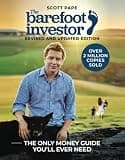
The Barefoot Investor
Australia's best-selling money book ever. A simple system for accounts, budgeting, debt and a real emergency fund in one.
The Armchair Guide to Property Investing
Ben Kingsley & Bryce Holdaway
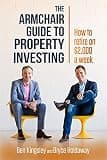
The Armchair Guide to Property Investing
Two of Australia's most trusted property voices lay out a plain-English roadmap to building a portfolio on an average income. Practical, local, and refreshingly free of get-rich-quick hype.
Ditch the Debt and Get Rich
Effie Zahos
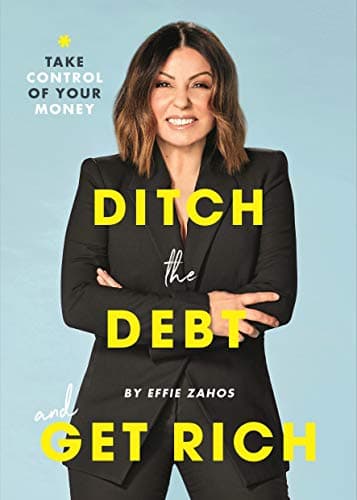
Ditch the Debt and Get Rich
One of Australia's most trusted money journalists shows you how to crush debt and build real wealth without giving up your flat white. Clear, doable steps you can start this week.
Some links above are affiliate links. If you buy through them, Snowball Invest may earn a small commission at no extra cost to you. We only recommend books we'd suggest anyway.
Sources
- 1. First home owner grant, Queensland Revenue Office
- 2. Eligibility for first home owner grant, Queensland Revenue Office
- 3. First home concession (established homes), Queensland Revenue Office
- 4. First home (new home) concession, Queensland Revenue Office
- 5. Unlocking home ownership for more Queenslanders, Queensland Government
- 6. Australian Government 5% Deposit Scheme (First Home Guarantee), First Home Buyers Australia
- 7. Help to Buy income and property price thresholds, First Home Buyers Australia
Was this article useful?
Put it to your own numbers
Every calculator runs entirely in your browser, with nothing stored. See what these numbers look like for your own situation.
Try the Stamp Duty calculator →General information only. This article is educational and does not constitute personal financial advice. It does not account for your circumstances. Consider your own situation and seek advice from a licensed adviser before acting. Read our full disclaimer.

Timothy Hirou Gaschereau
Founder of Snowball Invest, not a financial adviser.
I write about what I'm learning myself, because nobody ever taught us how to take control of our own money. It's a skill, not a mystery, and it's never too late to learn it. The best day to start was yesterday, the second best is today.
LinkedIn →Related articles

First Home Owners Grant SA: What You Get and How to Claim
The SA First Home Owner Grant is $15,000 with no property value cap on new homes. Eligibility, the stamp duty abolition, and how to apply for 2025-26.

First Home Owners Grant WA: What You Get and How to Claim
The WA First Home Owner Grant is $10,000 for a new home. Eligibility, the 26th parallel value caps, the stamp duty concession, and how to apply for 2025-26.

First Home Owners Grant VIC: What You Get and How to Claim
The Victorian FHOG is $10,000 for new homes up to $750k. Check eligibility, how to apply, and what else you can stack it with. Updated for 2025-26.