

How Much Deposit Do You Need to Buy a House in Australia?
The real deposit numbers: the 20% benchmark, buying with as little as 5% through government schemes, and what a smaller deposit actually costs you.
 By Timothy Hirou GaschereauPublished
 8 min read
Try it yourself
"How much deposit do I need" doesn't have one universal answer, it depends on whether you're aiming for the standard 20% or using one of the ways to buy with less. Here's exactly how each path actually works. This is part of a wider guide to property and debt on Snowball Invest.
Quick answer
The standard benchmark is 20% of the property's value, which avoids Lenders Mortgage Insurance (LMI). You can buy with as little as 5% through a standard lender by paying LMI, or through the government's Home Guarantee Scheme, which lets eligible first home buyers use a 5% deposit without LMI at all.
In this guide
- →The honest answer, and why 20% became the standard benchmark
- →Buying with less through government schemes, and how common family help actually is
- →What a smaller deposit genuinely costs you over the life of the loan
- →Saving for it faster, including the First Home Super Saver Scheme
🤔 The honest answer
There isn't a single required percentage, lenders will approve loans anywhere from around 5% to 20%+ deposit, the real question is which trade-off you're willing to make: a smaller deposit gets you into the market sooner but usually costs more overall, through LMI, a larger loan, and more interest over time.
📏 The 20% benchmark, and why it exists
20% is the deposit level at which most lenders stop requiring Lenders Mortgage Insurance. Below that, your loan-to-value ratio (LVR) exceeds 80%, and the lender's insurance requirement kicks in to cover their own risk.
On a $700,000 property, 20% is $140,000. That's a genuinely large sum for most first buyers, which is exactly why the smaller-deposit paths below exist and are used so widely.
Deposit on a $700,000 home, and where LMI switches off
Below 20% you either pay LMI or lean on a scheme or guarantor. At 20% it drops away.
🏛️ Buying with less: government schemes
The Australian Government's Home Guarantee Scheme, run through Housing Australia, lets eligible first home buyers purchase with a deposit as low as 5% (2% for eligible single parents and legal guardians) without paying LMI, the government guarantees the gap to the lender instead. As of the scheme's October 2025 expansion, income caps and annual place limits were removed for the First Home Guarantee, though property price caps still apply and vary by location.
Because eligibility and price caps are genuinely regional and change over time, always check your specific situation on the official Housing Australia or First Home Buyers Australia site before relying on a figure you've seen elsewhere.
There's also a second, quite different government scheme worth knowing about: the Help to Buy scheme. Where the Home Guarantee Scheme just guarantees part of your loan, Help to Buy actually has the government co-invest up to 40% of the purchase price, letting you buy with as little as a 2% deposit in exchange for sharing future capital gains.
Pooling a deposit with a friend or sibling is another way people are getting over this line faster, and the government's 5% Deposit Scheme is now open to eligible friends and siblings buying together, not just couples. If that's a path you're weighing up, our guide to co-buying property in Australia covers the ownership structure, the co-ownership agreement, and the mortgage liability risks you need to sort out first.
👨👩👧 The other common path: family help
🎯 The essential: Family help with a deposit isn't rare or embarrassing, it's now part of how roughly 1 in 5 first home buyers actually get there.
Alongside government schemes and personal saving, family assistance has become a genuinely mainstream third path. Finder's First Home Buyer Report found almost one in five first home buyers (17%) relied on financial help from parents to save their deposit, up from 11% just a few years earlier, and separate research puts the average parental deposit gift at just over $74,000, a figure that's risen steadily. Most of that help now comes with no expectation of repayment at all, a shift from earlier years when informal family loans were more common than outright gifts.
It's worth being upfront about what this means practically: for a meaningful share of buyers, comparing "save it yourself" against "use a government scheme" leaves out the option a lot of actual buyers are using. If family help is genuinely on the table, it's worth having that conversation early and honestly, including how a gift (versus a loan) might affect eligibility for schemes that require "genuine savings," rather than treating it as a separate, unrelated question from the rest of the deposit plan.
💸 What a smaller deposit actually costs you
| Deposit | Loan amount | LMI likely required? |
|---|---|---|
| 20% ($140,000) | $560,000 | No |
| 10% ($70,000) | $630,000 | Yes, unless using a scheme or guarantor |
| 5% ($35,000) | $665,000 | Yes, unless eligible for the Home Guarantee Scheme |
A smaller deposit also means a larger loan balance from day one, which means more interest paid over the life of the loan, on top of any LMI premium. Our LMI Calculator puts an actual number on that premium for your own deposit size. It's not automatically the wrong choice, time in the property market has real value too, but it's worth seeing the actual gap rather than assuming it's small. Lenders will also weigh your credit score alongside the deposit size itself. And don't forget the other big upfront cost sitting next to your deposit: run your address and price through our Stamp Duty Calculator so you know the real cash number you need on settlement day.
🏃 Saving for it faster
Whatever deposit target you're aiming for, the mechanics of getting there faster are the same ones that apply to any savings goal: an emergency fund sitting separately so a bad month doesn't derail the deposit fund, a dedicated high-interest savings account so the deposit isn't mixed in with everyday spending money, and an automatic transfer on payday rather than relying on whatever's left at the end of the month.
One option specific to a house deposit, and easy to overlook, is the First Home Super Saver Scheme (FHSSS). It lets eligible first home buyers make voluntary contributions to their own super, taxed at super's lower rate rather than your marginal income tax rate, then withdraw those contributions plus associated earnings to put toward a deposit.
You can contribute up to $15,000 per financial year, up to $50,000 in total, under the FHSSS. Buying with a partner, you can each use your own $50,000 cap, potentially $100,000 combined. You'll need to request an FHSS determination from the ATO before signing a contract, and the scheme only applies to a home you intend to live in, not an investment property.
SnowLetter
Australia's money news and our best reads, once a week.
❓ Frequently asked questions
Can I really buy a house with a 5% deposit in Australia?
+
Yes, either by paying LMI on top of a 5-10% deposit through a standard lender, or via the government's Home Guarantee Scheme, which lets eligible buyers use a 5% deposit without paying LMI at all.
Does my deposit have to be genuine savings?
+
Many lenders require at least some of your deposit to be 'genuine savings', money saved over time rather than a one-off gift, though rules vary by lender and situation, including for guarantor loans.
Do I need extra money on top of the deposit?
+
Yes, budget separately for stamp duty, conveyancing and inspection fees, and loan establishment costs, these are on top of the deposit itself and are easy to underestimate.
Is a bigger deposit always better?
+
Not automatically, a bigger deposit reduces LMI and interest costs, but tying up more cash also has an opportunity cost, worth weighing against your own timeline and other goals rather than assuming more is always right.
What is the First Home Super Saver Scheme?
+
It lets eligible first home buyers make voluntary super contributions, up to $15,000 a year and $50,000 in total, then withdraw them plus earnings to help fund a deposit. Contributions get super's lower tax treatment, but you need an ATO determination before signing a contract, and it only applies to a home you plan to live in.
📚 Recommended reading
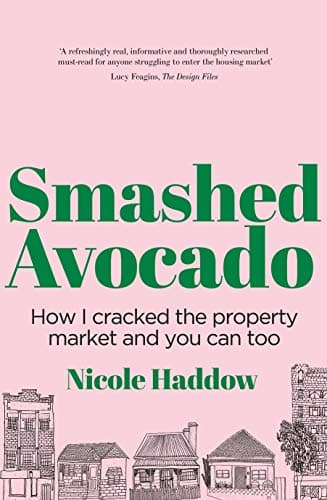
Smashed Avocado
Nicole Haddow
Smashed Avocado
A millennial who ditched the rent trap and cracked the property market by 30, told with honesty and humour. If you have ever been told your brunch is why you cannot buy a home, this Aussie story is your comeback.
The Barefoot Investor
Scott Pape

The Barefoot Investor
Australia's best-selling money book ever. A simple system for accounts, budgeting, debt and a real emergency fund in one.
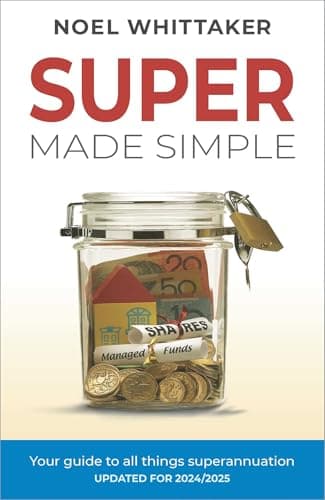
Super Made Simple
Noel Whittaker
Super Made Simple
A focused, up-to-date guide to actually understanding your superannuation, from one of Australia's most trusted finance writers.
Some links above are affiliate links. If you buy through them, Snowball Invest may earn a small commission at no extra cost to you. We only recommend books we'd suggest anyway.
Sources
- 1. Deposit saving, National Australia Bank
- 2. Australian Government 5% Deposit Scheme, Housing Australia
- 3. First Home Buyer schemes, First Home Buyers Australia
- 4. First Home Super Saver Scheme, First Home Buyers Australia
- 5. The 'bank of mum and dad': 1 in 5 first home buyers tap the family bank, Finder
Was this article useful?
Put it to your own numbers
Every calculator runs entirely in your browser, with nothing stored. See what these numbers look like for your own situation.
Try the Stamp Duty calculator →General information only. This article is educational and does not constitute personal financial advice. It does not account for your circumstances. Consider your own situation and seek advice from a licensed adviser before acting. Read our full disclaimer.

Timothy Hirou Gaschereau
Founder of Snowball Invest, not a financial adviser.
I write about what I'm learning myself, because nobody ever taught us how to take control of our own money. It's a skill, not a mystery, and it's never too late to learn it. The best day to start was yesterday, the second best is today.
LinkedIn →Related articles

First Home Guarantee: Buy Your First Home With a 5% Deposit
The First Home Guarantee lets eligible buyers in Australia buy with just a 5% deposit and no LMI. See how it works, what changed, and if you qualify.
Housing Affordability in Australia: The Honest Picture (and What You Can Actually Do)
The current state of housing affordability in Australia, why it got structurally harder, and the real options available to buy anyway.
Guarantor Home Loans: How They Work (and the Risks)
How a guarantor home loan actually works, what the guarantor is really agreeing to, the real risks, and how to remove a guarantor later.