

Housing Affordability in Australia: The Honest Picture (and What You Can Actually Do)
The current state of housing affordability in Australia, why it got structurally harder, and the real options available to buy anyway.
 By Timothy Hirou GaschereauPublished
 12 min read
Try it yourself
This one pairs with a few other guides on the site: how much deposit you actually need, what rentvesting involves, and the First Home Super Saver Scheme. This one's about the bigger picture those guides sit inside.
Quick answer
Australia's national price-to-income ratio hit 8.2x in the September 2025 quarter, a record high, per Cotality. At a 15% savings rate, saving a 20% deposit takes roughly 11 years nationally, longer in Sydney, shorter in Darwin and much of regional Australia. Government schemes help at the margin, they get you in the door with less upfront, but they don't change the underlying price-to-income ratio. The real question isn't "should I buy a house?", it's "what trade-offs am I willing to make, and on what timeline?"
In this guide
- →The honest, current numbers, no doom-scrolling and no lecture
- →Why it got structurally harder, not because of any one generation's choices
- →What the First Home Guarantee, Help to Buy and state grants actually do
- →Rentvesting, regional options, and the boring lever of deposit optimisation
📊 The numbers, honestly
🎯 The essential: The national price-to-income ratio hit 8.2x in September 2025, a series record. It varies enormously by city, and the schemes don't change that underlying number.
The national mean dwelling price was $1,111,100 in the March quarter 2026, according to the ABS. The median household income sits at $104,390 pre-tax annually (Cotality/ANU, September 2025 data). Divide one by the other and you get the price-to-income ratio, which hit 8.2x nationally in the September 2025 quarter, a series record, up noticeably from where it sat five years earlier.
One median home = $1,111,100
Even banking every dollar earned, that is 8.2 years. At a real 15% savings rate, a 20% deposit alone takes about 11 years.
At a 15% annual savings rate, Cotality puts the time needed to save a 20% deposit at roughly 11 years nationally, up from a 9.1-year average five years ago. That's an average household. A single person on a below-median income is looking at considerably longer.
The gap between cities is large. Sydney sits well above the national average on both the price-to-income ratio and deposit-saving timeline, Darwin sits well below it, and most other capitals fall somewhere in between. Rather than quote precise city-by-city figures that shift with every quarterly release, the exact current numbers for your city are worth checking directly at Cotality's Housing Affordability Report, which updates regularly.
One more figure worth knowing: rent now consumes 33.4% of median household income nationally (Cotality, September 2025), a record in its own right, and it's part of why the 15% savings-rate assumption is optimistic for a lot of renters right now.
Adelaide and Brisbane deserve a mention. Both used to be the affordable alternatives to Sydney and Melbourne. Both have re-rated sharply over the past five years and no longer play that role in the way they once did.
🔍 Why it got harder (structural, not generational)
This isn't about blame, it's about understanding the forces at play.
Supply hasn't kept up. Australia has not built enough homes relative to population growth in recent years. The National Housing Supply and Affordability Council has documented a structural shortfall between new household formation and new dwelling completions, built up over years of planning bottlenecks and construction sector constraints.
The rate cycle made it worse, not better. The RBA's rate hiking cycle through 2022-23 hit borrowing capacity hard, but prices didn't fall proportionally in most cities. Strong employment, savings buffers and a rebound in migration kept demand elevated even as rates rose. The 2025 cuts reignited demand without solving supply, and the hikes through early 2026 took the cash rate back to 4.35%, exactly where the cutting cycle began. Borrowing capacity has tightened again; the supply shortfall has not moved.
Existing owners compound the gap. Rising prices benefit people who already own property, they can use equity gains to buy again, often with a deposit that would take a first home buyer over a decade to save. That wealth effect is real and self-reinforcing.
Tax settings shape demand. Negative gearing and the CGT discount create structural incentives for property investment, which competes with owner-occupier buyers, particularly at the lower end of the market where first home buyers concentrate. See our negative gearing guide for how that mechanism actually works.
Post-COVID regional repricing. Remote work shifted demand to regional areas during and after COVID. Regional Australia was once a meaningful affordability alternative, for many markets that gap has narrowed significantly since.
HECS-HELP debt quietly shrinks borrowing power too. A lot of first home buyers are also still paying off a university debt, and lenders count the compulsory repayment as an ongoing expense when assessing what you can service. For a graduate on an average salary that's typically worth $50,000 to $90,000 in reduced borrowing capacity, on top of everything else making the deposit itself harder to save. See our HECS repayment calculator to see what your own balance is costing you.
🛠️ What you can actually do
Options, not lectures. Each involves real trade-offs, none is a magic solution.
First Home Guarantee
Lets eligible first home buyers purchase with a 5% deposit and no Lenders Mortgage Insurance, the government guarantees the remaining 15%. From 1 October 2025, income caps were removed and places became unlimited, with property price caps varying by state and location (from around $600,000 up to $1,500,000 in Sydney).
The trade-off: you're borrowing 95% of the purchase price. Repayments are higher, your buffer is smaller, and there's very little equity to absorb a short-term price fall. Guarantor loans are another route to a smaller deposit, worth exploring alongside this scheme.
Help to Buy
A shared equity scheme: you put in a minimum 2% deposit, take out a home loan for the rest, and the government contributes up to 30% (existing home) or 40% (new build) of the purchase price, within income caps and a capped number of places per year. Check firsthomebuyers.gov.au for current caps, as both are reviewed periodically.
The trade-off: you don't fully own your home, the government holds an equity stake until you buy it out, and if prices rise, buying out that stake costs more. A legitimate pathway for buyers who can't otherwise get in, but understand what you're signing up for.
First Home Super Saver Scheme
Make voluntary contributions to super and withdraw up to $50,000 (plus associated earnings) as a deposit, up to $15,000 per financial year toward the cap. The tax advantage is real: contributions via salary sacrifice are taxed at 15% rather than your marginal rate. See our dedicated FHSS guide for the full mechanics.
State grants and stamp duty concessions
Most states offer grants for new builds (typically $10,000 to $30,000 depending on the state) and stamp duty exemptions or concessions for first home buyers up to certain property value thresholds. These change regularly, check your state revenue office for current figures before assuming a number.
Rentvesting
Rent where you want to live, buy where you can afford. You get on the property ladder without sacrificing your lifestyle or commute, while a tenant helps cover the mortgage on your investment property. It works best when the rent-to-buy gap is large. See our rentvesting guide for the tax implications and trade-offs, including the loss of the main residence CGT exemption.
Regional Australia and outer suburbs
Still meaningfully more affordable than the major capitals in places like Darwin, parts of regional Queensland, SA and WA, even after the post-COVID repricing. The lifestyle trade-off is real, moving regionally only makes sense if your work allows it.
Deposit optimisation
The boring one. The deposit timeline math is brutal partly because of a 15% savings rate assumption, boosting that to 25-30% meaningfully compresses the timeline. It's the lever you have the most control over. Don't moralise about spending, the math doesn't care whether you cut lattes or subscriptions, it cares about the savings rate. Find the number that works for your life and run it.
🏠 How Much Deposit Do You Need?
The full breakdown of deposit sizes, LMI thresholds, and how to structure your savings to get there faster.
🤔 The honest bottom line
Housing affordability in Australia is structurally difficult. It won't be fixed by any single scheme, government, or rate cut, meaningful improvement requires sustained supply-side reform, not just demand-side intervention.
The schemes help at the margin. The First Home Guarantee and Help to Buy are genuinely useful for the right buyer in the right situation, but they don't change the underlying price-to-income ratio, they help you get in with less upfront, they don't make the home cheaper.
The question isn't "should I buy a house?" It's "what trade-offs am I willing to make, and on what timeline?" For some, that means buying regional or interstate. For others, rentvesting. For others still, renting long-term and building wealth through other assets, that's a legitimate financial choice, not a failure. The data is what it is. Your path through it is yours to choose.
SnowLetter
Australia's money news and our best reads, once a week.
❓ Frequently asked questions
What is the average price-to-income ratio in Australia?
+
The national dwelling value-to-income ratio hit 8.2x in the September 2025 quarter, a series record, according to Cotality (formerly CoreLogic). Sydney is the least affordable capital, Darwin the most affordable.
How long does it take to save a house deposit in Australia?
+
At a 15% annual savings rate on median household income, Cotality puts the national figure at roughly 11 years to save a 20% deposit, up from a 9.1-year average five years earlier. Sydney takes meaningfully longer, Darwin and regional areas meaningfully less.
What is the First Home Guarantee and how does it work?
+
It lets eligible first home buyers purchase with a 5% deposit and no Lenders Mortgage Insurance, the government guarantees the remaining 15%. From 1 October 2025, income caps were removed and places became unlimited. Property price caps apply by state and location, ranging from $600,000 to $1,500,000.
What is Help to Buy and is it worth it?
+
A shared equity scheme: you put in a minimum 2% deposit, take out a home loan for the rest, and the government contributes up to 30% (existing home) or 40% (new build). Income caps and place numbers are reviewed periodically, check housingaustralia.gov.au for current figures. Whether it's worth it depends on your situation: it's a genuine pathway for buyers who can't otherwise get in, but the government remains a co-owner until you buy out their share.
Is rentvesting a good idea in Australia?
+
It can work well when the rent-to-buy gap is large, typically renting somewhere expensive while buying somewhere more affordable. The trade-offs: no main residence CGT exemption on the investment property, landlord responsibilities, and the psychological aspect of not owning where you live.
Are regional areas still affordable in Australia?
+
More affordable than the major capitals, yes, but less so than before COVID. Regional price-to-income ratios have converged toward capital city levels in aggregate, though pockets like Darwin, parts of regional Queensland, SA and WA still offer genuine affordability.
Can I use my super to buy a house in Australia?
+
Yes, through the First Home Super Saver Scheme. You make voluntary contributions to super (up to $15,000 per financial year) and can withdraw up to $50,000 of eligible contributions plus associated earnings as a deposit. Contributions made via salary sacrifice are taxed at 15% rather than your marginal rate.
📚 Recommended reading
Smashed Avocado
Nicole Haddow
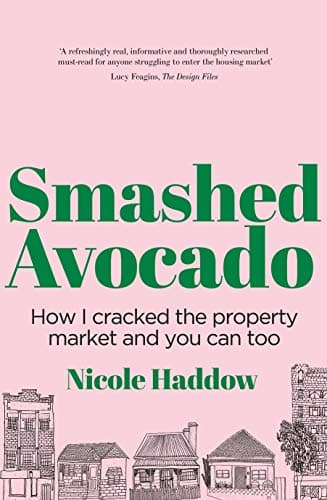
Smashed Avocado
A millennial who ditched the rent trap and cracked the property market by 30, told with honesty and humour. If you have ever been told your brunch is why you cannot buy a home, this Aussie story is your comeback.
The Barefoot Investor
Scott Pape

The Barefoot Investor
Australia's best-selling money book ever. A simple system for accounts, budgeting, debt and a real emergency fund in one.
The Armchair Guide to Property Investing
Ben Kingsley & Bryce Holdaway
The Armchair Guide to Property Investing
Two of Australia's most trusted property voices lay out a plain-English roadmap to building a portfolio on an average income. Practical, local, and refreshingly free of get-rich-quick hype.
Some links above are affiliate links. If you buy through them, Snowball Invest may earn a small commission at no extra cost to you. We only recommend books we'd suggest anyway.
Sources
- 1. Total Value of Dwellings, Australian Bureau of Statistics
- 2. Housing Affordability Report, Cotality (formerly CoreLogic)
- 3. First Home Guarantee, Housing Australia
- 4. Help to Buy, Australian Government
- 5. First Home Super Saver Scheme, Australian Taxation Office
- 6. Buying a home, Moneysmart, Australian Securities and Investments Commission
Was this article useful?
Put it to your own numbers
Every calculator runs entirely in your browser, with nothing stored. See what these numbers look like for your own situation.
Try the Borrowing Power calculator →General information only. This article is educational and does not constitute personal financial advice. It does not account for your circumstances. Consider your own situation and seek advice from a licensed adviser before acting. Read our full disclaimer.

Timothy Hirou Gaschereau
Founder of Snowball Invest, not a financial adviser.
I write about what I'm learning myself, because nobody ever taught us how to take control of our own money. It's a skill, not a mystery, and it's never too late to learn it. The best day to start was yesterday, the second best is today.
LinkedIn →Related articles

First Home Guarantee: Buy Your First Home With a 5% Deposit
The First Home Guarantee lets eligible buyers in Australia buy with just a 5% deposit and no LMI. See how it works, what changed, and if you qualify.

Stamp Duty Concessions for First Home Buyers in Australia
Stamp duty concessions for first home buyers can save tens of thousands in Australia. See how each state works and check your eligibility.

Stamp Duty Australia: The Complete State-by-State Guide
How stamp duty (transfer duty) works across every Australian state and territory: rates, first home buyer exemptions, a worked example, and upfront cost tips.