

First Home Super Saver Scheme: The Full Guide
How the First Home Super Saver Scheme actually works, a real worked tax example, the deemed-earnings quirk most guides skip, and what the scheme can't fix.
 By Timothy Hirou GaschereauPublished
 9 min read
Try it yourself
The First Home Super Saver Scheme is a genuinely useful, genuinely underused way to save a deposit with a real tax advantage, and one that involves more moving parts than the one-paragraph explanations usually let on. This is part of a wider guide to retirement and FIRE on Snowball Invest.
Quick answer
The FHSSS lets eligible first home buyers contribute up to $15,000 a year, $50,000 in total, into super, then withdraw those contributions plus deemed earnings for a deposit. Contributions get super's lower tax treatment, and withdrawals are taxed at your marginal rate minus a 30% offset, a genuine advantage over saving the same amount outside super.
In this guide
- →What the scheme actually is, and the two contribution types that qualify
- →The tax advantage, worked out with real numbers
- →A deemed earnings quirk most explanations skip entirely
- →How to actually use it, in the right order
- →What it won't solve, and real usage numbers since it launched
🏠 What the scheme actually is
Eligible first home buyers, 18 or older, who've never owned property in Australia and intend to live in the home they buy, can make voluntary super contributions and later withdraw them, plus deemed earnings, to help fund a deposit. It's not a separate account, the money sits inside your existing super fund until released.
If you're currently investing on behalf of a child, this is worth filing away for later. Once they're old enough to start working, encouraging voluntary super contributions from their first pay can set them up to use this scheme for their own future deposit. See our Investing for Kids Calculator for how a head start before then compounds over a childhood.
💵 Concessional vs non-concessional contributions
Two contribution types qualify: concessional (salary sacrifice or personal deductible contributions, taxed at 15% going in) and non-concessional (personal after-tax contributions, no tax going in since it's already been taxed as income). Both count toward the same $15,000 annual and $50,000 lifetime FHSSS caps, though they sit within your regular super contribution caps too, worth checking against those separately.
📈 The tax advantage, with real numbers
The benefit comes from routing savings through super's lower tax environment instead of paying full marginal tax on it as ordinary income.
A worked example from The Conversation: someone earning an extra $10,000 at a 32% marginal tax rate (including Medicare levy) keeps $6,800 of it if saved normally outside super. Salary sacrificed through the FHSSS instead, after the 15% contributions tax and the eventual withdrawal tax (marginal rate minus a 30% offset), they end up with roughly $8,330, about $1,530 better off for the exact same $10,000 of income.
The higher your marginal tax rate, the bigger this gap tends to be, since the advantage is essentially the difference between your marginal rate and the concessional rates the scheme applies.
Same $10,000 of income, 32% marginal rate
Roughly $1,530 better off, for the exact same income.
🧮 The deemed earnings quirk
🎯 The essential: The "earnings" you withdraw are a formula-driven ATO rate, not your fund's actual return, which can quietly work for or against you.
Here's a detail most explanations skip entirely: the "earnings" added to your contributions when you withdraw aren't your super fund's actual investment return. The ATO calculates a notional (deemed) earnings amount using its own Shortfall Interest Charge (SIC) rate, which changes quarterly, published on the ATO's own rates page, and is unrelated to how your specific super fund's investments actually performed.
That cuts both ways: if your super fund had a strong investment year, the deemed rate could credit you with less than the fund actually earned on that money. If the fund had a weak or negative year, the deemed rate could credit you with more. It's a mechanism worth knowing about rather than assuming the withdrawal simply reflects your fund's real performance.
🪜 How to actually use it
1. Make voluntary contributions, salary sacrifice or personal, within the annual and lifetime caps.
2. Request an FHSS determination from the ATO before signing any contract to buy or build, this confirms the maximum amount available for release.
3. Apply to release the funds, ideally before signing a contract, and definitely before settlement.
4. Sign the contract once the funds are on their way, using them toward the deposit.
🏠 How Much Deposit Do You Need?
Where the FHSSS fits alongside the other deposit paths available.
⚠️ What it won't solve
What it genuinely does
- ✓A real, measurable tax advantage over saving the same amount outside super
- ✓Couples or co-buyers can each use their own $50,000 cap
- ✓Works alongside other deposit strategies rather than replacing them
What it doesn't do
- ✕Doesn't fix the underlying affordability problem, deposit saving times have grown regardless
- ✕Money is far less accessible than a normal savings account if plans change
- ✕The tax benefit shrinks meaningfully for lower marginal tax rates
- ✕Requires getting the ATO paperwork sequence right before signing a contract
The scale of the housing affordability problem is worth naming honestly: the time needed to save a 20% deposit on an average Australian home rose from around 9 years to about 11.2 years between 2015 and 2025. A $50,000 scheme genuinely helps, it doesn't come close to closing a gap that size on its own.
If the gap is still too wide even with the FHSSS boosting your savings, it's worth knowing there's a shared equity option too. The Help to Buy scheme lets eligible buyers purchase with just a 2% deposit by having the government co-invest up to 40% of the purchase price, a genuinely different trade-off to saving harder through super.
📈 How many people actually use it
Between the scheme's start in July 2019 and June 2025, around 81,300 people requested a withdrawal, with about 63,500 successfully releasing funds, a total of $1.1 billion, averaging roughly $15,750 per person over that period. Usage has grown noticeably in recent years: in the 2024-25 financial year alone, around 18,300 people requested access, with about 15,200 successful releases totalling $303.6 million, an average approaching $20,000 per person, a sign the scheme is becoming more widely used and understood as awareness grows.
The gap between requests and successful releases, roughly 78% of requests actually succeed, is worth noting. Getting the sequence wrong, particularly requesting a determination or release after signing a contract rather than before, is a common reason a request doesn't go through cleanly.
SnowLetter
Australia's money news and our best reads, once a week.
❓ Frequently asked questions
Can couples both use the First Home Super Saver Scheme for the same property?
+
Yes, couples, siblings, or friends buying together can each access their own FHSSS savings for the one property, up to $50,000 each, potentially $100,000 combined.
What happens to the money if I don't end up buying a house?
+
It stays in your super, taxed and treated as a normal super contribution, you don't get it back as cash outside super. This is the core trade-off worth being certain about before contributing more than you'd be comfortable leaving in super long-term.
Is the FHSSS worth using if I'm only a basic-rate taxpayer?
+
The tax advantage shrinks the lower your marginal rate is, since the benefit comes from the gap between your marginal rate and the 15% contributions tax, minus the 30% withdrawal offset. It's still generally positive, but the dollar benefit is meaningfully larger for higher earners.
Do I need to request anything from the ATO before buying?
+
Yes, you need a valid FHSS determination from the ATO before signing a contract to buy or build, and you must apply to release the funds before settlement. Doing this out of order can affect eligibility, it's worth getting the sequence right rather than assuming it's automatic.
📚 Recommended reading
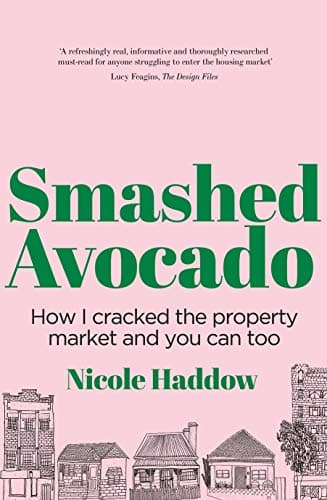
Smashed Avocado
Nicole Haddow
Smashed Avocado
A millennial who ditched the rent trap and cracked the property market by 30, told with honesty and humour. If you have ever been told your brunch is why you cannot buy a home, this Aussie story is your comeback.
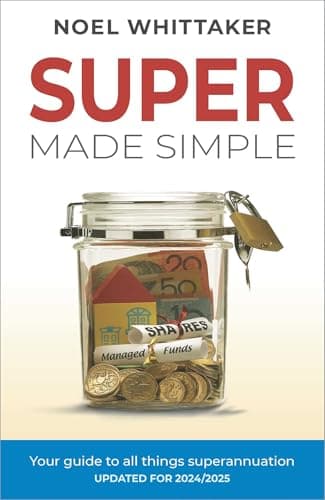
Super Made Simple
Noel Whittaker
Super Made Simple
A focused, up-to-date guide to actually understanding your superannuation, from one of Australia's most trusted finance writers.
The Barefoot Investor
Scott Pape

The Barefoot Investor
Australia's best-selling money book ever. A simple system for accounts, budgeting, debt and a real emergency fund in one.
Some links above are affiliate links. If you buy through them, Snowball Invest may earn a small commission at no extra cost to you. We only recommend books we'd suggest anyway.
Sources
- 1. First Home Super Saver Scheme, First Home Buyers Australia
- 2. This little-known scheme can help first home buyers save thousands more for a deposit, with less tax, The Conversation
- 3. First Home Super Saver Scheme, Australian Taxation Office
- 4. Shortfall interest charge (SIC) rates, Australian Taxation Office
Was this article useful?
Put it to your own numbers
Every calculator runs entirely in your browser, with nothing stored. See what these numbers look like for your own situation.
Try the Stamp Duty calculator →General information only. This article is educational and does not constitute personal financial advice. It does not account for your circumstances. Consider your own situation and seek advice from a licensed adviser before acting. Read our full disclaimer.

Timothy Hirou Gaschereau
Founder of Snowball Invest, not a financial adviser.
I write about what I'm learning myself, because nobody ever taught us how to take control of our own money. It's a skill, not a mystery, and it's never too late to learn it. The best day to start was yesterday, the second best is today.
LinkedIn →Related articles

First Home Guarantee: Buy Your First Home With a 5% Deposit
The First Home Guarantee lets eligible buyers in Australia buy with just a 5% deposit and no LMI. See how it works, what changed, and if you qualify.
Housing Affordability in Australia: The Honest Picture (and What You Can Actually Do)
The current state of housing affordability in Australia, why it got structurally harder, and the real options available to buy anyway.
Guarantor Home Loans: How They Work (and the Risks)
How a guarantor home loan actually works, what the guarantor is really agreeing to, the real risks, and how to remove a guarantor later.