

FIRE Number Calculator
Work out the portfolio you'd need to cover your living costs without working again, and how long it'll take to build it at your current savings rate.
Built and checked byTimothy Hirou GaschereauFigures verified at the source on
Your details
Your FIRE number
$1,250,000
Time to reach it
24 yrs 2 mos
Projected FIRE age
54.2
Monthly income it provides
$4,167
Coast FIRE number at age 30: $344,439
This is what you'd need invested today so that real growth alone reaches your FIRE number by age 60, with no further contributions. You're $314,439 away from being able to coast.
Uses the 4% withdrawal rule: a portfolio of 25 times your annual expenses can typically sustain that spending indefinitely. This calculator assumes a constant annual growth rate and contribution amount, doesn't account for taxes, fees or inflation eroding your expenses over time, and is not financial advice.
How to use this calculator
- 1. What it actually costs you to live for a year. This is what your FIRE number is built to sustainably cover.
- 2. Your current investments, how much you add regularly, and the growth rate you're assuming.
- 3. 25 times your annual expenses, using the same 4% withdrawal rule used elsewhere on this site, plus how long it'll take to get there.
What your FIRE number actually is
FIRE stands for Financial Independence, Retire Early. The idea is simple: save and invest aggressively enough that your portfolio can cover your spending, making paid work optional. Your FIRE number is the portfolio size where that flips from goal to reality, and the standard formula is elegantly short: annual expenses multiplied by 25.
That 25x comes from the 4% rule. Financial planner William Bengen first crunched the numbers in 1994, testing decades of US market data to find a withdrawal rate that survived every historical stretch, including the Great Depression. In 1998 three professors at Trinity University, Cooley, Hubbard and Walz, expanded on his work in what's now known as the Trinity Study, testing 50/50 stock-bond portfolios over rolling 30-year periods and finding a 4% inflation-adjusted withdrawal held up roughly 95% of the time. One divided by 4% is 25, so a portfolio 25 times your annual spending is built to sustain a 4% withdrawal rate indefinitely. Spend $60,000 a year and your FIRE number is $1,500,000.
Does the 4% rule actually hold up in Australia?
Broadly yes, with a few caveats worth taking seriously. The Trinity Study only modelled 30-year retirements. If you retire at 40 or 45, you're planning for 40 to 50 years, and the odds of a 4% withdrawal surviving that much longer stretch drop. Morningstar Australia's own research suggests a safe withdrawal rate closer to 3.5 to 3.8% for Australians, particularly those with a longer time horizon. At 3.5%, your FIRE number becomes annual expenses times roughly 28.6, so that same $60,000 a year now points to about $1.72 million rather than $1.5 million.
The ASX also behaves differently to the US market it was originally modelled on. Since 2000 it's delivered a total return of around 8.1% a year, split roughly evenly between capital growth and dividend yield, and Australian investors get franking credits on top of those dividends. Tax matters too: super withdrawals are tax-free after 60, which is a genuine edge over most overseas systems, but a non-super portfolio is taxed at your marginal rate (minus the 50% CGT discount on assets held over 12 months), so your effective spendable withdrawal rate outside super is a bit lower than the headline number suggests. Plenty of Australian FIRE planners settle on 3.5% as their working number for exactly this reason, it's more conservative, and more appropriate if you're retiring well before you can touch super.
The different flavours of FIRE
Not all FIRE looks the same. Here's roughly what each variant means in Australian dollars, and how the number shifts depending on whether you use a 4% or 3.5% withdrawal rate. See the full breakdown in our guide to the types of FIRE.
| Variant | Annual spend | FIRE number at 4% | FIRE number at 3.5% |
|---|---|---|---|
| Lean FIRE | $40,000 | $1,000,000 | $1,143,000 |
| Regular FIRE | $65,000 | $1,625,000 | $1,857,000 |
| Fat FIRE | $120,000 | $3,000,000 | $3,429,000 |
The ASFA Retirement Standard puts a "comfortable" retirement at around $55,923 a year for a single person and $78,566 for a couple, both assuming you own your home outright, which lands squarely in Regular FIRE territory. Coast FIRE and Barista FIRE work differently again. Coast FIRE is the amount you need invested right now so that compound growth alone, with no further contributions, carries you to your full FIRE number by a target age. Barista FIRE means you've got enough that part-time or casual work covers the gap between what your portfolio generates and what you actually spend, rather than your investments doing all the work.
A worked example: Alex, 32, Melbourne
Alex earns $110,000, spends $60,000 a year, has $80,000 invested outside super already, and puts away $3,500 a month ($42,000 a year). That's a savings rate north of 50%, which is excellent by any measure. At 4%, Alex's FIRE number is $1.5 million. Assuming a 7% real return, that works out to roughly 16 years, putting Alex on track for financial independence at about 48. Using the more conservative 3.5% target of $1.72 million instead pushes it out to around 17.5 years, or roughly age 50.
Bump the monthly contribution up to $4,500 and the timeline shortens by roughly two years on either target. That's the savings rate lever in action: it does double duty, growing the portfolio faster while also being money you don't need your future FIRE number to cover. Try both scenarios in the calculator above and watch how much a few hundred extra dollars a month actually moves the needle.
The Australian bridge strategy
This is the part most overseas FIRE content skips entirely. Super is locked until your preservation age, 60 for anyone born after 30 June 1964. If you retire well before that, you can't simply point at your super balance and call it done. Most serious Australian FIRE plans effectively run two pools: a bridge fund outside super, ETFs, shares, cash, sized to cover living expenses from early retirement until you can access super, and super itself, which takes over from preservation age onwards. If Alex retires at 48, that's a 12-year bridge to fund before super kicks in at 60.
The two pools can be built at the same time. Salary sacrificing into super grows the post-60 pool at a 15% contributions tax rather than your marginal rate, while everything you invest outside super builds the bridge. The employer Super Guarantee sits at 12% as of 1 July 2025, so that base is already growing without you lifting a finger, and the concessional contribution cap gives you room to add more on top if it makes sense for your tax situation. One thing worth flagging: preservation age has already risen from 55 to 60 over the past couple of decades. There's no guarantee it stops there, so it's worth building some buffer into your bridge rather than cutting it exactly to the year.
The risks that actually derail a FIRE plan
- Sequence of returns risk. A market crash in your first few years of retirement forces you to sell assets at depressed prices to fund living expenses, which permanently dents a portfolio's ability to recover. Holding a couple of years of expenses in cash helps you avoid selling into a downturn.
- Inflation. The RBA targets 2 to 3%, but healthcare and housing costs often run hotter than that for retirees, so $60,000 today won't buy the same lifestyle in 20 years.
- Lifestyle creep. Earning more tends to mean spending more, and a higher spending baseline means a bigger FIRE number. Track your real spending over 12 months before locking in a target.
- Preservation age moving again. It's already gone from 55 to 60. Build a bridge that can stretch past 60 rather than one that stops the day super becomes available.
- Longevity. Retire at 40 and live to 95, and your portfolio needs to last 55 years, well beyond the 30-year window the Trinity Study modelled. A more conservative withdrawal rate and some capacity to earn in early retirement both help.
The Age Pension is a possible safety net much later in life, but not something to build a plan around. Your FIRE number is a starting point for a conversation, not a finish line. Use the calculator to get oriented, then stress-test your assumptions with a financial adviser who understands early retirement in the Australian context.
FAQ
Why 25 times annual expenses?
It comes from the 4% rule. William Bengen's 1994 research and the 1998 Trinity Study both found that withdrawing around 4% of a portfolio each year, adjusted for inflation, historically held up over long retirement periods without running out. 1 divided by 4% is 25, so a portfolio 25 times your annual spending is sized to support a 4% withdrawal rate.
Should I use 3.5% instead of 4% as an Australian?
For a standard 30-year retirement starting around 65, 4% is a reasonable starting point. For an early retiree with a 40 to 50 year horizon, 3.5% is the more prudent choice, and it's what a lot of Australian FIRE practitioners actually use. Morningstar Australia's research supports a 3.5 to 3.8% range. The difference is real money: at $60,000 a year, 4% gives a FIRE number of $1.5 million, while 3.5% gives about $1.72 million, roughly 1 to 2 extra years of work either way.
What's the difference between Lean, Regular, Fat, Coast and Barista FIRE?
Lean FIRE means retiring on a frugal budget, roughly $35,000 to $45,000 a year in Australia. Fat FIRE means no lifestyle compromises, typically $100,000+ a year. Regular FIRE sits in between, comfortable but not extravagant. Coast FIRE is different again: it's the amount you need invested right now so compound growth alone gets you to your full number by a target age, no more contributions required. Barista FIRE means you've got enough that part-time work covers the gap between what your portfolio generates and what you spend.
How does superannuation fit into my FIRE number?
They're related but separate. Your FIRE number is the total portfolio you need to fund your lifestyle indefinitely. Your super balance is one part of that total, and it's the part you can't touch until preservation age (60 for most people born after 30 June 1964). If you're planning to retire early, work out how much of your FIRE number needs to sit outside super to cover the years before you can access it.
What's the bridge strategy for retiring before I can access super?
It's the practice of building two pools at once: a bridge fund outside super (shares, ETFs, cash) sized to cover living expenses from your early retirement date until preservation age, and your super balance, which takes over from there. If you retire at 45 and preservation age is 60, that's a 15-year bridge to fund. Read our full guide to sizing one for more detail.
How much does my savings rate actually affect my timeline?
Dramatically, and non-linearly. A higher savings rate shortens your timeline far more than the maths might suggest at first glance, roughly speaking, someone saving half their income reaches FIRE about twice as fast as someone saving a quarter. It does double duty too: it grows your portfolio faster and shrinks the lifestyle your FIRE number needs to support.
Does this calculator account for inflation?
The growth rate you enter should already be a real, inflation-adjusted assumption if you want realistic results. This calculator doesn't automatically erode your expense target over time, so if you enter a nominal (non-inflation-adjusted) growth rate, treat the result as optimistic.
What about tax on withdrawals and contributions?
This calculator doesn't factor in tax on investment withdrawals, capital gains tax, or the different tax treatment of super versus a standard brokerage account. Super withdrawals are tax-free after 60, while a non-super portfolio is taxed at your marginal rate on gains (minus the 50% CGT discount for assets held over 12 months). Treat the FIRE number here as a pre-tax target, not a guaranteed spendable amount.
How do I work out my Coast FIRE number?
Coast FIRE number equals your full FIRE number divided by (1 plus your expected real return) raised to the power of years until your target retirement age. For example, a $1.5 million FIRE number, 25 years to go, and a 7% real return gives a Coast FIRE number of roughly $277,000. Once you've invested that, compound growth alone can get you the rest of the way, even if you stop adding more.
What happens if the market crashes right after I retire?
That's called sequence of returns risk, and it's arguably the biggest threat to any FIRE plan. A crash in your first few years of retirement forces you to sell assets at depressed prices, which permanently reduces the portfolio's ability to recover, even if the market bounces back later. Holding a year or two of expenses in cash, using a slightly lower withdrawal rate, and having some flexibility to earn a bit in early retirement all help cushion this.
Can I still get the Age Pension if I retire early?
Potentially, but not immediately. The Age Pension becomes available from age 67, subject to income and assets tests. If you retire early and draw down your portfolio for years before then, you might eventually qualify for a part or full pension once your assets fall under the threshold. Treat it as a possible bonus later in life rather than something your FIRE plan should rely on.
Related reading

Preservation Age Super: When Can You Actually Access Your Money?
Find out your preservation age in super, the conditions of release you must meet, how TTR pensions work, and what it means for FIRE planning in Australia.

Passive Income Australia: The Honest, Boring-but-True Guide
The four real passive income streams for Australians: dividends and franking credits, savings interest, REITs and rental income.
How to Set Financial Goals You'll Actually Achieve
Why most financial goals don't survive the year (real ASIC data), the SMART framework's origin, and how to turn any goal into a monthly number.
Where these numbers come from
Every rate and threshold in this calculator was read off the official page, not copied from another calculator. Check them yourself, they change.
📚 Recommended reading
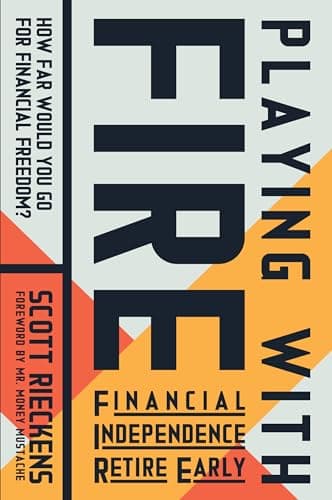
Playing with FIRE
Scott Rieckens
Playing with FIRE
Scott Rieckens documents his family trading a flashy lifestyle for freedom and an early exit from the daily grind. A warm, real-life intro to the FIRE movement, just swap the US retirement accounts for your super when you run the numbers.
Your Money or Your Life
Vicki Robin
Your Money or Your Life
The book that basically kicked off the FIRE movement, reframing money as 'life energy' you trade your hours for. The nine-step program is pure gold, just swap the US retirement-account chapter for super.
Some links above are affiliate links. If you buy through them, Snowball Invest may earn a small commission at no extra cost to you. We only recommend books we'd suggest anyway.
SnowLetter
Australia's money news and our best reads, once a week.
Disclaimer
This calculator estimates a financial independence target using the 4% withdrawal rule and a constant assumed annual growth rate and contribution amount. It does not account for taxes, fees, investment sequencing risk, super preservation age, or inflation eroding your expenses over time. This tool provides estimates only, is not financial advice, and doesn't replace a plan from a licensed financial adviser.