

Playing with FIRE by Scott Rieckens: An Honest Review
Our honest Playing with FIRE review for Australians: Scott Rieckens's FIRE memoir, what inspires, what's US-only, and how the mechanics change with super here.
 By Timothy Hirou GaschereauPublished
 8 min read
If you've ever Googled "retire early" at 11pm on a Tuesday, this book probably found its way onto your screen. It's a readable, honest memoir about one American family's decision to overhaul their lifestyle in pursuit of financial independence. It's not a technical investing manual, it's a story, and a pretty compelling one. It's part of our personal finance book reviews on Snowball Invest.
Quick answer
A readable, honest FIRE memoir that's a genuinely good starting point for complete beginners, especially anyone trying to get a sceptical partner on board with spending less and investing more. Light on investing mechanics and US-centric throughout, so Australians will do some translation. Our rating: 3.5 out of 5 (it holds around 3.75 on Goodreads globally).
Want to read Playing with FIRE?
Scott Rieckens documents his family trading a flashy lifestyle for freedom and an early exit from the daily grind.
In this guide
- →What the book is about: the Rieckens family's FIRE story
- →The genuine strengths and the honest weaknesses
- →Who it's for, and who already knows this
- →What critics and r/financialindependence readers say
- →The Australian angle: super, the bridge portfolio and the savings-rate reality check
📖 What is Playing with FIRE about?
In 2017, Scott Rieckens heard a podcast about the FIRE movement (Financial Independence Retire Early) and had one of those moments where everything clicks. He was living in Coronado, San Diego, earning good money and spending almost all of it. Nice car, nice lifestyle, no real financial runway. He told his wife Taylor. She was not immediately thrilled.
What follows is a memoir of the couple's decision to radically restructure their finances: they sold the BMW, moved from expensive Coronado to the much cheaper Bend, Oregon, started tracking every dollar, dramatically lifted their savings rate, and began investing in low-cost index funds, shortening their projected retirement timeline dramatically. The book accompanies a 2019 documentary of the same name and features conversations with big names in the FIRE world (Mr Money Mustache wrote the foreword; Vicki Robin, JL Collins and the Mad Fientist all appear). Think of it as a gateway to all of them. It's not a technical how-to: Rieckens is a filmmaker, not a financial planner, and the book reads that way, accessible, personal, and honest about the emotional difficulty of the process, especially for Taylor, whose initially reluctant perspective adds a lot of weight.
⚖️ Strengths and weaknesses
What it gets right
- ✓Genuinely relatable story: a real couple with real arguments, doubts and stakes, not abstract theory.
- ✓Low barrier to entry: it reads fast and you could finish it on a long weekend.
- ✓Honest about the hard parts: Taylor's reluctance and the emotional cost of lifestyle change are front and centre.
- ✓A good gateway to FIRE figures (Mr Money Mustache, Vicki Robin, JL Collins, the Mad Fientist) in digestible form.
- ✓Pairs with the documentary for visual learners.
- ✓The joy-list exercise (write down what actually makes you happy, then compare it to your spending) is a simple reframe many readers call the most useful part.
Where it falls short
- ✕Light on investing mechanics: no real asset allocation, withdrawal strategy or sequence-of-returns risk.
- ✕US-centric throughout: 401(k), Roth IRA and the US tax system are baked into every example.
- ✕Works best for high-income earners: the savings-rate maths is easier from a high base.
- ✕More memoir than manual: a story, not a system.
- ✕Surface-level for anyone already in the FIRE community, and overlaps heavily with the documentary.
👤 Who should read it, and who should skip it?
Read it if you
- ✓Are completely new to FIRE and want a quick, human introduction to the concept.
- ✓Learn better through stories than spreadsheets.
- ✓Want a motivating read that gets you thinking about your savings rate without overwhelming you.
- ✓Are trying to get a sceptical partner interested (Taylor's arc is genuinely useful for that conversation).
Skip it if you
- ✕Already know what FIRE is and have read the foundational texts.
- ✕Want a technical investing guide with Australian-specific mechanics.
- ✕Are looking for advice on super, ASX ETFs or the Australian tax system.
🔍 What do critics say?
There aren't major mainstream media reviews of Playing with FIRE; coverage lives mostly in personal finance blogs and reader platforms, which tells you something about its audience. The most accurate one-line summary from reviewers is that the approach sounds easy but isn't pain-free. The consistent critical theme: the strategy is considerably more accessible for high-income and dual-income households, so a couple cutting from a high lifestyle has more room to move than someone on an average wage in a major city. Where critics broadly agree: it's an excellent entry point to the FIRE movement for newcomers, with limited depth for anyone already familiar with the ideas.
💬 What do readers say? Goodreads and Reddit
On Goodreads it holds around 3.75 out of 5 from thousands of ratings, a solid bell curve sitting just above average. On r/financialindependence it's consistently described as easy to read and relatable, a good introduction for people who've never encountered the movement, with the common caveat of limited new value for those already in the community.
The joy-list exercise comes up repeatedly as a standout: the kind of simple, practical prompt that sticks with people long after they've forgotten the rest of the book. Reception to the documentary is more mixed, some find it a useful companion, others feel it covers the same ground.
🇦🇺 The Australian angle
This is the section that matters most on an Australian personal finance site:
- The core maths translates. Save aggressively, invest in low-cost index funds, withdraw roughly 4% a year in retirement. The higher your savings rate, the faster you reach financial independence. That part is universal.
- Superannuation complicates things. Super is the most tax-efficient long-term vehicle here (15% contributions tax, 0% in pension phase), but you can't access it until preservation age (currently 60 for most people born after 1 July 1964). Retire at 40 or 45 and you need a separate, non-super bridge portfolio to cover the gap years.
- ASX ETFs are the Australian equivalent of the US index funds Rieckens uses, and franking credits on Australian dividend-paying ETFs add a tax-efficiency layer with no US equivalent.
- The savings-rate reality check. With high housing costs in Sydney and Melbourne, hitting a 50 to 70% savings rate is harder here than for a dual-income household in Bend, Oregon. The principle holds; the starting conditions differ.
- The US tax specifics don't apply. The Australian framework: maximise concessional super contributions up to the annual cap, then build a non-super ETF portfolio for the years before preservation age.
For genuinely Australian FIRE mechanics, our Money School review (Lacey Filipich) and Quit Like a Millionaire review (the Yield Shield and the bridge concept) are the natural next reads.
💰 The verdict
For Australian readers this lands at 3.5 out of 5, a notch below the global Goodreads average, and the reason is simple: the US-centric content requires constant mental translation, and the book never acknowledges that the mechanics look quite different outside America. What it is, though, is a motivating entry point, a human story that makes FIRE feel possible rather than theoretical. If you're FIRE-curious and want a quick, readable book to get you thinking differently about money, read it, then graduate to more technical resources for the Australian mechanics. It won't give you a plan, but it might give you the motivation to go and find one.
Want to read Playing with FIRE?
FIRE-curious and want a story that makes it feel real? Grab a copy, then build your Australian plan.
SnowLetter
Australia's money news and our best reads, once a week.
❓ Frequently asked questions
Is Playing with FIRE worth reading for Australians?
+
Yes, with caveats. It's a genuinely engaging introduction to the FIRE movement and the core ideas translate well. The main limitation is that every financial example is US-specific, so you'll need to do some mental translation. Read it for the mindset, then find Australian-specific resources for the mechanics.
What is Playing with FIRE about?
+
It's Scott Rieckens's memoir of his family discovering the FIRE movement in 2017 and radically restructuring their finances: selling the BMW, moving from expensive Coronado to cheaper Bend, Oregon, tracking every dollar, lifting their savings rate dramatically, and investing in low-cost index funds. It accompanies a 2019 documentary of the same name.
Is there a Playing with FIRE documentary?
+
Yes. The book accompanies a 2019 documentary of the same name, also from Scott Rieckens. It follows the same story and features interviews with FIRE figures including Mr Money Mustache, Vicki Robin, JL Collins and the Mad Fientist. Some find the two complement each other; others find the overlap repetitive.
Who is Scott Rieckens?
+
Scott Rieckens is an American filmmaker and author. He discovered the FIRE movement in 2017 and documented his family's journey toward financial independence, first through the book Playing with FIRE (2019) and the companion documentary the same year. He's not a financial adviser or professional investor.
What is the FIRE movement in Australia?
+
FIRE (Financial Independence Retire Early) is a philosophy built around saving aggressively, investing in low-cost index funds, and reaching a point where your investment returns cover your living expenses. In Australia it has a local flavour: super is the most tax-efficient long-term vehicle, but the preservation age (currently 60 for most people) means early retirees need a separate non-super portfolio to bridge the gap. The community is active on forums like r/AusFinance and r/fiaustralia.
What should I read after Playing with FIRE for Australian-specific advice?
+
It's a great starting point but won't give you the local mechanics. Consider JL Collins's The Simple Path to Wealth for investing fundamentals, then Australian-specific resources on superannuation strategy, ASX ETF selection and the bridge-portfolio concept. ASIC's MoneySmart is a solid, free starting point.
📚 Get the book (and two FIRE companions)
Playing with FIRE
Scott Rieckens
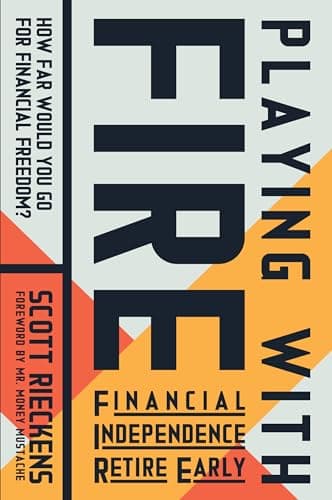
Playing with FIRE
Scott Rieckens documents his family trading a flashy lifestyle for freedom and an early exit from the daily grind. A warm, real-life intro to the FIRE movement, just swap the US retirement accounts for your super when you run the numbers.
Money School
Lacey Filipich
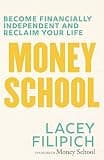
Money School
Lacey Filipich shows how to buy back your time, not just budget your dollars, with a clear path from saving to financial independence. It is refreshingly Australian and genuinely doable, even if maths was never your thing.
Quit Like a Millionaire
Kristy Shen & Bryce Leung

Quit Like a Millionaire
A no-nonsense FIRE memoir from a couple who retired in their 30s. Shen takes you from growing up poor to hitting financial independence, with the actual maths.
Some links above are affiliate links. If you buy through them, Snowball Invest may earn a small commission at no extra cost to you. We only recommend books we'd suggest anyway.
Sources
Was this article useful?
Put it to your own numbers
Every calculator runs entirely in your browser, with nothing stored. See what these numbers look like for your own situation.
Explore the calculators →General information only. This article is educational and does not constitute personal financial advice. It does not account for your circumstances. Consider your own situation and seek advice from a licensed adviser before acting. Read our full disclaimer.

Timothy Hirou Gaschereau
Founder of Snowball Invest, not a financial adviser.
I write about what I'm learning myself, because nobody ever taught us how to take control of our own money. It's a skill, not a mystery, and it's never too late to learn it. The best day to start was yesterday, the second best is today.
LinkedIn →Related articles

Quit Like a Millionaire by Kristy Shen: An Honest Review
Our honest Quit Like a Millionaire review for Australians: Kristy Shen and Bryce Leung's FIRE strategy, the Yield Shield, what maps to super and the ASX, and what to skip.

Set for Life by Scott Trench: An Honest Review
Our honest Set for Life review for Australians: Scott Trench's three-stage FIRE plan, house hacking, what translates here, and what needs adapting.

Financial Freedom by Grant Sabatier: An Honest Review
Our honest Financial Freedom review for Australians: Grant Sabatier's income-first FIRE playbook, the savings-rate maths, the US-centric bits, and the super-bridge angle.