

Money School by Lacey Filipich: An Honest Review
Our honest Money School review: Lacey Filipich's Australian guide to financial independence and time freedom (FITR), the strengths, the dated bits, and who it's for.
 By Timothy Hirou GaschereauPublished
 10 min read
If you've been looking for a personal finance book that actually speaks to your life as an Australian, Money School is the real deal: practical, non-preachy, and built for the ASX, not Wall Street. It's a genuinely local take on financial independence, and it holds up well. It's part of our personal finance book reviews on Snowball Invest.
Quick answer
A genuinely Australian guide to FIRE (or FITR, Financially Independent and Time Rich, as Lacey Filipich calls it) that covers super, shares, property and passive income without the hype. Best for Australians in their 20s and 30s who are new to financial independence or just getting started with investing. Some 2020 figures need checking, but the framework is solid. Our rating: 3.9 out of 5.
Want to read Money School?
Lacey Filipich's practical, refreshingly Australian path from saving to financial independence, and buying back your time.
In this guide
- →What the book is about: the FITR framework and financial independence, Aussie-style
- →The genuine strengths and the honest weaknesses
- →Who it's for, and who's better off elsewhere
- →What critics and r/fiaustralia readers say
- →The Australian angle: super, preservation age, the ASX and franking
📖 What is Money School about?
Money School: Become Financially Independent and Reclaim Your Life was published by Penguin in 2020. Its core argument is simple: most Australians are "time poor" by choice, not necessity. Filipich's alternative is what she calls FITR (Financially Independent, Time Rich). Rather than grinding until 65 and retiring worn out, you build passive income through shares and property, spend less than you earn, avoid lifestyle inflation, and reach a point where paid work becomes optional. It's the FIRE concept, adapted thoughtfully for the Australian context, including super, the ASX and the Age Pension.
Filipich knows what she's talking about because she's done it. She trained and worked as a chemical engineer in the Western Australian resources sector before founding Money School in 2010 and reaching financial independence young. If you're new to the concept, our guide to the different types of FIRE lays out the FIRE variants Filipich's FITR framework sits alongside. Rather than a single "big retirement," she took multiple mini-retirements along the way, a concept she champions throughout. The book is structured in four parts, moving from foundational money principles through to investing in assets, managing the unexpected, and designing your post-FI life. It's a choose-your-own-adventure format, so you can skip sections that don't apply without losing the thread.
⚖️ Strengths and weaknesses
What it gets right
- ✓Genuinely Australian: the ASX, franking credits, super and the local property market are native concepts, not afterthoughts.
- ✓Practical and step-by-step: no hype, just the actual maths of how much you need and how long it'll take at your savings rate.
- ✓Relatable author story: Filipich shares the mistakes as well as the wins, in a notably non-judgmental tone.
- ✓Covers ethical investing, which is rare in Australian personal finance books.
- ✓Beginner-friendly without being dumbed down: you finish understanding why the strategies work, not just what to do.
Where it falls short
- ✕It's a commitment: the foundations in Part 1 will feel familiar if you've already read a few FIRE books.
- ✕Published in 2020: some super caps, thresholds and figures have changed, so cross-check current numbers.
- ✕Limited depth for intermediate or advanced investors already comfortable with ETF portfolios and franking.
- ✕Relatively niche at the advanced end: deep in the FIRE community already? It may not add much new.
👤 Who should read it, and who should skip it?
Read it if you
- ✓Are new to personal finance and want a practical, Australian-specific starting point.
- ✓Are curious about financial independence in Australia but don't know where to begin.
- ✓Have heard of FIRE but want a version that accounts for super, the ASX and Australian tax.
- ✓Appreciate a relatable, non-judgmental author voice.
You might skip it if you
- ✕Are already well-versed in FIRE and actively managing a diversified portfolio.
- ✕Want advanced tax strategy, portfolio optimisation or detailed super structuring.
- ✕Need a book updated post-2020 with current figures baked in.
🔍 What do critics say?
Mainstream Australian media welcomed the book on release, with the Sydney Morning Herald covering it as teaching Australians to buy time, not things, a neat framing of its "time poverty" argument, and Filipich has featured in financial-literacy segments as a credible mainstream voice on money. FIRE-focused reviewers made a useful, honest observation that recurs: the early foundations cover familiar ground for seasoned FIRE readers, but the later parts offer genuine value, especially the section on what to do when income stops unexpectedly, which is rarely covered in other FI books. It also picked up a reader-voted Best Book award, which says something about how useful its actual audience found it.
💬 What do readers say? Goodreads and Reddit
On Goodreads it holds around 3.9 out of 5, a solid, credible spread with the large majority in the four and five-star range. Common praise: accessible explanations of complicated concepts, a relatable and non-judgmental tone, and the practical step-by-step structure. Several readers specifically call out the treatment of ethics in investing as a welcome surprise.
On r/fiaustralia, Money School is regularly listed as a recommended Australian FIRE book and described as great for the FIRE crowd, sitting alongside titles like The Barefoot Investor as a go-to for Australians starting their FI journey.
🇦🇺 The Australian angle
This is where Money School genuinely stands apart. The global personal finance canon was written for American readers, with a different tax system, different investment vehicles and a completely different retirement system. Money School treats superannuation as the central retirement vehicle it is for Australians, and discusses franking credits in the context of Australian dividend investing, something that makes a material difference to after-tax returns for ASX investors.
Crucially, it addresses a genuinely tricky Australian problem: you generally can't access your super until preservation age (now 60 for most people), which means FIRE in Australia requires building a bridge of non-super assets to cover the years between financial independence and super access. Filipich tackles this directly, which most overseas FIRE books simply can't. For a classic on the philosophy behind trading money for life energy, our Your Money or Your Life review pairs nicely with it.
💰 The verdict
Money School is one of the strongest personal finance books Australia has produced. It's practical, honest, and written by someone who actually did what she's teaching. The FITR framework is a sensible evolution of FIRE for an Australian context, and the coverage of super, ASX investing and property is genuinely useful. The caveats are real but manageable: some specific 2020 figures need updating, so treat the ATO and ASIC MoneySmart as your sources of truth for current caps and thresholds, and if you're already deep in the FIRE world, the later parts are where you'll find the most value. For beginners and those early in their financial independence journey, it's a clear recommendation, the book we'd hand to a friend who just asked "where do I even start with money?" Our rating: 3.9 out of 5.
Want to read Money School?
Want time freedom, not just a budget? Grab a copy and start mapping your path to financial independence.
SnowLetter
Australia's money news and our best reads, once a week.
❓ Frequently asked questions
Is Money School suitable for beginners?
+
Yes, absolutely. It's one of the more beginner-friendly personal finance books available for Australian readers. Filipich explains concepts like passive income, dividend investing and superannuation clearly and without jargon. You don't need any prior financial knowledge to get value from it.
How does Money School compare to The Barefoot Investor?
+
Both are practical, Australian-specific and beginner-friendly. The Barefoot Investor focuses heavily on budgeting, debt elimination and a step-by-step bucket system. Money School goes further into financial independence and investing, covering shares, property and the FITR framework in more depth. They complement each other well at different stages.
Is the advice in Money School still relevant?
+
The core framework (spend less than you earn, buy income-producing assets, avoid bad debt) is timeless and fully relevant. Some specific figures (super contribution caps, tax thresholds and certain investment numbers) have changed since the 2020 publication, so always verify current figures with the ATO and ASIC MoneySmart before deciding anything.
Does Money School cover superannuation?
+
Yes. Super is treated as a central part of the Australian financial independence picture, including how it interacts with early-retirement timelines and the preservation age. It's one of the book's key advantages over US-centric titles.
Who is Lacey Filipich?
+
Lacey Filipich is an Australian financial educator and the founder of Money School. She trained and worked as a chemical engineer in the Western Australian resources sector before founding Money School in 2010, and reached financial independence young. She's since taught thousands of Australians about personal finance and financial independence.
Is Money School worth reading if you already know FIRE?
+
It depends how deep your knowledge goes. If you're already optimising a portfolio, structuring super contributions and modelling your FI number, the early foundations will feel familiar. The later parts offer more, particularly the section on managing financial setbacks during the FI journey, and the Australian-specific framing is useful even for experienced FIRE readers who've mostly consumed US content.
📚 Get the book (and two FIRE companions)
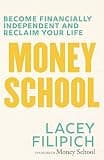
Money School
Lacey Filipich
Money School
Lacey Filipich shows how to buy back your time, not just budget your dollars, with a clear path from saving to financial independence. It is refreshingly Australian and genuinely doable, even if maths was never your thing.
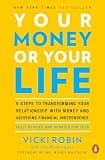
Your Money or Your Life
Vicki Robin
Your Money or Your Life
The book that basically kicked off the FIRE movement, reframing money as 'life energy' you trade your hours for. The nine-step program is pure gold, just swap the US retirement-account chapter for super.
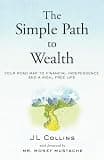
The Simple Path to Wealth
JL Collins
The Simple Path to Wealth
The friendliest on-ramp to index investing there is, born from letters a dad wrote his daughter. It makes 'buy the whole market and chill' feel obvious, just map his US fund picks onto Aussie equivalents and super.
Some links above are affiliate links. If you buy through them, Snowball Invest may earn a small commission at no extra cost to you. We only recommend books we'd suggest anyway.
Sources
Was this article useful?
Put it to your own numbers
Every calculator runs entirely in your browser, with nothing stored. See what these numbers look like for your own situation.
Explore the calculators →General information only. This article is educational and does not constitute personal financial advice. It does not account for your circumstances. Consider your own situation and seek advice from a licensed adviser before acting. Read our full disclaimer.

Timothy Hirou Gaschereau
Founder of Snowball Invest, not a financial adviser.
I write about what I'm learning myself, because nobody ever taught us how to take control of our own money. It's a skill, not a mystery, and it's never too late to learn it. The best day to start was yesterday, the second best is today.
LinkedIn →Related articles

Financial Freedom by Grant Sabatier: An Honest Review
Our honest Financial Freedom review for Australians: Grant Sabatier's income-first FIRE playbook, the savings-rate maths, the US-centric bits, and the super-bridge angle.

Early Retirement Extreme by Jacob Lund Fisker: A Review
Our honest Early Retirement Extreme review: Jacob Lund Fisker's foundational FIRE manifesto, the systems-thinking philosophy, and the Australian super-bridge angle.

Your Money or Your Life Review: The FIRE Classic, Aussie Take
Our honest Your Money or Your Life review: the life energy concept, the 9-step program, and exactly what Australian readers need to know before buying.