

Your Money or Your Life Review: The FIRE Classic, Aussie Take
Our honest Your Money or Your Life review: the life energy concept, the 9-step program, and exactly what Australian readers need to know before buying.
 By Timothy Hirou GaschereauPublished
 11 min read
Your Money or Your Life is the book widely credited with planting the seed for the entire FIRE movement, decades before "FIRE" was even a term. Its big idea, that money is really the life energy you trade your hours for, has changed how a generation thinks about work. Here's our honest review, and exactly how to apply it with an Australian lens. It's part of our personal finance book reviews on Snowball Invest.
Quick answer
A genuinely life-changing mindset book for anyone who feels trapped by the earn-spend treadmill. The "life energy" reframe alone is worth the read. It's less useful if you want step-by-step Australian investment instructions, and it's US-centric enough that you'll do some mental translating. Read the 2018 edition. Our rating: 4 out of 5.
Want to read Your Money or Your Life?
Get the 2018 revised edition, it swaps the dated bond advice for index funds and adds a Mr Money Mustache foreword.
In this guide
- →What the book is actually about: life energy, the 9 steps and the crossover point
- →Genuine strengths and the real criticisms, side by side
- →Who it's for, and who should skip it
- →What critics and the FIRE community say
- →The Australian angle: what translates, and what to swap for super and ETFs
📖 What is Your Money or Your Life about?
The core reframe: money is not just numbers, it's life energy. Every dollar you earn cost you a chunk of your finite time, and every dollar you spend is that time gone forever. From that single idea, Vicki Robin and Joe Dominguez build a nine-step program that takes you from financial fog to full financial independence. The steps cover tracking every cent, calculating your real hourly wage (after tax, commuting and work expenses), plotting income and expenses on a wall chart, and working toward the crossover point: the moment your investment income permanently exceeds your monthly expenses. At that point, paid work becomes optional.
The original came out in 1992, well before index funds were a household idea. Read the 2018 revised edition: it rewrites the investment chapter to recommend low-cost index funds and adds a foreword by Mr Money Mustache. The philosophy is the same across editions, but the 2018 investment advice is the one that has aged well.
⚖️ Strengths and weaknesses
A genuinely powerful book with real limitations. Both are worth knowing.
What it gets right
- ✓The life energy reframe is genuinely sticky: once a $90 dinner costs you 'three hours of your life', you decide differently.
- ✓It's the canonical FIRE text, the philosophical foundation of the whole movement.
- ✓The tracking-against-your-real-hourly-wage exercise is eye-opening for most readers.
- ✓The core question ('is this worth the life energy it cost?') is timeless even when tactics date.
- ✓The 2018 edition fixed the biggest flaw by adding low-cost index-fund investing.
- ✓Mr Money Mustache's foreword bridges the 1990s origins to the modern FIRE community.
Where it falls short
- ✕Nine methodical steps are a slog if you want quick wins, some readers bounce off early.
- ✕The original US treasury-bond framing still underpins the crossover maths, so you translate.
- ✕It's very US-centric: 401ks, IRAs, US bond markets and American cost-of-living throughout.
- ✕It can feel preachy on consumerism and the environment if you're not already sympathetic.
- ✕It's a slow-burn philosophy read, not a checklist of things to do this weekend.
👤 Who should read it, and who should skip it?
Read it if you
- ✓Feel trapped by lifestyle inflation and want to understand why.
- ✓Are FIRE-curious and want the philosophical foundations, not just the maths.
- ✓Are open to a genuine mindset shift about time, money and work.
- ✓Are happy to do the mental translation from US to Australian context.
Skip it if you
- ✕Want step-by-step Australian investment instructions.
- ✕Are already deep in FIRE and know the life energy concept inside out.
- ✕Find slow-burn, philosophy-first books frustrating.
- ✕Want something that accounts for super, the ASX and Australian tax from the start.
🔍 What do critics say?
The mainstream press has been broadly positive, with a few honest caveats. The Washington Post profiled the book's enduring cult following and Vicki Robin's continued influence, and the New York Times covered the 2018 revised edition with the neat framing "a personal finance book based on happiness instead of money." Oprah, the LA Times and Money Magazine have all endorsed it, which speaks to crossover appeal beyond the hardcore FIRE crowd. The honest note: some readers find the anti-consumerism and environmental messaging heavy-handed. Robin and Dominguez aren't shy about their views, and if you're not already sympathetic, parts will read like a lecture.
💬 What do readers say? Goodreads and Reddit
On Goodreads the book sits at around 3.98 out of 5 from more than 31,000 ratings, with roughly 70% giving it 4 or 5 stars, a strong result for a book over 30 years old. The most common praise: the life energy concept is genuinely transformative. The most common criticism: it's repetitive, the investment mechanics feel dated even in the 2018 edition, and the US-centric examples need constant adjustment.
On r/financialindependence it's listed in the wiki as the foundational FI text. On r/AusFinance it shows up as a mindset-and-behaviour read rather than a tactical guide, usually recommended alongside more Australia-specific resources.
🇦🇺 The Australian angle
The good news: the philosophy and the FIRE maths work perfectly here. The crossover point doesn't care whether your income is in Australian or US dollars, and the life energy reframe is just as powerful on $85,000 in Sydney as on $85,000 in Seattle. What to mentally swap out: the US treasury bond investment chapter, the 401k and IRA references, and the American cost-of-living examples.
What to swap in: Australian superannuation (especially salary sacrifice), which is arguably a more powerful wealth-building tool than anything in the book's original US framework and maps directly onto the crossover point; low-cost ASX-listed index ETFs as the vehicle for that crossover income; and the Australian tax system, including the CGT discount on assets held more than 12 months and franking credits on Australian shares. For the local mechanics, our guides to passive investing in Australia and compound interest pick up where the book's US framing leaves off. We're not recommending specific products, do your own research and consider a licensed adviser.
💰 The verdict
Our rating is 4 out of 5. This is one of the most important personal finance books ever written, and an honest review tells you both things: it's genuinely powerful and it has real limitations. The life energy concept alone is worth the read. If you've ever felt like you're working harder but getting no closer to financial freedom, this gives you a framework that actually sticks. It's not a quick fix, it's a slow, methodical reorientation of how you think about time, money and work. Read the 2018 edition, go in knowing it's a mindset book first and an investing manual second, and keep Australian-specific resources ready to fill the gaps.
Want to read Your Money or Your Life?
Ready to rethink what your money is really costing you? Grab the 2018 edition.
SnowLetter
Australia's money news and our best reads, once a week.
❓ Frequently asked questions
Is Your Money or Your Life still relevant?
+
Yes. The core philosophy, treating money as life energy and working toward a crossover point where investment income covers your expenses, is timeless. The 2018 revised edition updated the investment chapter to include index funds, which makes it far more relevant than the original 1992 text.
What is the 'life energy' concept in the book?
+
Life energy is Robin and Dominguez's term for the time and vitality you trade when you earn money. Every dollar you spend represents a portion of your finite life. To find your real hourly wage, you subtract taxes, work expenses and commuting time from your take-home pay, then evaluate every purchase against that rate. A $150 pair of shoes might cost you four hours of your life, not two.
What is the crossover point?
+
The crossover point is the moment your monthly investment income permanently exceeds your monthly expenses. At that point paid work becomes optional, because your money is working harder than you are. It's the book's definition of financial independence, and it maps directly onto what the FIRE community calls 'reaching your number'.
Is Your Money or Your Life good for Australian readers?
+
The philosophy and FIRE maths translate perfectly. The life energy concept, the tracking system and the crossover point calculation all work in Australian dollars. What doesn't translate: the US retirement account references (401k, IRA), the US treasury bond framework, and American cost-of-living examples. Substitute superannuation, ASX-listed index ETFs and the Australian tax system (including the CGT discount and franking credits).
What edition should I read?
+
The 2018 revised edition (with a foreword by Mr Money Mustache). It updates the investment chapter to include index-fund investing, adds modern topics like tracking finances online and side income, and removes the most outdated material from the 1992 original. Avoid the original 1992 edition for investment advice specifically, though the philosophy is the same across editions.
Is Your Money or Your Life suitable for beginners?
+
Yes, with a caveat. It's an excellent first book if you want a mindset shift and a framework for thinking about money differently. It's less useful as a beginner's guide to investing, because it doesn't cover portfolio mechanics in practical depth. Pair it with more tactical resources for the full picture.
📚 Get the book (and two FIRE next reads)
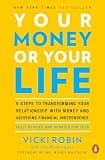
Your Money or Your Life
Vicki Robin
Your Money or Your Life
The book that basically kicked off the FIRE movement, reframing money as 'life energy' you trade your hours for. The nine-step program is pure gold, just swap the US retirement-account chapter for super.
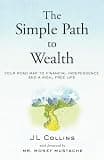
The Simple Path to Wealth
JL Collins
The Simple Path to Wealth
The friendliest on-ramp to index investing there is, born from letters a dad wrote his daughter. It makes 'buy the whole market and chill' feel obvious, just map his US fund picks onto Aussie equivalents and super.
Quit Like a Millionaire
Kristy Shen & Bryce Leung

Quit Like a Millionaire
A no-nonsense FIRE memoir from a couple who retired in their 30s. Shen takes you from growing up poor to hitting financial independence, with the actual maths.
Some links above are affiliate links. If you buy through them, Snowball Invest may earn a small commission at no extra cost to you. We only recommend books we'd suggest anyway.
Sources
Was this article useful?
Put it to your own numbers
Every calculator runs entirely in your browser, with nothing stored. See what these numbers look like for your own situation.
Explore the calculators →General information only. This article is educational and does not constitute personal financial advice. It does not account for your circumstances. Consider your own situation and seek advice from a licensed adviser before acting. Read our full disclaimer.

Timothy Hirou Gaschereau
Founder of Snowball Invest, not a financial adviser.
I write about what I'm learning myself, because nobody ever taught us how to take control of our own money. It's a skill, not a mystery, and it's never too late to learn it. The best day to start was yesterday, the second best is today.
LinkedIn →Related articles

Early Retirement Extreme by Jacob Lund Fisker: A Review
Our honest Early Retirement Extreme review: Jacob Lund Fisker's foundational FIRE manifesto, the systems-thinking philosophy, and the Australian super-bridge angle.

Financial Freedom by Grant Sabatier: An Honest Review
Our honest Financial Freedom review for Australians: Grant Sabatier's income-first FIRE playbook, the savings-rate maths, the US-centric bits, and the super-bridge angle.

Think and Grow Rich by Napoleon Hill: An Honest Review
Our honest Think and Grow Rich review: the mindset wins, the law-of-attraction baggage, the credibility questions around Napoleon Hill, and who it's for.