

Passive Investing Australia: The Beginner's Guide to Growing Wealth Without the Stress
What passive investing actually is, what the SPIVA data shows about active fund managers, and how fees and franking credits shape it locally.
 By Timothy Hirou GaschereauPublished
 12 min read
Try it yourself
Once you understand what a share is and what an ETF is, there's a single idea that ties almost everything else in this guide together. This is that idea. This is part of a wider guide to getting started with investing on Snowball Invest.
Quick answer
Passive investing means tracking the market rather than trying to beat it, usually through index funds or ETFs that automatically hold a broad basket of assets. The data is consistent: most active fund managers in Australia fail to outperform a simple index after fees, which gives the average investor a real, structural edge just by keeping costs low and staying invested.
In this guide
- →What passive investing actually means, and how it differs from active investing
- →What the SPIVA data actually shows about active managers in Australia
- →Why fees compound quietly into a genuinely large cost over decades
- →How passive investing works day to day, and what's different about it here
- →A 30-year worked example, and the myths worth clearing up first
🤔 What passive investing actually is
🎯 The essential: The core philosophy in one line: you don't need to beat the market, you just need to be the market.
Passive investing means buying and holding a diversified portfolio that tracks a market index, rather than trying to pick winning stocks or time the market. Instead of asking "which shares will go up," a passive investor asks "how do I own a slice of the whole market instead." The answer is usually an index fund or an ETF that automatically holds every company in a given index, like the ASX 200 or a global shares index.
The opposite approach, active investing, has a fund manager (or you, personally) researching individual companies, trying to pick winners, and trading in and out of positions. It sounds smarter. The data, covered next, says otherwise more often than not.
🏆 Active vs passive: what the data actually says
🎯 The essential: Over a 15-year period, roughly 85-87% of professional Australian equity fund managers left investors worse off than a simple index fund.
Here's the uncomfortable number for the active management industry: most professional fund managers, with full teams of analysts and years of experience, still don't beat a basic index fund after fees. This isn't opinion, it's measured twice a year by the SPIVA Australia Scorecard, published by S&P Dow Jones Indices, which tracks how Australian active fund managers perform against their benchmark over time.
Per the most recent SPIVA Australia data, around 77-78% of active Australian equity fund managers underperformed the S&P/ASX 200 over five years, and that climbs to roughly 85-87% over fifteen years. This isn't a bad year or a rough patch for one report, it's a consistent, structural pattern that repeats across almost every measured period.
Fees are the single biggest reason. An active fund has to outperform the index by enough to cover its own costs before you see any net benefit, a much harder bar to clear than it sounds, which is exactly what the next section walks through.
💸 The fee drag: why costs matter more than you think
Every fund charges a Management Expense Ratio (MER), an annual fee taken as a percentage of your investment, deducted automatically so you never see it leave your account. That invisibility is exactly what makes it easy to underestimate. In Australia, active managed funds commonly run somewhere between 0.8% and 1.5% a year, while broad market ETFs and index funds often sit between 0.03% and 0.20%.
Worked example: $50,000 invested for 20 years at an 8% gross annual return before fees. At a 1.2% MER (net 6.8%), you'd end with roughly $185,000. At a 0.15% MER (net 7.85%), you'd end with roughly $225,000. That's about $40,000 lost to fees alone on a single $50,000 starting investment, no bad luck or market crash required, just the quiet, compounding cost of a higher fee.
You can't control what the market does. You can control what you pay, which is exactly why fee minimisation is one of the most reliable levers any investor has. Run your own balance and timeframe through our investment fees calculator to see what a higher MER would actually cost you.
📈 How passive investing works in practice
The mechanics are genuinely simple. Index tracking means the fund holds the same shares as its target index in the same proportions, updating automatically as the index itself changes, no action required from you. Instant diversification comes from a single broad ETF often holding hundreds or thousands of companies across countries and sectors, reducing the risk that any one company's collapse wipes out your portfolio.
Buy and hold is the discipline that makes it work, staying invested through the ups and downs rather than selling during a crash and missing the recovery. And once a year or so, a light rebalance checks whether your allocation has drifted from your target and nudges it back, covered in more depth in our how to build a simple portfolio guide.
🌏 What's different about passive investing in Australia
The strategy is global, but a few things make the local version distinct. ASX-listed ETFs are the main vehicle, bought through a standard brokerage account the same way you'd buy a share, liquid and transparent from a few hundred dollars.
Australian companies often pay dividends carrying franking credits, a tax offset for company tax already paid, which reduces a passive investor's tax bill or generates a refund, a genuine local advantage of holding Australian equities alongside global exposure. And most Australians are already passive investors without realising it: a super fund sitting in a balanced or growth option with substantial index exposure is doing exactly what passive investing describes, the main difference being that super stays locked away until preservation age, while investments outside super stay flexible.
Holding an investment for more than 12 months before selling also unlocks a 50% capital gains tax discount from the ATO, another structural reason the buy-and-hold approach suits Australian investors specifically, the longer you hold, the more tax-efficient the eventual gain becomes.
🧮 A worked example over 30 years
Say you're 28, investing $500 a month into a broad market index fund or ETF, at an assumed 7% average annual return (a conservative, after-fee estimate based on long-run historical averages, not a guarantee), for 30 years until you're 58.
| Amount | |
|---|---|
| Total contributed | $180,000 |
| Estimated ending balance | ≈$610,000 |
| Growth from compounding | ≈$430,000 |
You put in $180,000, the market grew it to roughly $610,000, and the extra $430,000 came purely from compound growth, returns earning their own returns year after year. This only works if you stay invested, our what is compound interest article covers exactly why that mechanic matters so much. A few honest caveats: 7% is a long-run average, not a smooth annual line, some years will be up 20%, some down 30%, and only holding through both delivers the average. Inflation will also erode the real purchasing power of that $610,000, and past returns never guarantee future ones, this is a projection, not a promise.
🚫 What passive investing is not
- Not zero-attention forever. It's low-maintenance, not no-maintenance, checking your allocation once a year and rebalancing when it drifts still matters.
- Not guaranteed returns. Markets fall, sometimes sharply, a passive investor in early 2020 watched a 30%+ drop in weeks. The strategy works because markets have historically recovered over long periods, not because they never fall.
- Not only for people with a lot of money. Many ASX ETFs cost under $100 a unit. Regular small contributions, not a large lump sum, are the actual engine.
- Not boring in a bad way. Boring, in this case, tends to win, the excitement of active trading comes with transaction costs, tax events, and, per the SPIVA data above, worse outcomes for most people.
🚀 How to Start Investing in Australia
The practical, step-by-step version once the philosophy makes sense.
What I actually use
Pearler
This is the broker I personally use. Do your own research and form your own opinion, but I genuinely recommend it, it's built for long-term investors rather than day traders, and makes it easy to automate regular investing. Sign up through my link or with the code TIMOTHY269825 and you'll both get a $20 cash bonus once you make your first investment (Pearler's current offer, T&Cs apply).
Sign up to Pearler →This is a referral link. If you sign up through it, I get a bonus too, at no extra cost to you.
SnowLetter
Australia's money news and our best reads, once a week.
❓ Frequently asked questions
Is passive investing good for beginners in Australia?
+
Yes, it's arguably the strongest starting point. It requires no stock-picking expertise, keeps costs low, and gives instant diversification. The SPIVA evidence consistently shows passive strategies beating most active approaches after fees over the long run.
What's the difference between passive investing and passive income?
+
They're related but different. Passive investing is a strategy for growing wealth by tracking market indexes over time. Passive income is money that flows to you without active work, like dividends or interest. Passive investing can generate passive income through dividends, but the primary goal is long-term capital growth, not immediate cash flow.
Can I do passive investing through my super?
+
Yes. Most super funds offer index-linked options, sometimes labelled 'index' or 'passive', which track market benchmarks and typically carry lower fees than actively managed options. Checking your super's investment menu is one of the highest-impact, lowest-effort moves many Australians can make.
How much money do I need to start passive investing in Australia?
+
Less than most people think. Many ASX-listed ETFs cost under $100 per unit, and plenty of brokers have no minimum beyond that. Consistency in regular contributions matters far more than the size of your first one.
Is passive investing safe?
+
No share investment is risk-free, passive or otherwise, values fluctuate and can fall sharply. What passive investing does reduce is company-specific risk (one bad stock pick) and manager risk (a fund manager making poor calls), by holding a broad, diversified basket instead.
How do I actually start passive investing in Australia?
+
Open a brokerage account, decide your target split across asset classes, choose low-cost ETFs or index funds matching each, and set up regular contributions. Our how to start investing guide walks through each step.
Do I need a financial adviser to invest passively?
+
Not necessarily, passive investing is specifically designed to be accessible without professional management. A licensed adviser can add genuine value for complex situations, significant assets, business structures, estate planning, but the basics are well within reach for someone with straightforward goals.
📚 Recommended reading
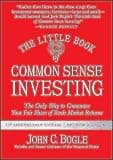
The Little Book of Common Sense Investing
John C. Bogle
The Little Book of Common Sense Investing
From the man who invented the index fund, this is the short, sharp case for low-cost investing that has aged like fine wine. The maths on fees is universal, just think ETFs and super instead of his US funds.
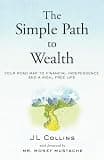
The Simple Path to Wealth
JL Collins
The Simple Path to Wealth
The friendliest on-ramp to index investing there is, born from letters a dad wrote his daughter. It makes 'buy the whole market and chill' feel obvious, just map his US fund picks onto Aussie equivalents and super.
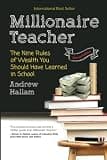
The Millionaire Teacher
Andrew Hallam
The Millionaire Teacher
A schoolteacher built a seven-figure portfolio on a modest salary, and here he lays out nine plain-English rules for doing the same with low-cost index funds. Refreshingly global, so Aussie readers just swap in super and local ETFs.
Some links above are affiliate links. If you buy through them, Snowball Invest may earn a small commission at no extra cost to you. We only recommend books we'd suggest anyway.
Sources
Was this article useful?
Put it to your own numbers
Every calculator runs entirely in your browser, with nothing stored. See what these numbers look like for your own situation.
Try the Compound Interest calculator →General information only. This article is educational and does not constitute personal financial advice. It does not account for your circumstances. Consider your own situation and seek advice from a licensed adviser before acting. Read our full disclaimer.

Timothy Hirou Gaschereau
Founder of Snowball Invest, not a financial adviser.
I write about what I'm learning myself, because nobody ever taught us how to take control of our own money. It's a skill, not a mystery, and it's never too late to learn it. The best day to start was yesterday, the second best is today.
LinkedIn →Related articles
ETF vs Managed Fund: Which Structure Actually Suits You?
ETFs or managed funds? We break down the real differences in cost, tax, flexibility and auto-investing so you can pick the right structure for your money.
How to Invest in Managed Funds in Australia
Want to invest in managed funds in Australia? A plain-English, step-by-step guide covering how to buy, the minimums, the fees and the tax.
How to Invest in Index Funds in Australia
Want to invest in index funds in Australia? A plain-English, step-by-step guide to what to buy, how to open an account, and what it all costs.