

ETF vs Managed Fund: Which Structure Actually Suits You?
ETFs or managed funds? We break down the real differences in cost, tax, flexibility and auto-investing so you can pick the right structure for your money.
 By Timothy Hirou GaschereauPublished
 12 min read
Try it yourself
Both ETFs and managed funds are pooled investment vehicles. They can hold the exact same underlying assets: Australian shares, global shares, bonds, property. The difference is the wrapper around those assets, and that wrapper has real consequences for your costs, your tax, and your day-to-day experience.
This is the head-to-head comparison and the decision. If you want the basics first, read our explainers on what an ETF is and what a managed fund is, then come back. Throughout this article, managed fund means an unlisted managed fund, the kind you apply for directly through the fund manager.
🎯 The essential: ETFs trade on the ASX like shares; unlisted managed funds are bought directly from the fund manager. Costs are comparable for index strategies, but active managed funds are often much dearer. ETFs are generally more tax-efficient in a taxable account, while managed funds win on set-and-forget auto-investing. For most Aussie DIY investors doing index investing, ETFs are the better default.
How you actually buy and sell them
This is the most fundamental difference, and it flows through to almost everything else.
ETFs are listed on the ASX. You buy and sell them through a broker (CommSec, Stake, Pearler, SelfWealth, take your pick) exactly the way you would buy BHP or CBA shares. You get an intraday price, your trade settles in two business days, and your holding sits on CHESS or in a custodial account depending on the broker.
Unlisted managed funds work differently. You apply directly to the fund manager, usually via an online form or a BPAY payment. No broker is involved. Transactions are processed at the fund's end-of-day net asset value (NAV), not at a live market price, and your holding sits on the fund manager's register rather than CHESS.
Pricing and minimum investment
ETFs price continuously during ASX trading hours. You can buy as little as one unit, which for a popular broad-market ETF usually costs between $50 and $200. So the practical minimum is one unit plus brokerage.
Unlisted managed funds price once per day at NAV, and minimums vary widely: retail funds often want $1,000 to $5,000 to open, some start at $500, and wholesale funds historically required very large minimums until platforms opened them up. The gap has narrowed a lot, but for sheer accessibility it is hard to beat buying a single ETF unit through a zero-brokerage broker.
Costs head to head
For broad index ETFs, management fees are very low: think A200 at around 0.04%, VGS around 0.18%, or the one-fund VDHG at around 0.27%. On top of that you pay brokerage (usually $0 to $9.50) and a small bid/ask spread. Index managed funds can be comparably cheap, roughly 0.16% to 0.29%, but active managed funds are a different story: 0.70% to 2% or more is common, sometimes with a performance fee on top.
One trap for small, frequent investors: if you put in $500 a month and pay $9.50 brokerage, that is 1.9% in transaction costs before the MER even bites. Managed funds avoid brokerage but charge a buy/sell spread (typically 0.10% to 0.25%) on every transaction instead. Our fee drag calculator shows what a 1% difference compounds to over decades.
Active vs passive: the line is blurring
A common misconception worth clearing up: managed funds are not automatically active, and ETFs are not automatically passive. Index managed funds are fully passive, and active ETFs (from managers like Magellan, Hyperion and Betashares) trade on the ASX. The real distinction is the structure (listed vs unlisted), not the strategy (active vs passive).
That said, the active-versus-passive question is worth facing directly. The SPIVA Australia Scorecard from S&P Dow Jones Indices tracks active managers against their benchmarks. Its Year-End 2024 report found that about 56% of Australian equity general active managers underperformed the S&P/ASX 200 over the year, and the numbers get worse over longer horizons. For global equities, around 85% underperformed. That is a relevant data point when you are deciding whether to pay 1.5% for active management.
Tax in Australia: this one actually matters
Both ETFs and managed funds are pass-through structures: they distribute income and capital gains to investors, who pay tax at their own marginal rate, and franking credits flow through both equally. Both also operate under the AMIT (Attribution Managed Investment Trust) regime. So far, so equal. Here is where it gets interesting.
The capital gains problem with managed funds. When investors redeem from an unlisted managed fund, the manager often has to sell underlying assets to raise cash, which can crystallise capital gains. Those gains are then distributed to all remaining unitholders at year end, including investors who never sold a single unit. You can do everything right, hold patiently for years, and still cop a capital gains distribution because other people decided to leave.
Why ETFs handle this better. ETFs use an in-specie creation and redemption mechanism with authorised participants. When large investors exit, they typically receive a basket of the underlying securities rather than cash, so the ETF itself does not need to sell assets. That means the fund generally does not crystallise capital gains from redemptions, which makes it more tax-efficient for the investors who stay.
In a taxable account (outside super), ETFs tend to be more tax-efficient than equivalent unlisted managed funds, especially in volatile periods with heavy redemptions. Inside super, where earnings are taxed at a flat 15%, the difference matters less but still exists.
Auto-investing and transparency
This is where managed funds genuinely shine. They let you set up automatic investing via BPAY or direct debit on a schedule (weekly, fortnightly, monthly). You set it up once and contributions go in without you logging in to place a trade. For a true set-and-forget approach, that is a real advantage, and it sidesteps the "I'll do it later" trap that catches a lot of ETF investors.
ETFs traditionally required you to log in and place each trade, but platforms like Pearler and Stake now offer auto-invest features that schedule ETF purchases for you, and most major ETFs support a Dividend Reinvestment Plan. On transparency, ETFs win: most publish holdings daily or monthly, whereas active managed funds often disclose only quarterly and with a lag.
Side-by-side comparison
| Feature | ETF | Managed fund |
|---|---|---|
| How you buy | Broker, on the ASX | Direct to fund manager |
| Pricing | Intraday market price | Once-daily NAV |
| Minimum | One unit (~$50-$200) | Often $1,000-$5,000 |
| MER (index) | 0.04%-0.27% | 0.16%-0.29% |
| MER (active) | 0.50%-1.50% | 0.70%-2%+ (plus perf. fee) |
| Transaction cost | Brokerage + tiny spread | Buy/sell spread, no brokerage |
| Tax efficiency | Generally better | Can distribute gains to all |
| Auto-invest | Via some platforms | Native BPAY/direct debit |
| Liquidity | Intraday, T+2 | End of day, 3-5 days |
Who should pick which
Choose an ETF if you want to invest lump sums or irregular amounts with no minimum, you want flexibility to trade during market hours, you are in a taxable account and want to avoid surprise capital gains distributions, you want the lowest cost for index investing, or you want daily transparency and the ability to combine asset classes with precision.
Choose a managed fund if you want fully automatic regular investing via BPAY or direct debit without ever placing a trade, you want a specific active strategy only offered in an unlisted structure, or you are investing on a platform (or inside super) that only offers managed funds.
The honest answer for most Australian investors: for a simple index portfolio, start with ETFs. The cost is comparable, the tax efficiency is better, the flexibility and transparency are superior, and auto-invest, once the managed fund's trump card, is now available on several ETF platforms.
Frequently asked questions
Is an ETF the same as a managed fund?
+
Not exactly. Both are pooled investment vehicles that hold a basket of assets, but the structure is different. An ETF is listed on the ASX and trades like a share through a broker. An unlisted managed fund is bought directly from the fund manager and priced once per day. They can hold identical underlying investments; the wrapper is what differs.
Are ETFs cheaper than managed funds in Australia?
+
For index investing, the costs are broadly comparable. ETF MERs for popular index funds range from about 0.04% to 0.27% a year, and index managed funds can sit in a similar range. The difference is brokerage (ETFs) versus buy/sell spreads (managed funds). For active strategies, managed funds tend to be more expensive, often 0.70% to 2% or more, plus potential performance fees.
Which is more tax-efficient, an ETF or a managed fund?
+
In a taxable account, ETFs are generally more tax-efficient. Because ETFs use an in-specie creation and redemption mechanism, they typically do not need to sell assets to meet redemptions, so they do not crystallise capital gains that get distributed to all remaining holders. Unlisted managed funds can trigger capital gains distributions for all investors when other unitholders redeem. Both structures pass through franking credits equally.
Can I automatically invest in ETFs like I can with managed funds?
+
Not natively through a standard broker. With a managed fund you can set up a BPAY or direct debit schedule and contributions go in automatically. With ETFs you need to place a trade each time, unless you use a platform like Pearler or Stake that offers an auto-invest feature. The gap is narrowing, but managed funds still have the edge on pure auto-invest simplicity.
What is the difference between an index fund and an ETF?
+
Index fund describes the strategy (tracking a market index passively). ETF describes the structure (listed on an exchange). An index fund can be either an ETF or an unlisted managed fund. Most popular ETFs in Australia are index funds, but active ETFs also exist. It is really strategy versus structure, and the two are not mutually exclusive.
Are ETFs better than managed funds for Australian investors?
+
For most DIY investors doing index investing in a taxable account, yes. ETFs offer comparable costs, better tax efficiency, greater flexibility and more transparency. The main advantages of managed funds are automatic investing via BPAY or direct debit, and access to active strategies not available as ETFs. Neither structure is universally superior; it depends on how you invest and what you are investing in.
Keep reading
Books worth reading
📚 Recommended reading
The Barefoot Investor
Scott Pape

The Barefoot Investor
Australia's best-selling money book ever. A simple system for accounts, budgeting, debt and a real emergency fund in one.
The Bogleheads' Guide to Investing
Taylor Larimore, Mel Lindauer & Michael LeBoeuf
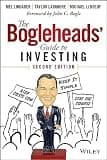
The Bogleheads' Guide to Investing
The friendly community bible of low-cost, buy-and-hold index investing, written by everyday investors rather than salespeople. The core philosophy is timeless for Aussies, just read the tax-advantaged account bits as super.
Girls That Invest
Simran Kaur
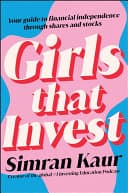
Girls That Invest
A no-jargon crash course from the podcaster behind Girls That Invest that makes the sharemarket feel doable, written especially for women starting out. The perfect first step before you buy your first ETF.
Some links above are affiliate links. If you buy through them, Snowball Invest may earn a small commission at no extra cost to you. We only recommend books we'd suggest anyway.
Sources
- ASIC Moneysmart, Managed funds and ETFs, moneysmart.gov.au
- ASX, ETF education and product information, asx.com.au
- Vanguard Australia, ETF and managed fund product pages, vanguard.com.au
- Betashares, ETF education and fund pages, betashares.com.au
- Australian Taxation Office, Attribution Managed Investment Trusts (AMIT), ato.gov.au
- S&P Dow Jones Indices, SPIVA Australia Scorecard (Year-End 2024)
General information only, not personal financial advice. Past performance is not a reliable indicator of future returns. Consider speaking to a licensed financial adviser about your own situation.
Was this article useful?
Put it to your own numbers
Every calculator runs entirely in your browser, with nothing stored. See what these numbers look like for your own situation.
Try the Net Fees calculator →General information only. This article is educational and does not constitute personal financial advice. It does not account for your circumstances. Consider your own situation and seek advice from a licensed adviser before acting. Read our full disclaimer.

Timothy Hirou Gaschereau
Founder of Snowball Invest, not a financial adviser.
I write about what I'm learning myself, because nobody ever taught us how to take control of our own money. It's a skill, not a mystery, and it's never too late to learn it. The best day to start was yesterday, the second best is today.
LinkedIn →Related articles
How to Invest in Managed Funds in Australia
Want to invest in managed funds in Australia? A plain-English, step-by-step guide covering how to buy, the minimums, the fees and the tax.
How to Invest in Index Funds in Australia
Want to invest in index funds in Australia? A plain-English, step-by-step guide to what to buy, how to open an account, and what it all costs.

Active vs Passive Investing: What the Evidence Actually Says
Active or passive investing? We break down the SPIVA evidence, the fee maths, and the tax rules so you can decide what works for your money in Australia.