

The Bogleheads' Guide to Investing: An Honest Review
Our honest Bogleheads' Guide to Investing review for Australians: the low-cost index philosophy, the three-fund portfolio adapted to the ASX, and what to skip.
 By Timothy Hirou GaschereauPublished
 10 min read
If you've spent any time in personal finance circles online, you've probably seen the word "Boglehead" thrown around. This is the book that started it all for a lot of people: a compact, no-nonsense guide to building wealth through low-cost index fund investing. It's not flashy, it's not exciting, and that's exactly the point. It's part of our personal finance book reviews on Snowball Invest.
Quick answer
A genuinely excellent, philosophy-first foundation for any investor, especially anyone new to passive investing who wants to understand why low-cost index funds beat most active managers over time. Australian readers will need to mentally translate the US account types (401k, Roth IRA), but the core ideas land perfectly here. Our rating: 4 out of 5.
Want to read The Bogleheads' Guide to Investing?
The friendly community bible of low-cost, buy-and-hold index investing, written by everyday investors rather than salespeople.
In this guide
- →What the book is about: the Boglehead philosophy and the three-fund portfolio
- →The genuine strengths and the honest weaknesses
- →Who it's for, and who already knows this
- →What critics and r/Bogleheads readers say
- →The Australian angle: super, VAS/VGS and franking
📖 What is The Bogleheads' Guide to Investing about?
The book is built around the investing philosophy of John "Jack" Bogle, the founder of Vanguard and one of the most influential figures in personal finance history. Bogle spent decades arguing that ordinary investors are better off buying the whole market cheaply rather than paying active managers to try to beat it. The data backed him up. The Bogleheads are the community of investors who took his ideas and ran with them, and the three authors were among the most respected voices in it (Bogle himself dubbed Larimore and Lindauer the "King" and "Prince" of the Bogleheads). So this isn't outsiders summarising someone else's ideas, it's the community's own distillation of decades of collective wisdom.
The core philosophy, in plain English:
- Live below your means. You can't invest what you don't save.
- Keep it simple. A diversified, low-cost portfolio beats complexity almost every time.
- Minimise costs and taxes. Fees compound against you just as returns compound for you.
- Stay the course. Don't time the market, don't panic sell, don't chase last year's winner.
- Avoid stock-picking and market timing. Most professionals can't do it consistently, and that's fine.
- Behaviour beats cleverness. The investor who stays invested through a downturn almost always outperforms the one who tries to be clever.
The three-fund portfolio sits at the heart of it: a domestic shares fund, an international shares fund and a bond fund. Simple, diversified, cheap to run. Across its editions (the second published 2014, updating the 2006 original), it packs a complete beginner's manual for passive investing (foundations, investing basics, asset allocation, tax-advantaged accounts, behavioural finance, common mistakes and estate planning) into a genuinely compact book.
⚖️ Strengths and weaknesses
What it gets right
- ✓The philosophy is timeless: low costs, broad diversification and staying the course never go out of date.
- ✓Genuinely beginner-friendly: plain, direct writing free of unnecessary jargon.
- ✓The behavioural-finance section is excellent, treating investor psychology as central rather than an afterthought.
- ✓Community-backed credibility: distilled wisdom of a global community of self-directed investors, with Bogle's own endorsement.
- ✓Comprehensive for its size, with very little filler.
Where it falls short
- ✕Heavily US-centric: the 401(k), Roth IRA, HSA and 529 chapters are specific to the US tax code.
- ✕Some dated examples: specific fee numbers and contribution limits have changed since the last edition.
- ✕Can feel repetitive if you're already a convert to passive investing.
- ✕The estate-planning chapter has limited relevance outside the US.
- ✕No newer edition since 2014, and the ETF landscape has moved on, particularly for non-US investors.
👤 Who should read it, and who should skip it?
Read it if you
- ✓Are new to investing and want a clear, principled framework before you buy anything.
- ✓Keep hearing about 'passive investing' and want to understand the philosophy behind it.
- ✓Want to understand why fees matter so much over long horizons.
- ✓Are interested in the three-fund portfolio Australians have adapted from the Boglehead model.
Skip or deprioritise it if you
- ✕Already have a solid grasp of passive investing and want advanced strategy.
- ✕Want a book written specifically for Australian investors.
- ✕Are looking for specific product recommendations for the Australian market.
🔍 What do critics say?
The consensus across financial media and personal finance writers is strongly positive, with a consistent set of caveats. Reviewers praise the lean writing and emphasis on simplicity, often noting it punches well above its weight for a book of its length, and singling out the comparison tables as genuinely useful. Writers reviewing from a non-US perspective make the honest point that it's very well suited to US investors and a little less practical for international ones, which is exactly what Australian readers should keep in mind. The main criticisms everywhere are the same two: US-centricity and occasional repetition. Neither is a dealbreaker.
💬 What do readers say? Goodreads and Reddit
On Goodreads it holds around 4.3 out of 5 from roughly 11,000 ratings, skewing heavily positive, with the large majority rating it four or five stars. The common themes mirror the critical consensus: clear, practical, beginner-friendly and genuinely useful for building a long-term investing mindset. Readers who already knew the basics were more likely to find it repetitive.
In r/AusFinance and r/fiaustralia it's recommended alongside a note that the Bogleheads wiki's non-US section is more practically useful for Australians navigating local account types and tax. Nobody suggests skipping it; they're just honest that you'll do some local translation.
🇦🇺 The Australian angle
The Boglehead philosophy maps almost perfectly onto the Australian landscape. You don't need a 401(k) or a Roth IRA to invest like a Boglehead. Here's how the core ideas translate:
- Superannuation is your tax-advantaged wrapper. Contributions are taxed at 15% (rather than your marginal rate) and earnings inside super are taxed at a maximum of 15% in accumulation phase. If you're not maximising concessional contributions before investing outside super, you may be leaving money on the table.
- ASX ETFs are your index funds. Low-cost local ETFs do exactly what the book recommends.
- Franking credits are a genuine bonus the book doesn't cover, because they're uniquely Australian: dividends often come with credits for tax already paid at the company level, lifting the effective yield on Australian shares.
- The US chapters are not your problem. Read the 401(k)/Roth IRA/HSA sections for context, but don't hunt for an Australian equivalent of every account type. The principle (use tax-advantaged wrappers, minimise tax drag) is what matters.
| Role | Boglehead idea | Common Australian building block |
|---|---|---|
| Domestic shares | Total domestic market index fund | VAS (Vanguard Australian Shares) |
| International shares | Total international market index fund | VGS (Vanguard International Shares) |
| Defensive | Total bond market fund | A bond ETF or high-interest cash |
The philosophy (keep costs low, diversify broadly, use tax-advantaged accounts, stay the course) is 100% transferable; the specific products and account types are not. If you want a step-by-step Australian version of the three-fund idea, our guide to building a simple portfolio walks through it. For the single-argument version of the same idea from Bogle himself, see our Little Book of Common Sense Investing review.
💰 The verdict
The Bogleheads' Guide to Investing is a genuinely excellent book. It's clear, principled, and covers more ground than you'd expect from something this readable. For Australian investors new to passive investing, it's one of the best places to start building a mental framework. The US-centricity is real but manageable: treat the tax and account chapters as background reading, not a how-to guide, and pair the book with Australian-specific resources (MoneySmart, the Bogleheads wiki's non-US section, and ASX ETF education). Do that and you'll get enormous value from it. Our rating: 4 out of 5.
Want to read The Bogleheads' Guide to Investing?
Want the index-investing philosophy done properly? Grab a copy and read the behaviour chapters twice.
SnowLetter
Australia's money news and our best reads, once a week.
❓ Frequently asked questions
Is The Bogleheads' Guide to Investing suitable for Australian investors?
+
Yes, with one important caveat. The core philosophy (low-cost index funds, broad diversification, minimising fees and taxes, staying the course) is directly applicable in Australia. The US-specific chapters on 401(k)s, Roth IRAs and the US tax code don't apply here, so treat them as background context and look to ASIC MoneySmart and the Bogleheads wiki's non-US section for local guidance.
What is the Boglehead investing philosophy?
+
Built on the ideas of Vanguard founder John Bogle: live below your means, invest early and consistently, use low-cost broad index funds rather than picking stocks or timing the market, minimise fees and taxes, and stay the course through volatility. It prioritises behaviour and discipline over cleverness.
What is the three-fund portfolio?
+
A simple, diversified approach using three index funds: a domestic shares fund, an international shares fund and a bond fund. In Australia, a common version uses VAS (Australian shares), VGS (international shares) and a bond ETF or cash for the defensive allocation. The exact split depends on your age, risk tolerance and time horizon.
How does this compare to The Little Book of Common Sense Investing?
+
Both promote the same core philosophy of low-cost passive index investing inspired by John Bogle. The Little Book (written by Bogle himself) is shorter and focused on the single argument for index funds. The Bogleheads' Guide is broader, covering asset allocation, tax, behavioural finance and more. If you only read one, this guide is more comprehensive; if you've read one, the other is still worth your time.
Is the book still relevant today?
+
Yes. The core principles haven't changed: low-cost index funds still outperform the majority of active funds over long horizons. The specific fund names, fee numbers and US contribution limits are dated, but the philosophy and framework are as sound as ever. Just verify any specific figures from current official sources before acting.
Where can I learn more about Boglehead investing for Australia?
+
Start with the Bogleheads wiki (which has a non-US investing section), and ASIC's MoneySmart for Australian investing basics. The ASX investor education section covers ETFs and how to invest locally, and the r/AusFinance and r/fiaustralia communities are active and generally well-informed.
📚 Get the book (and two index-investing companions)
The Bogleheads' Guide to Investing
Taylor Larimore, Mel Lindauer & Michael LeBoeuf
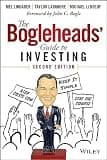
The Bogleheads' Guide to Investing
The friendly community bible of low-cost, buy-and-hold index investing, written by everyday investors rather than salespeople. The core philosophy is timeless for Aussies, just read the tax-advantaged account bits as super.
The Millionaire Teacher
Andrew Hallam
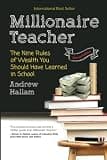
The Millionaire Teacher
A schoolteacher built a seven-figure portfolio on a modest salary, and here he lays out nine plain-English rules for doing the same with low-cost index funds. Refreshingly global, so Aussie readers just swap in super and local ETFs.
Some links above are affiliate links. If you buy through them, Snowball Invest may earn a small commission at no extra cost to you. We only recommend books we'd suggest anyway.
Sources
Was this article useful?
Put it to your own numbers
Every calculator runs entirely in your browser, with nothing stored. See what these numbers look like for your own situation.
Explore the calculators →General information only. This article is educational and does not constitute personal financial advice. It does not account for your circumstances. Consider your own situation and seek advice from a licensed adviser before acting. Read our full disclaimer.

Timothy Hirou Gaschereau
Founder of Snowball Invest, not a financial adviser.
I write about what I'm learning myself, because nobody ever taught us how to take control of our own money. It's a skill, not a mystery, and it's never too late to learn it. The best day to start was yesterday, the second best is today.
LinkedIn →Related articles

Money Master the Game by Tony Robbins: An Honest Review
Our honest Money Master the Game review for Australians: Tony Robbins's 7-step plan, the sound core message on fees and index funds, and the US-heavy padding.

The Simple Path to Wealth Review: JL Collins for Australians
Our honest Simple Path to Wealth review for Australians: what JL Collins gets right, what doesn't apply here, and how to use the philosophy with local ETFs and super.

The Little Book of Common Sense Investing: Honest Review
Our honest review of John Bogle's The Little Book of Common Sense Investing: its real strengths, genuine weaknesses, and what Australian investors should take from it.