

How to Build a Simple Investment Portfolio
How to turn shares, ETFs and everything else you've learned into an actual portfolio: deciding your asset mix, one fund vs several, and why simple usually wins.
 By Timothy Hirou GaschereauPublished
 9 min read
Try it yourself
By this point you know what an ETF is, how to choose one, and how to actually buy it. This is the last piece: how those pieces fit together into something you'd actually call a portfolio, rather than just a random pile of purchases. This is part of a wider guide to getting started with investing on Snowball Invest.
Quick answer
A simple portfolio starts with your foundation sorted (emergency fund, no high-interest debt), then a mix of assets that matches your timeframe, most beginners can cover this with a single diversified ETF. More funds only make sense once you have a specific reason to tilt away from that broad exposure, not by default.
In this guide
- →What needs to be sorted before you build anything
- →Why your growth/defensive split matters more than which specific ETF you pick
- →One diversified fund vs building your own mix from separate ETFs
- →A few illustrative starting points, and how rebalancing actually works
- →The single biggest way beginners hurt their own returns
🧱 The foundation, before any of this
🎯 The essential: A portfolio sitting on top of no emergency fund and unpaid high-interest debt isn't a portfolio, it's a risk.
A portfolio built on top of no emergency fund and unpaid high-interest debt isn't really a portfolio, it's a risk. Get those two things in reasonable shape first, not perfect, just reasonable, before worrying about asset mix.
📊 Why the mix matters more than the fund you pick
It feels like the highest-stakes decision is which specific ETF to buy. Research on institutional portfolios suggests otherwise. A landmark 1986 study by Brinson, Hood and Beebower, published in the Financial Analysts Journal and still widely cited in portfolio construction today, examined the return variability of major U.S. pension funds over a decade and found that the split between asset classes, growth versus defensive, explained roughly 90% of the variation in a portfolio's returns over time. Which specific securities were picked within each asset class explained far less.
The finding has been debated and refined since (later research points out it explains variability of a single portfolio's returns over time, not necessarily the differences between portfolios), but the practical takeaway has held up: get your growth/defensive split right for your own timeframe, and the difference between two reasonable ETFs tracking a similar index matters far less than people assume.
🎚️ Decide your asset mix
🎯 The essential: The core decision isn't which ETF, it's how much sits in growth assets versus defensive assets, and that's driven by timeframe.
The core decision is how much goes into growth assets like shares and ETFs, versus more defensive assets like bonds and cash. Growth assets have historically delivered higher long-term returns, with more short-term ups and downs, defensive assets smooth that out at the cost of lower expected growth. A longer timeframe generally supports leaning further toward growth, since there's more time to recover from a downturn.
🧺 One diversified fund, or build it yourself
You've got two broad approaches. A diversified ETF holds a fixed mix of shares and bonds in one fund, effectively a whole portfolio in a single trade. Or you build it yourself, a broad-market ETF for shares, a separate bond ETF, maybe an international tilt, giving you more control over the exact mix at the cost of more decisions and more to keep track of.
Neither is wrong. For most beginners, starting with one diversified fund and only splitting it out later if you develop a specific reason to is the lower-effort, lower-error path. If you're weighing ETFs against managed funds as the vehicle for either approach, that's worth reading alongside this.
Once the core is sorted, some investors add a small satellite holding for a specific reason, like gold for diversification. If that's you, our guide to the best gold ETF in Australia covers the options and the honest trade-offs.
📋 A few illustrative starting points
These are examples to illustrate how the pieces combine, not recommendations for your specific situation, your own mix depends on your timeframe and comfort with risk:
| Profile | Illustrative growth/defensive split | Rough timeframe |
|---|---|---|
| Just starting out, long timeframe | Mostly growth assets | 10+ years |
| Balanced | A mix of growth and defensive assets | 5 to 10 years |
| Getting closer to needing the money | Leaning toward defensive assets | Under 5 years |
These are illustrative shapes, not a formula to copy. The right mix for you depends on your own timeframe, other assets, and how you'd genuinely react to a bad year, not a table on a website.
⚖️ Rebalancing, in plain English
If you hold multiple funds, their relative proportions drift over time as some grow faster than others. Rebalancing just means nudging it back toward your original target mix, either by directing new contributions toward whatever's fallen behind, or occasionally selling a bit of what's grown to top up the rest. Once or twice a year is plenty for a long-term portfolio, this isn't something to fuss over weekly.
🧘 The biggest risk is overcomplicating it
The most common way beginners hurt their own returns isn't picking the wrong ETF, it's constantly tinkering: chasing whatever performed best last year, checking the balance daily and reacting to every dip, or collecting funds that all hold roughly the same thing. A simple portfolio you actually stick with almost always beats a complicated one you keep fiddling with.
What I actually use
Pearler
This is the broker I personally use. Do your own research and form your own opinion, but I genuinely recommend it, it's built for long-term investors rather than day traders, and makes it easy to automate regular investing. Sign up through my link or with the code TIMOTHY269825 and you'll both get a $20 cash bonus once you make your first investment (Pearler's current offer, T&Cs apply).
Sign up to Pearler →This is a referral link. If you sign up through it, I get a bonus too, at no extra cost to you.
The Snowball Portfolio Tracker
Twenty holdings, cost base, gain and loss, and the allocation breakdown most people are wrong about. Prices typed by hand, so nothing breaks silently.
Create a free accountFree, and it keeps all five in one place. Already have one?
Excel and Google Sheets (.xlsx), 11 KB
Not sure what kind of investor you are? Take the 2-minute quiz.
❓ Frequently asked questions
How many different ETFs do I actually need in a portfolio?
+
Often just one, a diversified or broad-market ETF already spreads you across hundreds of companies. Some people add a second or third for a specific tilt, like international or bonds, but a portfolio doesn't need to be complicated to be effective.
What's the right split between shares and bonds?
+
It depends on your timeframe and comfort with seeing the value drop temporarily, there's no single correct answer. As a very rough starting principle, a longer timeframe generally supports a higher share allocation, since there's more time to ride out a downturn.
How often should I check on my portfolio?
+
Far less often than it feels like you should. Checking daily mostly just adds stress without changing anything useful, a quarterly or twice-yearly look is usually plenty for a long-term, buy-and-hold portfolio.
Do I need to rebalance a single diversified ETF?
+
No, that's one of the main appeals, a diversified ETF rebalances itself internally. Rebalancing only becomes something you need to think about once you're holding multiple separate funds.
Where to next
📚 Recommended reading
The Bogleheads' Guide to Investing
Taylor Larimore, Mel Lindauer & Michael LeBoeuf
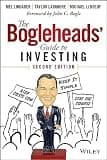
The Bogleheads' Guide to Investing
The friendly community bible of low-cost, buy-and-hold index investing, written by everyday investors rather than salespeople. The core philosophy is timeless for Aussies, just read the tax-advantaged account bits as super.
The Simple Path to Wealth
JL Collins
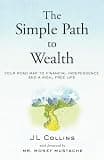
The Simple Path to Wealth
The friendliest on-ramp to index investing there is, born from letters a dad wrote his daughter. It makes 'buy the whole market and chill' feel obvious, just map his US fund picks onto Aussie equivalents and super.
The Millionaire Teacher
Andrew Hallam
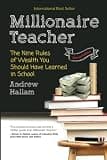
The Millionaire Teacher
A schoolteacher built a seven-figure portfolio on a modest salary, and here he lays out nine plain-English rules for doing the same with low-cost index funds. Refreshingly global, so Aussie readers just swap in super and local ETFs.
Some links above are affiliate links. If you buy through them, Snowball Invest may earn a small commission at no extra cost to you. We only recommend books we'd suggest anyway.
Sources
Was this article useful?
Put it to your own numbers
Every calculator runs entirely in your browser, with nothing stored. See what these numbers look like for your own situation.
Try the Compound Interest calculator →General information only. This article is educational and does not constitute personal financial advice. It does not account for your circumstances. Consider your own situation and seek advice from a licensed adviser before acting. Read our full disclaimer.

Timothy Hirou Gaschereau
Founder of Snowball Invest, not a financial adviser.
I write about what I'm learning myself, because nobody ever taught us how to take control of our own money. It's a skill, not a mystery, and it's never too late to learn it. The best day to start was yesterday, the second best is today.
LinkedIn →Related articles

Core and Satellite Investing in Australia
Learn what a core and satellite portfolio is, how to size the split, pick core and satellite ETFs, and whether it suits Australian DIY investors.
How to Rebalance Your ETF Portfolio in Australia
Your ETF portfolio drifts over time. Learn how to rebalance it in Australia, when to do it, how to sidestep extra CGT, plus a worked example with numbers.

The Three-Fund Portfolio in Australia
Three ETFs, thousands of companies, one simple structure. How to build a three-fund portfolio in Australia with VAS, VGS and VAF, and choose your split.