

Millionaire Teacher by Andrew Hallam: An Honest Review
Our honest Millionaire Teacher review: Andrew Hallam's nine rules of index investing, the strengths, the caveats, and how it translates for Australian investors.
 By Timothy Hirou GaschereauPublished
 10 min read
Andrew Hallam built a million-dollar portfolio on a high-school English teacher's salary, then wrote a book explaining exactly how. The short verdict: it's one of the clearest, most honest introductions to index investing you'll find anywhere, and yes, it absolutely applies to Australians (with a bit of translation). It's part of our personal finance book reviews on Snowball Invest.
Quick answer
A plain-English, story-driven case for low-cost index investing, distilled into nine rules. Best for anyone who hasn't yet committed to passive investing and wants a persuasive, readable place to start. Experienced index investors will find it familiar ground, and the fund examples are North American, so Australians translate them to local ETFs. Our rating: 4 out of 5.
Want to read The Millionaire Teacher?
Nine plain-English rules for building wealth on a modest salary with low-cost index funds. Refreshingly global.
In this guide
- →What the book is about: the nine rules of wealth
- →The genuine strengths and the honest weaknesses
- →Who it's for, and who already knows this
- →What critics and r/Bogleheads readers say
- →The Australian angle: translating the rules to VAS, VGS and super
📖 What is Millionaire Teacher about?
The full title is Millionaire Teacher: The Nine Rules of Wealth You Should Have Learned in School (2nd edition, 2017). Andrew Hallam, a Canadian who spent years teaching English at international schools, became a millionaire on a teacher's salary by following a disciplined, low-cost investing approach, and the book distils that into nine rules:
- Spend like you want to be rich. Live frugally and save aggressively; your savings rate matters more than your fund picks.
- Start early and let compound interest do the heavy lifting.
- Use low-cost index funds instead of actively managed funds, because most active managers underperform their benchmark over the long run.
- Understand the devastating drag of fees, which compound into a massive gap over decades.
- Stay the course through crashes. Hallam rebalanced into shares after both 2001 and the 2008 crisis; that discipline is the difference.
- Build a sensible bond and stock allocation (a common blunt starting point is roughly your age as a percentage in bonds).
- Resist stock-picking and hot tips. The data doesn't support stock-picking for most investors.
- Build a diversified index portfolio, a simple two or three-fund mix of domestic and international shares plus bonds. Our guide to building a simple portfolio covers the Australian version of this.
- The 10% stock-picking solution, guardrails for those who really can't resist, while being clear they'll likely still underperform.
The book is internationally respected and especially popular among expat and globally mobile investors, which led Hallam to write his follow-up, The Global Expatriate's Guide to Investing. Millionaire Teacher is the foundation of all of it.
⚖️ Strengths and weaknesses
What it gets right
- ✓Hallam's credibility is real: he built wealth on a teacher's salary, so the message lands differently than advice from a hedge fund manager.
- ✓Genuinely engaging writing: personal anecdotes, real case studies and a dry sense of humour.
- ✓The fee argument is devastating (in a good way): he shows the maths in a way that's hard to forget.
- ✓Excellent behavioural-finance sections on why we make bad decisions and how to avoid them.
- ✓Covers the full picture: saving, investing, fees, behaviour and portfolio construction, not just a chapter on ETFs.
- ✓The 2017 second edition is updated with ETF-specific guidance.
Where it falls short
- ✕The fund examples are US and Canada-centric, so Australians need to translate them.
- ✕The 'age in bonds' rule is a blunt instrument, not tailored to your circumstances (or to the fact Australians have super working in the background).
- ✕The stock-picking chapter feels slightly inconsistent after eight chapters arguing against it.
- ✕It's a beginner-to-intermediate book: not much new if you already run a diversified ETF portfolio.
- ✕No Australian tax content: franking credits and super don't feature.
👤 Who should read it, and who should skip it?
Read it if you
- ✓Are new to investing and want a clear, story-driven introduction to index funds.
- ✓Have money in a high-fee managed fund and aren't sure whether to stay.
- ✓Keep hearing about passive investing but haven't fully committed yet.
- ✓Want to understand the behavioural side of investing, not just the mechanics.
Skip it if you
- ✕Already invest in low-cost index ETFs and rebalance regularly.
- ✕Want Australia-specific guidance on super, ETFs and tax (this book won't give you that).
- ✕Are after advanced portfolio theory or factor investing.
🔍 What do critics say?
The critical consensus is about as positive as it gets in personal finance publishing. Widely read investing sites recommend it wholeheartedly as one of the best introductions to index investing available, praising Hallam's balance between the sacrifices required and the genuine contentment of a simpler financial life. The one recurring quibble is the final stock-picking chapter: after eight chapters arguing convincingly against stock-picking, the last one shows readers how to do it. Hallam's rationale (most people, particularly men, will try it anyway, so better to give them guardrails and a reality check) is pragmatic, but the tonal shift is noticeable.
💬 What do readers say? Goodreads and Reddit
On Goodreads it holds around 4.3 out of 5 from thousands of ratings, with nearly half of readers giving it five stars, a strong result for a finance book. On Reddit, across r/Bogleheads and personal finance communities, it's consistently described as eye-opening for first-time investors and frequently recommended as the first book to read, not one of many. The credibility point comes up again and again: readers respond to the fact that Hallam actually built wealth on a modest salary.
Notably, it appears regularly in "best finance books" threads on r/AusFinance and r/fiaustralia even though it doesn't cover Australian-specific content. The philosophy is universal enough that Australian readers recommend it anyway.
🇦🇺 The Australian angle
The fund examples are North American, but the philosophy translates perfectly. Hallam's low-cost Vanguard index funds map to VAS (Vanguard Australian Shares) and VGS (Vanguard International Shares) on the ASX, both with management fees well under 0.20% a year. Where he talks about tax-advantaged accounts like the US 401(k), the Australian equivalent is superannuation, and it's compulsory, so choosing a low-cost super fund with index options matters enormously (many retail super funds charge 1 to 2% a year, which sounds small and isn't).
The fee-drag maths hits hard. Here's an illustrative example: $100,000 invested for 30 years at an assumed 8% gross annual return, under three different fee levels. These are approximate and returns are never guaranteed, but the direction is the whole point.
| Annual fee | Roughly what you'd keep |
|---|---|
| ~0.10% (index ETF) | ~$980,000 |
| ~1.2% (typical active fund) | ~$720,000 |
| ~2.0% (high-fee retail super) | ~$575,000 |
That's a gap of roughly $400,000 between the cheapest and most expensive option, on the same starting balance. The money doesn't vanish, it transfers from your account to the fund manager's. One genuinely Australian bonus Hallam doesn't cover: franking credits, which come attached to many Australian dividends and represent company tax already paid, a real reason to hold some Australian shares alongside international exposure. And because your super is already a diversified, tax-advantaged vehicle, think about your total asset allocation across super and personal investments, not just one in isolation. For a deeper, single-author take on the same philosophy, our Simple Path to Wealth review is a natural next read.
💰 The verdict
Millionaire Teacher is an excellent book. It's not perfect, and it's not aimed at experienced index investors who already know this material. But for anyone still sitting in high-fee managed funds, still tempted by stock tips, or still not investing at all, it's one of the most persuasive and readable cases for passive investing ever written. The fee-drag argument alone is worth the cost, the behavioural-finance sections are genuinely useful, and Hallam's personal story gives the whole thing a credibility most finance writing lacks. Highly recommended for beginners and intermediate investors who haven't yet fully embraced low-cost index investing. Our rating: 4 out of 5.
Want to read The Millionaire Teacher?
Still in high-fee funds or on the fence about index investing? Grab a copy and read the fees chapter first.
SnowLetter
Australia's money news and our best reads, once a week.
❓ Frequently asked questions
Is Millionaire Teacher suitable for Australian investors?
+
Yes, with one caveat. The specific fund recommendations are US and Canadian, so you'll need to translate them to Australian equivalents like VAS and VGS. But the core philosophy (low fees, broad diversification, consistent behaviour, and the power of compounding) applies directly to Australians. The fee-drag argument is especially relevant given the high fees charged by many Australian retail super funds.
What are Andrew Hallam's nine rules in brief?
+
In short: spend less than you earn and avoid lifestyle inflation; start investing early; use low-cost index funds; understand how fees compound against you; don't panic-sell during crashes; maintain a sensible bond and stock split; avoid stock-picking and hot tips; build a diversified index portfolio; and if you absolutely must pick stocks, follow strict guardrails and accept you'll likely underperform the index.
How does it compare to The Barefoot Investor?
+
Both are excellent starting points for Australians. The Barefoot Investor is more Australia-specific (bank accounts, super, insurance, debt), while Millionaire Teacher goes deeper on the investing philosophy, particularly the case for index funds over active management and the maths of fee drag. Ideally read both; for the investing fundamentals specifically, Hallam has the edge.
Is the book still relevant today?
+
Absolutely. The second edition was updated in 2017, and the core argument has only become better supported by evidence since. Decades of data continue to show most active fund managers underperform their benchmark after fees over the long run. The specific ETF examples evolve, but the philosophy is timeless.
What level of investor is this book aimed at?
+
Beginners and intermediate investors who haven't yet committed to passive index investing. If you're already running a simple, low-fee ETF portfolio and rebalancing annually, you'll find it familiar. If you're new, or still in high-fee managed funds, it's an ideal starting point.
Does Andrew Hallam have other books?
+
Yes. His follow-up, The Global Expatriate's Guide to Investing, is aimed at internationally mobile workers and expats, covering how to build an index portfolio across different countries and platforms. It's particularly popular among Australians working abroad or holding assets in multiple countries.
📚 Get the book (and two index-investing companions)
The Millionaire Teacher
Andrew Hallam
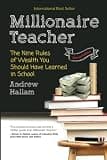
The Millionaire Teacher
A schoolteacher built a seven-figure portfolio on a modest salary, and here he lays out nine plain-English rules for doing the same with low-cost index funds. Refreshingly global, so Aussie readers just swap in super and local ETFs.
The Simple Path to Wealth
JL Collins
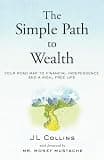
The Simple Path to Wealth
The friendliest on-ramp to index investing there is, born from letters a dad wrote his daughter. It makes 'buy the whole market and chill' feel obvious, just map his US fund picks onto Aussie equivalents and super.
Some links above are affiliate links. If you buy through them, Snowball Invest may earn a small commission at no extra cost to you. We only recommend books we'd suggest anyway.
Sources
Was this article useful?
Put it to your own numbers
Every calculator runs entirely in your browser, with nothing stored. See what these numbers look like for your own situation.
Explore the calculators →General information only. This article is educational and does not constitute personal financial advice. It does not account for your circumstances. Consider your own situation and seek advice from a licensed adviser before acting. Read our full disclaimer.

Timothy Hirou Gaschereau
Founder of Snowball Invest, not a financial adviser.
I write about what I'm learning myself, because nobody ever taught us how to take control of our own money. It's a skill, not a mystery, and it's never too late to learn it. The best day to start was yesterday, the second best is today.
LinkedIn →Related articles
Unshakeable by Tony Robbins: An Honest Review
Our honest Unshakeable review for Australians: Tony Robbins and Peter Mallouk's stay-invested, low-fee playbook, its US-centric limits, and the super-fee angle.

Money Master the Game by Tony Robbins: An Honest Review
Our honest Money Master the Game review for Australians: Tony Robbins's 7-step plan, the sound core message on fees and index funds, and the US-heavy padding.

The Simple Path to Wealth Review: JL Collins for Australians
Our honest Simple Path to Wealth review for Australians: what JL Collins gets right, what doesn't apply here, and how to use the philosophy with local ETFs and super.