

The Simple Path to Wealth Review: JL Collins for Australians
Our honest Simple Path to Wealth review for Australians: what JL Collins gets right, what doesn't apply here, and how to use the philosophy with local ETFs and super.
 By Timothy Hirou GaschereauPublished
 11 min read
The Simple Path to Wealth is one of the most recommended investing books in the world, and it turns up in almost every FIRE reading list. But it's a US book built around a US fund, so how useful is it for an Australian? Here's our honest review, including exactly how to translate JL Collins' philosophy to local tools. It's part of our personal finance book reviews on Snowball Invest.
Quick answer
One of the clearest, most readable books ever written about passive index investing. The philosophy is genuinely excellent. But if you're Australian, you'll need to do some mental translation, because large chunks of the book (VTSAX, 401k, Roth IRA, US tax) simply don't apply here. Read it for the mindset, then do your local homework. Our rating: 4 out of 5.
Want to read The Simple Path to Wealth?
The best plain-English case for index investing there is. Get the revised edition.
In this guide
- →What the book is actually about: VTSAX, FU money and the two phases
- →Genuine strengths and the real criticisms, side by side
- →Who it's for, and who should skip it
- →What readers and the FIRE community say
- →The big one: how an Australian actually applies the philosophy
📖 What is The Simple Path to Wealth actually about?
Collins originally wrote this material as blog posts and letters to his daughter. The core message is blunt: investing doesn't have to be complicated, and the financial industry profits from convincing you otherwise. The book's central vehicle is VTSAX, a US total stock market index fund. Collins argues that buying and holding a single, low-cost, broadly diversified index fund is all most people need. No stock picking, no market timing, no expensive advisers.
The philosophy breaks into two phases. In the accumulation phase (while you're building wealth) he recommends 100% stocks, accepting short-term volatility for long-term growth, with the goal of "FU money": enough financial independence to walk away from a job or situation that no longer serves you. In the preservation phase (drawing down in retirement) he adds bonds as a stabiliser. The 4% safe withdrawal rate sits at the heart of the retirement section, and he makes a compelling case for staying the course through crashes, since panic selling is the single biggest wealth-destroying mistake ordinary investors make. The revised 2025 edition keeps all of this and adds updated data, a bigger FAQ and a new case study.
Accumulation
Build wealth, ride the volatility
100% shares
milestone
Preservation
Draw down, add a stabiliser
Shares plus bonds
One fund, two phases. The switch flips once you hit enough to walk away.
⚖️ Strengths and weaknesses
A genuinely excellent book in several ways, with one big limitation for Australian readers. Both sides matter.
What Collins gets right
- ✓The case for low-cost index investing is airtight and backed by decades of data.
- ✓One-fund simplicity is psychologically powerful: a plan you'll stick to beats a clever one you won't.
- ✓The FU money mindset (wealth as freedom, not stuff) is the best thing in the book, and it's universal.
- ✓His treatment of market crashes is honest and useful, not a pretence that they aren't scary.
- ✓The writing reads like a letter from a knowledgeable friend, no jargon, no sales pitch.
- ✓The revised edition adds real value with updated data and an expanded FAQ.
Where it falls short (especially for Aussies)
- ✕VTSAX doesn't exist in Australia, so a lot of the practical advice is built around a product you can't buy.
- ✕It's heavily US-centric: 401k, Roth IRA, US Social Security and US tax get lots of pages you'll skim.
- ✕The 4% rule is based on US data, and may be too optimistic for longer Australian retirements.
- ✕The bond advice is oversimplified, and looked shaky in 2022 when stocks and bonds fell together.
- ✕Property is almost entirely ignored, which is a big gap for many Australians.
- ✕Superannuation gets zero coverage, despite being central to Australian financial life.
👤 Who should read it, and who should skip it?
Read it if
- ✓You're new to investing and want a clear, jargon-free foundation.
- ✓You're overwhelmed by financial complexity and want a simple philosophy.
- ✓You're interested in FIRE and want to understand the foundational thinking.
- ✓You want to understand why passive index investing works, without being sold anything.
Skip it or read it knowing its limits if
- ✕You want Australian-specific guidance on super, ETFs and tax.
- ✕You're looking for a property investment strategy.
- ✕You have complex tax, estate or business structures.
- ✕You want a book that accounts for the Age Pension, franking credits or super drawdown.
If FIRE is the part that hooked you, it's worth reading our guide to the different types of FIRE next, and running your own number through our FIRE number calculator to see what Collins's philosophy actually means for your numbers.
💬 What do readers and critics say?
On Goodreads the book holds a rating of around 4.27 out of 5 from a very large number of ratings, making it one of the highest-rated personal finance books on the platform. The consensus across financial blogs and communities is similar: excellent philosophy, limited direct applicability for non-US readers.
On r/fiaustralia and r/AusFinance it's recommended constantly as a foundational read, with one consistent caveat: you need to mentally translate VTSAX to local ASX-listed equivalents. Australians love the philosophy and just swap the product.
🇦🇺 How do Australians apply The Simple Path to Wealth?
This is the section that matters most. The philosophy transfers, the product doesn't. VTSAX is unavailable here, but the underlying idea, buying a low-cost, broadly diversified index fund and holding it for the long term, is completely accessible through broad market index ETFs listed on the ASX. The mechanics are slightly different, the philosophy is identical. If you want the local how-to, start with our guides to passive investing in Australia and how to choose an ETF.
A few local advantages and differences worth knowing. Franking credits are a genuine Australian edge: Australian shares and the ETFs that hold them often come with credits attached to dividends, representing company tax already paid, which can reduce your tax bill (the ATO has clear guidance). Superannuation is your 401k equivalent, a tax-advantaged wrapper where many funds offer low-cost index options, so it's worth thinking about super as part of your overall strategy rather than something that just happens in the background. The FU money concept needs no translation at all. And treat the 4% rule as a starting point, not a law: the Age Pension, super tax rules and Australian returns all change the maths, so ASIC Moneysmart's retirement calculators are a better Australian starting point.
💰 The verdict
Our rating is 4 out of 5. The Simple Path to Wealth is one of the most compelling cases for passive index investing ever written, and the revised edition makes it even more useful. The writing is clear, the philosophy is sound, and the mindset content is genuinely valuable. The Australian caveat is real though: you'll need to mentally translate a lot of the specific mechanics, and entire sections on US tax simply won't apply. Read it for the philosophy, do your Australian homework separately, and it belongs on the shortlist of books that can genuinely change how you think about money.
Want to read The Simple Path to Wealth?
Ready to keep it simple? Grab the revised edition and pair it with our Aussie ETF guides.
SnowLetter
Australia's money news and our best reads, once a week.
❓ Frequently asked questions
Is The Simple Path to Wealth worth reading for Australians?
+
Yes, with a caveat. The investing philosophy (passive index funds, low costs, staying the course, building FU money) is universally sound and clearly explained. But large sections covering VTSAX, 401k, Roth IRA and US tax don't apply here. Read it for the mindset and framework, then use Australian resources for the local implementation.
What is the main message of The Simple Path to Wealth?
+
Investing doesn't have to be complicated. Buy a low-cost, broadly diversified index fund, hold it for the long term, ignore the financial media noise, and let compound growth do the work. The financial industry profits from complexity, and you don't need to participate in it to build real wealth.
What is JL Collins' investment strategy?
+
Collins advocates for a single low-cost total stock market index fund during the accumulation phase, with bonds added during the preservation phase. He recommends VTSAX specifically (a US total stock market fund), though the underlying principle, broad diversification at the lowest possible cost, applies to any equivalent product in any market.
Is the 4% rule relevant in Australia?
+
It's a useful starting framework, but treat it with caution. The rule came from US historical data for a roughly 30-year retirement. Some Australian research suggests a more conservative rate may suit longer retirements, and the Age Pension, super drawdown rules and Australian tax all change the maths. ASIC Moneysmart's retirement calculators are a better starting point for Australian planning.
What is the Australian equivalent of VTSAX?
+
VTSAX is a US-domiciled fund unavailable to Australian retail investors. The equivalent approach here uses low-cost, broadly diversified index ETFs listed on the ASX, giving you exposure to global markets, Australian markets, or both. The specific products depend on your goals and tax situation, so read up on how to choose an ETF and consider advice for your own circumstances.
Is there a 2025 updated edition of The Simple Path to Wealth?
+
Yes. A revised and expanded edition was published in 2025 with updated data, a substantially expanded FAQ (covering topics like Bitcoin, insurance and retirement) and a new case study. Note that at launch the hardcover and e-book were the new edition while some paperback and audio versions were still the original text, so check the format before you buy.
📚 Get the book (and two worthy next reads)
The Simple Path to Wealth
JL Collins
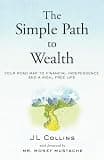
The Simple Path to Wealth
The friendliest on-ramp to index investing there is, born from letters a dad wrote his daughter. It makes 'buy the whole market and chill' feel obvious, just map his US fund picks onto Aussie equivalents and super.
The Little Book of Common Sense Investing
John C. Bogle
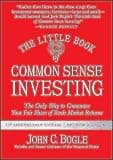
The Little Book of Common Sense Investing
From the man who invented the index fund, this is the short, sharp case for low-cost investing that has aged like fine wine. The maths on fees is universal, just think ETFs and super instead of his US funds.
The Millionaire Teacher
Andrew Hallam
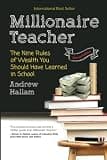
The Millionaire Teacher
A schoolteacher built a seven-figure portfolio on a modest salary, and here he lays out nine plain-English rules for doing the same with low-cost index funds. Refreshingly global, so Aussie readers just swap in super and local ETFs.
Some links above are affiliate links. If you buy through them, Snowball Invest may earn a small commission at no extra cost to you. We only recommend books we'd suggest anyway.
Sources
Was this article useful?
Put it to your own numbers
Every calculator runs entirely in your browser, with nothing stored. See what these numbers look like for your own situation.
Explore the calculators →General information only. This article is educational and does not constitute personal financial advice. It does not account for your circumstances. Consider your own situation and seek advice from a licensed adviser before acting. Read our full disclaimer.

Timothy Hirou Gaschereau
Founder of Snowball Invest, not a financial adviser.
I write about what I'm learning myself, because nobody ever taught us how to take control of our own money. It's a skill, not a mystery, and it's never too late to learn it. The best day to start was yesterday, the second best is today.
LinkedIn →Related articles

Motivated Money by Peter Thornhill: An Honest Review
Our honest Motivated Money review: Peter Thornhill's dividend-income philosophy, the strengths, the real criticisms, and who this Aussie investing classic is for.

The $1000 Project by Canna Campbell: An Honest Review
Our honest review of The $1000 Project by Canna Campbell: the $1,000 parcel method, dividend investing, the strengths, the limits, and who it's for.

Money Master the Game by Tony Robbins: An Honest Review
Our honest Money Master the Game review for Australians: Tony Robbins's 7-step plan, the sound core message on fees and index funds, and the US-heavy padding.