

Motivated Money by Peter Thornhill: An Honest Review
Our honest Motivated Money review: Peter Thornhill's dividend-income philosophy, the strengths, the real criticisms, and who this Aussie investing classic is for.
 By Timothy Hirou GaschereauPublished
 11 min read
If you've spent any time in Australian investing circles, you've heard the name. Motivated Money by Peter Thornhill is one of the most recommended, and most argued-about, books in the Aussie investing community. Here's the honest version: it's a genuinely valuable mindset shift with some real blind spots. Worth reading, worth reading critically. It's part of our personal finance book reviews on Snowball Invest.
Quick answer
A genuinely valuable mindset shift on income investing, written specifically for Australians, with a few blind spots worth knowing before you dive in. Best for long-term Aussie investors, income-focused readers approaching retirement, and the FIRE crowd curious about dividend investing. Skip it if you want a balanced overview of every asset class or a simple index-fund-only framework. Our rating: 4 out of 5.
Want to read Motivated Money?
A calm, contrarian Aussie case for living off growing dividends. One of the few great finance books written for Australians.
In this guide
- →What the book is about: Thornhill's income-not-capital-growth philosophy
- →The genuine strengths and the real criticisms, side by side
- →Who it's for, and who should read something else first
- →What critics and readers say, including the r/fiaustralia debate
- →The Australian angle: franking credits, the ASX, LICs and super
📖 What is Motivated Money about?
Peter Thornhill spent decades in financial services across Australia and the UK before distilling his career into a single, opinionated framework. Now in its 6th edition (published 2020), the book has been updated and expanded since its original release.
The core idea is simple, even if it cuts against conventional wisdom. Thornhill argues the goal of investing should be to build a growing income stream, not to pile up a lump sum you then sell down in retirement. Instead of chasing capital growth, you buy productive, dividend-paying businesses and live off the income they throw off. You never need to sell the goose, because the goose keeps laying eggs.
| Pillar | What it means |
|---|---|
| Industrials over everything | A strong preference for the ASX industrials (excluding the resources sector), which he sees as more reliable income producers than miners. |
| LICs over ETFs | Favours long-established Australian LICs (Argo, Milton, BKI, Whitefield) for their ability to smooth dividends in downturns. |
| Income, not asset sales | Live off dividends and never sell. Capital growth is a by-product, not the goal. |
| Volatility isn't risk | Blunt on cash and bonds for long horizons; argues price wobble is not the same as genuine risk. |
| Spend less than you earn | The foundation everything else sits on. No strategy works without it. |
He backs the case with long-run data on the Australian share market, arguing that patient, decades-long ownership of quality shares has historically rewarded investors handsomely, and that holding for seven years or more has made a positive return highly likely. Read those data sections with your brain switched on (more on that below), but the underlying point about patience is sound.
⚖️ Strengths and weaknesses
What it gets right
- ✓The mindset shift: build an income stream you never have to sell, instead of a lump sum you draw down. Genuinely eye-opening.
- ✓Franking credits: one of the clearest plain-English explanations of the Australian dividend imputation system you'll find.
- ✓Accessible writing: no jargon, no condescension. Reads like a knowledgeable friend talking.
- ✓Australian to the core: written with the ASX, franking and super in mind, so nothing needs translating.
- ✓The LIC case: a practical argument for why dividend-smoothing matters if you actually live on your income.
Where it falls short
- ✕Sweeping dismissal of other asset classes: REITs, resources, international shares and bonds get waved away more by rhetoric than analysis.
- ✕Data deserves scrutiny: critics point to selective start dates and comparisons that flatter the argument.
- ✕Gearing needs care: borrowing to invest is presented as manageable, but it's not for everyone and the failure scenarios get little airtime.
- ✕Some examples feel dated, leaning on the GFC and dot-com crash.
- ✕One perspective, not a full education: it's a manifesto for one approach, not a balanced overview.
👤 Who should read it, and who should skip it?
Read it if you
- ✓Are a long-term Australian investor who wants to understand the income-focused approach.
- ✓Are approaching retirement and drawn to living off dividends rather than selling down.
- ✓Are in the FIRE community and curious about dividend investing and LICs in Australia.
- ✓Want to understand why some experienced Aussie investors prefer LICs over ETFs.
Read something else first if you
- ✕Need a balanced overview of all asset classes before forming a view.
- ✕Want guidance on international diversification or a global portfolio.
- ✕Prefer the index-fund-only simplicity of The Simple Path to Wealth.
- ✕Might take the gearing sections as straightforward advice without further research.
The honest answer: most serious Australian investors should read it, even if they end up disagreeing with parts. Understanding Thornhill's framework makes you a sharper investor, whichever path you ultimately choose.
🔍 What do critics say?
There are no major newspaper reviews of Motivated Money, and it hasn't been through academic peer review. What exists is a body of community commentary, some glowing, some sharply critical. Morningstar Australia and Firstlinks have both engaged seriously with Thornhill's income-investing approach, and InvestSmart memorably dubbed him the "Investment Heretic," which captures his against-the-grain spirit. In the FIRE community he's treated as something of a legend.
The more critical voices come from r/fiaustralia, where detailed threads pick apart the data, arguing that selective start dates and convenient comparisons make the case look stronger than a neutral analysis would. That doesn't make the core philosophy wrong, but it's a fair reason to read the charts critically rather than take them at face value. There's no formal validation of his specific claims, so engage with the ideas, don't swallow them whole.
💬 What do readers say? Goodreads and Reddit
Readers rate it highly. On Goodreads it sits around 4.5 out of 5, with the large majority handing out four and five stars, and it holds a similarly strong rating on Amazon AU. Reviewers describe it as down-to-earth and straight-shooting, and praise how it explains complicated financial concepts in a relatable, practical way.
On Reddit the picture is more nuanced. r/AusFinance generally recommends it as a beginner-friendly intro to Thornhill's approach, while r/fiaustralia treats it as influential but debated, with people asking whether his results reflect the strategy or simply the timing of a long bull market early in his investing life. That's a fair question to hold in mind.
🇦🇺 The Australian angle
This is genuinely one of the best finance books Australia has produced, and the reason is simple: it's written for the Australian context. Almost every other investing book worth reading was written by an American, for Americans, and has to be mentally translated. Motivated Money doesn't need translating.
- Franking credits. The strategy is built around fully franked dividends, which are a genuine structural advantage in the Australian tax system, especially for investors in lower tax brackets or in pension-phase super.
- ASX concentration. Our market leans heavily on financials and resources. The All Industrials focus is a deliberate response, filtering out the resources sector in search of steadier income.
- LICs. Listed Investment Companies have a long history on the ASX, with names like Argo and Milton going back decades. They're far more prominent here than in most markets, and Thornhill's preference for them is grounded in that history.
- Superannuation. A portfolio of fully franked dividends inside a pension-phase super fund (where earnings are taxed at 0%) is about as tax-efficient as investing gets in Australia.
Retirees drawing down and readers chasing early retirement both gravitate to this approach, so if the FIRE angle interests you, our guide to the different types of FIRE is worth a read alongside it.
If you'd like a gentler, index-first counterpoint before or after this one, our Simple Path to Wealth review and Little Book of Common Sense Investing review make the case for broad, low-cost index funds.
💰 The verdict
Motivated Money earns its reputation. The income-focused mindset shift is genuinely valuable, the Australian-specific content on franking credits and LICs is excellent, and the writing is accessible without being condescending. For any serious Australian investor, it belongs on the reading list. Just read it with your critical thinking engaged: the dismissal of other asset classes is too sweeping, the data comparisons deserve scrutiny, and the gearing sections need careful handling. It works best as one strong perspective in a broader financial education, not the final word. Our rating: 4 out of 5.
Want to read Motivated Money?
Ready to rethink dividends and income? Grab a copy and see if Thornhill's approach fits how you want to invest.
SnowLetter
Australia's money news and our best reads, once a week.
❓ Frequently asked questions
Is Motivated Money suitable for beginners?
+
Yes, with a caveat. The writing is clear and jargon-free, and Thornhill explains his ideas in plain English, so beginners find it easy to read and genuinely thought-provoking. The caveat is that it presents one opinionated approach as if it's the obvious answer. Read it alongside other perspectives, particularly on diversification and index funds, before making any investing decisions.
Does Peter Thornhill recommend ETFs or LICs?
+
Thornhill clearly prefers Listed Investment Companies (LICs) over ETFs. His favoured vehicles are long-established Australian LICs such as Argo, Milton, BKI and Whitefield, which he values for their ability to smooth dividends during downturns by drawing on retained profits, something an ETF can't do. It's a debated point in the Australian investing community, with reasonable arguments on both sides.
What is the All Industrials index Thornhill talks about?
+
It refers to the ASX Industrials index, which tracks Australian industrial companies while excluding the resources sector. Thornhill's argument is that industrial businesses produce more reliable, growing income streams than miners, which lean heavily on commodity prices. Whitefield is often cited as the LIC most closely aligned with this approach.
Is the book still relevant now?
+
The core philosophy, building a growing income stream from quality dividend-paying shares, is as relevant as ever. The 6th edition was published in 2020 with updated material. Some examples draw on older events like the GFC and dot-com crash, which can feel dated, but the underlying principles and the Australian tax context around franking credits and super haven't changed fundamentally.
Where can I buy Motivated Money in Australia?
+
The 6th edition is available in print and Kindle format on Amazon AU, and through Australian bookshops. The eBook is the most convenient option for most readers.
How does Thornhill's strategy compare to simple index fund investing?
+
They differ in philosophy. Index fund investing (think a broad ETF like VAS or VGS) aims to capture the total return of the market, dividends plus capital growth, with low cost and wide diversification. Thornhill focuses specifically on income from Australian industrial shares and LICs, excludes resources and international shares, and prioritises dividend growth over total return. Index investing is simpler and more diversified; Thornhill's approach is more concentrated and income-focused. Plenty of Australian investors end up combining elements of both.
📚 Get the book (and two index-investing counterpoints)
Motivated Money
Peter Thornhill
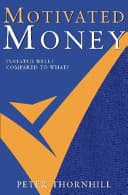
Motivated Money
Peter Thornhill's cult-favourite case for living off fully franked dividends instead of chasing capital gains. A calm, contrarian Aussie take that has quietly built a big following of long-term investors.
The Simple Path to Wealth
JL Collins
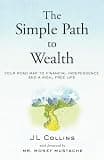
The Simple Path to Wealth
The friendliest on-ramp to index investing there is, born from letters a dad wrote his daughter. It makes 'buy the whole market and chill' feel obvious, just map his US fund picks onto Aussie equivalents and super.
Some links above are affiliate links. If you buy through them, Snowball Invest may earn a small commission at no extra cost to you. We only recommend books we'd suggest anyway.
Sources
Was this article useful?
Put it to your own numbers
Every calculator runs entirely in your browser, with nothing stored. See what these numbers look like for your own situation.
Explore the calculators →General information only. This article is educational and does not constitute personal financial advice. It does not account for your circumstances. Consider your own situation and seek advice from a licensed adviser before acting. Read our full disclaimer.

Timothy Hirou Gaschereau
Founder of Snowball Invest, not a financial adviser.
I write about what I'm learning myself, because nobody ever taught us how to take control of our own money. It's a skill, not a mystery, and it's never too late to learn it. The best day to start was yesterday, the second best is today.
LinkedIn →Related articles

The Simple Path to Wealth Review: JL Collins for Australians
Our honest Simple Path to Wealth review for Australians: what JL Collins gets right, what doesn't apply here, and how to use the philosophy with local ETFs and super.

The $1000 Project by Canna Campbell: An Honest Review
Our honest review of The $1000 Project by Canna Campbell: the $1,000 parcel method, dividend investing, the strengths, the limits, and who it's for.

Money Master the Game by Tony Robbins: An Honest Review
Our honest Money Master the Game review for Australians: Tony Robbins's 7-step plan, the sound core message on fees and index funds, and the US-heavy padding.