

Money Master the Game by Tony Robbins: An Honest Review
Our honest Money Master the Game review for Australians: Tony Robbins's 7-step plan, the sound core message on fees and index funds, and the US-heavy padding.
 By Timothy Hirou GaschereauPublished
 10 min read
Money Master the Game has a genuinely useful message buried inside roughly 600 pages. The question is whether you want to dig for it. Short answer: if you're new to investing, probably yes; if you already know what an index fund is, probably not. It's part of our personal finance book reviews on Snowball Invest.
Quick answer
Solid core ideas, padded delivery, and heavily US-framed. Best for beginners and intermediate investors who need a motivational push to start. Skip it if you want a short read, you're already investing-savvy, or you need Australia-specific guidance (and note the condensed follow-up, Unshakeable, covers the same ground faster). Our rating: 3.5 out of 5.
Want to read Money Master the Game?
Tony Robbins distils interviews with 50-plus top investors into a 7-step plan. Sound on fees and index funds, if you can handle the length.
In this guide
- →What the book is about: the 7 steps and the sound core message
- →The genuine strengths and the honest weaknesses
- →Who it's for, and why some should read Unshakeable instead
- →What critics and r/Bogleheads readers say
- →The Australian angle: fees, super, ETFs and the All Weather portfolio
📖 What is Money Master the Game about?
Money Master the Game is a roughly 600-page personal finance guide published in 2014. Tony Robbins spent years interviewing more than 50 of the world's top investors, including Ray Dalio, Jack Bogle and Warren Buffett, and distilled what he learned into a 7-step framework for financial freedom. The core ideas are genuinely sound:
- Keep fees low: expensive actively managed funds quietly eat your returns over decades.
- Use low-cost index funds: passive investing beats most active managers over the long run.
- Harness compounding: starting early and staying invested beats picking winners.
- Get your asset allocation right: how you split across asset classes matters more than individual stock picks.
- Diversify and automate: don't concentrate your risk, and remove emotion and procrastination.
- Build a lifetime income stream: plan for a stage where your money works for you.
The most talked-about section is Ray Dalio's "All Weather" portfolio, a specific asset allocation designed to hold up across different economic conditions, which Robbins presents as a kind of investing holy grail. The book is also long, very long, and plenty of readers agree it could have been 200 pages without losing much. If that sounds exhausting, Robbins's shorter follow-up, Unshakeable, covers the same ground in a fraction of the time.
⚖️ Strengths and weaknesses
What it gets right
- ✓The fees argument is excellent: a 1% annual fee difference compounds into tens of thousands over 30 years, explained in language that sticks.
- ✓The interviews are impressive: candid access to Jack Bogle, Warren Buffett and Ray Dalio in one book is genuinely valuable.
- ✓It's accessible: Robbins meets nervous beginners where they are.
- ✓It gets people started, which is probably its biggest practical win.
- ✓Compounding and asset allocation are explained clearly and usefully for anyone new to them.
Where it falls short
- ✕It's too long: nearly 600 pages for ideas that could be covered in 200, with a lot of repetition and motivational filler.
- ✕Heavily US-centric: built around 401(k)s, IRAs, Roth IRAs and annuities that don't exist here.
- ✕The conflict-of-interest concern is real: critics flagged that parts steer readers toward firms Robbins is connected to.
- ✕The expert interviews contradict each other (active vs index vs hedge funds), which can confuse beginners.
- ✕The All Weather portfolio is US-specific and heavily bond-weighted, presented as more novel than it is.
- ✕Annuities and structured products are promoted alongside the anti-fee message, and largely don't translate to Australia anyway.
👤 Who should read it, and who should skip it?
Read it if you
- ✓Are new to investing and need a motivational kick to actually start.
- ✓Respond well to big-picture inspiration and real-world stories.
- ✓Want to understand, in plain English, why fees and asset allocation matter so much.
- ✓Have never thought seriously about compounding or diversification.
Skip it (or read Unshakeable) if you
- ✕Already know what index funds, ETFs and asset allocation are.
- ✕Want a short, tight read.
- ✕Are an Australian after local, practical guidance on super, ETFs and tax (ASIC MoneySmart is the right starting point).
🔍 What do critics say?
The critical consensus is fairly consistent: a useful primer, padded delivery, read with your eyes open about the promotional elements. The most detailed critique, from a well-known financial commentator, praised Robbins for spotlighting an important topic but raised specific concerns: the promotional feel of certain sections, the tension between the anti-fee message and some of the firms recommended, and inconsistent advice across the expert interviews. Other reviewers called it solid and better than having no plan at all, while noting the filler, self-promotion and contradictory interviews, and pointing beginners elsewhere for step-by-step implementation.
💬 What do readers say? Goodreads and Reddit
On Goodreads it sits at around 4 out of 5 from tens of thousands of ratings, a solid score for a book this long and this polarising. Across r/investing, r/Bogleheads and r/personalfinance the story is consistent: generally seen as useful for beginners, especially its emphasis on saving consistently, keeping fees low and not trying to beat the market.
The praise tends to focus on the core message; the criticism tends to focus on the delivery (excessive length, repetition, self-promotion and the potential conflicts of interest in some recommendations). Both are fair.
🇦🇺 The Australian angle
The core principles translate directly, even if the specific products don't:
- Fees matter here too, massively. Even a 0.5% annual difference in super fund fees compounds into a significant sum over 30 or 40 years, which is exactly why APRA publishes annual super fund performance data. Robbins's fee argument lands just as hard in Australia.
- The US account types need translation. Think superannuation when he says 401(k) or IRA, and an account-based pension where he talks annuities. The concepts (tax-advantaged long-term savings, converting a lump sum into reliable income) are the same; the products differ.
- Index funds and ETFs are very much a thing here, with a wide range of low-cost ASX-listed ETFs from Vanguard, iShares and BetaShares. The index-fund argument applies directly.
- The All Weather portfolio can be approximated with ASX-listed ETFs, but it was designed around US asset classes and Treasuries, so any Australian adaptation needs to account for local conditions and currency. It's a starting point for thinking about allocation, not a plug-and-play solution.
Take the principles, translate the products, and verify everything locally. For the condensed version of the same ideas, see our Unshakeable review, and for the low-fee index case at its clearest, our Little Book of Common Sense Investing review.
💰 The verdict
Money Master the Game is worth reading if you're new to investing and need someone to convince you it actually matters. The core message is sound: fees kill returns, index funds beat most active managers, compounding is powerful, asset allocation matters more than stock picking, so start now, automate it and stay the course. But go in with clear expectations. It's long, it's repetitive, it's built around American products that don't exist here, and some sections read more like a sales pitch than a finance book. If you want the same ideas in a fraction of the time, Unshakeable is the condensed version and the better starting point for most readers. Read Money Master the Game if you want the full deep-dive and the interviews; read Unshakeable if you want the ideas without the filler. Our rating: 3.5 out of 5.
Want to read Money Master the Game?
Want the full deep-dive and the investor interviews? Grab a copy, and translate the US products as you go.
SnowLetter
Australia's money news and our best reads, once a week.
❓ Frequently asked questions
Is Money Master the Game worth reading for Australians?
+
Yes, with caveats. The core principles (keep fees low, use index funds, automate your investing, get your asset allocation right) apply directly here. But the book is built around US products (401(k)s, IRAs, annuities) that don't exist in Australia, so you'll mentally translate a lot of the practical detail. For Australian-specific guidance, ASIC MoneySmart is the better starting point.
What is the All Weather portfolio in the book?
+
An asset allocation strategy from hedge fund manager Ray Dalio, designed to hold up reasonably across different economic conditions. The book presents a simplified version that's heavily weighted to bonds. It's a useful framework for thinking about diversification, but it's US-framed (built around US Treasuries) and performed well partly thanks to a long bond bull market, so it's not a plug-and-play solution for Australians.
How does it compare to Unshakeable?
+
Unshakeable (2017) is Robbins's follow-up and covers the same core ideas in roughly 250 pages instead of 600. It's tighter, faster and easier to finish. Time-poor readers or those with some financial literacy will get more from Unshakeable; if you want the in-depth interviews and full framework, go with the original.
Does Tony Robbins have a conflict of interest in the book?
+
It's a legitimate concern raised by credible critics, who noted the book steers readers toward firms Robbins may have relationships with, including at least one carrying fees that sit awkwardly with the book's strong anti-high-fee message. It doesn't mean the core investing advice is wrong, but it's worth being aware of when evaluating specific product recommendations.
What are the 7 steps?
+
Roughly: (1) commit to saving and investing, (2) learn the rules of the financial system, (3) set a specific, achievable goal, (4) get your asset allocation right, (5) build a lifetime income plan, (6) learn from the world's best investors, and (7) take action and give back. In short: start, learn, set a goal, allocate well, plan for retirement, learn from the best, and act.
Is it good for beginners?
+
Yes, that's its sweet spot. It's accessible, motivating, and explains why fees, compounding and asset allocation matter in plain English. Experienced investors will find it long and repetitive and are better served by the condensed Unshakeable or a dedicated index-investing book.
📚 Get the book (and two companions)
Money Master the Game
Tony Robbins
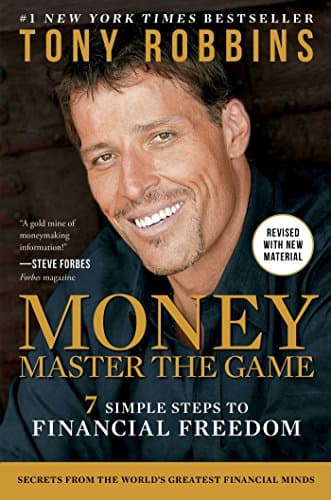
Money Master the Game
Tony Robbins distils interviews with 50-plus top investors into a 7-step plan. The core message (low fees, index funds, asset allocation) is sound, but it's long, US-heavy and a bit salesy.
Unshakeable
Tony Robbins
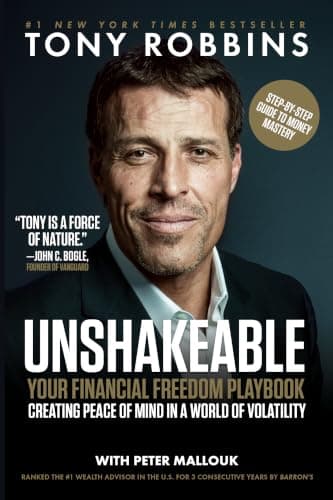
Unshakeable
Tony Robbins distils interviews with top investors into calm rules for staying invested when markets get scary. Skip his US fund and tax specifics and keep the mindset: low fees, long horizon, and don't panic-sell your super.
Some links above are affiliate links. If you buy through them, Snowball Invest may earn a small commission at no extra cost to you. We only recommend books we'd suggest anyway.
Sources
Was this article useful?
Put it to your own numbers
Every calculator runs entirely in your browser, with nothing stored. See what these numbers look like for your own situation.
Explore the calculators →General information only. This article is educational and does not constitute personal financial advice. It does not account for your circumstances. Consider your own situation and seek advice from a licensed adviser before acting. Read our full disclaimer.

Timothy Hirou Gaschereau
Founder of Snowball Invest, not a financial adviser.
I write about what I'm learning myself, because nobody ever taught us how to take control of our own money. It's a skill, not a mystery, and it's never too late to learn it. The best day to start was yesterday, the second best is today.
LinkedIn →Related articles

The Simple Path to Wealth Review: JL Collins for Australians
Our honest Simple Path to Wealth review for Australians: what JL Collins gets right, what doesn't apply here, and how to use the philosophy with local ETFs and super.

The Little Book of Common Sense Investing: Honest Review
Our honest review of John Bogle's The Little Book of Common Sense Investing: its real strengths, genuine weaknesses, and what Australian investors should take from it.
A Random Walk Down Wall Street Review: Malkiel for Aussies
Our honest A Random Walk Down Wall Street review: what Burton Malkiel's classic gets right, where it falls short, and whether it applies to Australian investors.