

A Random Walk Down Wall Street Review: Malkiel for Aussies
Our honest A Random Walk Down Wall Street review: what Burton Malkiel's classic gets right, where it falls short, and whether it applies to Australian investors.
 By Timothy Hirou GaschereauPublished
 11 min read
A Random Walk Down Wall Street is the book that launched a thousand index-fund portfolios. It's the most rigorous case for passive investing you'll find, but it's also long, dense and very American. Here's an honest review, plus what an Australian investor actually needs to translate. It's part of our personal finance book reviews on Snowball Invest.
Quick answer
One of the most important investing books ever written. The case for low-cost index funds is rigorous and convincing. It's dense, very long, and almost entirely US-focused, but the core message translates perfectly for Australian investors. If you're serious about long-term wealth, read it, just expect to do some translation work for the ASX. Our rating: 4 out of 5.
Want to read A Random Walk Down Wall Street?
Get the 13th edition (2023), it adds behavioural finance and smart-beta chapters the classic was missing.
In this guide
- →What the book is actually about: the random walk, the efficient market hypothesis and the index case
- →Genuine strengths and the real criticisms, side by side
- →Who it's for, and who should skip it
- →What critics and readers say, on Goodreads and Reddit
- →The Australian angle: SPIVA, franking, super and ASX concentration
📖 What is A Random Walk Down Wall Street about?
First published in 1973 and now in its 13th edition, this is Burton Malkiel's evidence-heavy case for passive investing. The central idea is the random walk hypothesis: stock prices move effectively at random because new information arrives unpredictably and gets priced in almost instantly. That leads to the efficient market hypothesis: if markets price in information quickly, consistently beating them through stock-picking or timing is extremely hard.
Malkiel's data is blunt: around two-thirds of active managers are beaten by a simple index fund in any given year, and over 10 to 15 years more than 90% underperform, largely because of fees. The rational move is to own the whole market at the lowest possible cost. The bubble-history chapters (tulip mania to the dot-com crash to 2008) are gripping, the life-cycle guide is practical, and the 13th edition adds chapters on behavioural finance and smart beta.
⚖️ Strengths and weaknesses
What it gets right
- ✓The efficient-market case is rigorous, built from data and research rather than assertion.
- ✓The demolition of stock-picking and market-timing is evidence-based, not mockery, just the numbers.
- ✓The index-fund conclusion is gold and has held up for 50 years.
- ✓The market-bubble history is the most readable part, and builds the resilience to stay invested.
- ✓The life-cycle asset-allocation guide gives you something concrete to work with.
- ✓The 13th-edition updates (behavioural finance, smart beta, ESG) bring it up to date.
Where it falls short
- ✕Dense and academic in places, some chapters on portfolio theory and beta need real concentration.
- ✕Very long at 432 pages, and some ground gets covered more than once.
- ✕Heavily US-centric: every fund, tax reference and retirement account is American.
- ✕The technical and fundamental analysis chapters can be a slog once the point is made.
- ✕Repetitive: the core argument is made, remade, then made again with different data.
- ✕The factor/smart-beta critique feels a touch too dismissive given the academic evidence.
👤 Who should read it, and who should skip it?
Read it if you
- ✓Are in your 20s to 40s and want to understand why passive investing works, not just that it does.
- ✓Are still tempted by stock-picking, active funds or market timing, this will clarify what you're taking on.
- ✓Like a rigorous, evidence-based argument you can actually trust.
Skip it (or read something shorter first) if you
- ✕Are a complete beginner who needs a simple, step-by-step Australian getting-started guide.
- ✕Want a quick read, The Little Book of Common Sense Investing makes the same case in 200 fewer pages.
- ✕Want local specifics on super, franking or your first $5,000.
🔍 What do critics say?
The press reception has been consistently strong across five decades. The Wall Street Journal put it plainly: "Talk to 10 money experts and you're likely to hear 10 recommendations for Burton Malkiel's classic investing book." Forbes called it a genuine classic, and the New York Times has recommended re-reading it over the flood of new finance books. The academic criticism is more pointed: some economists argue Malkiel presents the efficient market hypothesis as more reliable than the evidence warrants, since markets do produce bubbles and mispricings, and behavioural finance (which the 13th edition now acknowledges) shows investor psychology moves prices away from fundamentals in ways a strict random walk doesn't fully capture.
💬 What do readers say? Goodreads and Reddit
On Goodreads the book holds around 4.14 out of 5 from roughly 41,000 ratings, skewing strongly positive (41% five stars, 37% four). The "dense but worth it" consensus shows up everywhere.
On r/Bogleheads it's rated a "10/10" for making a compelling, evidence-backed case for buy-and-hold. On r/AusFinance it's a regular next step after The Barefoot Investor for readers who want more depth, seen as supporting the same principles with far more rigour. The common complaints match ours: repetitive, US-centric, and not the easiest entry point for beginners, but almost no one who finishes it regrets reading it.
🇦🇺 Does it apply to Australian investors?
The core argument applies perfectly, the specific examples don't. The passive-beats-active evidence isn't uniquely American: SPIVA Australia reports consistently show most active Australian equity managers underperforming their benchmark over five and ten-year periods, so Malkiel's logic holds on the ASX just as well as on the NYSE. Because the Australian market is heavily concentrated in financials and resources, a Malkiel-style approach here usually means combining broad Australian exposure with global diversification rather than relying on the ASX alone.
Two local advantages the book doesn't cover: franking credits (Australian companies pay tax on profits and pass an offset to eligible shareholders, which can reduce your tax bill or generate a refund, per the ATO's rules), and superannuation, which plays exactly the tax-advantaged-wrapper role Malkiel advocates. Use the most tax-efficient structure available, keep costs low, diversify broadly and let time work, our guide to building a simple portfolio walks through exactly how. For the local how-to, our guides to passive investing in Australia and The Little Book of Common Sense Investing are good companions.
💰 The verdict
Our rating is 4 out of 5. This is where the intellectual case for passive investing is made better than anywhere else. If you want to understand why low-cost index funds are the rational default, not just that they are, this book delivers that understanding, the bubble history is engaging and the life-cycle guide is practical. The caveat is real: at 432 pages, with a US-only frame and some genuinely dense sections, it demands something from you. If you're a complete beginner, start with something shorter and come back to this once you have the basics. For Australian investors building serious wealth, it belongs on the shelf, just keep ASIC's Moneysmart and the ATO nearby for the local translation.
Want to read A Random Walk Down Wall Street?
Ready for the definitive case for index investing? Grab the 13th edition.
SnowLetter
Australia's money news and our best reads, once a week.
❓ Frequently asked questions
Is A Random Walk Down Wall Street worth reading?
+
Yes, for most investors. It's the most thorough and evidence-based case for passive, low-cost index investing available in a single book. The writing is dense in places and the examples are all American, but the core argument is universal and the market-bubble history chapters are genuinely engaging. Most readers who finish it say it changed how they think about investing.
What is the main message of A Random Walk Down Wall Street?
+
Stock prices are effectively unpredictable in the short term because markets rapidly price in available information. As a result, most active fund managers fail to beat a simple index fund over time, especially after fees. The practical conclusion: most investors are better off with a diversified, low-cost index fund held for the long term than with any stock-picking or market-timing strategy.
How long is the book?
+
The 13th edition (2023) is 432 pages, structured across four parts covering market theory, investment analysis, portfolio construction and a practical guide for investors. It's a substantial read, not a weekend one.
Is it good for beginners?
+
It depends on your starting point. It's written for a general audience and avoids heavy maths, but it's long and covers a lot of ground, so complete beginners may find parts challenging. If you're new to investing, you might get more from a shorter introduction first, then return to this once you have the basics.
Does it apply to Australian investors?
+
The core argument applies perfectly, the passive-beats-active evidence is just as strong on the ASX (see the SPIVA Australia reports). But all the specific fund names, tax structures and retirement accounts are American. Translate the principles into the local context: broad-market ASX ETFs, superannuation as your tax-advantaged wrapper, franking credits on Australian shares, and global diversification to offset the ASX's concentration in banks and miners.
Which edition should I read?
+
The 13th edition (2023). It adds dedicated chapters on behavioural finance and smart beta that were missing or underdeveloped in earlier editions. If you already own the 12th edition the core advice is unchanged, but the behavioural finance chapter is a meaningful addition.
📚 Get the book (and two worthy next reads)
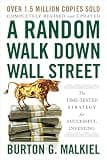
A Random Walk Down Wall Street
Burton G. Malkiel
A Random Walk Down Wall Street
The classic that quietly demolishes stock-picking and market-timing with fifty years of evidence. Dense in spots but worth it, and the passive-beats-active lesson travels perfectly to the ASX.
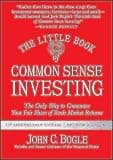
The Little Book of Common Sense Investing
John C. Bogle
The Little Book of Common Sense Investing
From the man who invented the index fund, this is the short, sharp case for low-cost investing that has aged like fine wine. The maths on fees is universal, just think ETFs and super instead of his US funds.
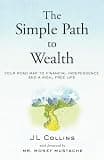
The Simple Path to Wealth
JL Collins
The Simple Path to Wealth
The friendliest on-ramp to index investing there is, born from letters a dad wrote his daughter. It makes 'buy the whole market and chill' feel obvious, just map his US fund picks onto Aussie equivalents and super.
Some links above are affiliate links. If you buy through them, Snowball Invest may earn a small commission at no extra cost to you. We only recommend books we'd suggest anyway.
Sources
Was this article useful?
Put it to your own numbers
Every calculator runs entirely in your browser, with nothing stored. See what these numbers look like for your own situation.
Explore the calculators →General information only. This article is educational and does not constitute personal financial advice. It does not account for your circumstances. Consider your own situation and seek advice from a licensed adviser before acting. Read our full disclaimer.

Timothy Hirou Gaschereau
Founder of Snowball Invest, not a financial adviser.
I write about what I'm learning myself, because nobody ever taught us how to take control of our own money. It's a skill, not a mystery, and it's never too late to learn it. The best day to start was yesterday, the second best is today.
LinkedIn →Related articles

Money Master the Game by Tony Robbins: An Honest Review
Our honest Money Master the Game review for Australians: Tony Robbins's 7-step plan, the sound core message on fees and index funds, and the US-heavy padding.

The Simple Path to Wealth Review: JL Collins for Australians
Our honest Simple Path to Wealth review for Australians: what JL Collins gets right, what doesn't apply here, and how to use the philosophy with local ETFs and super.

The Little Book of Common Sense Investing: Honest Review
Our honest review of John Bogle's The Little Book of Common Sense Investing: its real strengths, genuine weaknesses, and what Australian investors should take from it.