

What Is an Index Fund? A Plain-English Guide for Australians
What an index fund actually is, how it tracks a market index, why fees matter, and the difference between unlisted funds and index ETFs.
 By Timothy Hirou GaschereauPublished
 10 min read
Try it yourself
This one's the foundational piece behind two other guides on the site: our index funds vs ETFs comparison and our what is an ETF explainer. Start here if you want the concept itself before the structural comparison.
Quick answer
An index fund is a fund that tracks a market index, like the ASX 200, instead of trying to beat it. No fund manager is picking stocks, the fund simply holds what the index holds, in the same proportions. Because there's no active management, fees are low, and low fees compound into a real difference over time. You can access index funds as unlisted managed funds or as ETFs listed on the ASX.
In this guide
- →What an index fund actually is, and how it differs from active management
- →What a market index is and how it's built
- →How an index fund tracks its index, mechanically
- →Why fees matter more than most people assume, with a worked example
- →The structural difference between unlisted index funds and index ETFs
- →Who index funds suit, and how to actually access one in Australia
🗂️ So, what actually is an index fund?
🎯 The essential: An index fund copies a market index. No stock-picking, no bets, just holding what the index holds.
If the ASX 200 goes up 8%, an index fund tracking it goes up roughly 8% (minus a small fee). If the ASX 200 drops 15%, so does the fund. You're not trying to beat the market, you're buying the market.
This approach is called passive investing, one of the most evidence-backed strategies available to everyday investors. Our passive investing guide covers the deeper case for why it works.
📊 What's a market index?
Before an index fund makes sense, you need to know what an index actually is. A market index is a list of companies grouped by specific rules, used to measure how a slice of the market is performing.
Some Australian examples:
- ASX 200: the 200 largest companies listed on the ASX, weighted by market capitalisation. The most widely used benchmark for Australian shares.
- All Ordinaries (All Ords): the top 500 ASX-listed companies. One of Australia's oldest indices, launched in 1980.
- S&P/ASX 300: a broader version of the ASX 200, covering the top 300 companies.
Indices are maintained by index providers, who set the rules for which companies qualify, how they're weighted, and when the list updates (usually quarterly). An index fund's job is to mirror that list as closely as possible.
⚙️ How does it actually track an index?
There are two main methods:
Full replication: the fund buys every security in the index, in the same proportions. If a company makes up 10% of the ASX 200, the fund holds 10% of that company. Simple and precise.
Sampling: for very large or complex indices, the fund buys a representative sample that closely mimics the index's behaviour without holding every single component. Common for indices with thousands of holdings.
For most Australian investors tracking the ASX 200, full replication is standard. When the index changes, a company gets added or removed, or weightings shift after a quarterly rebalance, the fund adjusts automatically. No fund manager makes a judgment call.
💸 Why fees matter more than you think
Active fund managers get paid to research companies and try to outperform the market. That expertise costs money, active managed fund fees in Australia commonly run from around 0.50% up toward 1.50%+ per year, depending on the fund. Index funds skip that: the investment decisions are made by the index rules, not a person, so fees are far lower, often a fraction of a per cent.
Worked example: two investors each put $10,000 into an index fund returning 7% p.a. before fees. Investor A pays a 0.10% fee (nets 6.90%), Investor B pays a 1.00% fee (nets 6.00%). After 20 years: Investor A has roughly $37,980, Investor B has roughly $32,070, a gap of about $5,910. That entire gap comes from fees, not from worse investment choices.
Over 30 years the gap widens further. Fees compound against you the same way returns compound for you. ASIC MoneySmart's managed funds fee calculator lets you run your own numbers with different fee rates and timeframes.
🏗️ Unlisted managed index funds vs listed ETFs
"Index fund" is a concept, not a single product structure. You can access one in two main forms:
| Unlisted managed index fund | Index ETF | |
|---|---|---|
| How you buy | Direct through the fund manager or a platform | Through a brokerage account, like buying shares |
| Pricing | End-of-day unit price (NAV) | Live market price throughout the trading day |
| Typical minimum | Often $500 to $5,000 retail (some wholesale classes require far more) | Price of one unit, often under $100 |
| Fees on top | None per transaction | Brokerage fee per trade |
Both track the same underlying index. The difference is how you access them and how they're priced. For the full breakdown of the structural trade-offs, see our index funds vs ETFs comparison. For most beginners investing regular amounts, the distinction matters less than simply getting started with a low-cost, diversified option.
👤 Who are index funds actually for?
Index funds suit a wide range of investors, particularly:
- Beginners who want broad market exposure without researching individual companies.
- Long-term investors comfortable holding through ups and downs and letting compounding do the work.
- Cost-conscious investors who understand every dollar in fees is a dollar not compounding in their portfolio.
- Busy people who don't want to spend hours analysing stocks. Once set up, index funds are genuinely low-maintenance.
They're not a magic solution. Index funds fall when the market falls, they won't outperform the market by design, and they require patience, the strategy works over years, not months. But for most everyday Australians building long-term wealth, they're one of the most practical tools available.
🇦🇺 How to access index funds in Australia
A few main routes:
Through a brokerage account for ETFs: open an account with an ASX broker, search for index ETFs, and buy units the same way you'd buy shares. Our what is an ETF guide covers this in more detail.
Through a managed fund platform for unlisted index funds: invest a lump sum or set up regular contributions, and the fund processes transactions at end-of-day pricing.
Through your superannuation: many super funds offer an index or "passive" investment option, often the lowest-fee option available inside super. Switching your super's investment option doesn't require opening a separate account, it's worth checking what your fund offers.
🧱 How to Build a Simple Portfolio
A practical walkthrough of building a portfolio using low-cost index funds.
What I actually use
Pearler
This is the broker I personally use. Do your own research and form your own opinion, but I genuinely recommend it, it's built for long-term investors rather than day traders, and makes it easy to automate regular investing. Sign up through my link or with the code TIMOTHY269825 and you'll both get a $20 cash bonus once you make your first investment (Pearler's current offer, T&Cs apply).
Sign up to Pearler →This is a referral link. If you sign up through it, I get a bonus too, at no extra cost to you.
SnowLetter
Australia's money news and our best reads, once a week.
Curious what kind of investor you are? Take the 2-minute quiz.
❓ Frequently asked questions
What's the difference between an index fund and a managed fund?
+
A managed fund is the broad category: a pooled investment vehicle where many investors' money is combined and managed together. An index fund is a type of managed fund that passively tracks a market index instead of being actively managed. All index funds are managed funds, but not all managed funds are index funds.
Can I lose money in an index fund?
+
Yes. Index funds track the market, so when the market falls, so does your fund's value. There's no capital guarantee. Diversified market indices have historically recovered and grown over long periods, but past performance doesn't guarantee future results.
What's the minimum amount I need to invest in an index fund?
+
Depends on the structure. For ASX-listed index ETFs, you can often start with the price of one unit, sometimes under $100, though brokerage fees apply. For unlisted managed index funds, retail minimums are commonly $500 to $5,000, though some wholesale share classes require far more, sometimes $25,000 to $500,000. Check the fund's product disclosure statement for current minimums.
Are index funds good for beginners?
+
They're one of the most beginner-friendly investment options available: low fees, broad diversification, no stock-picking required, and a simple buy-and-hold approach. The main thing beginners need is patience, the strategy works over years, not months.
How often does an index fund rebalance?
+
Whenever the underlying index changes. For the ASX 200, that's typically quarterly. The fund manager handles this automatically, you don't need to do anything.
Do index funds pay dividends?
+
Yes, if the companies in the index pay dividends, those flow through to the fund. Depending on the fund's structure, dividends are either distributed to investors or automatically reinvested. Check the fund's PDS for its distribution policy.
Is an index fund the same as an ETF?
+
Not exactly. An ETF is a structure, a fund listed on a stock exchange. An index fund is a strategy, passively tracking an index. Most popular ETFs in Australia are index funds, but not all ETFs are index funds (some are actively managed), and not all index funds are ETFs (unlisted managed index funds exist too).
📚 Recommended reading
The Little Book of Common Sense Investing
John C. Bogle
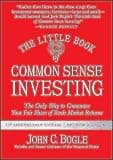
The Little Book of Common Sense Investing
From the man who invented the index fund, this is the short, sharp case for low-cost investing that has aged like fine wine. The maths on fees is universal, just think ETFs and super instead of his US funds.
The Simple Path to Wealth
JL Collins
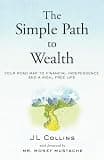
The Simple Path to Wealth
The friendliest on-ramp to index investing there is, born from letters a dad wrote his daughter. It makes 'buy the whole market and chill' feel obvious, just map his US fund picks onto Aussie equivalents and super.
The Millionaire Teacher
Andrew Hallam
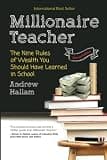
The Millionaire Teacher
A schoolteacher built a seven-figure portfolio on a modest salary, and here he lays out nine plain-English rules for doing the same with low-cost index funds. Refreshingly global, so Aussie readers just swap in super and local ETFs.
Some links above are affiliate links. If you buy through them, Snowball Invest may earn a small commission at no extra cost to you. We only recommend books we'd suggest anyway.
Sources
Was this article useful?
Put it to your own numbers
Every calculator runs entirely in your browser, with nothing stored. See what these numbers look like for your own situation.
Try the Compound Interest calculator →General information only. This article is educational and does not constitute personal financial advice. It does not account for your circumstances. Consider your own situation and seek advice from a licensed adviser before acting. Read our full disclaimer.

Timothy Hirou Gaschereau
Founder of Snowball Invest, not a financial adviser.
I write about what I'm learning myself, because nobody ever taught us how to take control of our own money. It's a skill, not a mystery, and it's never too late to learn it. The best day to start was yesterday, the second best is today.
LinkedIn →Related articles
The Index Investment Option in Your Super: Should You Use It?
An index option in super tracks a market index at a fraction of the fees of active management. Here is what it means, how fees compound, and who it suits.

BGBL ETF Australia: Betashares' Global Shares Fund Explained
BGBL is Betashares' ultra low cost global shares ETF tracking around 1,000 companies. What it holds, its 0.08% fee, BGBL vs VGS, dividends and tax.
U100 ETF Australia: Global X's US Giants ETF Explained
U100 is Global X's low cost US 100 ETF on the ASX, holding 100 US giants. What it holds, its 0.18% fee, currency risk, and how U100 compares to NDQ.