

U100 ETF Australia: Global X's US Giants ETF Explained
U100 is Global X's low cost US 100 ETF on the ASX, holding 100 US giants. What it holds, its 0.18% fee, currency risk, and how U100 compares to NDQ.
 By Timothy Hirou GaschereauPublished
 7 min read
U100 is one of the cheapest ways to own the biggest names in US business from an ASX brokerage account. It is young, tech-heavy and often confused with NDQ, so here is the full picture: what it holds, what it costs, the currency risk, and how the U100 vs NDQ question actually shakes out. This is part of our wider getting started with investing guide on Snowball Invest. General information only, not personal financial advice, and past performance is not a reliable guide to future performance. Figures are from the Global X fund page and the ASX and are subject to change.
Quick answer
U100 is the Global X US 100 ETF (ASX: U100). It tracks the Global X US 100 Index, holding 100 of the largest US companies across the NYSE and the Nasdaq, and charges about 0.18% a year. It is unhedged, heavily weighted to mega-cap tech, and it launched in August 2023, so it has a short track record. It is not the same fund as Betashares NDQ, though the two overlap heavily.
In this guide
- →What U100 is and the index it tracks
- →What is inside it, and just how tech-heavy it is
- →The 0.18% fee and how it compares to NDQ
- →U100 vs NDQ, compared fairly
- →Currency risk, distributions, tax and how to buy
🇺🇸 What is U100?
🎯 The essential: U100 is the Global X US 100 ETF, issued by Global X Management (AUS) Limited, part of the global Mirae Asset group. It tracks the Global X US 100 Index, giving you 100 of the largest innovative US companies from both the NYSE and the Nasdaq in a single ASX-listed ticker.
The index is constructed by Mirae Asset Global Index and selects the 100 largest innovative companies listed on US exchanges, weighted by market capitalisation. Think of it as a concentrated slice of the biggest names in American business.
U100 launched on 21 August 2023, so it has just over three years of live performance history as of mid-2026, which is worth keeping in mind. It is domiciled in Australia as a managed investment scheme, so it falls under Australian regulatory and tax rules. As at 27 August 2026 the fund had assets under management of roughly $103 million (source: Global X fund page, subject to change).
🔍 What's inside U100?
The fund holds 100 large US companies, rebalanced quarterly. The top 10 holdings as at 28 August 2026 are below, and they are subject to change, so always check the Global X fund page for current data.
| Company | Weight |
|---|---|
| NVIDIA | 11.08% |
| Apple | 9.45% |
| Microsoft | 7.68% |
| Amazon | 5.64% |
| Alphabet (Class A) | 4.06% |
| Alphabet (Class C) | 3.77% |
| Broadcom | 3.60% |
| Micron Technology | 3.23% |
| Advanced Micro Devices | 3.09% |
| Meta Platforms | 3.02% |
The top 10 alone account for roughly 55% of the fund. That is a lot of eggs in a small number of baskets, and most of those baskets are in tech. By sector, semiconductors make up around 34%, packaged software around 23%, internet software and services around 14%, telecommunications equipment around 13% and internet retail around 7% (source: Global X fund page, subject to change).
The concentration is the point. U100 is not trying to be a broad market fund. It is deliberately tilted toward the largest, most innovative US companies, and right now that means semiconductors and software dominate. When mega-cap US tech runs hot, U100 tends to run with it. When the sector corrects, U100 corrects hard. NVIDIA alone sits above 11% of the fund, so a rough quarter for one stock is felt across the whole holding. That is not a criticism, just the reality of what you are buying.
🏷️ The management fee
U100's management fee is about 0.18% a year (source: Global X fund page, subject to change). That is $18 a year on $10,000, or $90 on $50,000. For a fund with this level of US large-cap exposure, that is genuinely competitive. For comparison, NDQ charges about 0.48% a year, nearly three times as much, which is a $150 difference on a $50,000 portfolio every year.
That said, fee alone is not the whole story. The two funds track different indices, have different track records and are run by different managers, so the comparison below is worth reading before you decide.
🥊 U100 vs NDQ
This is the question most people are actually asking. Here is a fair side-by-side. It is not a recommendation either way.
| U100 | NDQ | |
|---|---|---|
| Issuer | Global X | Betashares |
| Index | Global X US 100 | Nasdaq-100 |
| Holdings | 100 largest US (NYSE + Nasdaq) | 100 largest non-financial Nasdaq |
| Management fee | ~0.18% | ~0.48% |
| Currency hedged | No | No |
| Distributions | Semi-annual | Quarterly |
| Listed since | 2023 | 2015 |
The index difference is the key one. NDQ tracks the Nasdaq-100, the 100 largest non-financial companies listed specifically on the Nasdaq. U100 tracks the Global X US 100 Index, which pulls the 100 largest innovative companies from both the NYSE and the Nasdaq, so it can include NYSE-listed names that NDQ cannot. In practice the overlap is very high, and both are dominated by the same mega-cap tech names, but they are not identical and will not always perform identically. NDQ has been running since 2015, so it has a decade of live data. U100 launched in August 2023 and does not, at least not yet. The fee gap is real and favours U100, but cheaper does not automatically mean better.
📈 Compound Interest Calculator
Model how a 0.30% fee difference compounds over 20 or 30 years, so you can weigh it against track record and index construction.
💱 Currency risk
U100 is unhedged. The fund holds US-listed companies priced in US dollars, but your units are priced in Australian dollars, so the AUD/USD exchange rate directly affects your returns. If the Australian dollar falls against the US dollar, your U100 units are worth more in AUD terms even if the underlying stocks have not moved, which lifts your returns. If the AUD rises, the opposite happens and it drags on returns.
This cuts both ways. Over the past decade a weaker Australian dollar has generally been a tailwind for unhedged US funds, but that is not guaranteed to continue. U100 does not offer a hedged share class, so if you want to remove that currency variable our hedged vs unhedged guide is worth a read.
🪙 Distributions and tax
U100 pays distributions semi-annually, twice a year. Global X has reported a 12-month yield figure above 12% (source: Global X fund page, subject to change), but that needs unpacking. The figure includes all distribution components, not just income from dividends, and it can include capital gains distributions from the fund's rebalancing. The yield can be lumpy and will vary from year to year, so do not treat it as a reliable income stream in the way you might a bond or a term deposit.
On tax, a few points worth knowing (general information only, not tax advice). As an Australian-domiciled fund, U100 falls under Australian tax rules. US-sourced dividends are subject to US withholding tax before they reach the fund, which then passes the net amount to you. You declare distributions in your Australian tax return using the statement Global X provides. If you sell your units, any gain is a capital gains tax event, and holding for at least 12 months may make you eligible for the 50% capital gains tax discount as an individual. Keep good records and speak to a registered tax agent about your own situation.
🛒 How to buy U100
U100 trades on the ASX under the ticker U100 during normal trading hours, and you buy it through any standard ASX brokerage account such as CommSec, SelfWealth, Stake or Pearler. Place a market order or a limit order, just as you would for any ASX-listed share or ETF. Check the fund page for the latest net asset value before you buy, so you have a sense of fair value versus the live market price.
SnowLetter
Australia's money news and our best reads, once a week.
❓ Frequently asked questions
What does U100 hold?
+
U100 holds 100 of the largest innovative US companies listed on either the NYSE or the Nasdaq, as defined by the Global X US 100 Index. Recent top holdings include NVIDIA, Apple, Microsoft and Amazon. Holdings are rebalanced quarterly and are subject to change, so check the Global X fund page for current data.
What is U100's management fee?
+
U100's management fee is about 0.18% a year (source: Global X fund page, subject to change). On a $10,000 investment that is roughly $18 a year. That makes it one of the cheaper US large-cap ETFs on the ASX.
Is U100 the same as NDQ?
+
No. U100 and NDQ are different funds tracking different indices. U100 is issued by Global X and tracks the Global X US 100 Index, which selects the 100 largest US companies from both the NYSE and the Nasdaq. NDQ is issued by Betashares and tracks the Nasdaq-100, the 100 largest non-financial companies listed on the Nasdaq. The overlap in holdings is high, but the funds are not identical, and NDQ has a much longer track record, having launched in 2015.
Is U100 hedged?
+
No. U100 is unhedged, so your returns in Australian dollars are affected by movements in the AUD against the US dollar. When the Australian dollar falls against the US dollar, your returns in AUD terms get a boost. When the AUD rises, your returns are reduced. There is no hedged version of U100.
Is U100 a good investment?
+
That depends on your personal situation, goals and risk tolerance, which is why this is general information only, not financial advice. U100 offers low-cost exposure to 100 large US companies, but it carries significant tech concentration risk and currency risk, and it has a short track record. Past performance is not a reliable guide to future performance.
How long has U100 been around?
+
U100 launched on 21 August 2023, so it has just over three years of live performance history as of mid-2026. The Global X US 100 Index itself launched on 10 August 2023. Any performance shown before that date is back-tested using the index methodology, not live fund returns.
📚 Recommended reading
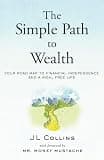
The Simple Path to Wealth
JL Collins
The Simple Path to Wealth
The friendliest on-ramp to index investing there is, born from letters a dad wrote his daughter. It makes 'buy the whole market and chill' feel obvious, just map his US fund picks onto Aussie equivalents and super.
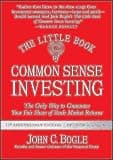
The Little Book of Common Sense Investing
John C. Bogle
The Little Book of Common Sense Investing
From the man who invented the index fund, this is the short, sharp case for low-cost investing that has aged like fine wine. The maths on fees is universal, just think ETFs and super instead of his US funds.
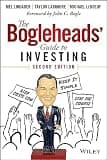
The Bogleheads' Guide to Investing
Taylor Larimore, Mel Lindauer & Michael LeBoeuf
The Bogleheads' Guide to Investing
The friendly community bible of low-cost, buy-and-hold index investing, written by everyday investors rather than salespeople. The core philosophy is timeless for Aussies, just read the tax-advantaged account bits as super.
Some links above are affiliate links. If you buy through them, Snowball Invest may earn a small commission at no extra cost to you. We only recommend books we'd suggest anyway.
Sources
Was this article useful?
Put it to your own numbers
Every calculator runs entirely in your browser, with nothing stored. See what these numbers look like for your own situation.
Explore the calculators →General information only. This article is educational and does not constitute personal financial advice. It does not account for your circumstances. Consider your own situation and seek advice from a licensed adviser before acting. Read our full disclaimer.

Timothy Hirou Gaschereau
Founder of Snowball Invest, not a financial adviser.
I write about what I'm learning myself, because nobody ever taught us how to take control of our own money. It's a skill, not a mystery, and it's never too late to learn it. The best day to start was yesterday, the second best is today.
LinkedIn →Related articles
BGBL ETF Australia: Betashares' Global Shares Fund Explained
BGBL is Betashares' ultra low cost global shares ETF tracking around 1,000 companies. What it holds, its 0.08% fee, BGBL vs VGS, dividends and tax.

IWLD ETF Australia: iShares' Global Equity ETF Explained
IWLD is iShares' low cost global shares ETF on the ASX, with an ESG screen built in. What it holds, its 0.09% fee, IWLD vs VGS, and how to buy.

IOO ETF Australia: iShares Global 100 ETF Guide
IOO is the iShares Global 100 ETF: 100 of the world's biggest companies. What it holds, its 0.40% fee, the tech concentration, and how it compares to VGS.