

IWLD ETF Australia: iShares' Global Equity ETF Explained
IWLD is iShares' low cost global shares ETF on the ASX, with an ESG screen built in. What it holds, its 0.09% fee, IWLD vs VGS, and how to buy.
 By Timothy Hirou GaschereauPublished
 7 min read
IWLD is one of the cheapest ways to own a broad slice of the world's developed markets from an ASX account, with an ESG screen built in. Most people looking at it are really asking one thing: how does it compare to VGS? Here is what IWLD holds, what the ESG filter actually does, what it costs, and how the two stack up. This is part of our wider getting started with investing guide on Snowball Invest. General information only, not personal financial advice, and past performance is not a reliable indicator of future performance. Figures are from BlackRock and the ASX and are subject to change.
Quick answer
IWLD is the iShares Core MSCI World ex Australia ESG ETF (ASX: IWLD). It tracks the MSCI World ex Australia ESG Leaders Index, holding hundreds of large and mid-cap developed-market companies that pass an ESG screen, and charges about 0.09% a year, one of the cheapest global ETFs on the ASX. It is unhedged and heavily weighted to the US, and it pairs naturally with an Australian shares fund.
In this guide
- →What IWLD is and the index it tracks
- →How the ESG screen works, in two rounds
- →The 0.09% fee and the heavy US weighting
- →IWLD vs VGS, compared fairly
- →Whether it is hedged, plus distributions, tax and how to buy
🌏 What is IWLD?
🎯 The essential: IWLD is the iShares Core MSCI World ex Australia ESG ETF, managed by BlackRock Investment Management (Australia). It gives you a single ASX-listed fund holding hundreds of global developed-market shares, filtered through an ESG screen. You buy it like any ordinary ASX share.
It tracks the MSCI World ex Australia ESG Leaders Index and listed on the ASX on 28 April 2016. The "ex Australia" part means developed markets with Australia excluded, so you get exposure to the US, UK, Japan, Canada, Europe and other developed economies, but no emerging markets like China, India or Brazil.
It is an Australian-domiciled fund, so it sits neatly inside your Australian brokerage account. No overseas accounts, no foreign currency conversions on your end. For the most current fund facts, always check the official iShares IWLD product page.
🔍 What's inside IWLD?
The "ESG Leaders" part of the index name does a lot of heavy lifting, so it is worth unpacking. MSCI applies two rounds of filtering before a company can be included.
Round one, exclusions. MSCI removes companies involved in controversial and nuclear weapons, civilian firearms, tobacco, alcohol, gambling and nuclear power, above set revenue or capacity thresholds.
Round two, leaders selection. From what remains, MSCI picks the top 50% of ESG scorers within each sector. You still get sector diversification, just the better-scoring half of each sector.
The result is a diversified portfolio of hundreds of global companies across technology, healthcare, financials and consumer sectors, consistent with the broader MSCI World composition. The US weighting is heavy, typically 60 to 70% or more of the index, so IWLD reflects that. Recent top holdings include Microsoft and NVIDIA, though exact weights change daily, so check the iShares fact sheet for current data.
🏷️ The management fee
IWLD's management fee is about 0.09% a year (source: ASX and BlackRock, subject to change). That is roughly $9 a year on $10,000, $45 on $50,000 and $90 on $100,000. That is exceptionally low. For context, many actively managed funds charge 0.50% to 1.50% a year or more.
One thing to keep in mind: brokerage fees apply separately every time you buy or sell, and they vary by platform, so it pays to compare before you pick a broker.
📈 Compound Interest Calculator
See how a low fee like 0.09% compounds in your favour over 20 or 30 years compared with a pricier active fund.
💱 Is IWLD hedged?
No. IWLD is unhedged, so you hold exposure to the US dollar, euro, yen, pound and other developed-market currencies, and your AUD returns move with them. If the Australian dollar falls against those currencies, your IWLD returns get a boost in AUD terms. If the AUD rises, your returns are reduced. For long-term investors, currency movements tend to average out over time, but in any given year they can add or subtract meaningfully.
There is no hedged version of IWLD. If you want a hedged global shares ETF you would need to look elsewhere: VGS, for example, has a hedged sibling called VGAD, while IWLD has no equivalent. Our hedged vs unhedged guide explains the trade-off in full.
🥊 IWLD vs VGS
This is the question most people ask. Both IWLD and VGS are low-cost, unhedged, ASX-listed ETFs tracking developed-market shares outside Australia. But there are real differences.
| IWLD | VGS | |
|---|---|---|
| Index tracked | MSCI World ex Australia ESG Leaders | MSCI World ex Australia |
| ESG screening | Yes | No |
| Management fee | ~0.09% | ~0.18% |
| Fund size | ~A$1.5 billion | ~A$15 billion+ |
| Hedged option | No | Yes (VGAD) |
| Distributions | Semi-annual | Semi-annual |
On fee, IWLD is cheaper, costing about half as much per year. On screening, IWLD applies MSCI's ESG Leaders filter while VGS holds the full, unfiltered index. If you want to exclude tobacco, gambling or controversial weapons, IWLD does that automatically. If you do not care about ESG, VGS gives you the whole universe. On size and liquidity, VGS is significantly larger, with tighter bid-ask spreads, and it has a hedged version while IWLD does not. Neither fund is objectively better. It comes down to whether you want ESG screening and whether the fee difference matters to you.
🪙 Distributions and tax
IWLD pays distributions twice a year, typically in January and July, sourced from the dividends of its underlying global companies. Distribution yield varies and is not guaranteed, so check the product page for current data.
A few tax points for Australian investors (general information only). Distributions are assessable income in the year you receive them. Because the underlying holdings are international, distributions may include foreign income, and you may be entitled to a Foreign Income Tax Offset to avoid being taxed twice on the same income. There are no franking credits, since international shares do not generate Australian franking. If you sell units held for more than 12 months, you may be eligible for the 50% capital gains tax discount on any gain. Tax outcomes depend on your personal situation, so speak to a registered tax agent for advice specific to you.
🛒 How to buy IWLD
Buying IWLD is exactly like buying any ASX-listed share. Open a brokerage account with a provider such as CommSec, SelfWealth, Stake, Pearler or CMC Markets, search the ticker IWLD, choose a market order (executes at the current price) or a limit order (sets the price you are willing to pay), enter your amount and confirm. The minimum is typically one unit, and brokerage fees vary by platform, so compare before you commit.
SnowLetter
Australia's money news and our best reads, once a week.
❓ Frequently asked questions
What does IWLD hold?
+
IWLD holds hundreds of large and mid-cap developed-market shares, excluding Australia and emerging markets, that pass MSCI's ESG Leaders screening. Recent top holdings include Microsoft and NVIDIA, though exact weights change regularly. Check the iShares IWLD fact sheet for current holdings data.
What is IWLD's management fee?
+
IWLD's management fee is about 0.09% a year (source: ASX and BlackRock, subject to change). On a $10,000 investment that works out to roughly $9 a year. Brokerage fees apply separately when you buy or sell, and they vary by platform.
Is IWLD hedged?
+
No. IWLD is unhedged, so your returns in Australian dollars are affected by movements in the AUD against the US dollar and other developed-market currencies. There is no hedged version of IWLD on the ASX. If you want a hedged global shares ETF, you would need a different fund, such as Vanguard's VGAD.
How does IWLD compare to VGS?
+
Both are low-cost, unhedged, Australian-domiciled ETFs tracking developed-market shares outside Australia. The main differences: IWLD applies an ESG screen and charges about 0.09% a year, while VGS has no ESG filter and charges about 0.18%. VGS is significantly larger by assets and has higher daily liquidity, and VGS has a hedged version (VGAD) while IWLD does not.
Is IWLD a good investment?
+
That depends on your goals, time horizon and risk tolerance. IWLD offers broad global diversification at a very low fee with ESG screening built in, but it has heavy US concentration and no hedged option. This is general information only, not financial advice, and past performance is not a reliable indicator of future performance.
Does IWLD pay dividends?
+
IWLD pays distributions twice a year (semi-annually), typically in January and July. Distributions include dividends from the underlying holdings. There are no franking credits, because the underlying companies are international. Check the iShares product page for current yield data.
📚 Recommended reading
The Simple Path to Wealth
JL Collins
The Simple Path to Wealth
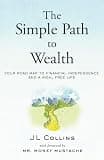
The friendliest on-ramp to index investing there is, born from letters a dad wrote his daughter. It makes 'buy the whole market and chill' feel obvious, just map his US fund picks onto Aussie equivalents and super.
The Little Book of Common Sense Investing
John C. Bogle
The Little Book of Common Sense Investing
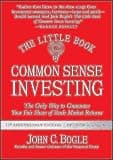
From the man who invented the index fund, this is the short, sharp case for low-cost investing that has aged like fine wine. The maths on fees is universal, just think ETFs and super instead of his US funds.
The Bogleheads' Guide to Investing
Taylor Larimore, Mel Lindauer & Michael LeBoeuf
The Bogleheads' Guide to Investing
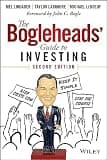
The friendly community bible of low-cost, buy-and-hold index investing, written by everyday investors rather than salespeople. The core philosophy is timeless for Aussies, just read the tax-advantaged account bits as super.
Some links above are affiliate links. If you buy through them, Snowball Invest may earn a small commission at no extra cost to you. We only recommend books we'd suggest anyway.
Sources
Was this article useful?
Put it to your own numbers
Every calculator runs entirely in your browser, with nothing stored. See what these numbers look like for your own situation.
Explore the calculators →General information only. This article is educational and does not constitute personal financial advice. It does not account for your circumstances. Consider your own situation and seek advice from a licensed adviser before acting. Read our full disclaimer.

Timothy Hirou Gaschereau
Founder of Snowball Invest, not a financial adviser.
I write about what I'm learning myself, because nobody ever taught us how to take control of our own money. It's a skill, not a mystery, and it's never too late to learn it. The best day to start was yesterday, the second best is today.
LinkedIn →Related articles
BGBL ETF Australia: Betashares' Global Shares Fund Explained
BGBL is Betashares' ultra low cost global shares ETF tracking around 1,000 companies. What it holds, its 0.08% fee, BGBL vs VGS, dividends and tax.
VGAD ETF Australia: Hedged Global Shares, and Is It Worth It?
VGAD is Vanguard's hedged international shares ETF. How currency hedging works, VGAD vs VGS, the fees, distributions, and where it fits in a portfolio.
U100 ETF Australia: Global X's US Giants ETF Explained
U100 is Global X's low cost US 100 ETF on the ASX, holding 100 US giants. What it holds, its 0.18% fee, currency risk, and how U100 compares to NDQ.