

Your Super Is Working Right Now. The Question Is Whether You Are.
Superannuation is a tax-sheltered, compounding wealth machine that most Australians treat like a mystery box until their 50s. This is the foundation guide for our Retirement & FIRE series: how super actually works, why it belongs in every FIRE plan, what to do at each life stage, and how the Age Pension fits in.
Quick answer
Superannuation is your money, sitting in a tax-advantaged investment account, compounding for decades before you can touch it. Treated deliberately, through salary sacrifice, sensible investment choices and a separate outside-super plan if you want to retire early, it's the single most powerful wealth-building tool most Australians have. The mistake isn't the system. It's ignoring it for thirty years and hoping it sorts itself out.
In this guide
- →What superannuation actually is, and why the tax treatment matters so much
- →The real maths behind starting early, worked through a simple example
- →What FIRE actually means in Australia, and the different flavours of it
- →Why super and FIRE work together rather than against each other
- →The specific mistakes Australians make with super in their 20s, 30s, 40s and 50s
- →How the Age Pension fits in as a safety net, not a retirement plan
🏦 What Superannuation Actually Is
Superannuation is your money, sitting in a tax-advantaged investment account, growing for decades before you can touch it. Your employer puts in 12% of your ordinary time earnings under the Super Guarantee (the rate that took effect on 1 July 2025, up from 11.5%). That money is invested and compounds over your working life. At preservation age, 60 for anyone born on or after 1 July 1964, you can access it once you meet a condition of release, most commonly retiring.
The tax treatment is where it gets genuinely powerful:
- Contributions are taxed at 15% going in, not your marginal rate, which saves 22 cents in the dollar if you're on the 37% bracket.
- Investment earnings inside super are taxed at 15% (and as low as 10% on longer-term capital gains), instead of up to 47% outside super.
- Withdrawals after 60 are tax-free for most people, once they're taken as a lump sum or income stream from a taxed super fund.
The concessional contributions cap, the annual limit on before-tax contributions taxed at that 15% rate, is $32,500 for 2026-27, up from $30,000 in the two years before it. Most Australians don't come close to using it, which is itself worth noticing: it's one of the few tax breaks in the system that rewards you simply for using more of it.
One more practical thing worth sorting early: when you change jobs, your new employer generally has to pay into your existing "stapled" fund unless you actively choose otherwise, which helps avoid the classic problem of ending up with three or four small accounts, each quietly charging its own fees and its own insurance premiums. A five-minute check on your myGov account every couple of years is usually enough to catch this before it becomes expensive.
Super feels abstract and locked away, and that's precisely what makes it powerful: forced long-term compounding in a low-tax environment, protected from your own worst impulses. For the full beginner's rundown, see What Is Superannuation? A Complete Beginner's Guide.
📈 The Compounding Math
Here's the maths that makes "start early" more than a cliché. Take two hypothetical Australians earning $80,000 a year. Alex starts paying attention at 25: employer Super Guarantee contributes 12% ($9,600/yr) and Alex salary sacrifices another $5,000/yr, for $14,600/yr total. Jordan does exactly the same thing, but doesn't start until 35.
At a 7% average annual return, by 65: Alex has contributed around $584,000 in total and ends up with a balance of roughly $2.9 million. Jordan has contributed around $438,000 and ends up with roughly $1.4 million.
Same $14,600/yr in employer SG + salary sacrifice, 7% average annual return, balance at 65
$2.91m
Alex
Starts at 25 (40 years)
Contributed $584k
$1.38m
Jordan
Starts at 35 (30 years)
Contributed $438k
Alex contributes just $146k more than Jordan overall, but ends up with roughly double the balance. The gap is ten extra years of compounding, not extra saving.
Alex ends up with roughly double Jordan's balance despite contributing only $146,000 more across the whole 40 years. The extra $1.5 million or so comes purely from ten more years of compounding, not from saving harder. This is a simplified, illustrative example, it ignores fees, changing salaries and year-to-year market swings, but the underlying mechanic is real.
What makes the gap this large is that compounding is front-loaded in reverse: the last decade before retirement adds the biggest dollar amounts to a balance, because there's simply more money sitting there to grow. Skip your first ten contributing years and you don't just lose ten years of deposits, you lose the ten years in which that money would have had the longest runway to compound. That's the whole argument for starting now rather than "when things settle down."
If you're behind, you're not out of options. The carry-forward concessional contributions rules let you use unused cap space from the past five years for catch-up contributions. See How Much Super Do You Need to Retire in Australia? for a detailed breakdown of what "on track" actually looks like.
🔥 FIRE in Australia: What It Really Means
FIRE stands for Financial Independence, Retire Early: build enough invested assets that your portfolio covers your living costs indefinitely, and work becomes optional. The commonly cited 4% rule suggests that if you live on around 4% of your portfolio a year, it should reasonably last 30-plus years. Need $60,000/yr to live on? That points to roughly $1.5 million invested.
In Australia, FIRE planning has to account for two separate pools of money: super, locked until preservation age, and outside-super investments (shares, ETFs, savings), accessible any time. That split shapes almost every decision in a FIRE plan, from how much to salary sacrifice to how early "early" can realistically be.
There are a few common flavours people talk about:
| Flavour | What it means | Rough spending |
|---|---|---|
| Lean FIRE | A tight, minimal budget, prioritising the earliest possible exit | Under $40,000/yr |
| Fat FIRE | Full financial independence without cutting your lifestyle | $100,000+/yr |
| Coast FIRE | You've already saved enough that compounding alone gets you to your number by a normal retirement age | Varies |
| Barista FIRE | Partially retired, topping up the gap with casual or part-time work | Varies |
The 4% rule is a useful starting estimate, not a guarantee. It's built on historical market data, mostly American, and doesn't account for the sequence of returns you personally experience, a market downturn in your first few retired years does more damage than the same downturn ten years in. Most people treat it as a number to stress-test rather than a formula to trust blindly. See What Is FIRE? Financial Independence, Retire Early Explained and Types of FIRE: Lean, Fat, Coast and Barista FIRE Explained for the full detail on each, including the "bridge years" complication Australia's locked-away super creates for Coast FIRE specifically.
🤝 Super and FIRE Are Not Enemies
The objection goes: "super is locked until 60, so it's useless for FIRE." That's backwards. Super is the most tax-efficient investment vehicle available to most Australians. Paying 15% tax on contributions and earnings instead of up to 47% outside super is a genuinely massive structural advantage, and giving it up entirely to chase early retirement outside the system is usually a mistake. The real question isn't "super or outside-super." It's "how do I bridge the gap between early retirement and 60."
🎯 The essential: A practical structure looks like this: maximise super contributions through salary sacrifice up to your cap, build a separate outside-super portfolio large enough to fund life from early retirement until 60, then let super take over, potentially tax-free, once you reach it.
Broken down, that's three moving parts:
- Maximise super contributions through salary sacrifice up to your concessional cap, capturing the tax saving every single year rather than only in the years you remember to think about it.
- Build a separate outside-super portfolio, typically low-cost index ETFs or similar, sized specifically to fund the years between the day you stop working and the day super becomes available.
- Let super take over from 60, at which point withdrawals are potentially tax-free and your bridge portfolio can stop carrying the full load, or be left to keep compounding if you don't need all of it yet.
Retiring at 45 means roughly 15 years of funding your life from outside super. That's a concrete planning problem you can size and solve for, not a reason to abandon the best tax shelter in the country. See When Can I Access My Super? Preservation Age Explained and Transition to Retirement (TTR): How the Strategy Actually Works for how the access rules and bridge strategies actually work.
🧭 Retirement Planning by Life Stage: The Mistakes Australians Make
In your 20s
The mistake is ignoring it entirely. Average super balances for 30-34 year olds sit around $55,690 for men and $46,586 for women (ASFA analysis of ATO data), a gap worth closing early rather than later. In your 20s: consolidate multiple super accounts into one, actively choose your investment option (the default "balanced" mix may be too conservative for someone with 40 years to go), check your employer is actually paying your Super Guarantee, and nominate a beneficiary.
In your 30s
The mistake is treating super as background noise. Not using salary sacrifice is the big one. If you have unused concessional cap space, sacrificing even $5,000-$10,000 a year costs less than most people expect after the tax saving, and compounds for 30-plus years. It's also worth checking the insurance bundled inside your super, many people in their 30s with dependants are underinsured without realising it. See Salary Sacrifice Super: How It Works (And Is It Worth It?). This is also the decade rentvesting, mortgages and young families start competing for the same dollars a super contribution would otherwise use, which is exactly why it's worth automating salary sacrifice rather than relying on "whatever's left over" at the end of the month, because there usually isn't anything left over.
In your 40s
The mistake is panic-switching investment options after a market fall, locking in losses on a balance that still has 15-25 years to grow. The carry-forward contributions rule becomes genuinely powerful here for catch-up after a career break or a stretch of part-time work. See Carry-Forward Concessional Contributions: The Catch-Up Rule Explained. If you're self-employed, see Superannuation for the Self-Employed: What You Need to Know, since you're not covered by the Super Guarantee the way employees are. This is also a sensible decade to sit down and actually forecast a number: run your current balance and contribution rate forward and see where it lands at 65, rather than vaguely hoping it'll be "enough."
In your 50s and approaching retirement
The mistake is winging it. Know your preservation age and conditions of release (see When Can I Access My Super?), consider a Transition to Retirement strategy, and don't underestimate longevity. A 65 year old Australian woman today has a life expectancy of roughly 87 to 88, meaning potentially 20-plus years of retirement to fund; a 65 year old man's is a little shorter, but still commonly 20 years or more. Both are reasons to plan for a retirement that lasts longer than instinct suggests, rather than a shorter, more comfortable-feeling number. It's also worth getting professional advice at this stage; a good adviser session can be worth thousands of dollars in avoided mistakes, and many funds offer a basic version of this advice to members at low or no extra cost.
🛟 The Age Pension: A Safety Net, Not a Retirement Plan
The Age Pension is available from age 67 and is means-tested against both your income and your assets. As of the current 2026 rates, the full pension pays around $1,201/fortnight for a single person and around $1,810/fortnight combined for a couple, indexed twice a year in March and September.
The full single rate works out to roughly $31,200 a year. ASFA's comfortable retirement standard for a single homeowner sits at around $55,900 a year, a gap of roughly $25,000 you close with super, other investments, or continued work, not by assuming the pension covers everything on its own.
The means test is a taper, not a cliff. Full pension is only paid below a fairly low asset threshold, and it phases out completely somewhere in the mid-$700,000s of assessable assets for a single homeowner (indexed, so the exact figure moves). Plenty of people with moderate super balances still receive a part pension.
Two separate tests run in parallel, the assets test and the income test, and whichever one gives you the lower payment is the one that applies. The income test doesn't look at what your investments actually earned; it uses a deeming rate, an assumed rate of return set by the government, applied to your financial assets regardless of their real performance. Your home is excluded from the assets test no matter its value, which is a big part of why homeownership status changes the picture so much.
Practically, it's worth checking your position a year or two before Age Pension age rather than waiting until you turn 67. Applications go through Centrelink via myGov, and even a partial entitlement can come with a Pensioner Concession Card, which brings meaningful savings on medicines, health checks and utilities well beyond the cash payment itself. See Age Pension Australia: Rates, Eligibility, and How It All Works for the full eligibility rules and worked examples.
🗺️ Where to Go From Here
New to super? Start with
- What Is Superannuation? A Complete Beginner's Guide, then Salary Sacrifice Super
- Curious about FIRE? What Is FIRE? then Types of FIRE (Lean/Fat/Coast/Barista)
- Want to know if you're on track? How Much Super Do You Need to Retire?
- Approaching 60? When Can I Access My Super? and Transition to Retirement
- Had contribution gaps? Carry-Forward Concessional Contributions
- Self-employed? Superannuation for the Self-Employed
- Working out where the Age Pension fits in? Age Pension Australia: Rates, Eligibility, and How It All Works
🎯 How Much Super Do You Need to Retire in Australia?
Real Australian retirement benchmarks, how the Age Pension fits in, and how to work out your own number.
🎯 The Mental Shift That Makes All of This Work
The system is actually pretty good. Super is a genuinely excellent vehicle with real tax concessions built in, and the Age Pension exists as a backstop even if nothing else goes to plan. The problem is most of us think about money in months, not decades. We check whether we can afford dinner out this week, not whether we're on track for a retirement that might last 25 years.
The shift that changes everything: start thinking of your 65 year old self as a real person, not an abstraction, whose quality of life depends directly on decisions you make today. That's not guilt-tripping, it's just accurate. The $50 a fortnight you don't salary sacrifice today is a specific, calculable amount smaller in your account in 30 years' time, and the version of you living on it will feel that difference in a way the version of you today never quite can.
🎯 The essential: You don't have to get it perfect, and you don't have to solve super and FIRE and the Age Pension in one afternoon. Just get started, pick one thing from this guide to act on this week, and get a little better every year.
SnowLetter
Australia's money news and our best reads, once a week.
❓ Frequently Asked Questions
How much super do I need to retire comfortably in Australia?
+
ASFA's Retirement Standard suggests a single homeowner needs around $630,000 in super to fund a comfortable retirement (spending roughly $55,900/yr), and a couple around $730,000 combined, assuming outright home ownership and a part Age Pension topping up the rest. These figures are indexed and move over time, so treat them as a benchmark to check against, not a fixed target.
When can I access my superannuation?
+
For anyone born on or after 1 July 1964, your preservation age is 60. You can access your super once you reach it and meet a condition of release, most commonly retiring from the workforce. Access becomes unconditional at 65, regardless of whether you're still working.
Can I retire early (FIRE) if my money is locked in super until 60?
+
Yes, but it means planning for two separate pools of money: super, which keeps compounding tax-effectively until you're 60, and an outside-super investment portfolio built specifically to fund the years between early retirement and preservation age. Retiring at 45 means roughly 15 years to bridge, which is a concrete planning problem, not a reason to write off the best tax shelter available to you.
What is the superannuation guarantee rate right now?
+
12% of your ordinary time earnings, the rate that took effect on 1 July 2025 as the final step of a legislated schedule of gradual increases. There's no further increase currently legislated, so 12% is expected to be the standing rate going forward.
What is the concessional contributions cap and why does it matter?
+
It's the annual limit on before-tax super contributions taxed at the concessional 15% rate, covering your employer's Super Guarantee, any salary sacrifice, and personal deductible contributions combined. The cap is indexed periodically in $2,500 steps; it's $32,500 for the 2026-27 financial year, up from $30,000 in the two years prior. Using more of it, where you can afford to, is one of the most effective legal tax strategies available to most Australians.
Will I still get the Age Pension if I have superannuation?
+
Possibly a part pension, even with a meaningful super balance, because the assets test tapers your payment down gradually rather than cutting it off at a single line. As a rough guide, the full pension is only paid up to a fairly low asset threshold, and it phases out entirely somewhere in the mid-$700,000s of assessable assets for a single homeowner (indexed twice a year, so check the current figure closer to retirement).
📚 Recommended reading
Super Made Simple
Noel Whittaker
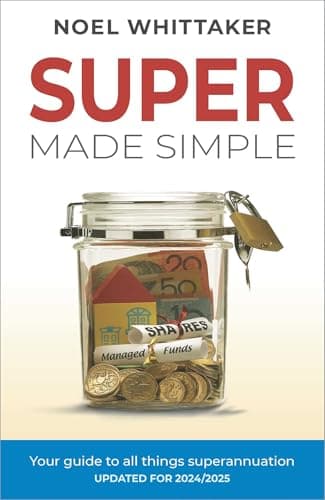
Super Made Simple
A focused, up-to-date guide to actually understanding your superannuation, from one of Australia's most trusted finance writers.
The Simple Path to Wealth
JL Collins
The Simple Path to Wealth
The friendliest on-ramp to index investing there is, born from letters a dad wrote his daughter. It makes 'buy the whole market and chill' feel obvious, just map his US fund picks onto Aussie equivalents and super.
Playing with FIRE
Scott Rieckens
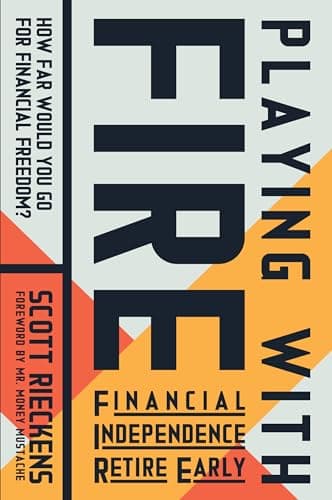
Playing with FIRE
Scott Rieckens documents his family trading a flashy lifestyle for freedom and an early exit from the daily grind. A warm, real-life intro to the FIRE movement, just swap the US retirement accounts for your super when you run the numbers.
Some links above are affiliate links. If you buy through them, Snowball Invest may earn a small commission at no extra cost to you. We only recommend books we'd suggest anyway.
Sources
- 1. The final SG rate increase is coming on 1 July, Australian Taxation Office
- 2. Concessional contributions cap, Australian Taxation Office
- 3. ASFA Retirement Standard, March quarter 2026, Association of Superannuation Funds of Australia
- 4. Age Pension rates, SuperGuide
- 5. Age Pension assets test thresholds, SuperGuide
- 6. Life expectancy, Australian Bureau of Statistics
Was this article useful?
Related calculators
Articles in this guide

How Much Does Aged Care Cost in Australia?
Home care or a nursing home? Here is what aged care actually costs in Australia, from the basic daily fee to RADs, means testing, and where to start.

How Long Does Probate Take in Australia?
Probate usually takes 4 to 8 weeks for the grant, then 6 to 12 months to administer the estate. Here is what to expect, and what tends to slow it down.

Enduring Power of Attorney in Australia
An enduring power of attorney lets someone you trust manage your affairs if you lose capacity. Here is how to set one up in Australia, and why not to wait.

What Does an Executor of an Estate Do in Australia?
Named executor of a will in Australia? Here is exactly what you have to do, step by step, from locating the will to paying tax and distributing assets.

What Happens to Your Debts When You Die in Australia?
In Australia, debts do not pass to your family. They are paid from your estate first. Here is how it works, plus the HECS rule and when joint debts differ.

When Is Salary Sacrifice NOT Worth It in Australia?
Salary sacrifice into super is not always the smart move. Here are six situations where it is not worth it in Australia, and what to do instead.

Superannuation Rate 2025-26: What You Should Be Getting
The super guarantee rate is now 12% from 1 July 2025. How much you should be getting, who qualifies, and what to do if your employer is not paying.

How to Read Your Super Statement (and What Actually Matters)
Learn how to read your super statement in Australia: contributions, fees, returns, insurance and beneficiaries, in plain English. Five things to check today.

What Is an SMSF? A Beginner's Guide to Self-Managed Super
Thinking about an SMSF in Australia? Learn how they work, the pros, the cons, and whether your super balance makes one worth it.

Super Withdrawal Tax: What You'll Actually Pay (or Not)
How much tax you pay on a super withdrawal, by age and component. The low rate cap, lump sums vs income streams, early access, and death benefits explained.

Preservation Age Super: When Can You Actually Access Your Money?
Find out your preservation age in super, the conditions of release you must meet, how TTR pensions work, and what it means for FIRE planning in Australia.

Concessional vs Non-Concessional Super: The Plain-English Guide
Concessional or non-concessional super contributions? The real difference, the 2025-26 caps, the tax treatment, and which one suits you, in plain English.

Non-Concessional Contributions: The Complete Australian Guide (2026-27)
Non-concessional (after-tax) super contributions in 2026-27: the $130,000 cap, the bring-forward rule, tax treatment, and what happens if you go over.

Binding Death Benefit Nominations: The Super Decision Most Australians Ignore
Your super doesn't automatically go to your family when you die. Here's what a binding death benefit nomination is, who you can nominate, and why it matters.

Superannuation Death Benefit Tax: Who Gets Your Super and How Much Tax They Pay
Who gets your super when you die, and how much tax do they pay? A spouse pays nothing. An adult child can pay 17%. Here's exactly how the tax works.

Reversionary Pension: What Happens to Your Super Income Stream When You Die
What is a reversionary pension, who can be nominated, and how does the transfer balance cap work? A plain-English guide for Australians in or near retirement.

What Age Can You Retire in Australia? (Preservation Age vs Age Pension Age)
There's no legal retirement age in Australia. Here's what preservation age and Age Pension age actually mean, and the gap between them.

Age Pension Australia: Rates, Eligibility, and How It All Works
How much the Age Pension pays, who's eligible, how the income and assets tests actually work, how it interacts with your super, and when to apply.

Superannuation for the Self-Employed: What You Need to Know
Why super isn't compulsory for sole traders, the real gap this creates, how the tax deduction works, and how to actually build the habit.

How to Find and Consolidate Lost Super
Real ATO figures on lost and unclaimed super, why it goes missing, how to find it through myGov, and the insurance check to do before consolidating.

Super Co-Contribution: The Free Government Top-Up Most People Miss
How the super co-contribution actually works, the exact income thresholds, and why it's one of the most underused benefits in super.

Types of FIRE: Lean, Fat, Coast and Barista FIRE Explained
The real differences between Lean, Fat, Coast and Barista FIRE, and the Coast FIRE 'bridge years' complication Australia's locked-away super creates.

First Home Super Saver Scheme: The Full Guide
How the First Home Super Saver Scheme actually works, a real worked tax example, the deemed-earnings quirk most guides skip, and what the scheme can't fix.

Transition to Retirement (TTR): How the Strategy Actually Works
How a transition to retirement strategy actually works, the two common ways people use it, a worked example, and the tax nuance most explainers get wrong.

Minimum Pension Drawdown Rates by Age (Australia 2026-27)
The official 2026-27 minimum pension drawdown rates by age, how they're calculated, the TTR 10% cap, and what happens if your fund misses the minimum.

How Much Super Should You Have? Average Balances by Age in Australia
Real average super balances by age from ASFA and the ATO, the Retirement Standard targets, the gender super gap, and what actually helps.

What Is FIRE? Financial Independence, Retire Early Explained
What FIRE (Financial Independence, Retire Early) actually means, the different flavours, the 4% rule, and how it plays out in Australia.

Salary Sacrifice Super: How It Works (And Is It Worth It?)
How salary sacrificing into super actually reduces your tax bill, the concessional cap limit to watch, and whether it's worth it for your situation.

Carry-Forward Concessional Contributions: The Catch-Up Rule Explained
Missed super contributions during part-time work or time off? How the carry-forward concessional contributions rule lets you catch up, and what it saves.

Concessional Contributions Cap 2026-27: How Much You Can Actually Put Into Super
The concessional contributions cap 2026-27 is $32,500. Learn what counts, how SG affects your room, carry-forward rules, and what happens if you go over.

How Much Super Do You Need to Retire in Australia?
Real Australian retirement benchmarks, not a guess, how the Age Pension fits in, and how to work out your own number for a comfortable retirement.

When Can I Access My Super? Preservation Age Explained
The full preservation age table by birth year, when you can actually access your super, and the narrow exceptions that let you access it earlier.

How Much Super Can You Withdraw After 60?
No fixed cap, but the rules depend on whether you've retired, you're still working, or you're on a TTR. Here's exactly how it works in 2026-27.

What Is Superannuation? A Complete Beginner's Guide
What superannuation actually is, how contributions and tax work, and what happens to your super when you change jobs, explained in plain English.

Payday Super Explained: What It Means for Your Retirement
From 1 July 2026, employers must pay super with every pay run, not quarterly. Here's what the payday super change means for employees and employers alike.
Division 296 Tax Explained: The New 30% Tax on Super Balances Over $3 Million
Division 296 tax is now law, applying from 1 July 2026 to Australians with super balances above $3 million. Here's exactly how it works, who it hits, and what the key dates are.

The Bridge Portfolio Strategy: Retiring Before You Can Access Your Super
A bridge portfolio is the pool of investments outside super that funds your life from early retirement until you can access your super. Here's how to size and structure one for the Australian FIRE context.

Downsizer Contribution to Super: Rules, Limits and How to Use It
Everything you need to know about the downsizer contribution to super: who qualifies, the $300k per person limit, cap exemptions, and Age Pension traps to avoid.
Account-Based Pension: How It Works, Rules and Drawdown
Learn how an account-based pension works in Australia, tax benefits, minimum drawdown rules, the transfer balance cap, and a worked example.

Spouse Super Contributions: Tax Offset, Rules and How to Contribute
Learn how spouse super contributions work in Australia, including the $540 tax offset, income thresholds, eligibility rules and a step-by-step worked example.

The Superannuation Choice Form: Choosing Your Super at a New Job
Starting a new job? Here is how the superannuation standard choice form works, what the stapled super fund rule means, and how to pick the right fund.

The Index Investment Option in Your Super: Should You Use It?
An index option in super tracks a market index at a fraction of the fees of active management. Here is what it means, how fees compound, and who it suits.