

How Much Does Aged Care Cost in Australia?
Home care or a nursing home? Here is what aged care actually costs in Australia, from the basic daily fee to RADs, means testing, and where to start.
 By Timothy Hirou GaschereauPublished
 11 min read
Aged care costs in Australia are genuinely confusing. There are multiple fee types, government assessments, and a system that changed significantly on 1 November 2025. If you are trying to work out what your parent or loved one will actually pay, this guide cuts through the jargon. Where the fees outstrip what a parent can cover, our guide to financially supporting elderly parents looks at how to help without derailing your own finances. It is part of our wider retirement and FIRE guides on Snowball Invest. General information only, not financial advice. All fee figures are indexed and change during the year, so always verify current rates at myagedcare.gov.au before making decisions.
Quick answer
Residential aged care typically costs between $1,000 and $1,500 or more per week, covering a basic daily fee, a means-tested contribution, and an accommodation payment. Home care is funded through the Support at Home program, which replaced Home Care Packages for new entrants from 1 November 2025, with government subsidies ranging from roughly $11,000 to $80,000 or more per year. A means assessment by Services Australia decides how much the government contributes and how much the individual pays. All figures are indexed and subject to change.
In this guide
- →The two main types of aged care and who they suit
- →Every residential fee, from the basic daily fee to RADs
- →Home care under the new Support at Home program
- →How the means assessment treats income, assets and the home
- →A worked example and where to actually start
🏡 Two main types of aged care
Staying at home: Support at Home (formerly Home Care Packages). Many older Australians want to stay in their own home for as long as possible. The Support at Home program, which launched on 1 November 2025, funds services like personal care, nursing, domestic help and home modifications to make that possible. New entrants from 1 November 2025 are assessed under Support at Home. People who were already receiving a Home Care Package (HCP) on or before 31 October 2025 continue under their existing arrangements until at least July 2027.
Moving into a nursing home: residential aged care. When care needs become too high to manage at home, residential aged care provides 24-hour support. This is where the fee structure gets more complex, with up to four separate cost components. Understanding each one makes the total much less alarming.
🧾 Residential aged care fees
There are four main components. Not everyone pays all four. How much you pay depends on your income, assets, and the room you choose.
1. Basic daily fee. Everyone pays this, no exceptions. It is set at 85% of the single person rate of the basic Age Pension, which is $66.80 per day(approximately $24,382 per year as of the article date). It covers meals, cleaning, laundry and utilities. The government indexes it on 20 March and 20 September each year, so the figure will change. Always check the current rate at myagedcare.gov.au.
2. Means-tested care fee. This is not universal. It applies to residents under the 1 July 2014 fee arrangements (broadly, those who entered care before 1 November 2025, or those protected by the "no worse off" principle). The amount is different for everyone and is set by a means assessment. Key caps (current as of the article date, indexed in March and September) are below.
| Cap | Amount |
|---|---|
| Daily maximum | $370.39/day |
| Annual cap | $35,910.43/year |
| Lifetime cap | $86,185.23 |
Once you hit the annual or lifetime cap, the government covers the rest. For residents entering from 1 November 2025, the new arrangements replace the means-tested care fee with a hotelling contribution (up to $22.15/day) and a non-clinical care contribution (up to $107.32/day, with a lifetime cap of $137,917.01). The structure differs but the principle is the same: your contribution is based on your means.
3. Accommodation payment: RAD versus DAP. You negotiate a room price with the provider before moving in, then choose how to pay for it. A RAD (Refundable Accommodation Deposit) is a lump sum paid upfront, most of which is refunded when the resident leaves or passes away. Typical RADs range from a few hundred thousand dollars to over $1 million in major cities. A DAP (Daily Accommodation Payment) is a daily rental-style payment instead of a lump sum, and it is not refunded. The formula is:
DAP = (agreed room price x MPIR) / 365
The MPIR (Maximum Permissible Interest Rate) is set by the government and updated quarterly. The My Aged Care website uses 8.43% in its worked examples, but check the current MPIR at the Department of Health, Disability and Ageing website before calculating. You can also pay part as a RAD and part as a DAP.
Important change from 1 November 2025: providers can now retain up to 2% per year of the RAD, capped at a maximum of 10% over 5 years. After five years, no further retention applies. This means the RAD is no longer fully refundable for new residents, so factor it into your planning.
4. Extra services fees (higher everyday living fee). Some providers offer premium services for an additional fee. From 1 November 2025 this is called the higher everyday living fee, covering things like a private room upgrade, premium meals or extra activities. It is optional and not means-tested. Providers cannot require it as a condition of entry, and there is a 28-day cooling-off period.
🏠 Home care and the Support at Home program
The old Home Care Package structure. HCPs had four levels, each with a different government subsidy. Many families are still in this system, so here is the breakdown. These figures are the government subsidy amounts, current as of the article date and indexed annually.
| HCP level | Care needs | Government subsidy (approx.) |
|---|---|---|
| Level 1 | Basic support | $29.28/day (~$10,686/year) |
| Level 2 | Low-level care | $51.49/day (~$18,785/year) |
| Level 3 | Intermediate care | $112.07/day (~$40,949/year) |
| Level 4 | High care | $169.90/day (~$62,014/year) |
On top of the subsidy, HCP recipients could also be charged a basic daily fee (provider-set, government-capped) and an income-tested care fee (based on a means assessment). Check current maximums at myagedcare.gov.au and current caps with Services Australia.
The new Support at Home program (from 1 November 2025). New entrants are assessed under Support at Home, which has eight ongoing funding classifications rather than four levels. Annual funding ranges from approximately $11,010 (Classification 1) to $80,137 (Classification 8), indexed on 1 July each year. People who transitioned from HCPs receive equivalent classifications. For example, a former Level 4 HCP recipient now sits in a transitioned classification with an annual budget of approximately $65,416 (as of 1 July 2026).
Under Support at Home, your contribution depends on the type of service (clinical, independence or everyday living) and your financial circumstances. Clinical services like nursing are fully funded by the government. Everyday living services like domestic help attract the highest participant contributions. Use the Support at Home fee estimator on myagedcare.gov.au for a personalised estimate.
📊 How the means assessment works
The means assessment is how Services Australia works out your contribution. It looks at both income and assets. The result determines your means-tested care fee (or equivalent contributions under the new arrangements) and whether the government helps with accommodation costs. Key thresholds, current as of the article date and indexed regularly, are below.
- Income free area: $35,313.20 per year (single). Below this, no income-tested fee applies.
- Asset free area: $64,500. Below this, no asset-tested fee applies.
- Full government accommodation support: if your income is below $35,521.20 and assets below $64,500, the government covers your full accommodation costs.
What about the family home? This is the question we hear most often. The family home is generally exempt from the assets test while a protected person lives there. A protected person is a spouse, a dependent child, or an eligible carer who has lived in the home for at least two years. If no protected person lives in the home, it is included in the assets test, but only a capped value of $206,663.20 per person is counted (the low-means home exemption cap). All of these thresholds are indexed and subject to change. Services Australia administers the assessment and sends a fee advice letter once it is complete.
If your parent may also be eligible for the pension, our guides to the Age Pension and the Age Pension assets test explain how income and assets are treated more broadly.
🧮 A realistic worked example
🎯 The essential: This is a simplified illustration only. It is not financial advice and not a personalised estimate. Your situation will be different.
Meet Margaret. She is 82, single, and owns her home. She is moving into residential aged care. No protected person lives in her home. Her means assessment places her in a moderate-means category.
| Fee component | Daily amount |
|---|---|
| Basic daily fee | $66.80 |
| Means-tested care fee (illustrative) | $25.00 |
| DAP (illustrative room price) | $60.00 |
| Extra services | $0 |
| Total per day | $151.80 |
At roughly 30 days, that is about $4,554 a month, or approximately $54,648 a year. Caveat: this is a simplified illustration. Margaret's actual fees depend on her income, assets, and the room she chooses. Get a personalised fee estimate from My Aged Care or Services Australia before making any decisions. The figures above use illustrative amounts, not real quotes.
📈 Retirement Income Calculator
Model how super, the pension and other savings could fund ongoing care costs, so you can pressure-test a plan before committing to a RAD.
💳 How people pay for aged care
The cost of a nursing home is significant. Here is how most families approach it. Selling the family home to pay the RAD is the most common approach when no protected person lives there. Keeping the home and paying the DAP works if a protected person lives there or the family wants to retain the asset, and some families rent out the home to cover the daily payment. A combination RAD and DAP reduces the daily payment while preserving some liquidity.
Getting specialist financial advice genuinely matters here. The RAD counts as an asset in the means assessment, which can affect other fees, and pension entitlements may shift. Look for an Accredited Aged Care Professional or a financial adviser with specific aged care expertise. You can search the financial advisers register on Moneysmart.
🚦 Where to start
The system can feel overwhelming. Here is a simple order of operations.
- Step 1: Contact My Aged Care. Call 1800 200 422 to request an ACAT (Aged Care Assessment Team) assessment. It is free and determines eligibility and care level. You cannot access government-funded aged care without it.
- Step 2: Get a fee estimate. Once assessed, Services Australia can provide a personalised estimate. Use the aged care home fee estimator on myagedcare.gov.au for a rough guide first.
- Step 3: Choose a provider and negotiate accommodation costs. Providers must publish room prices, and you can negotiate down from the listed price.
- Step 4: Consider specialist financial advice before committing to a RAD. The decision has flow-on effects for pension entitlements, means-tested fees and estate planning.
SnowLetter
Australia's money news and our best reads, once a week.
❓ Frequently asked questions
How much does a nursing home cost per week in Australia?
+
Expect roughly $1,000 to $1,500 or more per week for most residential aged care residents. That covers the basic daily fee, the means-tested care fee, and an accommodation payment. The exact amount depends on your income, assets, and the room you choose. Higher-end facilities or premium rooms can cost significantly more.
Do you have to sell the house to pay for aged care?
+
Not necessarily. The family home may be exempt from the assets test if a protected person (spouse, dependent child, or eligible carer) lives there. Even if no protected person is present, you can keep the home and pay a daily accommodation payment (DAP) instead of a lump-sum RAD. Many families rent out the home to help cover the DAP. A financial adviser can model the options for your situation.
What is a RAD in aged care?
+
A RAD (Refundable Accommodation Deposit) is a lump-sum payment you make to a residential aged care provider to cover accommodation costs. Most of it is refunded when you leave or pass away. From 1 November 2025, providers can retain up to 2% per year, capped at 10% over five years. The alternative is a DAP (Daily Accommodation Payment), which works like a daily rental fee and is not refunded.
What does the government pay for aged care?
+
The government subsidises a significant portion of aged care costs. For residential care it covers nursing and personal care above your means-tested contribution, and pays accommodation costs in full for low-means residents. For home care under Support at Home, government funding ranges from roughly $11,010 to $80,137 per year depending on your assessed classification. The higher your assessed means, the more you contribute.
How are aged care fees calculated?
+
Residential aged care fees are based on a means assessment by Services Australia, which looks at your income and assets (including, in some cases, the family home). The assessment determines your means-tested care fee and accommodation contribution. The basic daily fee is the same for everyone. You can request a fee estimate from Services Australia before choosing a provider.
Can I get help at home instead of going into a nursing home?
+
Yes. The Support at Home program, which replaced Home Care Packages for new entrants from 1 November 2025, funds services like personal care, nursing, domestic help and home modifications so people can stay in their own home longer. The level of support depends on your assessed care needs. Contact My Aged Care on 1800 200 422 to start the assessment.
📚 Recommended reading
Retirement Made Simple
Noel Whittaker

Retirement Made Simple
Australia's godfather of personal finance demystifies super, the pension and making your savings last. The plain-English retirement handbook every Aussie should read before they stop working.
Making Money Made Simple
Noel Whittaker
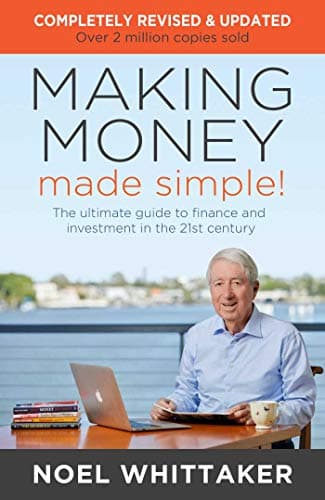
Making Money Made Simple
Australia's classic, comprehensive money guide covering tax, super and investing, updated for today.
The Psychology of Money
Morgan Housel
The Psychology of Money
19 short stories on how people actually think and feel about money, not just the maths of it.
Some links above are affiliate links. If you buy through them, Snowball Invest may earn a small commission at no extra cost to you. We only recommend books we'd suggest anyway.
Sources
- 1. Aged care home costs and fees, My Aged Care
- 2. Understanding aged care home accommodation costs, My Aged Care
- 3. Support at Home costs and contributions, My Aged Care
- 4. Means assessment for residential aged care, Department of Health, Disability and Ageing
- 5. Financial advisers register, Moneysmart, Australian Securities and Investments Commission
Was this article useful?
Put it to your own numbers
Every calculator runs entirely in your browser, with nothing stored. See what these numbers look like for your own situation.
Explore the calculators →General information only. This article is educational and does not constitute personal financial advice. It does not account for your circumstances. Consider your own situation and seek advice from a licensed adviser before acting. Read our full disclaimer.

Timothy Hirou Gaschereau
Founder of Snowball Invest, not a financial adviser.
I write about what I'm learning myself, because nobody ever taught us how to take control of our own money. It's a skill, not a mystery, and it's never too late to learn it. The best day to start was yesterday, the second best is today.
LinkedIn →Related articles

Age Pension Australia: Rates, Eligibility, and How It All Works
How much the Age Pension pays, who's eligible, how the income and assets tests actually work, how it interacts with your super, and when to apply.

How Much Money Can a Pensioner Have in the Bank?
No fixed bank limit exists for the Age Pension. How the assets test and deeming actually work, with current indicative thresholds. Not advice.

How to Read Your Super Statement (and What Actually Matters)
Learn how to read your super statement in Australia: contributions, fees, returns, insurance and beneficiaries, in plain English. Five things to check today.