

How to Read Your Super Statement (and What Actually Matters)
Learn how to read your super statement in Australia: contributions, fees, returns, insurance and beneficiaries, in plain English. Five things to check today.
 By Timothy Hirou GaschereauPublished
 11 min read
Most Australians get their super statement, glance at the balance, feel vaguely reassured (or vaguely anxious), and move on. Sound familiar? Here is the thing: your super is almost certainly your largest financial asset outside your home, and it will likely be the main thing funding your retirement. Treating the annual statement like junk mail is like ignoring your car's service light because you are busy.
So let us fix that. This guide walks through every section of a typical super statement in plain English, tells you what actually matters, and ends with a short action list. It is general information only, not advice, and it takes about ten minutes.
🎯 The essential: Your super statement is a yearly health check on your biggest long-term asset. The things worth checking: your employer is paying 12% SG (from 1 July 2025), your fees (they compound, so even 1% a year can cost tens of thousands), your investment option (it drives your outcome more than anything), your insurance cover (it erodes your balance quietly), and your beneficiary nomination. Also confirm your fund has your TFN, or you pay extra tax.
Opening balance vs closing balance
The simplest part, and the best place to start. Your opening balance is what your super was worth at the start of the period (usually 1 July); your closing balance is what it was worth at the end (usually 30 June). The difference is the result of a few things happening at once: contributions coming in, investment returns, and fees, insurance premiums and tax going out.
If your closing balance is higher, great. If it is lower, do not panic yet: a negative return in a single year is normal for a long-term investment.
The contributions section
This shows every dollar that went into your super during the year. Employer contributions are the Superannuation Guarantee (SG), now 12% from 1 July 2025, calculated on your ordinary time earnings. The sanity check: divide your employer contributions by your ordinary earnings for the year, you should get roughly 12%. If it is noticeably lower, investigate (you can report unpaid super to the ATO).
Your own contributions appear here too. Concessional (before-tax)contributions, like salary sacrifice, are taxed at 15% inside the fund (that tax shows as a deduction on your statement) and count toward the concessional cap. Non-concessional (after-tax) contributions come from your take-home pay with no deduction and have a separate cap. Check the ATO for the current caps. If you want to save more into super, see our guide on how salary sacrifice into super works.
Investment earnings (returns)
This shows the growth or loss your money generated while invested, as a dollar amount, a percentage, or both. The important bit: a negative return in a single year is completely normal. Markets go up and down, super is designed to be held for decades, and selling out of a growth option after a bad year just locks in the loss and misses the recovery. The figure shown is for your specific option, after investment fees and fund-level tax, so it is not the raw market return you read about in the news.
Fees (the one that really matters)
Fees are the section most people skip. They should not. A typical statement shows an administration fee (often a flat dollar amount plus a small percentage), an investment fee (usually deducted before the return is calculated, so it may not be a separate line), and any adviser service fee.
Fees compound in reverse: every dollar paid is a dollar that does not grow for decades. On a $50,000 balance, paying 1% more per year than a comparable fund could cost more than $60,000 in lost growth over 30 years (a rough illustration). Compare yours with the ATO's YourSuper tool or via our how to compare super funds guide.
Insurance premiums
Most funds include default insurance, and the premiums come straight out of your balance, easy to overlook because the money never leaves your bank account. The three common types are life cover, total and permanent disability (TPD), and income protection. The key question is whether the cover suits your life right now.
If you are in your 20s with no dependants or mortgage, you may be paying for life cover you do not need. If you have a mortgage, a partner or kids, the default cover might be exactly right, or not enough. TPD definitions can be narrow and income protection through super often has a shorter benefit period than a standalone policy, so it is worth understanding before assuming you are fully covered. Our guide on insurance through super vs standalone digs into this.
Your investment option
Arguably the most important section, and the most ignored. Your option is where your money is actually invested: high growth or growth (mostly shares, higher potential return and volatility), balanced (a mix), conservative (more defensive), or a MySuper default if you never chose. Your option drives your long-term outcome more than almost anything else, because a 1% difference in average annual return compounds enormously over 30 years.
As general information (not advice): people with decades until retirement often have time to ride out downturns, which is why higher-growth options are commonly discussed for younger investors, but it depends on your circumstances and comfort with risk. The key action is simply to know what option you are in.
Beneficiary nomination and your details
Your beneficiary nomination tells your fund who gets your money if you die. The catch: super does not automatically form part of your estate, so your Will alone is not enough. A binding nomination must be followed (and typically lapses after three years, so check it is current); a non-binding one is only a guide the trustee can override.
Then check your personal details. Errors in your name or date of birth can cause problems when you access your super. Most importantly, make sure your TFN is recorded: without it, the fund withholds extra tax on concessional contributions and cannot accept personal contributions. And check whether you have multiple or lost accounts, consolidating saves on duplicate fees and insurance, but confirm you are not giving up wanted cover first.
5 things to check on your super statement today
- Confirm your employer is paying 12% SG. Divide employer contributions by your ordinary earnings; it should be close to 12%.
- Check your fees. Find the admin and investment fees and compare them with the ATO's YourSuper tool.
- Review your insurance cover. What do you have, what does it cost, and does it suit your life stage?
- Confirm your investment option. Know what you are in and whether it fits your time horizon and risk comfort.
- Update your beneficiary nomination. Is it current, binding, and not lapsed? Fix it now, not when it is too late.
SnowLetter
Australia's money news and our best reads, once a week.
❓ Frequently asked questions
What is a super statement?
+
A super statement is an annual document from your superannuation fund summarising your account activity for the financial year. It shows your opening and closing balance, contributions received, investment returns, fees deducted, insurance premiums charged, and your current investment option. Most funds send it after 30 June each year, either by post or through an online member portal.
How do I check if my employer is paying super correctly?
+
Divide the employer contributions shown on your statement by your ordinary time earnings for the year. The result should be close to 12% (the SG rate from 1 July 2025). You can also log in to myGov and check your super contributions through ATO online services, where employer payments are reported. If you think your employer is underpaying, you can report it to the ATO.
What fees should I look for on my super statement?
+
Look for the administration fee (a flat dollar amount and/or a percentage of your balance), the investment fee (sometimes shown separately, sometimes deducted before returns are calculated), and any adviser service fees. Compare the total fee load against similar funds using the ATO's YourSuper comparison tool. ASIC Moneysmart also has useful guidance on comparing super funds.
What happens if my super fund does not have my TFN?
+
If your fund does not have your Tax File Number on file, it must withhold additional tax on your concessional contributions at a significantly higher rate (the ATO describes this as an additional 32% on top of the standard 15% contributions tax). You can provide your TFN to your fund at any time, and the ATO may be able to refund excess tax withheld once your TFN is recorded. Check the ATO's current rules.
Should I change my investment option after reading my statement?
+
That depends entirely on your personal circumstances, time horizon, and comfort with risk. This is general information only, not personal financial advice. As a starting point, it is worth knowing what option you are currently in and understanding what it invests in. If you are unsure whether it suits you, consider speaking with a licensed financial adviser.
How do I find lost super?
+
Log in to myGov and link your account to the ATO. Go to Super, then Fund details, to see all super accounts associated with your TFN, including any lost or unclaimed accounts. Before consolidating multiple accounts, check whether you would be giving up any insurance cover you actually want before you merge.
Keep reading
📚 Recommended reading
The Barefoot Investor
Scott Pape

The Barefoot Investor
Australia's best-selling money book ever. A simple system for accounts, budgeting, debt and a real emergency fund in one.
Making Money Made Simple
Noel Whittaker

Making Money Made Simple
Australia's classic, comprehensive money guide covering tax, super and investing, updated for today.
Motivated Money
Peter Thornhill
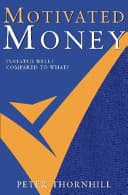
Motivated Money
Peter Thornhill's cult-favourite case for living off fully franked dividends instead of chasing capital gains. A calm, contrarian Aussie take that has quietly built a big following of long-term investors.
Some links above are affiliate links. If you buy through them, Snowball Invest may earn a small commission at no extra cost to you. We only recommend books we'd suggest anyway.
Sources
This article is general information only, not financial advice. It does not consider your objectives or circumstances. Superannuation rules, rates and caps can change, so always check the ATO and ASIC Moneysmart for current figures and consider a licensed financial adviser.
Was this article useful?
Put it to your own numbers
Every calculator runs entirely in your browser, with nothing stored. See what these numbers look like for your own situation.
Explore the calculators →General information only. This article is educational and does not constitute personal financial advice. It does not account for your circumstances. Consider your own situation and seek advice from a licensed adviser before acting. Read our full disclaimer.

Timothy Hirou Gaschereau
Founder of Snowball Invest, not a financial adviser.
I write about what I'm learning myself, because nobody ever taught us how to take control of our own money. It's a skill, not a mystery, and it's never too late to learn it. The best day to start was yesterday, the second best is today.
LinkedIn →Related articles

What Is an SMSF? A Beginner's Guide to Self-Managed Super
Thinking about an SMSF in Australia? Learn how they work, the pros, the cons, and whether your super balance makes one worth it.

Age Pension Australia: Rates, Eligibility, and How It All Works
How much the Age Pension pays, who's eligible, how the income and assets tests actually work, how it interacts with your super, and when to apply.

Minimum Pension Drawdown Rates by Age (Australia 2026-27)
The official 2026-27 minimum pension drawdown rates by age, how they're calculated, the TTR 10% cap, and what happens if your fund misses the minimum.