

What Is an SMSF? A Beginner's Guide to Self-Managed Super
Thinking about an SMSF in Australia? Learn how they work, the pros, the cons, and whether your super balance makes one worth it.
 By Timothy Hirou GaschereauPublished
 11 min read
Try it yourself
Super is one of those things most Australians are happy to ignore until they are not. You get the quarterly statement, you squint at the balance, and you move on. Then at some point, usually when the balance gets interesting, a question pops up: could I just run this myself?
That is the SMSF question. A self-managed super fund puts you in the driver's seat of your own retirement savings, with far more investment choice and control than a standard fund. It also puts you in the driver's seat of the paperwork, the compliance and the legal responsibility, all of it. This guide is part of our retirement and FIRE series, and it is general information only, not financial advice.
🎯 The essential: An SMSF is a private super fund you run yourself, regulated by the ATO, with up to 6 members who are each personally responsible as trustees. The appeal is control and investment choice (including direct property). The catch is time, cost and legal liability, and there is no government compensation scheme if it goes wrong. As a rule of thumb it only stacks up cost-wise from around 200,000 dollars.
What is an SMSF?
An SMSF (self-managed super fund) is a private super fund you set up and run yourself, for yourself and up to five other members (six total). Unlike a standard industry or retail fund, an SMSF is regulated by the Australian Taxation Office (ATO), not APRA.
The big difference: in a standard fund, a professional trustee runs things for you. In an SMSF, you are the trustee. Every member is normally a trustee too (or a director of a corporate trustee), so every member is personally and legally responsible for running the fund and keeping it compliant.
The sole purpose test is the golden rule: the fund must exist solely to provide retirement benefits. No early access, no personal use of fund assets, no bending the rules for a short-term win. The ATO takes this very seriously.
How an SMSF works
- Trustee structure. Individual trustees (each member in their own name) or a corporate trustee (a company acts as trustee and members are its directors). A corporate trustee costs more but is cleaner for admin and succession.
- The trust deed. The fund's rulebook, drafted by a professional and kept up to date as the law changes.
- The investment strategy. A written strategy covering objectives, risk, diversification, liquidity and member insurance, reviewed regularly.
- Annual audit. An independent audit by an approved SMSF auditor every year. Mandatory, not optional.
- Annual return. The fund lodges its own return with the ATO, usually with the help of an SMSF specialist accountant.
The pros of an SMSF
- Control. You choose exactly what the fund buys and sells, with no waiting on a fund manager.
- Broader choice. Direct shares, ETFs, managed funds, term deposits, direct property (with rules), even collectibles (with strict rules). The property angle is the main drawcard for many.
- Cost efficiency at higher balances. Fixed costs become a smaller slice of the fund as it grows, and can beat percentage-based fees at scale.
- Estate-planning flexibility. More control over how your super is paid out when you die.
- Pooling with family. Up to six members can pool their super, spreading the fixed costs.
The cons and risks of an SMSF
- Time and admin. Staying on top of investments, records, compliance and rule changes can feel like a second job.
- Personal legal responsibility. If the fund breaches the rules, the trustees are personally liable. A fund made non-complying can be taxed at 45 percent on its assets. That is a very expensive mistake.
- Costs at low balances. Setup and annual costs are largely fixed, so at a low balance they eat a disproportionate share of returns.
- No compensation scheme. APRA-regulated funds have access to a government compensation scheme for certain fraud or theft. SMSFs do not. There is no safety net.
- Concentration risk. Many trustees pile into one asset (often a single property). If it underperforms, the whole fund suffers.
How much do you need for an SMSF?
This is the question that stops a lot of people, and rightly so. ASIC Moneysmart notes SMSFs generally only make financial sense at larger balances, with a commonly cited rule of thumb of around 200,000 dollars or more.
The logic is simple. If your fund costs 3,000 to 5,000 dollars a year to run (accounting, audit and fees) and your balance is 100,000 dollars, that is 3 to 5 percent of your balance gone before you earn a cent. At 500,000 dollars, the same 5,000 dollars is just 1 percent.
The honest answer: below about 200,000 dollars the numbers usually do not stack up, and you are likely better off in a low-cost industry fund while you build the balance. See our guide to how much super you need to retire for the bigger picture.
What can (and cannot) an SMSF invest in?
The sole purpose test is the starting point: every investment must be for providing retirement benefits, not personal enjoyment or a short-term favour.
Generally allowed: Australian and international shares, ETFs and managed funds, term deposits and bonds, direct property with rules, business real property leased at market rates, and collectibles under strict storage and insurance rules.
Generally not allowed: acquiring residential property from a related party, lending to members or relatives, letting members or related parties use fund assets personally, or holding more than 5 percent of the fund in in-house assets. Borrowing to buy property is possible via a limited recourse borrowing arrangement, but it is complex and needs specialist advice.
SMSF vs an industry or retail fund
| Feature | SMSF | Industry fund | Retail fund |
|---|---|---|---|
| Control | Full, you decide | None, fund decides | Choose from a menu |
| Cost | Fixed, efficient at high balances | Low percentage fees | Higher percentage fees |
| Effort | High, ongoing admin | Minimal | Minimal |
| Investment options | Broadest (direct property, shares) | Fund's menu | Wider menu |
| Who runs it | You, the trustee | Professional trustee | Professional trustee |
| Compensation scheme | No | Yes | Yes |
| Best for | High balances, engaged investors | Most Australians | Those wanting more choice |
Is an SMSF right for you?
An SMSF is not for everyone, and the people who get into trouble are usually the ones who did not ask this question honestly enough.
It may suit you if: your balance is around 200,000 dollars or more, you want an investment (like direct property) not available in a standard fund, you are genuinely willing to do the admin and compliance, you have a clear documented strategy, and you want more control over estate planning.
It is probably not for you if: your balance is low and fixed costs will erode returns, you want a set-and-forget approach, you are not comfortable with personal legal responsibility, or you are hoping to use the fund's assets for personal benefit (the sole purpose test will stop you).
If you are genuinely considering one, the best first step is a chat with a licensed adviser who specialises in SMSFs, not a quick search and a DIY setup. A salary sacrifice top-up inside your existing fund may get you most of the way with none of the admin.
SnowLetter
Australia's money news and our best reads, once a week.
❓ Frequently asked questions
How much do you need to start an SMSF?
+
There is no legal minimum, but ASIC Moneysmart notes SMSFs generally only make financial sense at larger balances. The commonly cited rule of thumb is around 200,000 dollars or more. Below that, fixed running costs tend to eat a disproportionate share of returns compared to a low-cost industry fund. Confirm current benchmarks with a licensed adviser.
Can I buy property in my SMSF?
+
Yes, with rules. An SMSF can buy residential or commercial investment property, but the restrictions are strict. You generally cannot buy residential property from a related party (such as yourself or a family member), and you cannot use the property personally. Borrowing to buy inside an SMSF via a limited recourse borrowing arrangement is possible but complex, so get specialist advice first.
Can I live in a property my SMSF owns?
+
No. The sole purpose test is clear: SMSF assets must be kept solely to provide retirement benefits. Living in a property your fund owns is a serious breach that can trigger significant ATO penalties and see the fund made non-complying.
Is an SMSF worth it?
+
It depends on your balance, your investment goals, and how much time you are willing to commit. For engaged investors with 200,000 dollars or more who want options not available in a standard fund, an SMSF can be genuinely worthwhile. For most Australians with smaller balances or a hands-off preference, a low-cost industry fund is usually the better choice.
Who regulates SMSFs in Australia?
+
The ATO (Australian Taxation Office) regulates SMSFs. This differs from industry and retail super funds, which are regulated by APRA. The ATO handles SMSF registration, compliance, audit oversight, and enforcement.
Do I need an accountant for an SMSF?
+
You are not legally required to use an accountant, but in practice almost all trustees do. The annual tax return, financial statements, and compliance obligations are complex, and a separate independent audit by an approved SMSF auditor is mandatory every year. Both are a standard part of the annual running cost.
📚 Recommended reading
Super Made Simple
Noel Whittaker
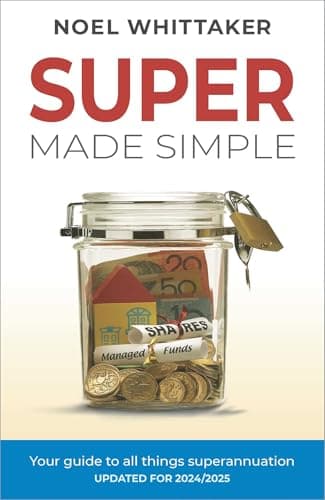
Super Made Simple
A focused, up-to-date guide to actually understanding your superannuation, from one of Australia's most trusted finance writers.
The Barefoot Investor
Scott Pape

The Barefoot Investor
Australia's best-selling money book ever. A simple system for accounts, budgeting, debt and a real emergency fund in one.
Retirement Made Simple
Noel Whittaker
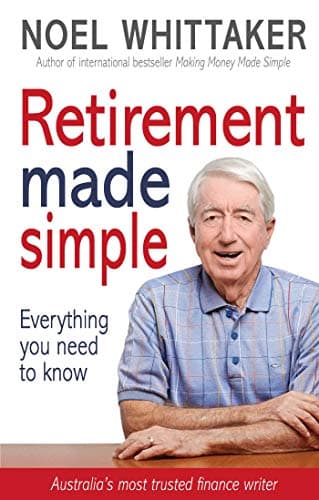
Retirement Made Simple
Australia's godfather of personal finance demystifies super, the pension and making your savings last. The plain-English retirement handbook every Aussie should read before they stop working.
Some links above are affiliate links. If you buy through them, Snowball Invest may earn a small commission at no extra cost to you. We only recommend books we'd suggest anyway.
Sources
This article is general information only, not financial, legal or tax advice. Super and SMSF rules change often, and your circumstances are unique. Confirm current rules with the ATO and ASIC Moneysmart, and speak with a licensed SMSF specialist before setting one up.
Was this article useful?
Put it to your own numbers
Every calculator runs entirely in your browser, with nothing stored. See what these numbers look like for your own situation.
Try the Retirement Income calculator →General information only. This article is educational and does not constitute personal financial advice. It does not account for your circumstances. Consider your own situation and seek advice from a licensed adviser before acting. Read our full disclaimer.

Timothy Hirou Gaschereau
Founder of Snowball Invest, not a financial adviser.
I write about what I'm learning myself, because nobody ever taught us how to take control of our own money. It's a skill, not a mystery, and it's never too late to learn it. The best day to start was yesterday, the second best is today.
LinkedIn →Related articles

How to Read Your Super Statement (and What Actually Matters)
Learn how to read your super statement in Australia: contributions, fees, returns, insurance and beneficiaries, in plain English. Five things to check today.

Age Pension Australia: Rates, Eligibility, and How It All Works
How much the Age Pension pays, who's eligible, how the income and assets tests actually work, how it interacts with your super, and when to apply.

Minimum Pension Drawdown Rates by Age (Australia 2026-27)
The official 2026-27 minimum pension drawdown rates by age, how they're calculated, the TTR 10% cap, and what happens if your fund misses the minimum.