

Minimum Pension Drawdown Rates by Age (Australia 2026-27)
The official 2026-27 minimum pension drawdown rates by age, how they're calculated, the TTR 10% cap, and what happens if your fund misses the minimum.
 By Timothy Hirou GaschereauPublished
 9 min read
Try it yourself
This article is general information only, not financial or tax advice. Your balance, age and personal circumstances will affect what's right for you, so consider speaking with a licensed financial adviser before making decisions about your super. This is part of a wider guide to retirement and FIRE on Snowball Invest.
Quick answer
The minimum pension drawdown rates for 2026-27 run from 4% (under 65) up to 14% (95 or older), based on your age at 1 July each year. They apply to standard account-based pensions and set the smallest amount your fund must pay you each financial year, there's no upper limit on a standard pension, only a floor.
In this guide
- →The full 2026-27 minimum drawdown rates table by age
- →Why the government requires a minimum withdrawal in the first place
- →How the minimum is actually calculated, with two worked examples
- →The extra 10% maximum cap that applies specifically to TTR pensions
- →What happens, and who's responsible, if your fund misses the minimum
📋 The minimum drawdown rates table (2026-27)
The rates below apply to standard account-based pensions (also called allocated pensions) for the 2026-27 financial year. They're set out in Schedule 7 of the Superannuation Industry (Supervision) Regulations 1994 and administered by the ATO.
| Age at 1 July | Minimum annual payment (% of balance) |
|---|---|
| Under 65 | 4% |
| 65-74 | 5% |
| 75-79 | 6% |
| 80-84 | 7% |
| 85-89 | 9% |
| 90-94 | 11% |
| 95 or older | 14% |
These are the standard rates and have applied since 2023-24. The government temporarily halved the minimum drawdown rates for four financial years, 2019-20 through to 2022-23, as a COVID-era measure to stop retirees being forced to sell assets at depressed prices. That reduction expired on 30 June 2023 and hasn't been extended or reinstated. The rates above have applied every year since, including 2026-27.
The minimum you must draw climbs with age, from 4% under 65 up to 14% at 95 and over.
🤔 Why does a minimum drawdown exist?
🎯 The essential: Pension-phase super earns investment income completely tax-free, the minimum drawdown rule exists to make sure that concession actually funds your retirement, rather than becoming a permanent tax shelter.
When your super moves into pension phase, investment earnings inside the fund drop to 0% tax, down from up to 15% in accumulation phase. That's a significant concession, and the ATO's position is simple: it's meant to fund your retirement income, not to let a balance sit untouched indefinitely while growing tax-free.
So the minimum drawdown rule is the government's way of enforcing that. You can't park a large balance in a pension account, enjoy the tax-free earnings, and pass the whole lot on without ever actually using it as income. The percentages are broadly calibrated to average Australian lifespans, so that drawing the minimum each year should, on average, see a balance last through retirement without running out too early.
🧮 How the minimum is calculated
The formula is straightforward: minimum annual payment equals your account balance multiplied by the age-band percentage. Your balance is measured at 1 July each year (or your opening balance if you started the pension mid-year), and the age used is your age on that same date.
| Example A | Example B | |
|---|---|---|
| Age | 67 | 78 |
| Balance at 1 July | $400,000 | $750,000 |
| Applicable rate | 5% | 6% |
| Minimum annual payment | $20,000 | $45,000 |
| Roughly per month | ~$1,667 | ~$3,750 |
You can always draw more than the minimum. There's no upper limit on a standard account-based pension, you could withdraw your entire balance if you wanted to. The minimum is a floor, not a ceiling.
If you open your pension after 1 July, the minimum for that first year is pro-rated based on the number of days remaining in the financial year. If you start on or after 1 June, no payment is required for that first, short year at all. From the following 1 July, you're on the full annual calculation.
🔀 TTR pensions: the 10% maximum cap
A Transition to Retirement (TTR) income stream uses the exact same age-band minimums as the table above. If you're 63 and drawing a TTR pension, your minimum is still 4%. But TTR pensions also carry a 10% maximum cap per year, a separate rule that standard account-based pensions don't have.
A TTR member is sandwiched between two limits: they must draw at least the age-band minimum (4% if under 65), and can't draw more than 10% of the account balance. That 10% ceiling exists because TTR pensions sit in a pre-retirement phase where investment earnings are still taxed at up to 15%, like an accumulation account, rather than the 0% that applies once you're in full retirement phase. The cap disappears once you turn 65 or meet a full condition of release, at which point your TTR pension automatically converts to a standard account-based pension with no maximum, just the age-band minimum going forward.
📈 Retirement Income Calculator
Model your own drawdown rate against your balance, investment returns and the Age Pension.
⚠️ What happens if you don't meet the minimum
If your fund fails to pay you at least the minimum amount in a financial year, the pension loses its pension-phase status for that year. That means investment earnings inside the fund become taxable at up to 15%, the accumulation rate, instead of 0%.
In practice, large APRA-regulated funds manage this automatically. They track your balance, calculate your minimum, and make sure payments go out before 30 June. SMSF trustees need to be more vigilant, you're personally responsible for ensuring the minimum is paid each year. Miss it, and the ATO treats the fund as if it was never in pension phase for that year, a costly mistake that's hard to undo. If you're an SMSF trustee, a calendar reminder for June each year is a simple fix for a serious consequence.
🎯 How much will you actually need?
Knowing the minimum is useful. Knowing whether the minimum is enough is the real question. For many retirees, especially those in their 60s with a reasonable balance, the minimum drawdown will be less than what they actually need to live on. For others, particularly in their 80s and 90s with large balances, the minimum can produce more income than they spend.
The minimum pension payment is a compliance floor, not a retirement income plan. If you're still working out whether your balance is on track in the first place, our guide to how much super you need to retire walks through the real Australian benchmarks in plain English.
SnowLetter
Australia's money news and our best reads, once a week.
❓ Frequently asked questions
Are minimum pension drawdown rates the same every year?
+
Not necessarily. The rates are set by regulation and can be changed by the government. The current rates have been stable since 2023-24, but the COVID period showed they can be temporarily reduced. Check the ATO's rates page at the start of each financial year, or bookmark this article, which we review annually.
Can I draw less than the minimum?
+
No. The minimum is mandatory. If you genuinely don't need the income, say you've gone back to work, you still have to take it. One option is to withdraw the minimum and reinvest it outside super, though this has tax implications worth thinking through with a financial adviser.
Do I have to take the minimum as cash, or can I use it differently?
+
It must be paid to you as a pension payment, into your bank account. You can then do whatever you like with it: spend it, invest it, gift it. But the payment has to leave the super fund, you can't redirect it internally or treat it as a contribution back into accumulation.
What if I start my pension mid-year?
+
Your minimum for the first year is pro-rated based on the number of days remaining in the financial year from your start date. If you start on 1 January, you'd have roughly half a year remaining and your minimum would be roughly half the full-year amount. If you start on or after 1 June, no payment is required at all for that year.
Do the same rates apply to SMSFs?
+
Yes. The minimum pension drawdown rates are the same whether your pension is with a large industry fund, a retail fund, or a self-managed super fund (SMSF). The difference is who's responsible for making sure it happens. With an SMSF, that's you, the trustee, and missing the minimum has real consequences for the fund.
📚 Recommended reading
Retirement Made Simple
Noel Whittaker
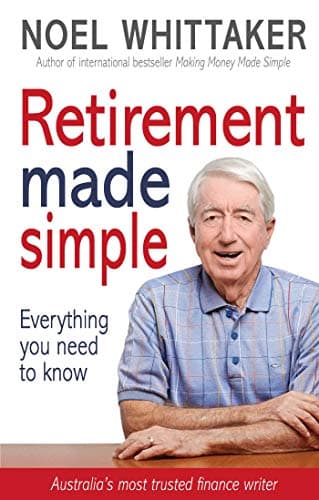
Retirement Made Simple
Australia's godfather of personal finance demystifies super, the pension and making your savings last. The plain-English retirement handbook every Aussie should read before they stop working.
Super Made Simple
Noel Whittaker
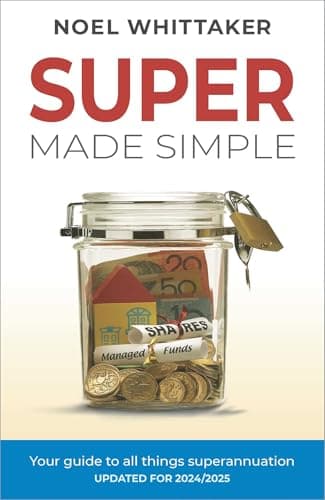
Super Made Simple
A focused, up-to-date guide to actually understanding your superannuation, from one of Australia's most trusted finance writers.
Die With Zero
Bill Perkins
Die With Zero
Stop hoarding cash for a someday that never comes. Perkins makes the case for spending on experiences while you are still young enough to enjoy them.
Some links above are affiliate links. If you buy through them, Snowball Invest may earn a small commission at no extra cost to you. We only recommend books we'd suggest anyway.
Sources
Was this article useful?
Put it to your own numbers
Every calculator runs entirely in your browser, with nothing stored. See what these numbers look like for your own situation.
Try the Retirement Income calculator →General information only. This article is educational and does not constitute personal financial advice. It does not account for your circumstances. Consider your own situation and seek advice from a licensed adviser before acting. Read our full disclaimer.

Timothy Hirou Gaschereau
Founder of Snowball Invest, not a financial adviser.
I write about what I'm learning myself, because nobody ever taught us how to take control of our own money. It's a skill, not a mystery, and it's never too late to learn it. The best day to start was yesterday, the second best is today.
LinkedIn →Related articles

How to Read Your Super Statement (and What Actually Matters)
Learn how to read your super statement in Australia: contributions, fees, returns, insurance and beneficiaries, in plain English. Five things to check today.

What Is an SMSF? A Beginner's Guide to Self-Managed Super
Thinking about an SMSF in Australia? Learn how they work, the pros, the cons, and whether your super balance makes one worth it.

Age Pension Australia: Rates, Eligibility, and How It All Works
How much the Age Pension pays, who's eligible, how the income and assets tests actually work, how it interacts with your super, and when to apply.