

Die With Zero Review: A Mindset Shift, With a Big Aussie Caveat
Our honest Die With Zero review for Australians: the good ideas, the real weaknesses, and why super, the Age Pension and aged-care costs change the maths here.
 By Timothy Hirou GaschereauPublished
 11 min read
Most money books are about saving more. Die With Zero flips that: Bill Perkins argues most people save too much for too long and die with far more than they ever needed. It's a provocative idea, and a genuinely useful one, but the literal strategy gets complicated fast for an Australian. Here's our honest review. It's part of our personal finance book reviews on Snowball Invest.
Quick answer
A genuinely useful kick up the backside for chronic over-savers. The core ideas are sound. The writing is repetitive, the examples are out of touch, and for Australians the literal strategy falls apart quickly once you factor in super, the Age Pension and aged-care costs. Read it as a mindset book, not a financial plan. Our rating: 3.5 out of 5.
Want to read Die With Zero?
A short, provocative read that will make you rethink saving for a 'someday' that might never come.
In this guide
- →What the book is actually about: stored life energy, time buckets and the memory dividend
- →Genuine strengths and the real criticisms, side by side
- →Who it's for, and who should skip it
- →What critics and readers say, including the anti-FIRE tension
- →The Australian angle: why super, the Age Pension and aged care change the maths
📖 What is Die With Zero actually about?
The central argument is simple: money is stored life energy. You traded hours of your finite life to earn it, so leaving it unspent at death means you traded your life for nothing. Perkins wants you to convert that stored energy into experiences, while you're still physically able to enjoy them. The book builds this around a few core ideas.
Time buckets: divide your life into five or ten year intervals, each with experiences that suit it (you can hike Patagonia at 35 in a way you probably can't at 75). The memory dividend: experiences keep paying you back emotionally for decades through recollection. And give money to your kids while you're alive, when they're buying a first home, not as an inheritance in their 60s. The goal isn't to maximise net worth, it's to maximise net fulfilment.
⚖️ Strengths and weaknesses
A book with real strengths and real weaknesses. Both are worth knowing.
What it gets right
- ✓It challenges the over-saving mindset directly, a rare and useful question in personal finance.
- ✓Time buckets are a genuinely practical planning frame that forces you to act while you can.
- ✓The memory dividend is backed by psychology: experiences beat things for lasting wellbeing.
- ✓Its key point that health declines before money runs out is important and often ignored.
- ✓Giving to your kids earlier (a first-home deposit at 30) beats an inheritance at 62.
- ✓It reframes retirement planning as life planning, a useful shift for anyone in their 30s or 40s.
Where it falls short
- ✕It assumes a high income and stable career, Perkins is a hedge fund manager worth a fortune.
- ✕The literal 'die with zero' target is impractical: you can't know your lifespan or health costs.
- ✕The writing is repetitive and padded, the core ideas could fit in a long essay.
- ✕It under-weights longevity and aged-care risk, which for most people is not irrational.
- ✕The examples (flying everyone to the Bahamas for your 40th) feel out of touch.
- ✕It lacks practical tools: no guidance on drawdown sequencing, tax or risk management.
👤 Who should read it, and who should skip it?
Read it if you
- ✓Are a natural saver who suspects you're hoarding out of anxiety rather than purpose.
- ✓Are already financially comfortable and want a framework for intentional spending.
- ✓Are in your 40s or 50s and have been deferring experiences until 'someday'.
- ✓Want a provocation to rethink your relationship with money and time.
Skip it if you
- ✕Are still building basic financial security and need practical tools.
- ✕Have significant longevity-risk concerns or a family history of long life.
- ✕Want an Australian-specific retirement planning guide.
- ✕Are on a median income and the Bahamas-birthday examples will just annoy you.
🔍 What do critics say about Die With Zero?
The critical reception is genuinely mixed. Forbes framed it generously as "the book the financial industry doesn't want you to read," praising Perkins for urging people to live with intention. The White Coat Investor took the opposite view, arguing the philosophy leans too far toward hedonism ("eat, drink and be merry for tomorrow we die") and identifying gaps around prudence, legacy and long-term security. The reviewer at Accidentally Retired captured the consensus neatly with 6 out of 10: "I love the concept but dislike the book." The writing is bland and repetitive and the examples unrelatable, but the core argument about spending intentionally is sound.
💬 What do readers say? Goodreads and Reddit
On Goodreads the book sits at around 3.89 out of 5 from roughly 41,000 ratings, skewing positive (29% five stars, 38% four). The most common written complaint mirrors the critics: great concept, repetitive execution.
On Reddit it's more nuanced. r/personalfinance and r/financialindependence appreciate the challenge to "save everything forever" but push back on the title's literalism and the lack of tools. In r/FIRE some call it "anti-FIRE" outright, since FIRE is about accumulating enough to stop working and Perkins is telling you to spend faster. Others find it a useful corrective to the hoarding instinct that creeps in after years of aggressive saving.
🇦🇺 Does Die With Zero work for Australians?
The philosophy travels fine: spend intentionally, convert money into experiences while you have the health to enjoy them, and give to your kids when they actually need it. But the maths changes significantly here, because Australia's retirement system has moving parts a US reader doesn't have to navigate.
- Super preservation age. Most Australians can't access their super until age 60, so you can't freely draw it down in your 50s the way a US reader might a 401k. The practical move is to spend external assets first and access super later, a sequencing our guide to a bridge portfolio covers and the book never does.
- The Age Pension. Available from age 67, subject to income and assets tests, with your super balance counting once assessable. See our Age Pension guide for the thresholds. Aggressive drawdown in your 60s can affect eligibility.
- Gifting limits. You can gift up to $10,000 per financial year (and $30,000 over five years) without it affecting your Age Pension assessment. Anything above is still counted as a deprived asset for five years, so you can't freely give away large sums.
- Aged-care costs. Residential aged care involves a basic daily fee (a set percentage of the single Age Pension, around $66 a day, indexed regularly), plus potential means-tested care and accommodation costs. Aggressive drawdown can leave a real shortfall if you need care in your 80s or 90s.
- No US-style annuity market. In the US you can buy annuities to guarantee lifetime income, which makes "spend to zero" more manageable. Australia's annuity market is thin, so longevity risk is harder to hedge.
The sensible Australian version of this philosophy isn't "die with zero." It's intentional spending across your healthy decades, with a deliberate aged-care buffer preserved. Spend more in your 60s and early 70s when you're active, plan your super drawdown around preservation age and the Age Pension, and keep a reserve for the aged-care wildcard.
💰 The verdict
Die With Zero is a good mindset book and a mediocre financial planning guide. Perkins is right that most people in wealthy countries save more than they need and defer experiences until it's too late, that health declines before money runs out, and that giving to your kids at 30 beats leaving them an inheritance at 60. He's wrong to treat "die with zero" as a literal target, wrong to dismiss longevity risk, and writing for a reader whose finances look nothing like most Australians'. Read it once, let it challenge your assumptions, then do your actual planning with someone who knows how super, the Age Pension and aged-care costs interact. Our rating: 3.5 out of 5.
Want to read Die With Zero?
Ready to rethink saving for 'someday'? Grab a copy and read it as a mindset reset.
SnowLetter
Australia's money news and our best reads, once a week.
❓ Frequently asked questions
Is Die With Zero worth reading?
+
Yes, once. It's a useful challenge to the over-saving mindset, and the time bucket framework is genuinely practical. But it's not a financial plan, and it has real gaps around longevity risk and implementation. Read it for the mindset shift, not the strategy.
What is the main message of Die With Zero?
+
Money is stored life energy, and dying with a large unspent balance means you traded your life for nothing. Perkins argues you should convert your wealth into meaningful experiences while you have the health and energy to enjoy them, rather than deferring everything to a retirement that may arrive too late.
What are the main criticisms of Die With Zero?
+
The writing is repetitive and could have been a blog post; the examples assume a very high income; the literal 'die with zero' target is impractical; the book under-weights longevity and aged-care risk; and it lacks any practical tools for implementation.
Does Die With Zero apply to Australians?
+
The philosophy applies, but the mechanics don't translate directly. Australia's super preservation age (60 for most people), Age Pension eligibility (from 67), Centrelink gifting limits and aged-care costs all change the maths. The sensible Australian version is intentional spending across your healthy decades, with a deliberate buffer for aged care, not a literal zero balance.
What is a 'time bucket' in Die With Zero?
+
A time bucket is a five or ten year interval of your life, say 30 to 40 or 70 to 75. Perkins argues different experiences suit different life stages, so you should plan which experiences belong in which bucket. The point: you can't do at 75 what you can at 35, so waiting until retirement to start living often means waiting too long.
Is 'dying with zero' actually achievable?
+
For most people, no. Hitting exactly zero at death requires knowing your lifespan, your health costs and that nothing unexpected happens, none of which are knowable. The title is a provocation to shift your mindset away from endless accumulation, not a literal instruction.
📚 Get the book (and two worthy next reads)
Die With Zero
Bill Perkins
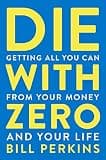
Die With Zero
Stop hoarding cash for a someday that never comes. Perkins makes the case for spending on experiences while you are still young enough to enjoy them.
Your Money or Your Life
Vicki Robin
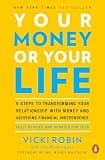
Your Money or Your Life
The book that basically kicked off the FIRE movement, reframing money as 'life energy' you trade your hours for. The nine-step program is pure gold, just swap the US retirement-account chapter for super.
Quit Like a Millionaire
Kristy Shen & Bryce Leung

Quit Like a Millionaire
A no-nonsense FIRE memoir from a couple who retired in their 30s. Shen takes you from growing up poor to hitting financial independence, with the actual maths.
Some links above are affiliate links. If you buy through them, Snowball Invest may earn a small commission at no extra cost to you. We only recommend books we'd suggest anyway.
Sources
Was this article useful?
Put it to your own numbers
Every calculator runs entirely in your browser, with nothing stored. See what these numbers look like for your own situation.
Explore the calculators →General information only. This article is educational and does not constitute personal financial advice. It does not account for your circumstances. Consider your own situation and seek advice from a licensed adviser before acting. Read our full disclaimer.

Timothy Hirou Gaschereau
Founder of Snowball Invest, not a financial adviser.
I write about what I'm learning myself, because nobody ever taught us how to take control of our own money. It's a skill, not a mystery, and it's never too late to learn it. The best day to start was yesterday, the second best is today.
LinkedIn →Related articles

Financial Freedom by Grant Sabatier: An Honest Review
Our honest Financial Freedom review for Australians: Grant Sabatier's income-first FIRE playbook, the savings-rate maths, the US-centric bits, and the super-bridge angle.

Early Retirement Extreme by Jacob Lund Fisker: A Review
Our honest Early Retirement Extreme review: Jacob Lund Fisker's foundational FIRE manifesto, the systems-thinking philosophy, and the Australian super-bridge angle.

Your Money or Your Life Review: The FIRE Classic, Aussie Take
Our honest Your Money or Your Life review: the life energy concept, the 9-step program, and exactly what Australian readers need to know before buying.