

Investing Amount Calculator
Work out roughly how much you'd need to invest regularly to reach a goal within a timeframe you choose.
Built and checked byTimothy Hirou GaschereauFigures verified at the source on
Your details
Required investment per month
$235
Goal amount
$50,000
Total contributions
$28,177
Investment return
$16,823
This calculator gives an estimate only, assuming a constant annual growth rate. Taxes and fees are not included. When 'goal in today's dollars' is on, the target is grown by your inflation rate so the contribution preserves real buying power. Not financial advice.
How to use this calculator
- 1. Enter your current savings, your target amount, and how long you're willing to give yourself to get there.
- 2. Enter the annual growth rate you expect on your investments.
- 3. The calculator solves for the regular contribution (weekly, monthly or annual) needed to hit your goal in time.
What actually drives how much you need to invest
The monthly figure this calculator gives you comes down to three levers: how much time you have, what return you expect, and what you're starting with. Change any one of them and the required contribution shifts, sometimes dramatically.
Timeframe is the biggest lever by far. Stretching a goal from five years to ten doesn't just halve the required contribution, it does better than that, because your earlier contributions have longer to compound. Starting earlier almost always beats contributing more later.
Return rate assumptions matter too, but be realistic. It's tempting to enter a high number to make the monthly figure look manageable, but an optimistic assumption can leave you short at the finish line, especially for shorter goals where there's less time to recover from a bad run. Contributing regularly, weekly, fortnightly or monthly rather than a single lump sum, also takes the pressure off trying to time the market. This is dollar cost averaging: you buy more units when prices are low and fewer when they're high, a habit rather than a decision you have to keep making.
What this looks like with real numbers
Say your goal is $500,000, you already have $10,000 saved, and you're weighing up a few different timeframes and return assumptions. Here's the monthly contribution each combination requires.
| Timeframe | Return (p.a.) | Monthly contribution needed |
|---|---|---|
| 10 years | 6% | ~$2,940 |
| 10 years | 8% | ~$2,613 |
| 20 years | 6% | ~$1,010 |
| 20 years | 8% | ~$765 |
| 30 years | 6% | ~$438 |
| 30 years | 8% | ~$262 |
Starting balance $10,000, target $500,000, contributions made monthly.
Look at the 10-year rows first. Even with a better return, you still need to put away roughly $2,600 a month, a serious ask for most Australians on a median income. Now look at the 30-year rows: at 8% p.a. you need just $262 a month for the same $500,000. That difference isn't a better return, it's time. An extra 20 years cuts the required monthly contribution by more than 90%, because your $10,000 starting balance alone grows to roughly $109,000 over 30 years at 8%, before you've contributed an extra dollar.
Here's a second example: a $1,000,000 goal, starting with $20,000, over 30 years at 8% p.a. Your $20,000 grows to roughly $218,700 on its own, leaving about $781,300 for contributions to cover. Run that through the annuity formula and you land on approximately $524 a month, a realistic figure for many households, especially once you factor in salary growth over three decades.
Four mistakes that will throw your plan off
The calculator gives you a clean number. These are the things that quietly turn it into a plan that fails.
Assuming unrealistically high returns. Plug in 12-15% and the monthly figure looks easy, but that's not a realistic long-run assumption for a diversified Australian portfolio. The ASX has delivered roughly 10% p.a. in nominal terms over the long run, and once you strip out inflation of around 2.5-3%, the real return is closer to 7%, for an all-shares portfolio with no diversification or fees. A realistic diversified portfolio typically lands in the 6-8% range in nominal terms. Use 6% for conservative planning and 8% for a growth-oriented portfolio with a longer runway, not higher.
Ignoring inflation. Your $500,000 target sounds like a lot today. In 30 years, at 2.5% inflation, it buys roughly what $235,000 buys now. You can handle this by using a real return (nominal return minus inflation) so everything stays in today's dollars, or by setting a higher nominal target to account for the erosion. Either works, but ignoring it entirely doesn't.
Not stepping up contributions as income grows. Most people set a monthly figure and leave it there for years, missing an easy win. If your salary grows 3-5% a year, that's an opportunity to increase contributions rather than let lifestyle costs absorb all of it. Even a 5-10% annual step-up compounds meaningfully: starting at $500 a month and increasing 5% a year gets you to $638 by year five and $814 by year ten.
Treating the output as a guarantee. The calculator assumes a smooth, consistent return every year. Real markets don't work like that: the ASX fell roughly 38% in 2008 and rose over 23% in 2019. Use the output as a planning tool, not a contract, and revisit it every year to recalibrate against what actually happened.
Turning the number into a real plan
Set up an automatic transfer from your everyday account to your investment account the day after your pay lands, so you spend what's left rather than what you intended to invest. If you're paid fortnightly, consider splitting your monthly target across two fortnights to smooth the cash flow. Working out where that contribution fits inside your broader budget is easier with a framework like the 50/30/20 rule, which splits your take-home pay into needs, wants and savings.
If the required contribution looks too high, you've got three levers: extend the timeframe, lower the target, or accept a higher return assumption with eyes open to the risk that comes with it. Don't just inflate the return rate to make the number feel more comfortable. Clearing high-interest debt first is also worth doing before you ramp up contributions, since paying off a card at 20% p.a. is a guaranteed return most investing strategies won't beat, and keeping an emergency fund separate means you're never forced to sell at the wrong time to cover a surprise cost.
Don't forget superannuation, either. Your compulsory super contributions are already building long-term wealth even though they're not captured here. This calculator is best used for goals outside super, a house deposit, an investment portfolio, or financial independence before preservation age. For retirement-specific planning, a dedicated retirement calculator or a licensed financial adviser will give you a fuller picture.
FAQ
How much should I invest per month to reach $500,000?
It depends on your starting balance, timeframe and expected return. Starting from $10,000 at an 8% p.a. return, you'd need roughly $2,613 a month over 10 years, $765 a month over 20 years, or just $262 a month over 30 years. Time is the biggest lever here, so plug your own numbers into the calculator above for a figure specific to you.
What return rate should I use in the calculator?
For conservative planning, use 6% p.a. For a growth-oriented portfolio with a long timeframe, 7-8% is reasonable. The ASX has averaged around 10% nominally over the long run, but that's before inflation and fees, and a diversified portfolio including international shares typically lands in the 6-8% range over a full market cycle. Steer clear of anything above 10% unless you have a specific reason to expect it.
Does the calculator account for tax?
No. It doesn't factor in tax on investment returns, capital gains tax, or the tax treatment of dividends, all of which will reduce your effective return in practice. As a rough guide, many investors shave 1-1.5 percentage points off their assumed return to approximate the tax drag on a taxable portfolio. For an accurate after-tax picture, speak with a financial adviser or accountant.
Should I include my superannuation in this calculation?
That depends on your goal. If you're planning for retirement and you'll have access to your super by the time you need the money, your super balance and ongoing employer contributions are relevant. But this calculator works best for goals outside super, such as a share portfolio, a house deposit, or financial independence before preservation age. For retirement planning that includes super, a dedicated retirement calculator or a licensed adviser will give you a fuller picture.
How much do I need to invest per month to retire with $1 million?
Starting from zero over a 30-year timeframe at 8% p.a., you'd need roughly $670 a month. With $20,000 already saved, that drops to around $524 a month, and with $50,000 saved, closer to $390 a month. Your starting balance matters a lot over long timeframes because it has more time to compound. Use the calculator above with your own numbers to get a figure that's actually yours.
What happens if I miss a month of contributions?
Missing one month has a small but real cost: you lose that month's compounding, and the shortfall carries forward over the remaining years. One missed month isn't a disaster, but a habit of skipping them is. If you do miss one, the best fix is to resume the following month and, where you can, chip in a bit extra to partly cover the gap. Automating your contributions is the simplest way to avoid this altogether.
Is 8% a realistic return to expect from Australian shares?
Over long periods, it's within the range of historical outcomes for a diversified growth portfolio. The ASX 200 has delivered roughly 10% p.a. in nominal terms over the past 30 years, though with plenty of year-to-year variation, and after inflation and fees real returns have typically sat in the 5-8% range. Eight percent is a reasonable long-term planning assumption, but it's not guaranteed, so plan conservatively and review regularly.
How does starting with more savings affect my required monthly contribution?
Significantly. A bigger starting balance means more capital compounding from day one, which shrinks the gap your contributions need to fill. In the $500,000 example above, starting with $10,000 instead of zero at 8% over 30 years saves you roughly $66 a month, and starting with $50,000 instead of $10,000 saves you another $220 a month or so. Every dollar you put to work early reduces the ongoing contribution burden.
Can I use this calculator for a house deposit goal?
Yes, with one caveat. Deposit goals are usually shorter (3-7 years), and a high-growth share portfolio carries real risk over that kind of horizon, since the market could easily be down the year you need the money. For shorter-term goals, many Australians lean on high-interest savings accounts or term deposits instead. If you're using this calculator for a deposit, use a lower, more conservative return assumption, say 2-4%, to reflect that.
What's the difference between nominal and real returns, and which should I use?
A nominal return is the raw percentage gain before adjusting for inflation. A real return strips inflation out to show growth in actual purchasing power. If your portfolio returns 8% and inflation is 2.5%, your real return is roughly 5.5%. For most planning, using a nominal return of 6-8% and setting a nominal target that already accounts for inflation is the simplest, most practical approach.
How often should I recalculate my required contribution?
At least once a year. Your annual tax return or the end of the financial year is a good trigger, since you'll have a clear picture of what your portfolio actually returned. Recalculate any time your circumstances shift meaningfully too, such as a pay rise, a lump sum contribution, or a change to your timeframe or target. The investors who hit their goals are the ones who check in and adjust, not the ones who set it once and forget it.
What if my income changes significantly during the investment period?
Adjust your contributions to match. If your income drops, scale contributions back rather than going into debt to maintain them. If it rises, bump contributions up before lifestyle inflation quietly absorbs the extra. A contribution step-up strategy, where you commit to increasing your monthly investment by a fixed percentage each year, is a practical way to build income growth into the plan from day one.
Related reading

VDHG: The Complete Guide to Vanguard's All-in-One ETF
A plain-English guide to VDHG, Vanguard's all-in-one ASX ETF: fees, holdings, the tax drag, performance, and how it stacks up against DHHF and a DIY VAS + VGS portfolio.

DHHF Review: Is the Betashares All Growth ETF Worth It?
A plain-English review of DHHF, the Betashares Diversified All Growth ETF: its holdings, the 0.19% fee, why it's more tax-efficient than VDHG, and exactly who it suits.

VAS ETF: The Complete Australian Investor's Guide
A plain-English deep dive into VAS, Vanguard's Australian shares ETF: what it holds, the 0.07% fee, franking credits, and how it compares to A200 and VGS.
Where these numbers come from
Every rate and threshold in this calculator was read off the official page, not copied from another calculator. Check them yourself, they change.
📚 Recommended reading
Just Keep Buying
Nick Maggiulli
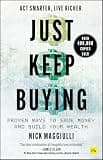
Just Keep Buying
Data over vibes. Maggiulli crunches the numbers to show that consistently buying assets beats trying to time the market, and it is easier than you think.
The Simple Path to Wealth
JL Collins
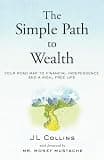
The Simple Path to Wealth
The friendliest on-ramp to index investing there is, born from letters a dad wrote his daughter. It makes 'buy the whole market and chill' feel obvious, just map his US fund picks onto Aussie equivalents and super.
Some links above are affiliate links. If you buy through them, Snowball Invest may earn a small commission at no extra cost to you. We only recommend books we'd suggest anyway.
SnowLetter
Australia's money news and our best reads, once a week.
Disclaimer
The results provided by this calculator are estimates only, based on the assumptions you enter, and are not a prediction or financial advice. Actual amounts required will vary. Consider speaking with a licensed financial adviser before making any financial decision.