

VDHG: The Complete Guide to Vanguard's All-in-One ETF
A plain-English guide to VDHG, Vanguard's all-in-one ASX ETF: fees, holdings, the tax drag, performance, and how it stacks up against DHHF and a DIY VAS + VGS portfolio.
 By Timothy Hirou GaschereauPublished
 14 min read
Try it yourself
VDHG is the ETF that launched a thousand r/AusFinance threads. It is Vanguard's all-in-one, one-ticket portfolio: buy a single unit on the ASX and you own a slice of more than 16,000 companies worldwide, plus a small bond buffer, all rebalanced for you. For a lot of Australians it is the entire investing plan in five letters.
This guide assumes you already know what an ETF is. Here we go deep on what VDHG actually holds, what the 0.27% fee really costs, the tax quirk everyone argues about, and how it stacks up against DHHF and a do-it-yourself portfolio. General information only, not financial advice.
🎯 The essential: VDHG is Vanguard's Diversified High Growth Index ETF (ASX: VDHG), a 90% growth / 10% bonds portfolio in one ticker, for a 0.27% yearly fee. It is Australian-domiciled, so no W-8BEN and no US estate tax headaches. The trade-offs: it costs more than a DIY VAS + VGS build, and its fund-of-funds structure can pass through capital gains that create a “tax drag”, more of an issue for high earners. Its main rival, DHHF, is cheaper (0.19%) and 100% shares. Great for hands-off beginners, less ideal if you want maximum growth or maximum tax efficiency.
What VDHG actually is
VDHG is the Vanguard Diversified High Growth Index ETF, listed on the ASX since 22 November 2017. It has grown into one of Australia's largest and most liquid ETFs, with a total fund size in the order of $12 billion across its share classes.
The structure is a fund of funds. VDHG does not buy individual shares directly. Instead it holds a basket of underlying Vanguard index funds and ETFs, which in turn own the actual shares and bonds. Think of it as a pre-built portfolio that Vanguard maintains for you: no spreadsheets, no rebalancing reminders, no agonising over whether you are overweight the US.
It is ASX-domiciled, which matters. You avoid the US estate tax exposure and the W-8BEN form you would face buying US-listed funds like VTI or VOO directly. Vanguard rates VDHG as high to very high risk with a suggested minimum timeframe of 7 or more years. That is not boilerplate: with 90% in growth assets, you will see real volatility.
What it actually holds
VDHG targets a 90% growth / 10% defensive split. In plain terms, 90% shares and 10% bonds, spread across seven asset classes.
| Asset class | Target weight |
|---|---|
| Australian shares | 36.0% |
| International shares (unhedged) | 26.5% |
| International shares (hedged) | 16.0% |
| International fixed interest (hedged) | 7.0% |
| International small companies | 6.5% |
| Emerging markets shares | 5.0% |
| Australian fixed interest | 3.0% |
Two things worth knowing. About 16% sits in currency-hedged international shares, so that slice is protected against swings in the Australian dollar, while the rest of the international exposure is unhedged and moves with the currency. Our guide to hedged vs unhedged ETFs unpacks that trade-off. And the defensive 10% is a bond sleeve (7% international, 3% Australian) that trims volatility a little but also caps long-run growth versus a 100% equity fund.
The net result: you own a tiny piece of thousands of companies, from BHP and CBA to Apple, Microsoft and Samsung, plus hundreds of emerging-market businesses, all in one parcel. If that sounds like the diversification pitch behind index investing, that is exactly what it is, just pre-assembled.
The 0.27% fee, in real dollars
VDHG's management fee (MER) is 0.27% per year. There are no meaningful indirect or transaction costs on top, so the number is the number. You never get a bill; it is quietly deducted from the fund's assets before returns are reported.
| Portfolio size | Annual fee at 0.27% |
|---|---|
| $10,000 | $27 |
| $50,000 | $135 |
| $100,000 | $270 |
| $250,000 | $675 |
How does that compare to doing it yourself?
| ETF | MER |
|---|---|
| VAS (Australian shares) | 0.07% |
| VGS (international shares) | 0.18% |
| DHHF (diversified all growth) | 0.19% |
| VDHG | 0.27% |
A DIY VAS + VGS build lands around 0.11% to 0.17% blended, so VDHG costs roughly 0.1% a year more. On a $100,000 portfolio that is about $100 to $160 a year, and it compounds over decades. The honest framing: 0.27% is not outrageous for automatic rebalancing and true one-ticket simplicity, but it is higher than the DIY route, and that gap is the price of convenience.
Distributions and the tax drag everyone argues about
VDHG pays quarterly distributions, usually in March, June, September and December. Each one can bundle several things: ordinary income (dividends and bond interest), franking credits that flow through from Australian companies, and, the contentious bit, realised capital gains.
Because VDHG is a fund of funds, the underlying funds sometimes sell assets when other investors redeem units. Those sales create capital gains inside the fund, which get passed through to everyone still holding, even if you reinvest straight away. You pay tax on them in the year you receive them. That is the tax drag that fills the AusFinance forums.
From 1 July 2024 Vanguard began directing new inflows into ETF share classes rather than unlisted managed funds, which should reduce these internal capital gains events over time. But Vanguard confirmed it is not selling down the existing managed fund holdings, so the issue is softened, not erased. For lower tax brackets it is often overstated; for someone on the top 47% marginal rate it can add up.
A Dividend Reinvestment Plan (DRP) is available: elect by 5pm on the record date, through Computershare if you hold via a broker, or in your account if you use Vanguard Personal Investor. One catch: reinvested distributions are still taxable, so keep cash aside for the bill.
Performance, honestly
VDHG had two cracking years recently: roughly 15% to 18% total returns across 2023 and 2024. Lovely, but do not anchor on them. Those years rode an exceptional run in global shares, led by US tech and the AI boom, and they are not a reliable guide to the next decade.
Over a full market cycle, a 90% equity / 10% bond portfolio has historically delivered somewhere in the range of 7% to 9% a year before tax. Treat that as a planning assumption, not a promise. Some years will be much better, some negative. With 90% in shares, VDHG will fall hard in a crash: a 30% to 40% drawdown is a normal feature, not a tail risk. The real question is not whether that happens, it is whether you will keep holding when it does. Past performance guarantees nothing, and that line is as true as it is legally required.
VDHG vs building your own (VAS + VGS)
This is the debate everyone hits once they have read a bit.
| Factor | VDHG | VAS + VGS (DIY) |
|---|---|---|
| MER | 0.27% | ~0.11% to 0.17% blended |
| Rebalancing | Automatic | Manual |
| Tax flexibility | Moderate | Better if managed well |
| Control of AU / global split | None | Full |
| Bonds included | Yes (10%) | No |
| Simplicity | Very high | Moderate |
The fee gap is real but not enormous. The bigger DIY advantages are tax flexibility (you can rebalance by steering new contributions to the underweight fund rather than selling, which defers capital gains) and control. VDHG's counter is discipline: one ticker, a fixed allocation, and no temptation to tinker. DIY wins on cost and tax for engaged investors who will actually rebalance. VDHG wins for everyone who would rather never think about it.
VDHG vs DHHF
The other big debate, and a genuinely close one.
| Factor | VDHG | DHHF |
|---|---|---|
| MER | 0.27% | 0.19% |
| Growth / defensive | 90% / 10% | 100% / 0% |
| Bonds | Yes | No |
| Currency hedging | Yes (~16%) | No |
| Tax efficiency | Moderate | Generally better |
| Structure | Fund of funds | ETF of ETFs |
DHHF is cheaper by 0.08% a year and generally more tax-efficient, because holding underlying ETFs (rather than unlisted managed funds) triggers fewer internal capital gains. It is also 100% shares, so if you do not want bonds it is the cleaner pick. VDHG's case is that 10% defensive sleeve, if you genuinely want it.
Already hold VDHG and tempted to switch to DHHF? Think twice. Selling VDHG is a capital gains tax event on any gains you have made, and that cost often outweighs the fee saving for years. The tidy move is to leave your VDHG alone and point new contributions at DHHF instead.
The bond drag debate
At 25 or 30, do you actually want 10% of your money in bonds? The case against: bonds drag on long-run returns, and a young investor with a 30-year runway has time to ride out crashes. The case for: bonds cushion the falls, and a portfolio that drops 35% is easier to hold than one that drops 45%.
The honest take: for most young FIRE-minded investors, 10% bonds is a small drag on returns. But the far bigger risk is panic-selling in a crash and locking in the loss. If the bond sleeve is what keeps you invested, it has earned its keep. If you know for certain you would sit tight through a 45% drawdown of a 100% equity fund, DHHF or a DIY build probably fits you better.
Who it suits, and who should look elsewhere
VDHG is a strong fit if you want a complete, diversified portfolio in one ticker without needing to understand asset allocation; want automatic rebalancing you never think about; suspect you might not stay disciplined with a DIY portfolio; are fine with quarterly distributions and the annual tax statement; and like having a little defensive allocation built in.
Look elsewhere if you want 100% shares with no bond drag (see DHHF); are a high-income earner where the capital gains tax drag genuinely bites; are happy to rebalance manually and save on fees with a VAS + VGS combo; or want full control over your Australian versus international split.
How to buy VDHG
You buy VDHG exactly like a share, using the ticker VDHG, through any ASX broker (Stake, Pearler, SelfWealth, CommSec, Superhero, CMC Markets and most others). The minimum is a single unit, around $77 as of mid-2026. New to this part? See how to buy shares in Australia and how to choose a broker.
One tip: on Vanguard Personal Investor, buying VDHG costs $0 brokerage ($9 to sell), which is a real edge if you invest small amounts regularly.
Common mistakes with VDHG
- Panic-selling in a correction. VDHG is built for 7+ years. A 20% or 30% drop is normal, not a sign something is broken. Selling locks in the loss and kills the compounding.
- Switching to DHHF and triggering CGT. If your VDHG is sitting on gains, selling to switch is a taxable event that often outweighs the fee saving for years. Redirect new contributions instead.
- Expecting smooth returns. 2023 and 2024 were exceptional. Budget emotionally for negative years.
- Ignoring the EOFY tax statement. Distributions have several components: franked and unfranked dividends, interest and capital gains. Give your accountant or tax software all of it, not just the total.
- Over-optimising. Six months spent debating VDHG vs DHHF vs DIY is six months not invested. The gap between these options is small next to the gap between investing and not investing. Pick something sensible and start.
❓ Frequently asked questions
Is VDHG good for beginners?
+
Yes, genuinely. VDHG is one of the most beginner-friendly ETFs on the ASX. You get a fully diversified portfolio across thousands of companies worldwide, automatic rebalancing, and a single fund's tax statement, all for 0.27% a year. The things to understand upfront are that it is a long-term investment (7+ years), it will be volatile, and the quarterly distributions create a tax admin task each year.
What is the difference between VDHG and DHHF?
+
VDHG is 90% growth and 10% bonds and costs 0.27% a year. DHHF is 100% shares with no bonds and costs 0.19%. DHHF is cheaper and generally more tax-efficient thanks to its ETF-of-ETFs structure. VDHG has a small bond allocation for slightly lower volatility. If you want maximum equity exposure and lower fees, DHHF has the stronger case. If you want some defensive allocation baked in, VDHG suits better.
Does VDHG pay dividends?
+
VDHG pays quarterly distributions rather than dividends in the traditional sense. Each distribution can include ordinary income (dividends and interest from the underlying holdings), franking credits, and realised capital gains from internal rebalancing. You can take the cash or reinvest automatically via the DRP.
Is VDHG tax-efficient?
+
It is moderate. VDHG's fund-of-funds structure has historically distributed more capital gains than a pure ETF-of-ETFs structure like DHHF, because internal managed fund redemptions can trigger capital gains events. Vanguard's 2024 restructure (directing new inflows to ETF share classes) should reduce this over time, but it is not eliminated. For lower tax brackets the impact is manageable. For high-income earners it is worth weighing DHHF or a DIY approach.
Can I lose money with VDHG?
+
Yes. VDHG is 90% invested in shares, and share markets fall, sometimes sharply. During the 2020 COVID crash global markets fell around 30% in weeks, and 2022 was a negative year. If you invest $10,000 today there will be periods when that balance is worth $7,000 or $8,000. That is normal for a high-growth portfolio. The key is staying invested long enough for the recovery and later growth to outweigh the drawdown.
What is the minimum investment for VDHG?
+
One unit, which is roughly $77 as of mid-2026. If you open a Vanguard Personal Investor account the minimum to open is $200, but you can then buy as little as one unit at a time with $0 brokerage.
Should I use the DRP with VDHG?
+
It depends. The DRP automatically reinvests your distributions into more VDHG units, which is great for compounding while you accumulate. But reinvested distributions are still taxable in the year you receive them, so you need the cash to pay the tax bill separately. If you are in a high tax bracket receiving large distributions, make sure you have cash set aside for tax before enrolling.
Is VDHG better than VAS + VGS?
+
Neither is objectively better. VDHG wins on simplicity, automatic rebalancing, and the discipline of a fixed allocation. VAS + VGS wins on lower fees (roughly 0.11% to 0.17% blended versus 0.27%), better tax flexibility, and control over your Australian versus international split. VDHG also bundles bonds, small caps and emerging markets that VAS + VGS alone leave out. For beginners, or anyone who won't stay disciplined with manual rebalancing, VDHG is the stronger pick. For engaged investors happy with a bit of admin, DIY is usually cheaper over the long run.
Keep reading
📚 Recommended reading
The Barefoot Investor
Scott Pape
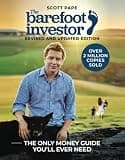
The Barefoot Investor
Australia's best-selling money book ever. A simple system for accounts, budgeting, debt and a real emergency fund in one.
Girls That Invest
Simran Kaur
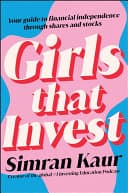
Girls That Invest
A no-jargon crash course from the podcaster behind Girls That Invest that makes the sharemarket feel doable, written especially for women starting out. The perfect first step before you buy your first ETF.
The Bogleheads' Guide to Investing
Taylor Larimore, Mel Lindauer & Michael LeBoeuf
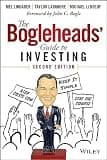
The Bogleheads' Guide to Investing
The friendly community bible of low-cost, buy-and-hold index investing, written by everyday investors rather than salespeople. The core philosophy is timeless for Aussies, just read the tax-advantaged account bits as super.
Some links above are affiliate links. If you buy through them, Snowball Invest may earn a small commission at no extra cost to you. We only recommend books we'd suggest anyway.
Sources
This article is general information only, not financial or tax advice. ETF fees, holdings, distribution components and tax rules can change, and the figures here are indicative as of mid-2026. Check Vanguard's current product disclosure statement and factsheet, the ATO, or a licensed adviser before investing.
Was this article useful?
Put it to your own numbers
Every calculator runs entirely in your browser, with nothing stored. See what these numbers look like for your own situation.
Try the Compound Interest calculator →General information only. This article is educational and does not constitute personal financial advice. It does not account for your circumstances. Consider your own situation and seek advice from a licensed adviser before acting. Read our full disclaimer.

Timothy Hirou Gaschereau
Founder of Snowball Invest, not a financial adviser.
I write about what I'm learning myself, because nobody ever taught us how to take control of our own money. It's a skill, not a mystery, and it's never too late to learn it. The best day to start was yesterday, the second best is today.
LinkedIn →Related articles

VDBA ETF Australia: Vanguard's Diversified Balanced Fund Explained
VDBA is Vanguard's 50/50 balanced all in one ETF. Get the asset allocation, 0.27% fee, quarterly distributions, and how VDBA compares to VDHG and VDGR.

VDGR ETF Australia: Vanguard's Diversified Growth Fund Explained
VDGR is Vanguard's 70/30 growth all in one ETF. Get the asset allocation, 0.27% fee, quarterly distributions, and how VDGR compares to VDHG and VDBA.

The Three-Fund Portfolio in Australia
Three ETFs, thousands of companies, one simple structure. How to build a three-fund portfolio in Australia with VAS, VGS and VAF, and choose your split.