

How to Choose a Share Trading Platform in Australia
Structure, markets, habit, cost, exit fees and tax: the order to judge a share trading platform in Australia, and the fees no pricing page shows you.

13 min read
Try it yourself
Quick answer
Choosing a share trading platform is a sequence, not a ranking. Decide how your shares will be held, which markets you need, and whether the platform suits the way you buy. Only then compare brokerage, and after that the conversion spread, the exit fees and the tax paperwork.
Most guides start at the fee table and stop there, which is why their answer rarely fits you. This one works in the order that actually decides the outcome. It is general information only, not financial advice.
In this guide
- →Why the order you judge things in matters more than any single answer
- →The one decision you cannot cheaply reverse
- →Why a headline brokerage rate cannot rank anything on its own
- →The cost that never appears on a pricing page
- →What it costs to leave, and what your tax return will look like
1. Start with how your shares will be held
Before fees, before apps, before anything: decide where your shares will actually live.
Australian shares sit on the ASX's CHESS register, and there are two ways a platform gets them there. CHESS sponsored means your shares are registered in your own name under your Holder Identification Number, or HIN. A custodian, sometimes called a nominee, holds them in its own name and records your entitlement on its own books. You get an account instead of a HIN. The CHESS sponsorship and HINs explainer has the detail.
This comes first because it is the only decision on this list you cannot cheaply reverse. Brokerage you can change next month by moving. Structure gets into your cost base. Leave a custodian and you may have to sell and rebuy, which is a capital gains tax event, and it restarts the 12-month clock on the 50% CGT discount for Australian resident individuals. You can lose a year of discount simply by changing platforms. No fee comparison table will warn you, because it is not a fee.
Some platforms register ASX shares in your name under a HIN. Others are custodians. CHESS sponsored brokers make moving cleaner. Custodians often make cheaper brokerage or fractional shares possible, so it is a trade rather than a verdict either way.
US shares work differently. There is no CHESS register for them, so whichever platform you use, your US holdings sit with a custodian or a US broker-dealer. The HIN question is an ASX question.
2. Then work out which markets you need
Now narrow to markets, because your market decides which costs even exist.
If you will only ever buy ASX shares and ASX-listed ETFs, half of this page stops applying to you. No currency conversion. No W-8BEN. No US estate tax questions. A platform's US brokerage is irrelevant, however good it looks on a banner.
Add US shares and a second cost stack switches on: brokerage on the order, the currency conversion spread, US regulatory fees, funding and withdrawal mechanics, dividend withholding tax, and the W-8BEN form you complete so the platform applies the treaty rate. Add markets beyond the US and check each one separately, because a platform that is cheap on the ASX is not automatically good on London or Tokyo.
So the honest answer to "best broker for US stocks in Australia" is that it depends on you: how often you convert, how much at a time, and how long you hold. Same story with the best broker for ETFs in Australia. It usually comes down to your order size rather than the ETF label. If funds are new to you, what an ETF is is worth ten minutes first.
3. Then check the platform supports your actual habit
Features are easy to compare and mostly beside the point. Habit is what decides your bill.
Are you a fortnightly $300 buyer or a twice-a-year $10,000 buyer? Those two people need different things. A fortnightly buyer lives or dies on minimum order sizes and fractional shares, because a fixed fee is a bigger slice of a small order. A lump-sum buyer barely notices.
Ask blunt questions. Is there a minimum first deposit? A minimum order value? Can you buy fractional US shares? Three minimums are confirmed as at 19 September 2026: Superhero from $10, Vanguard Personal Investor $200, and Stake fractional US shares from US$10. For every other platform, check before you open an account, because we have not verified those.
Can you set a recurring buy, or do you place each order by hand? Can you see your cost base and buy dates without exporting a spreadsheet? A platform that fits your habit is one you will still be using in three years. One that fights it gets abandoned, and abandoned accounts are the expensive ones.
4. Only then compare what it costs
Now cost. And notice how few platforms are left by the time you get here.
Brokerage fees in Australia come in three shapes. A flat fee per order, so one price whatever the size: Stake charges A$3 on ASX orders up to A$30,000. A percentage of trade value with a floor: Interactive Brokers Australia charges 0.08% on ASX orders with a minimum of A$6.00. And tiered pricing, where the percentage drops as the order grows, common at the full-service, bank-owned end of the market.
The shape matters more than the number on the banner. A flat A$3 fee is 0.6% when the order is A$500 and 0.06% when it is A$5,000. Interactive Brokers Australia's A$6.00 floor works out at 1.2% on an order of A$500, even though the headline rate is 0.08%. Same platform, same rate card, and the cost as a share of your money differs fifteen-fold depending on your order size.
Two more things before you rank anything. Brokerage generally attracts 10% GST, so if the advertised figure excludes GST, that is the number that actually leaves your account. And the round trip counts: you pay on the buy and again on the sell. A platform quoting "$3 per trade" means $3 each way, or $6 on a full round trip before GST.
This is why searching for the best stock broker in Australia hands you a list that may not survive contact with your own plan. The cheapest brokerage is a flat fee that is brutal on small orders, or a $0 offer with conditions, or a percentage rate whose floor does the damage. None of them is cheapest in the abstract.
Run your own plan through the fee comparison
Set your amount, your frequency and your horizon, and nine Australian platforms sort themselves on total cost, conversion included. It states what each one charges on your numbers and never picks a winner for you.
Compare broker fees →5. The cost that is not on the pricing page
Here is the fee that never gets its own line in a comparison table.
When you buy a US share, your Australian dollars become US dollars first, and the platform makes that exchange at a rate with a margin built in. That margin is the currency conversion fee. It appears as a slightly worse exchange rate rather than a fee line, which is precisely why it slips past anyone comparing brokerage.
Published rates run from 0.002% up to 0.60% as at 19 September 2026, and the cheap end carries a floor. Interactive Brokers Australia charges 0.002% on client-initiated conversions with a minimum of US$2.00. CMC Invest charges 0.60% on international orders and $0 brokerage on US shares. Stake charges 0.55% on AUD to USD conversions. That is a three-hundred-fold gap across the headline rates, and then a US$2.00 floor flips the maths again on small conversions.
Two features make it bite. It is a percentage, so it scales with every dollar converted rather than with the number of trades you place. And you usually pay it twice: once converting in, once converting out. A 0.60% round trip on a A$5,000 position is A$60 before the share price has moved a cent.
Then hunt for the rest of the invisible list: funding and withdrawal costs, account or inactivity fees, data fees, per-share US regulatory charges that turn up on the contract note, and any second conversion when you take money out.
6. What it costs to leave
Nobody checks this before signing up. It is also the section that listicles never reach.
Ask three questions. What does the platform charge to transfer holdings out? What does it charge to close the account? And can you take your holdings with you, or only your cash?
If you hold ASX shares under a HIN, moving brokers is a transfer. Your holdings, your buy dates and your cost base travel with you. If you are with a custodian, leaving often means selling and rebuying, which triggers CGT and restarts the 12-month discount clock. That is a genuine cost and it appears on no pricing page anywhere.
We have not verified exit or transfer-out fees for any platform on our comparison page, so treat them as unknown until you have read the fee schedule yourself. An account you are happy with has no exit cost. An account you are stuck in does.
7. What your tax reporting will look like
Last question, and it is an annual one.
Every platform gives you contract notes and an annual tax statement. What differs is how much work sits between those documents and a finished return. Check whether your buy and sell data pre-fills into tax software, whether the platform tracks cost base properly when you buy the same share in several parcels, and whether it keeps records for holdings you have since sold.
Hold shares for at least 12 months before you sell and you may qualify for the 50% CGT discount as an Australian resident individual, so the dates need to be right and the platform needs to hold them. Capital gains tax on shares covers the mechanics.
US shares add a second layer: dividends with tax withheld at the treaty rate, which you claim back through a foreign income tax offset, plus a W-8BEN that needs renewing when your circumstances change. Tax offsets in Australia explains how the offset works. A platform that reports cleanly saves you part of an accountant's hourly rate every year.
8. Putting it together
The order is the argument. Holding structure first, because it is the hardest to undo. Markets second, because they decide which costs exist at all. Habit third, because it decides which costs bite hardest. Cost fourth, and only then, because cost without the first three is a number with no context.
Then the three sections most rankings never reach: the hidden conversion cost, the exit cost, and the tax paperwork. Search "online broker Australia" and you will get lists that start at step four and stop at step five. That is not laziness, it is the business model. A published rate is easy to scrape and easy to rank, and holding structure is not.
🎯 The essential: Write down how you will hold your shares, which markets you will buy, and your realistic order size and frequency. Cross off anything that cannot handle those three. Then compare what is left on total cost, including conversion, minimums and GST. Then read the exit fees and the tax reporting. If two platforms tie on all of it, pick the one you will actually open.
What I actually use
Pearler
This is the broker I personally use. Do your own research and form your own opinion, but I genuinely recommend it, it's built for long-term investors rather than day traders, and makes it easy to automate regular investing. Sign up through my link or with the code TIMOTHY269825 and you'll both get a $20 cash bonus once you make your first investment (Pearler's current offer, T&Cs apply).
Sign up to Pearler →This is a referral link. If you sign up through it, I get a bonus too, at no extra cost to you.
Frequently asked questions
Does it matter which platform you start with?
Less than most people think, as long as you get the holding structure right. Brokerage differences on a small balance are dollars a year. What is hard to undo is custody, because moving from a custodian can mean selling and rebuying, which triggers capital gains tax and restarts the 12-month discount clock. Start simple, but start with the structure you want long term.
What actually happens when you change platforms?
If your ASX shares are held under your own HIN, you transfer them across and keep your holdings, buy dates and cost base intact. If they sit with a custodian, leaving often means selling and rebuying, which is a CGT event. Check how your shares are held before you sign up, not after you want to leave.
Should you use more than one platform?
There is no rule against it, and some people run one for ASX shares and another for US shares. The trade-off is admin: two sets of tax reporting, two logins, and two fee schedules to track. If you do run two, keep the split deliberate rather than accidental, and know which one holds what.
How do you check a platform is licensed in Australia?
Look for an Australian financial services licence number and check it on the ASIC registers. The platform's Financial Services Guide should name the licensee and set out how your money and shares are held. If you cannot find a licence number or a current FSG, that is a reason to stop and look further.
Do I need a broker to invest in ETFs in Australia?
For ASX-listed ETFs, yes. They trade on the exchange like shares, so you buy them through a platform with market access. Unlisted managed funds are the exception, since you can apply directly with the fund manager. For anything with a ticker, you need a platform.
Should you sort out custody before or after you start?
Before. Custody determines whether you get a HIN in your own name or hold through the platform's nominee, and it shapes what happens if you ever want to move. It takes one question at sign-up to find out, and it is the single hardest thing to change later without a tax consequence.
What should you re-check as your balance grows?
The things that scale. A flat fee that was trivial on a $500 order becomes meaningful on a $20,000 one, and a percentage fee does the opposite. Conversion costs grow with every dollar you send overseas. Re-run your own numbers once a year, because the platform that suited a $2,000 balance may not suit a $50,000 one.
What is a minimum marketable parcel?
It is the smallest holding the ASX treats as a normal tradeable parcel, and it matters if you hold a small number of shares in one company. Below that threshold, selling can be harder and the price you get can be worse. It is a reason to favour larger, less frequent purchases over many tiny ones.
What if a platform stops offering a market you use?
Check the terms before it happens, because market access can change. If your platform withdraws from a market, your options are usually to sell those holdings or transfer them, and the cost depends on custody. It is another argument for knowing how your shares are held before you need to move them.
Where to next
📚 Recommended reading
The Quick-Start Guide to Investing
Glen James & Nick Bradley
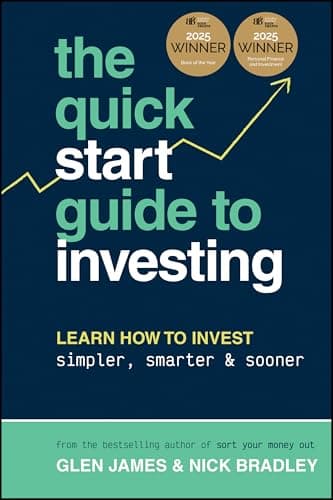
The Quick-Start Guide to Investing
A short, friendly runway from never invested to confidently buying shares and ETFs, tuned for Aussie beginners. Great if Sort Your Money Out left you keen to go deeper.
Girls That Invest
Simran Kaur

Girls That Invest
A no-jargon crash course from the podcaster behind Girls That Invest that makes the sharemarket feel doable, written especially for women starting out. The perfect first step before you buy your first ETF.
Sort Your Money Out and Get Invested
Glen James

Sort Your Money Out and Get Invested
From the host of the my millennial money podcast, a step-by-step Aussie plan to fix your spending, clear debt and actually start investing. Practical and refreshingly free of finance-bro nonsense.
Some links above are affiliate links. If you buy through them, Snowball Invest may earn a small commission at no extra cost to you. We only recommend books we'd suggest anyway.
Sources
- 1. Professional registers search, Australian Securities and Investments Commission
- 2. How to buy and sell shares, Moneysmart
- 3. CHESS-sponsored and issuer-sponsored holdings fact sheet, Australian Securities Exchange
- 4. Holder management, Australian Securities Exchange
- 5. The CGT discount, Australian Taxation Office
- 6. Disposing of shares, Australian Taxation Office
- 7. About Form W-8BEN, Internal Revenue Service
Every platform figure on this page is a published fee as at 19 September 2026, read off the platform's own pricing page or fee schedule. Fees change without notice, so check before you act.
Was this article useful?
SnowLetter
Australia's money news and our best reads, once a week.
Put it to your own numbers
Every calculator runs entirely in your browser, with nothing stored. See what these numbers look like for your own situation.
Try the Investing Amount calculator →General information only. This article is educational and does not constitute personal financial advice. It does not account for your circumstances. Consider your own situation and seek advice from a licensed adviser before acting. Read our full disclaimer.

Timothy Hirou Gaschereau
Founder of Snowball Invest, not a financial adviser.
I write about what I'm learning myself, because nobody ever taught us how to take control of our own money. It's a skill, not a mystery, and it's never too late to learn it. The best day to start was yesterday, the second best is today.
LinkedIn →Related articles
How to Buy Shares on CommSec
Want to buy shares on CommSec? A step-by-step guide to opening an account, placing your first order, and understanding the fees in Australia.

Vanguard S&P 500 ETF Australia: VTS, IVV or V500?
Want S&P 500 exposure in Australia? Compare VTS, IVV and V500, understand the W-8BEN trap and US estate tax, and see which ETF actually suits you.
What Are Franking Credits? A Plain-English Explanation
How Australia's dividend imputation system actually works, with a worked example, and how franking credits flow through to you from Australian share ETFs.