
CHESS Sponsorship: HIN, SRN, and Why Your Broker Model Matters
A number starting with X means the shares are in your name. No number at all means someone else holds them for you. What that difference costs if your broker fails.
 By Timothy Hirou GaschereauPublished
 11 min read
You opened an account, bought something, and a letter arrived with a number on it that nobody explained. That number tells you something genuinely important: whether the shares are registered in your name, or whether someone is holding them for you. Most people never check, and it only matters on the day it matters a lot.
This article is general information only, not personal financial advice. Consider your own circumstances before investing.
Quick answer
A number starting with X is a HIN: your shares sit on CHESS in your own name, and one number covers everything you hold. A number starting with I is an SRN, also your name but recorded by each company separately. No number at all usually means a custodian holds the shares for you, and your name is not on CHESS.
In this guide
- →How to tell in thirty seconds which model you are on
- →Why a HIN belongs to you rather than to your broker
- →What actually happens to your shares if the broker fails
- →Why some of the cheapest platforms use a custodian, and what you trade away
🏛️ What CHESS is
CHESS is the Clearing House Electronic Sub-register System, run by ASX Settlement. It is the record of who owns what on the Australian share market, and the machinery that transfers shares and money when a trade settles. The ASX calls it globally unique in combining settlement with an electronic subregister.
The closest everyday comparison is a land titles office. Buy a house and the title is registered. CHESS does that job for shares, and it is why settlement happens automatically two business days after you trade. If that side is unfamiliar, start with what T+2 actually means.
🔎 Which one are you?
Before the theory, the practical answer. Look at your paperwork or your broker app.
🎯 The essential: If you can see a number, the shares are in your name. If all you can see is a portfolio balance and no reference number anywhere, you are almost certainly on a custodian model.
🅧 The HIN, and why it is yours
A Holder Identification Number starts with X. The important part is not the format but who it belongs to: it is yours, not your broker’s. Your broker is the sponsoring participant attached to it, and that sponsorship can be moved.
One HIN covers every holding you have with that broker. The ASX describes this as consolidating all your broker sponsored holdings under one number, giving a single view of the portfolio, and it is why you get one monthly holding statement rather than one per company.
🅘 The SRN, and why there are several
A Securityholder Reference Number starts with I and comes from the company’s share registry rather than from CHESS. This is the issuer sponsored subregister: still your name, still your shares, different filing cabinet.
The catch is that it is per company. Hold ten issuer sponsored companies and you are managing ten numbers. People usually end up here through employee share schemes, inheritances, demergers or a dividend reinvestment plan rather than by choosing it. Selling means giving the SRN to a broker first, which is an extra step rather than a problem.
🏦 The custodian model
Here the broker, or a custodian entity connected to it, is the holder on CHESS. Your name is not on the register. You are the beneficial owner: the dividends, the gains and the economic outcome are yours, but the legal holding sits with the custodian, usually pooled with every other client in one account.
| CHESS sponsored | Custodian | |
|---|---|---|
| Whose name is on CHESS | Yours | The custodian's |
| Your identifier | A HIN starting with X | None, an internal account |
| Ownership | Legal, in your name | Beneficial, through the custodian |
| Switching brokers | Transfer the sponsorship | Often sell and rebuy |
| Fractional shares | Not possible, CHESS holds whole units | Possible |
⚠️ If your broker fails
This is the scenario that makes the distinction real rather than administrative.
CHESS sponsored: the shares are registered in your name, so they are not part of the failed broker’s assets to be divided up. The practical step is appointing a new sponsoring broker to take over your HIN. The holding itself does not move.
Custodian: your claim runs through the custodian. Australian rules require client assets to be kept separate from the firm’s own, and that segregation is the protection you are relying on. Where it has been maintained properly, holdings are recoverable. The honest caveat is that an insolvency is a process with a timeline, not a switch you flip.
This is not a reason to avoid custodian brokers, which are regulated and widely used. It is a reason to know which one you are on before you need to know.
🔁 Moving to another broker
With a HIN it is clean. You open the new account, ask the new broker to request the transfer, and the sponsorship moves across with your holdings attached. Nothing is sold, so there is no capital gains event.
From a custodian it is messier. Some support moving holdings across directly, some do not, and the fallback is selling and rebuying, which realises whatever gain has built up and puts you out of the market in between. Worth asking before you open the account rather than after.
💡 Why cheap brokers use custodians
There are real reasons, and none of them are sinister.
- Cost. Participating directly in CHESS settlement carries overhead that a custodian structure can avoid, and some of that saving reaches you as lower brokerage.
- Fractional shares. CHESS records whole units. Buying $50 of a $200 share is only possible if something other than CHESS is tracking your slice.
- International markets. CHESS covers ASX listed securities only, so a platform offering US or other overseas shares needs a custodian arrangement for those anyway, and often uses the same structure throughout.
So the trade is usually cost and features against having your own name on the register. Which side suits you depends on the size of the holding and how long you plan to leave it there. Our broker comparison guide goes through the rest of the decision.
❓ Frequently asked questions
What does CHESS sponsored actually mean?+
It means your shares are recorded on the CHESS subregister in your own name rather than your broker's. The ASX describes the choice plainly: investors can hold on the CHESS subregister through broker sponsorship, or on the issuer sponsored subregister, and with CHESS they hold securities in their own name. Your broker acts as the sponsoring participant, but the holding is yours.
Where do I find my HIN?+
On the welcome letter you received when the account was opened, and on your holding statements. The ASX notes that investors on the CHESS subregister receive monthly holding statements. If you cannot find it, ask your broker directly. It is a reasonable question and they will answer it.
What is the difference between a HIN and an SRN?+
A HIN comes from CHESS through your broker and covers everything you hold in one number, which the ASX describes as giving a consolidated view of your portfolio. An SRN comes from a company's share registry and applies to that company only, so ten issuer sponsored holdings means ten separate numbers. Both are genuine ownership in your own name, just recorded in different places.
Are my shares safe with a custodian broker?+
Custodians operating in Australia are regulated and required to keep client assets separate from their own, and that requirement is the main protection. What differs is your position if things go wrong: you hold a beneficial interest through the custodian rather than a holding registered in your name on CHESS, so an insolvency is resolved through the custodian rather than by simply reappointing a broker.
Can I move from a custodian broker to a CHESS sponsored one?+
Usually, but not as a simple transfer. Some custodians support moving the holdings across directly, and some do not, in which case the practical route is selling and rebuying, which can realise a capital gain. Ask both brokers what they support before you start, and get tax advice if the amounts are meaningful.
Do I need a HIN to buy ETFs?+
No. ASX listed ETFs work the same as shares here, so it depends on your broker rather than the fund. With a CHESS sponsored broker your ETF units sit under your HIN like any other holding. With a custodian broker they do not, and that applies to everything you hold there.
🔗 Sources
- ASX Settlement and CHESS, Australian Securities Exchange, describing the CHESS and issuer sponsored subregisters and the consolidated HIN.
- CHESS sponsored and issuer sponsored holdings, ASX fact sheet (PDF).
- Investor FAQ, Australian Securities Exchange.
- How to buy and sell shares, Moneysmart, Australian Securities and Investments Commission.
📚 Recommended reading
The Little Book of Common Sense Investing
John C. Bogle
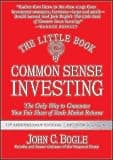
The Little Book of Common Sense Investing
From the man who invented the index fund, this is the short, sharp case for low-cost investing that has aged like fine wine. The maths on fees is universal, just think ETFs and super instead of his US funds.
Motivated Money
Peter Thornhill
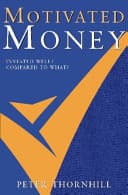
Motivated Money
Peter Thornhill's cult-favourite case for living off fully franked dividends instead of chasing capital gains. A calm, contrarian Aussie take that has quietly built a big following of long-term investors.
Some links above are affiliate links. If you buy through them, Snowball Invest may earn a small commission at no extra cost to you. We only recommend books we'd suggest anyway.
SnowLetter
Australia's money news and our best reads, once a week.
Was this article useful?
Put it to your own numbers
Every calculator runs entirely in your browser, with nothing stored. See what these numbers look like for your own situation.
Explore the calculators →General information only. This article is educational and does not constitute personal financial advice. It does not account for your circumstances. Consider your own situation and seek advice from a licensed adviser before acting. Read our full disclaimer.

Timothy Hirou Gaschereau
Founder of Snowball Invest, not a financial adviser.
I write about what I'm learning myself, because nobody ever taught us how to take control of our own money. It's a skill, not a mystery, and it's never too late to learn it. The best day to start was yesterday, the second best is today.
LinkedIn →Related articles

Market Order vs Limit Order: Which One Should You Use?
One fills fast at whatever the market charges. The other names your price and might never fill. When each is right, and where the spread quietly costs you.

ASX Settlement: What T+2 Actually Means
Sell on Wednesday and the cash is not yours on Wednesday. How the two business days are counted, why it decides who gets the dividend, and whether T+1 is coming.

BGBL vs VGS: Which Global ETF Belongs in Your Portfolio?
BGBL charges 0.08% and holds South Korea. VGS charges 0.18% and does not. What actually separates the two big ASX global ETFs, and how to pick one.