

BGBL vs VGS: Which Global ETF Belongs in Your Portfolio?
BGBL charges 0.08% and holds South Korea. VGS charges 0.18% and does not. What actually separates the two big ASX global ETFs, and how to pick one.
 By Timothy Hirou GaschereauPublished
 11 min read
These two funds own nearly the same companies in nearly the same proportions, which makes this a much smaller decision than the internet suggests. Two things genuinely separate them: the fee, and whether South Korea is in the index. This sits alongside our VAS vs VGS comparison on Snowball Invest.
This article is general information only, not personal financial advice. It does not recommend either fund. Consider your own circumstances and read the product disclosure statement before investing.
Quick answer
BGBL and VGS both give you developed world shares excluding Australia, and their top holdings are close to identical. BGBL charges 0.08% a year and includes South Korea. VGS charges 0.18% and does not, because MSCI still classifies Korea as an emerging market. Everything else is detail.
In this guide
- →What each fund actually holds, and why the holdings counts differ
- →What the fee gap costs in dollars, on a real balance
- →The South Korea question, and why two index providers disagree
- →Whether owning both makes any sense, and how each pairs with an Australian ETF
🌏 What each one holds
Both target the same universe: large and mid sized companies in developed markets outside Australia. Apple, Microsoft, Nvidia, Nestle, Toyota. The top ten in each looks nearly identical and the United States makes up roughly 70% or more of both.
BGBL tracks the Solactive GBS Developed Markets ex Australia Large and Mid Cap Index, holding around 1,000 companies as at September 2026. VGS tracks MSCI World ex-Australia, holding 1,314.
That gap in stock count is not one fund reaching further down into small companies. Both stop at the large and mid cap line. Solactive and MSCI simply draw that line in slightly different places, so the count differs without the exposure meaningfully changing.
💰 The fee comparison
This is the one difference that is certain, published, and easy to check. BGBL charges 0.08% a year. VGS charges 0.18%. Both figures are on the issuers' own product pages as at September 2026.
A tenth of a percentage point sounds like nothing, and on a small balance it nearly is. On $10,000 over a decade the difference is around $210. On $50,000 it is around $1,050. On half a million it starts to be a number you would notice.
Those figures assume a constant return, no contributions and unchanged fees, none of which will be true. They are there to size the gap, not to predict your balance. The honest summary is that the fee difference is real, worth having, and not the thing that will decide your retirement.
🇰🇷 Index methodology, and the South Korea question
This is the part most comparisons skip, and it is the only structural difference between the two.
MSCI still classifies South Korea as an emerging market, mainly over foreign exchange accessibility and market structure. VGS tracks MSCI World ex-Australia, so it holds no South Korean companies at all.
Solactive, a German index provider, classifies South Korea as developed. BGBL therefore holds Samsung Electronics, SK Hynix and Hyundai. In a typical developed markets index that includes it, South Korea is a small slice, in the order of one to two percent.
There is a second, softer difference: MSCI is the benchmark most institutions measure against, while Solactive is credible but less widely used. For a DIY investor that is close to irrelevant. If you specifically want to hold the index everyone else quotes, that points to VGS.
🎯 The essential: Neither fund holds small companies. Both stop at the large and mid cap line, so if you want developed market small caps you need a third fund either way.
🧾 Tax and domicile
Both are ASX domiciled Australian funds, and that matters more than most people realise.
Buying a US listed fund directly means holding US situated assets, which can expose your estate to US estate tax above a non-resident threshold of USD $60,000, and requires a W-8BEN form to get the treaty withholding rate instead of the default. With BGBL and VGS you hold units in an Australian fund, and the fund handles the treaty arrangements internally.
Distributions from both are unfranked foreign income, so there are no franking credits. Foreign tax withheld inside the fund can generally flow through to you as a foreign income tax offset, which reduces your Australian tax. How that lands depends on your situation, so take advice rather than assuming.
📊 Liquidity and fund size
VGS is one of the largest ETFs on the ASX, listed since November 2014 with well over a decade of history. BGBL listed in May 2023 and had grown to about $5.2 billion in net assets by September 2026, which is no longer a small fund by any measure.
Bigger funds usually carry tighter buy and sell spreads, which quietly reduces what a trade costs you. VGS keeps a slight edge there on size and history. Neither is anywhere near the scale where closure becomes a concern, and both trade with enough volume for ordinary investors.
🤔 Does holding both make sense?
Almost certainly not. They are heavily correlated, hold mostly the same companies, and owning both mainly means two lots of brokerage and two positions doing one job.
The one honest reason to prefer BGBL is if you want the South Korean exposure without buying a separate Korea fund. Samsung and SK Hynix are not minor companies, and plenty of investors think MSCI's classification is a leftover from an earlier era. If that argument appeals, BGBL gives you it automatically. If it does not, pick one and stop thinking about it.
🧩 Pairing with an Australian ETF
The standard Australian DIY portfolio is two funds: one global, one local. Both of these do the global job equally well, next to VAS or A200.
Splits commonly land somewhere between 60/40 and 70/30 in favour of the international side, which reflects the fact that Australia is roughly two percent of global market value. Some people hold more locally for the franking credits, others less for the diversification. There is no single right answer, and our guide to building a simple portfolio walks through how to choose yours.
⚖️ Side by side
| BGBL | VGS | |
|---|---|---|
| Index | Solactive GBS Developed Markets ex Australia | MSCI World ex-Australia |
| Management fee a year | 0.08% | 0.18% |
| Holdings, approximate | About 1,000 | 1,314 |
| South Korea | Included | Not included |
| Issuer | Betashares | Vanguard Australia |
| Net assets, approximate | About $5.2 billion | Substantially larger |
| Listed since | May 2023 | November 2014 |
| Currency | Unhedged | Unhedged |
| Domicile | Australia | Australia |
SnowLetter
Australia's money news and our best reads, once a week.
❓ Frequently asked questions
Is BGBL cheaper than VGS?
+
Yes. BGBL charges 0.08% a year against VGS at 0.18%, both confirmed on the issuers' own product pages in September 2026. On a $50,000 balance held for ten years at an assumed 8% gross return, that gap works out to roughly $1,050. It widens with bigger balances and longer holding periods. Check the current PDS before you act on it.
Why does BGBL include South Korea but VGS does not?
+
It comes down to the index each one tracks. BGBL follows a Solactive index, and Solactive treats South Korea as a developed market. VGS follows MSCI World ex-Australia, and MSCI still classifies South Korea as emerging, largely over foreign exchange access and market structure. Both classifications are defensible, they just use different rules.
Are BGBL and VGS both safe from US estate tax?
+
Both are Australian domiciled, so you hold units in an Australian fund rather than US securities directly. That generally keeps you outside the US estate tax net that can apply to non-residents holding US assets above USD $60,000, and it means no W-8BEN form. Tax rules change and depend on your circumstances, so take advice on your own position.
Can I hold BGBL and VGS together for more diversification?
+
You can, but it adds very little. The two hold mostly the same companies in mostly the same weights, so you would mainly be paying two lots of brokerage to manage two positions doing one job. The exception is if you specifically want the South Korean exposure that only BGBL carries.
Which one pairs better with VAS or A200?
+
Either works. Both are built to be the international half of a two-fund portfolio, so the choice comes down to the fee, which issuer you prefer, and whether South Korea matters to you. If you already hold A200 then BGBL keeps everything with one issuer, and VGS pairs naturally with VAS, but neither combination is wrong.
Does the lower fee mean BGBL will perform better?
+
Lower fees improve net returns when everything else is equal, but everything else is not quite equal here. The two track different indices, so gross returns will differ year to year regardless of cost. Over long periods the fee advantage compounds in BGBL's favour. Past performance tells you nothing reliable about future performance.
📚 Recommended reading
The Little Book of Common Sense Investing
John C. Bogle
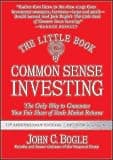
The Little Book of Common Sense Investing
From the man who invented the index fund, this is the short, sharp case for low-cost investing that has aged like fine wine. The maths on fees is universal, just think ETFs and super instead of his US funds.
The Bogleheads' Guide to Investing
Taylor Larimore, Mel Lindauer & Michael LeBoeuf
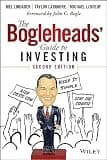
The Bogleheads' Guide to Investing
The friendly community bible of low-cost, buy-and-hold index investing, written by everyday investors rather than salespeople. The core philosophy is timeless for Aussies, just read the tax-advantaged account bits as super.
Motivated Money
Peter Thornhill
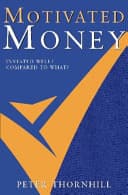
Motivated Money
Peter Thornhill's cult-favourite case for living off fully franked dividends instead of chasing capital gains. A calm, contrarian Aussie take that has quietly built a big following of long-term investors.
Some links above are affiliate links. If you buy through them, Snowball Invest may earn a small commission at no extra cost to you. We only recommend books we'd suggest anyway.
Sources
- 1. Global Shares ETF (BGBL), Betashares product page, showing the 0.08% fee and the Solactive index.
- 2. Vanguard MSCI Index International Shares ETF (VGS), Vanguard Australia product page, showing the 0.18% fee.
- 3. BGBL listing and trading data, Australian Securities Exchange.
- 4. VGS listing and trading data, Australian Securities Exchange.
- 5. Exchange traded funds, Moneysmart, Australian Securities and Investments Commission.
Was this article useful?
Put it to your own numbers
Every calculator runs entirely in your browser, with nothing stored. See what these numbers look like for your own situation.
Explore the calculators →General information only. This article is educational and does not constitute personal financial advice. It does not account for your circumstances. Consider your own situation and seek advice from a licensed adviser before acting. Read our full disclaimer.

Timothy Hirou Gaschereau
Founder of Snowball Invest, not a financial adviser.
I write about what I'm learning myself, because nobody ever taught us how to take control of our own money. It's a skill, not a mystery, and it's never too late to learn it. The best day to start was yesterday, the second best is today.
LinkedIn →Related articles

IVV vs VGS: All In on America, or the Whole Developed World?
This is not a fee decision, it is a concentration one. IVV is one country. VGS is 23, and the US is already most of it. How to think it through.

VAS vs A200: Two Ways to Own the Australian Market
VAS holds 325 companies, A200 holds 200, and their top ten are nearly identical. What actually separates the two big Australian equity ETFs.

The Rule of 72: How Long Until Your Money Doubles
Divide 72 by your return and you get the years until your money doubles. Worked Australian examples for super, ETFs, savings accounts and fees.