

VAS vs VGS: How to Combine Them (and in What Ratio)
VAS and VGS aren't rivals, they're the classic two-ETF core. How franking, home bias and global growth shape the split, with common VAS/VGS ratios and who each suits.
 By Timothy Hirou GaschereauPublished
 12 min read
Try it yourself
VAS and VGS get pitched as rivals, but they are nothing of the sort. They are the two building blocks of the most popular do-it-yourself index portfolio in Australia: VAS for home, VGS for the world. The real question is not which one, it is what split.
This guide walks through the genuine trade-off (franking versus global growth), the home bias you already carry without realising it, the common splits and who they suit, and how to keep the two on target without a tax bill. General information only, not financial advice.
🎯 The essential: VAS and VGS are designed to work together, not compete. VAS tracks Australian shares (ASX 300), pays franked dividends, costs 0.07%. VGS tracks developed international shares (MSCI World ex-Australia, ~70% US), pays no franking, costs 0.18%. The core trade-off is franking credits and familiarity (VAS) versus global diversification and growth (VGS). Common splits run 30/70 to 50/50 VAS/VGS; the right one depends on your tax, income needs and how much Australia you already own via super, property and your job. There is no single right answer.
Not really a versus: it's a pairing
VAS is the Vanguard Australian Shares Index ETF, tracking the S&P/ASX 300, around 300 of the biggest ASX companies (CBA, BHP, CSL and friends), for 0.07% a year, with franked dividends and no currency risk. VGS is the Vanguard MSCI Index International Shares ETF, tracking developed markets outside Australia (roughly 1,300 companies, ~70% US), for 0.18%, unhedged and unfranked. One is your home slice, the other is the rest of the world.
Side by side
| Feature | VAS | VGS |
|---|---|---|
| Index | S&P/ASX 300 | MSCI World ex-Australia |
| Holdings | ~300 | ~1,300 |
| MER | 0.07% | 0.18% |
| Exposure | Australia only | Developed markets (~70% US) |
| Franking credits | Yes | No |
| Currency | AUD (no currency risk) | Unhedged |
| Best for | Franked income, home tilt | Global growth, diversification |
The core trade-off: franking vs global growth
VAS's superpower is franking. Under Australia's imputation system, a company pays 30% tax then passes a franking credit to you to offset your own tax. It is worth the most to retirees and low-income earners (who can get a cash refund of excess credits) and super funds in accumulation (taxed at 15%). It is worth least to a high earner on the 47% marginal rate, where the credit only offsets part of the bill.
VGS's superpower is diversification. Australia is about 2% of global market capitalisation, heavy in banks and miners, with no real tech sector. VGS gives you US technology, European and Japanese blue chips, and the companies driving global growth. Different jobs, both worth having.
The home bias you already have
This matters more than most investors realise. Before you buy a single ETF, you probably already have huge Australian exposure: your super (most default funds hold a big slab of Aussie shares), your home (your largest asset, 100% Australian and AUD), your salary (paid in AUD by an Australian employer), and your cash. Pile a VAS-heavy portfolio on top and you are not diversifying, you are doubling down.
This is why many experienced Australian investors deliberately tilt toward VGS, sometimes 70% to 80% of their ETF portfolio. Not because they dislike Australia, but because they already own a lot of it.
What split should you use?
There is no single right answer, but here is how to think about it.
| Split (VAS / VGS) | Who it might suit |
|---|---|
| 50 / 50 | Balanced, comfortable with home bias, values franking |
| 40 / 60 | Slight international tilt, still meaningful franking |
| 30 / 70 | Popular FIRE/growth choice, lower home bias |
| 20 / 80 | Strong global tilt, minimal franking focus, long horizon |
| 10 / 90 | Effectively global with a small franking kicker |
The most-discussed range in Australian FIRE circles sits around 30/70 to 40/60 VAS/VGS, but that is a starting point, not a rule. Lean toward VGS if you are a high earner in accumulation, have a long horizon, or already own a home and super. Lean toward VAS if you are retired or low-income (franking is worth more) or want more franked income to live on.
Currency and the emerging-markets gap
VGS is unhedged, so a falling Aussie dollar lifts your VGS returns in AUD terms and a rising one trims them. Over long periods currency tends to wash out, and unhedged international is arguably a natural hedge: the AUD usually falls in global downturns, cushioning the blow when Australian assets are also under pressure. VGS also excludes emerging markets, so if you want China, India and Brazil too, add a third ETF (VGE), or use an all-in-one fund that already includes them.
Rebalancing without triggering CGT
Your split will drift as the two funds grow at different rates. The trap: selling units to rebalance triggers a capital gains tax event. The smarter approach for most people is to steer new contributions (and distributions) to whichever fund is underweight, nudging the balance back with no selling and no tax. Only sell to rebalance if the drift is large and you are in a low-income year. This contribution-based rebalancing is one of the quiet advantages of a two-ETF portfolio over a single fund.
The all-in-one alternative
If managing two tickers and a split sounds like too much, ready-made options blend Australian and international shares for you: VDHG (adds ~10% bonds, 0.27%) and DHHF (100% shares, 0.19%). Both cost more than a DIY VAS + VGS build and neither lets you set your own split, but they remove the rebalancing decisions entirely. See our VDHG vs DHHF comparison for the trade-off. There is no shame in an all-in-one: the best portfolio is the one you will actually stick with.
❓ Frequently asked questions
Can I just buy VGS and skip VAS?
+
Yes, and many do. You give up franking credits but get broad exposure to the developed world and its biggest companies. For high earners who don't benefit much from franking, VGS-heavy or VGS-only is a perfectly valid approach.
Can I just buy VAS and skip VGS?
+
Technically yes, but you are concentrating your whole portfolio in about 2% of the global market, and a market that is heavy in banks and miners. VAS is a fine fund, but as your only holding it leaves you very exposed to Australian-specific risks. Most index investors pair it with something international.
Is VAS or VGS better?
+
Wrong question. They are built to complement each other, not compete. VAS gives Australian income and franking; VGS gives global diversification and growth. Together they form a complete core.
What split do most Australian index investors use?
+
There is no official data, but the 30/70 to 40/60 (VAS/VGS) range comes up most often in Australian FIRE and personal-finance communities. Treat it as a starting point, and adjust for your tax situation, income needs and existing Australian exposure.
Do I need to add VGE for emerging markets?
+
No, it's optional. VAS plus VGS already covers the developed world and hundreds of companies. VGE adds emerging markets (China, India, Brazil and others) for full global coverage, but many investors keep it simple with two tickers. Just know what you are leaving out.
What if I already have a lot of super in Australian shares?
+
Factor your super into your whole-portfolio picture. If your super fund runs 70% to 80% Australian shares, your VAS/VGS split should tilt harder toward VGS to compensate. Super is part of your portfolio even though it sits in a separate account.
Keep reading
📚 Recommended reading
The Barefoot Investor
Scott Pape

The Barefoot Investor
Australia's best-selling money book ever. A simple system for accounts, budgeting, debt and a real emergency fund in one.
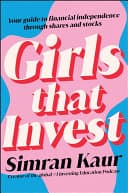
Girls That Invest
Simran Kaur
Girls That Invest
A no-jargon crash course from the podcaster behind Girls That Invest that makes the sharemarket feel doable, written especially for women starting out. The perfect first step before you buy your first ETF.
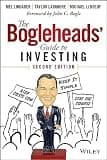
The Bogleheads' Guide to Investing
Taylor Larimore, Mel Lindauer & Michael LeBoeuf
The Bogleheads' Guide to Investing
The friendly community bible of low-cost, buy-and-hold index investing, written by everyday investors rather than salespeople. The core philosophy is timeless for Aussies, just read the tax-advantaged account bits as super.
Some links above are affiliate links. If you buy through them, Snowball Invest may earn a small commission at no extra cost to you. We only recommend books we'd suggest anyway.
Sources
This article is general information only, not financial or tax advice. It does not take into account your circumstances. Fees, index weights and tax rules change over time, and figures here are indicative as of mid-2026. Check each fund's current product disclosure statement, the ATO, or a licensed adviser before investing. Past performance is not a reliable indicator of future performance.
Was this article useful?
Put it to your own numbers
Every calculator runs entirely in your browser, with nothing stored. See what these numbers look like for your own situation.
Try the Compound Interest calculator →General information only. This article is educational and does not constitute personal financial advice. It does not account for your circumstances. Consider your own situation and seek advice from a licensed adviser before acting. Read our full disclaimer.

Timothy Hirou Gaschereau
Founder of Snowball Invest, not a financial adviser.
I write about what I'm learning myself, because nobody ever taught us how to take control of our own money. It's a skill, not a mystery, and it's never too late to learn it. The best day to start was yesterday, the second best is today.
LinkedIn →Related articles
VDHG: The Complete Guide to Vanguard's All-in-One ETF
A plain-English guide to VDHG, Vanguard's all-in-one ASX ETF: fees, holdings, the tax drag, performance, and how it stacks up against DHHF and a DIY VAS + VGS portfolio.

VGS ETF: The Complete Guide to Vanguard's International Shares ETF
A plain-English deep dive into VGS, Vanguard's international shares ETF: what it holds, the 0.18% fee, the ~70% US weighting, no franking, and how it compares to VAS, BGBL, VGAD and IVV.

VGE ETF Australia: The Complete Guide to Vanguard's Emerging Markets ETF
What is VGE? A plain-English guide to Vanguard's emerging markets ETF for Australians: what it holds, the 0.48% fee, the China/Taiwan concentration, and how it fits your portfolio.