

Girls That Invest Book Review: An Honest Australian Take
Our honest Girls That Invest book review: what Simran Kaur's beginner guide does well, where it falls short, and what Australian readers need to know first.
 By Timothy Hirou GaschereauPublished
 10 min read
Girls That Invest grew from a lockdown podcast into one of the most recommended beginner investing books going around, especially for women starting from zero. But does it actually deliver, and how well does it fit an Australian reader? Here's our honest take on what Simran Kaur's book does well and where it falls short. It's part of our personal finance book reviews on Snowball Invest.
Quick answer
A warm, readable introduction to investing that will genuinely help complete beginners take their first steps. Just know what you're getting: a mindset reset and a broad map, not a detailed how-to, and definitely not an Australian-specific guide. Our rating: 3.8 out of 5.
Want to read Girls That Invest?
The perfect gift for someone who has been putting off investing for years. Short, warm and doable.
In this guide
- →What the book actually covers, and its podcast origins
- →Genuine strengths and the real criticisms (including the editing)
- →Who it's for, and who should skip it
- →What critics and readers say, on Goodreads and Reddit
- →The Australian angle: what's missing, and how to fill the gaps
📖 What is Girls That Invest actually about?
The Girls That Invest brand started during Auckland's 2020 lockdown, when Simran Kaur and co-host Sonya Gupthan launched a podcast to talk about the thing most of their friends avoided: investing. It grew fast, past a million downloads by the time the Wiley-published book landed in 2022.
The book runs about 215 pages in two parts. Part one builds the case for investing: why holding cash loses value, myth-busting (investing isn't gambling, you don't need a fortune to start), the foundations, stock market basics and compounding. Part two shifts to investor identity: risk and volatility, ethical investing, the psychology of female investors, passive "lazy" investing, and a chapter on higher-risk "spicy" investing (options, forex, crypto, NFTs). The pitch is simple: jargon-free investing education, aimed especially at women and beginners, in the same chatty register as the podcast. And it largely delivers on that.
The compounding chapter is one of the stronger sections, and if you want the maths laid out in more detail than a beginner book has room for, our guide to how compound interest works walks through it step by step.
More risk, more homework needed. Beginners are steered to the lazy end first.
⚖️ Strengths and weaknesses
A genuinely helpful beginner book with some real flaws. Being honest about both is more useful than cheerleading.
What it gets right
- ✓It actually removes the fear, which is the real barrier for most first-time investors.
- ✓The structure is logical and well-paced: mindset, then foundations, then mechanics.
- ✓The myth-busting chapter dismantles 'you need a fortune' and 'it's just gambling' clearly.
- ✓The ethical investing chapter gets more space than most beginner books bother with.
- ✓The 'lazy investing' chapter makes a clear, honest case for passive index-style investing.
- ✓Short enough to actually finish, a book you complete beats a thorough one you abandon.
Where it falls short
- ✕The editing is a genuine problem: readers flag grammar errors and factual slips.
- ✕The depth is thin in places, ETFs and buying shares get surface-level treatment.
- ✕The cutesy, pop-culture tone works for some readers and grates on others.
- ✕It reads partly like marketing for the wider Girls That Invest ecosystem.
- ✕Nothing here for experienced investors, it's explicitly a beginner book.
- ✕The 'spicy investing' chapter crams four complex asset classes into too little space.
The ethical investing chapter gets more space than most beginner books give it, but it's still an overview. Our own guide to ethical investing in Australia covers the local screening options and funds if that chapter piques your interest.
👤 Who should read it, and who should skip it?
The book works best as a first step, not a full plan. If you finish it and still aren't sure what you're actually investing towards, our guide to setting financial goals is a useful next stop before you open a brokerage account.
Read it if you
- ✓Are a complete beginner who has never bought a share and feels intimidated.
- ✓Have been meaning to start for years but keep putting it off.
- ✓Respond well to a conversational, relatable tone.
- ✓Want to understand the why of investing before the how.
- ✓Want a book to give a friend or family member new to money.
Skip it or supplement it if you
- ✕Already know index funds, ETFs and basic brokerage mechanics.
- ✕Want Australian-specific guidance on super, the ASX or local tax.
- ✕Find casual, pop-culture-heavy writing distracting rather than motivating.
- ✕Want a rigorous, deeply researched text rather than an accessible overview.
🔍 What do critics say about Girls That Invest?
Press reception has been broadly positive, with a clear pattern: strong on accessibility and mission, lighter on critical scrutiny of the content itself. Forbes profiled Kaur as a founder making investing more approachable for women, and outlets across New Zealand and Australia leaned into the brand story and the jargon-busting approach. The more detailed independent reviews call it accessibly and engagingly written, and say it demystifies investing, though usually from clearly enthusiastic converts.
💬 What do readers say? Goodreads and Reddit
On Goodreads the book holds a striking 4.48 out of 5 from more than 9,500 ratings, with around 58% five stars and 32% four. The most common praise: "easy to read," "finally made investing feel possible," and "the best first finance book I've read."
The dissenting minority is consistent: readers on Goodreads and r/PersonalFinanceNZ flag the grammatical and factual errors ("couldn't really take it seriously"), and a handful find the tone too cutesy. The overall picture: readers starting from zero love it, and the critics tend to be people who already knew the basics.
🇦🇺 The Australian angle: what you need to know
The authors are New Zealand-based and the book is published by Wiley's Australian imprint, so it has a Commonwealth flavour and avoids the US-centric assumptions (401ks, Roth IRAs) that make many American money books feel irrelevant here. The general principles on compounding, risk and long-term thinking translate cleanly.
But the specifics are missing. There's no coverage of ASX mechanics (how to actually buy shares, CHESS holdings, Australian brokers), no discussion of superannuation (arguably the most important vehicle for most working Australians), no Australian ETF platforms, and no Australian tax treatment (capital gains, franking credits). For a beginner book read in this part of the world, the super gap in particular is significant. The fix is simple: treat this as a mindset and foundations book, then pair it with local resources. ASIC's Moneysmart and the ASX investor education centre fill the gaps, and our own guides to passive investing in Australia and how to choose an ETF pick up where the book stops.
💰 The verdict
Girls That Invest does exactly what it sets out to do: it makes investing feel less scary and more achievable for people who have never done it, and the thousands of glowing Goodreads ratings back that up. The editing issues are real and a little embarrassing for a Wiley book, the depth is limited, and Australian readers need to pair it with local resources. But the honest bottom line: if someone you know has been putting off investing for years because it feels overwhelming, this book will probably get them started, and that outcome is worth a lot. Go in expecting a warm introduction, not a comprehensive guide.
Want to read Girls That Invest?
Ready to finally start? Grab a copy, then use our Aussie ETF guides for the how-to.
SnowLetter
Australia's money news and our best reads, once a week.
❓ Frequently asked questions
Is Girls That Invest suitable for Australian readers?
+
Yes, with caveats. The core concepts (compounding, risk tolerance, ETFs, long-term investing) apply to any market. But it doesn't cover ASX mechanics, superannuation, Australian tax or local brokerage platforms. Treat it as a mindset and foundations primer, then follow up with ASIC Moneysmart and the ASX investor education resources for the local specifics.
How does it compare to other beginner finance books?
+
It sits at the accessible, motivational end. The Barefoot Investor covers Australian-specific content more thoroughly, and The Little Book of Common Sense Investing goes deeper on index-fund mechanics. Girls That Invest is the better starting point if anxiety or intimidation is your main barrier, and the better choice if you want a book you'll actually finish.
Does it cover ETFs and index funds?
+
Yes, but at an introductory level. The chapter on 'lazy investing' makes a clear case for passive, index-style investing and explains what ETFs are and why they suit most beginners. It doesn't go deep on specific fund types, fees, or how to evaluate ETFs on the ASX, so treat it as a solid pointer in the right direction rather than a complete how-to.
Is it only for women?
+
No. The title and branding are aimed at women, and one chapter specifically addresses female investor psychology and the gender gap. But the core content on shares, ETFs, compounding, risk and ethical investing is relevant to anyone starting out. Male readers who like the tone will get just as much from it.
What are the main criticisms of the book?
+
The most consistent: editing and grammar errors flagged by multiple readers; content that's too basic for anyone with existing knowledge; a cutesy tone that some find patronising rather than welcoming; and a sense that the book partly serves as marketing for the wider Girls That Invest brand. None are dealbreakers for the target audience, but they're worth knowing.
Is Girls That Invest worth reading?
+
If you're a genuine beginner who has been putting off investing because it feels overwhelming, yes, it will probably get you started, which is worth a lot. If you already understand index funds and have a brokerage account, you'll find it too basic. Go in expecting a warm, accessible introduction, not a comprehensive guide.
📚 Get the book (and two Aussie next reads)
Girls That Invest
Simran Kaur
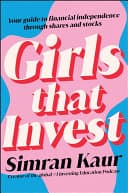
Girls That Invest
A no-jargon crash course from the podcaster behind Girls That Invest that makes the sharemarket feel doable, written especially for women starting out. The perfect first step before you buy your first ETF.
She's on the Money
Victoria Devine
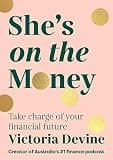
She's on the Money
Written for millennials, walks through budgeting, clearing debt, saving, investing and buying property with real stories.
Sort Your Money Out and Get Invested
Glen James
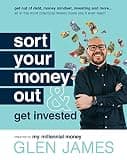
Sort Your Money Out and Get Invested
From the host of the my millennial money podcast, a step-by-step Aussie plan to fix your spending, clear debt and actually start investing. Practical and refreshingly free of finance-bro nonsense.
Some links above are affiliate links. If you buy through them, Snowball Invest may earn a small commission at no extra cost to you. We only recommend books we'd suggest anyway.
Sources
Was this article useful?
Put it to your own numbers
Every calculator runs entirely in your browser, with nothing stored. See what these numbers look like for your own situation.
Explore the calculators →General information only. This article is educational and does not constitute personal financial advice. It does not account for your circumstances. Consider your own situation and seek advice from a licensed adviser before acting. Read our full disclaimer.

Timothy Hirou Gaschereau
Founder of Snowball Invest, not a financial adviser.
I write about what I'm learning myself, because nobody ever taught us how to take control of our own money. It's a skill, not a mystery, and it's never too late to learn it. The best day to start was yesterday, the second best is today.
LinkedIn →Related articles

She's on the Money Review: Honest and Actually Useful
Our honest She's on the Money book review: what Victoria Devine gets right, where it falls short, and whether it's worth your time as an Australian reader.

Investing with She's on the Money: An Honest Review
Our honest Investing with She's on the Money review: Victoria Devine's beginner-friendly Aussie investing guide, its strengths, its ceiling, and who it's for.

Money Magnet by Steve McKnight: An Honest Review
Our honest Money Magnet review: Steve McKnight's holistic, values-driven Aussie wealth book, its strengths, its limits, and who should read it.