
Ethical Investing Australia: The Plain-English Guide
What ESG, greenwashing and impact investing actually mean in Australia, how to spot a genuinely ethical fund, and whether ethical investing costs you returns.
 By Timothy Hirou GaschereauPublished
 11 min read
Try it yourself
If you're new to investing generally, our what is an ETF and how to buy shares guides cover the mechanics first, this one's about layering values on top once you understand the basics.
Quick answer
Ethical investing means choosing investments based on values as well as returns. In Australia it covers everything from excluding tobacco stocks to actively funding renewable energy projects. The market is large and growing, greenwashing is a real and actively policed problem, and the performance trade-off is smaller than most people assume.
In this guide
- →The jargon decoded: ESG, responsible investing, impact investing, what they actually mean
- →The four main approaches, and the honest trade-offs of each
- →How to spot greenwashing, including a real, recent Australian enforcement case
- →Whether ethical investing actually costs you returns
- →A practical process for finding genuinely ethical funds, including your super
🗂️ The jargon, decoded
🎯 The essential: ESG is a measurement lens, responsible investing is the broad category, impact investing is the most intentional end of the spectrum. They're not interchangeable, even though they're often used that way.
ESG (Environmental, Social, Governance) is a framework for measuring non-financial risks and behaviours in a company: how it manages emissions, how it treats workers, how its board is structured. It's a measurement tool, not an investment strategy on its own, a fund can use ESG data and still hold fossil fuel companies.
Responsible investing is the broad umbrella term, any approach that considers factors beyond pure financial return. Ethical investing and sustainable investing are often used interchangeably with it in everyday conversation, and tend to imply a stronger values-based filter, though there's no legal definition locking in the distinction. Impact investing is the most specific: deliberately targeting investments that generate a measurable positive social or environmental outcome alongside a financial return, think affordable housing bonds or clean energy project finance, not just a fund that avoids cigarette companies.
🧭 The four main approaches
Negative screening excludes certain industries entirely, tobacco, weapons, gambling, coal are common exclusions in Australian ethical funds. The catch: "exclusion" isn't always as clean as it sounds, a fund might exclude direct coal miners but still hold banks that lend to coal projects. The depth of the screen matters, which is why reading the Product Disclosure Statement (PDS) is non-negotiable.
Positive screening / best-in-class actively selects the best ESG performers within each sector rather than excluding the worst, keeping the portfolio diversified across sectors. Critics argue it can still mean holding companies that are net harmful, just less so than their peers.
ESG integration incorporates ESG data into standard financial analysis as a risk management tool, not a values filter, the argument being that poor governance or environmental practices carry real financial risk. This is where greenwashing risk is highest, "we consider ESG factors" can mean anything from a rigorous process to a checkbox.
Impact investing goes further, directing capital toward activities generating a specific, measurable positive outcome: green bonds funding clean infrastructure, social impact bonds tied to outcomes like reduced reoffending. More common in institutional and wholesale markets than retail ETFs currently, but growing.
1. ESG integration
Data used as a risk lens, can still hold anything
2. Negative screening
Excludes whole industries, tobacco, weapons, coal
3. Positive / best-in-class
Picks the best ESG performer in each sector
4. Impact investing
Targets a specific, measurable positive outcome
⚠️ The greenwashing problem
Greenwashing is when a fund's marketing suggests stronger ethical credentials than its actual holdings or process justify. It's not always deliberate fraud, sometimes it's vague language that hasn't been tested against reality, but the effect is the same.
ASIC has taken this seriously. In September 2024, the Federal Court ordered Vanguard Investments Australia to pay a $12.9 million penalty, ASIC's largest greenwashing penalty at the time, after finding Vanguard had made misleading claims about the ESG screens applied to its Ethically Conscious Global Aggregate Bond Index Fund. ASIC had sought a higher penalty, the Court applied a discount for cooperation. ASIC has also published specific guidance (INFO 271) on avoiding greenwashing, signalling ongoing enforcement, not a one-off.
Practical red flags to watch for:
- Vague language with no specifics, "sustainable" or "ESG-aware" without explaining what that means in practice
- No exclusion list published, a genuine ethical fund tells you exactly what it won't hold
- Holdings that don't match the label, check the fund's actual top holdings against its stated values
- ESG "integration" with no described methodology
- No independent certification, RIAA's Responsible Investment Certification is one of the few available in Australia
- A PDS that's vaguer than the marketing, the PDS is the legal document, treat any gap as a warning sign
📊 Does ethical investing cost you returns?
The honest answer: probably not, possibly the opposite, but it depends on the time period and how you measure it. RIAA's benchmark reports have repeatedly found responsible investment funds performing competitively with, and at times outperforming, mainstream benchmarks over various periods, directionally consistent findings across several years of reporting, though you should treat any specific number as belonging to that year's report, not a permanent fact. ASIC MoneySmart notes the evidence is mixed overall and that past performance never guarantees future results.
A few things worth understanding about the debate:
- The tech tailwind question. Much of ESG funds' recent outperformance coincided with tech (which scores well on ESG) outperforming fossil fuels (which scores poorly). Whether that continues is genuinely uncertain.
- Fees matter. Some ethical ETFs carry slightly higher management fees than broad market equivalents, given the extra screening involved. Over 20 years, even a small fee gap compounds meaningfully.
- Diversification trade-offs. Excluding entire sectors reduces diversification. In years when excluded sectors outperform, an ethical fund will lag, that's the honest trade-off.
The performance penalty ethical investors feared a decade ago hasn't materialised in the Australian data to date. No one can promise that holds indefinitely, be sceptical of anyone who tells you ethical investing is a free lunch either way.
🔍 How to find genuinely ethical funds
You don't need to become a fund analyst. A practical process:
- Start with RIAA's Responsible Returns tool (responsiblereturns.com.au), a free, independent tool that filters funds and super options by values and certification status, built on RIAA's certification data, not fund marketing.
- Read the PDS investment strategy section. Look for a published exclusion list, a description of how ESG data is used, and what happens when a holding breaches the criteria.
- Check the actual holdings. Most ETFs and managed funds publish top holdings monthly or quarterly, cross-reference against the fund's stated exclusions.
- Look for RIAA certification, one of the few independent signals available in Australia.
- Compare fees once you've shortlisted funds that genuinely match your criteria, the ethical label shouldn't automatically mean paying significantly more.
- Consider your super, likely your largest investment. Most major funds now offer at least one responsible investment option, and Responsible Returns covers super options too.
📦 What Is an ETF?
The mechanics behind most ethical ETFs, if you're still getting comfortable with the structure itself.
If picking and researching funds yourself feels like a lot, some robo-advisors now offer ethical or values-based portfolios built and screened for you.
What I actually use
Pearler
This is the broker I personally use. Do your own research and form your own opinion, but I genuinely recommend it, it's built for long-term investors rather than day traders, and makes it easy to automate regular investing. Sign up through my link or with the code TIMOTHY269825 and you'll both get a $20 cash bonus once you make your first investment (Pearler's current offer, T&Cs apply).
Sign up to Pearler →This is a referral link. If you sign up through it, I get a bonus too, at no extra cost to you.
SnowLetter
Australia's money news and our best reads, once a week.
❓ Frequently asked questions
What is ethical investing in Australia?
+
Selecting investments based on values or sustainability criteria as well as financial returns. In Australia it covers approaches ranging from excluding specific industries, like tobacco or weapons, to actively targeting investments with positive environmental or social outcomes. The Responsible Investment Association Australasia (RIAA) is the peak body for the industry here.
What does ESG mean?
+
Environmental, Social, and Governance. It's a framework for assessing non-financial risks and behaviours in companies and funds, carbon emissions and resource use, labour practices and community impact, board structure and executive accountability. ESG is a measurement tool, not a guarantee of ethical behaviour.
Does ethical investing underperform?
+
The Australian evidence to date doesn't support the assumption that ethical investing costs you returns. RIAA's benchmark reports have reported responsible investment funds performing competitively with, and at times outperforming, mainstream benchmarks over various periods. That said, past performance doesn't guarantee future results, and some periods will favour excluded sectors, compare fees carefully.
What is greenwashing?
+
When a fund's marketing overstates its ethical or sustainable credentials relative to what it actually does. ASIC has taken real enforcement action on this in Australia, including a $12.9 million penalty against Vanguard in 2024 over an ethically conscious bond fund. To protect yourself: read the PDS, check actual holdings, and look for independent certification.
Can I invest ethically through my super?
+
Yes. Most major Australian super funds offer at least one responsible investment option, and some are built entirely around responsible investment principles. RIAA's Responsible Returns tool lets you compare your super fund's options against your values.
What's the difference between ethical investing and impact investing?
+
Ethical investing typically means avoiding harmful industries or selecting companies with better ESG profiles. Impact investing goes further, deliberately directing capital toward activities that generate a specific, measurable positive outcome, like affordable housing or clean energy infrastructure, alongside a financial return, and usually comes with outcome reporting.
Is there an independent way to check if an Australian fund is genuinely ethical?
+
RIAA's Responsible Investment Certification independently assesses funds against a defined standard, and its Responsible Returns tool lists certified funds and super options. Beyond certification, reading the PDS investment strategy section and checking published holdings are the most reliable self-directed checks available.
Where to next
📚 Recommended reading
Mindful Money
Canna Campbell

Mindful Money
A calmer, values-first approach to investing and financial wellbeing from a certified financial planner.
She's on the Money
Victoria Devine
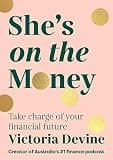
She's on the Money
Written for millennials, walks through budgeting, clearing debt, saving, investing and buying property with real stories.
Sort Your Money Out and Get Invested
Glen James
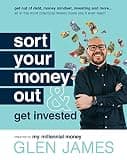
Sort Your Money Out and Get Invested
From the host of the my millennial money podcast, a step-by-step Aussie plan to fix your spending, clear debt and actually start investing. Practical and refreshingly free of finance-bro nonsense.
Some links above are affiliate links. If you buy through them, Snowball Invest may earn a small commission at no extra cost to you. We only recommend books we'd suggest anyway.
Sources
- 1. Environmental, social and governance (ESG) investing, Moneysmart, Australian Securities and Investments Commission
- 2. Responsible Investment Benchmark Report Australia, Responsible Investment Association Australasia
- 3. Responsible Returns tool, RIAA
- 4. Responsible Investment Certification, RIAA
- 5. How to avoid greenwashing when offering or promoting sustainability-related products, ASIC (INFO 271)
- 6. ASIC's Vanguard greenwashing action results in record $12.9 million penalty, ASIC media release 24-213MR
Was this article useful?
Put it to your own numbers
Every calculator runs entirely in your browser, with nothing stored. See what these numbers look like for your own situation.
Try the Compound Interest calculator →General information only. This article is educational and does not constitute personal financial advice. It does not account for your circumstances. Consider your own situation and seek advice from a licensed adviser before acting. Read our full disclaimer.

Timothy Hirou Gaschereau
Founder of Snowball Invest, not a financial adviser.
I write about what I'm learning myself, because nobody ever taught us how to take control of our own money. It's a skill, not a mystery, and it's never too late to learn it. The best day to start was yesterday, the second best is today.
LinkedIn →Related articles

ETHI ETF Australia: The Complete Ethical Global Shares Guide
ETHI is BetaShares' ethical global shares ETF. What it holds, how its ethical screens work, its 0.59% fee, performance, and how it stacks up against VGS.

IWLD ETF Australia: iShares' Global Equity ETF Explained
IWLD is iShares' low cost global shares ETF on the ASX, with an ESG screen built in. What it holds, its 0.09% fee, IWLD vs VGS, and how to buy.

CommSec Pocket Fees: What It Costs and How It Compares
A$2 a trade up to A$1,000, then 0.20%, on buys and sells. Plus the separate HIN nobody mentions, and the order size where Pocket costs more than main CommSec.