

Mindful Money by Canna Campbell: An Honest Review
Our honest Mindful Money review: Canna Campbell's holistic, values-based Aussie guide to financial independence, its strengths, its limits, and who should read it.
 By Timothy Hirou GaschereauPublished
 10 min read
Short version: Mindful Money is a warm, accessible and genuinely Australian personal finance book that gets the emotional side of money right, but don't expect advanced investing tactics. If you feel emotionally stuck around money and want a broad overview in one place, it's a lovely read. If you already hold a diversified portfolio, you'll find it thin. It's part of our personal finance book reviews on Snowball Invest.
Quick answer
A holistic, values-based guide to financial independence written for real Australians, not adapted from a US template. Best for beginners and intermediate readers who feel emotionally stuck around money or want a broad overview of budgeting, investing and wealth protection in one place. Not for experienced investors after deep asset-allocation strategy. Our rating: 3.5 out of 5.
Want to read Mindful Money?
A calmer, values-first approach to investing and financial wellbeing, from a licensed Australian financial planner.
In this guide
- →What the book covers: mindful spending, investing, super and the psychology of money
- →The genuine strengths and the honest weaknesses
- →Who it's for, and who's better off elsewhere
- →What critics and readers say
- →The Australian angle: ASX dividends, franking and super
📖 What is Mindful Money about?
Mindful Money: Simple, practical steps to financial independence is Canna Campbell's second book, published by Penguin in 2019. If you've read The $1000 Project, think of this as the broader companion. Where that book was a focused challenge to build $1,000 in side income, Mindful Money zooms out to cover the full picture. The core idea is simple: before you can build wealth, you need to align your spending with your values and bring genuine awareness to how you use money.
The book covers a lot of ground:
- Mindful and conscious spending, shedding what doesn't serve you and keeping what genuinely does.
- Budgeting without deprivation, framing restraint as a creative challenge rather than punishment.
- Building passive income, primarily through ASX dividend shares and property.
- Superannuation, using super as a long-term wealth engine.
- Insurance and wealth protection, covering the basics most people ignore until it's too late.
- The psychology of money: shame, fear, avoidance, and how to work through them.
Canna Campbell is a Sydney-based licensed financial planner and the founder of SugarMamaTV. She's not a US-based influencer with localised content; she operates within the ASIC-regulated Australian financial planning framework, which matters a lot for a book like this.
⚖️ Strengths and weaknesses
What it gets right
- ✓Genuinely Australian: ASX-listed shares, franking credits, super and local tax thresholds, no 401(k) to translate.
- ✓A holistic approach in one place: mindset, spending, investing, super and insurance, all mapped out.
- ✓Accessible, warm tone: reads like a conversation with a financially savvy friend, with illustrations that reinforce the points.
- ✓Good for beginners who feel overwhelmed: the money-mindset and values-based chapters break down real psychological barriers.
- ✓Practical frameworks: values-based spending exercises, a separate-accounts system, and a step-by-step approach to dividend income.
Where it falls short
- ✕Repetitive content: some ideas that could be a paragraph get stretched across several pages.
- ✕Basic for experienced investors: the investing content is introductory, with no real portfolio-construction depth.
- ✕Published in 2019: super caps and tax thresholds have changed, so check the numbers.
- ✕Limited treatment of debt: no detailed payoff playbook, a meaningful gap if debt is your urgent problem.
- ✕Some motivational filler: the balance tips toward 'you can do this' over 'here's exactly how' more than some readers like.
👤 Who should read it, and who should skip it?
Read it if you
- ✓Are a complete beginner who feels overwhelmed or ashamed about money and needs a gentle, non-judgmental start.
- ✓Want a holistic view (mindset, spending, investing, insurance) rather than a deep dive into one area.
- ✓Are a SugarMamaTV fan who wants to go deeper than the videos and podcast.
- ✓Read The $1000 Project and want the logical next step.
Skip it if you
- ✕Are an experienced investor who already understands ETFs, asset allocation and portfolio strategy.
- ✕Have serious debt as your primary financial problem (you'll need a more focused resource).
- ✕Prefer dense, data-driven books with detailed frameworks over a warm, conversational style.
🔍 What do critics say?
Dedicated critical reviews in the major Australian press are limited, which reflects the book's positioning: a mainstream personal finance title for a broad audience rather than one that generates literary debate. The independent commentary that exists notes it goes a bit further than The $1000 Project on technical detail and investment strategy while staying firmly in accessible territory, using illustrations to drive the points home. Wider coverage of Canna Campbell's approach has captured its appeal well: a vision of saving and minimalism framed as a purposeful creative challenge rather than deprivation. That aspirational-but-not-preachy tone is exactly what the book delivers.
💬 What do readers say? Goodreads and Reddit
On Goodreads it holds around 4.1 out of 5, a strongly positive skew, with roughly three quarters of readers giving it four or five stars. The praise: easy to read and understand, a step-by-step guide that makes personal finance feel achievable, and a genuine mindset shift for many. The criticism: repetitive content, some motivational filler, too basic for readers with existing knowledge, and light treatment of debt payoff.
The pattern is consistent: people who came to the book as beginners loved it; people who came with existing knowledge found it thin. That's less a flaw than a signal about who it's actually for. It also circulates more in lifestyle and wellness-adjacent communities than in the hardcore r/AusFinance crowd, which tells you something about its audience.
🇦🇺 The Australian angle
This is where Mindful Money earns its place. ASX dividend shares and franking credits are a real passive-income engine for Australian investors that simply doesn't exist in the same form in the US or UK, and Canna explains it clearly and practically. Super gets meaningful attention too: taxed at just 15% in the accumulation phase and 0% in the pension phase, it's one of the most tax-efficient wealth-building vehicles available to Australians, and the book rightly nudges readers in their 20s and 30s to treat it as a serious long-term investment rather than something to ignore.
All of this sits within the ASIC-regulated Australian financial planning context, grounded in how the local system actually works rather than adapted from overseas templates. For the dividend-income philosophy in more depth, our Motivated Money review is a natural next read.
💰 The verdict
Mindful Money is a warm, accessible and genuinely Australian personal finance book that does a solid job of connecting the emotional and practical sides of money. It's not trying to be a technical investing manual, and it doesn't pretend to be. The strengths are real: it's written for Australians, it covers the full picture, and it meets beginners where they are without condescension. The weaknesses are real too: it's repetitive in places, thin on debt strategy, and won't satisfy anyone past the beginner stage. For the right reader, it's a genuinely useful book; for the wrong one, it'll feel like a lot of things you already know. Know which one you are before you buy. Our rating: 3.5 out of 5.
Want to read Mindful Money?
Want to sort the emotional side of money as well as the numbers? Grab a copy and start with your values.
SnowLetter
Australia's money news and our best reads, once a week.
❓ Frequently asked questions
Who is Canna Campbell?
+
Canna Campbell is a Sydney-based licensed financial planner and the founder of SugarMamaTV, a financial education platform. She founded her own boutique advisory practice in 2007 and has spent nearly two decades helping everyday Australians with money management and investing. She's also the author of The $1000 Project.
Is Mindful Money suitable for complete beginners?
+
Yes, absolutely. It's one of the better beginner-friendly personal finance books written specifically for Australians. The tone is warm and non-judgmental, the concepts are explained clearly, and it addresses the emotional side of money that many purely technical books ignore. If you're starting from scratch, it's a solid first read.
How does it compare to The $1000 Project?
+
The $1000 Project is a focused, challenge-based book about building $1,000 in side income through small, deliberate steps. Mindful Money is broader, covering the full spectrum from spending psychology through to investing, super and insurance. Think of The $1000 Project as a sprint and Mindful Money as the longer race.
Is the investing advice still current?
+
The core principles (values-based spending, building passive income through ASX shares, maximising super) remain sound. But specific figures like super contribution caps and tax thresholds have changed since the 2019 publication, so always verify current limits with ASIC MoneySmart or the ATO before acting on any specific numbers.
Does it cover debt payoff strategies?
+
Not in any depth. Debt is acknowledged but the book doesn't provide a detailed framework for paying down consumer debt, such as the avalanche or snowball methods. If debt is your most pressing challenge, you'll need a more focused resource alongside this one.
Is it worth buying if you already follow SugarMamaTV?
+
Possibly, with lower expectations. If you've watched a lot of the YouTube content and podcast, you'll recognise many of the ideas. The value for existing followers is in having everything consolidated in one place with more structure than a short video allows. For casual followers, it's a meaningful step up.
📚 Get the book (and two companions)
Mindful Money
Canna Campbell

Mindful Money
A calmer, values-first approach to investing and financial wellbeing from a certified financial planner.
The $1000 Project
Canna Campbell
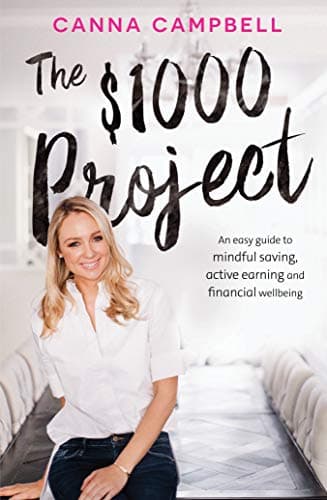
The $1000 Project
Canna Campbell's cult-favourite challenge shows how saving and investing in $1000 chunks can quietly transform your finances. Motivating, doable, and built for real Aussie budgets.
She's on the Money
Victoria Devine
She's on the Money
Written for millennials, walks through budgeting, clearing debt, saving, investing and buying property with real stories.
Some links above are affiliate links. If you buy through them, Snowball Invest may earn a small commission at no extra cost to you. We only recommend books we'd suggest anyway.
Sources
Was this article useful?
Put it to your own numbers
Every calculator runs entirely in your browser, with nothing stored. See what these numbers look like for your own situation.
Explore the calculators →General information only. This article is educational and does not constitute personal financial advice. It does not account for your circumstances. Consider your own situation and seek advice from a licensed adviser before acting. Read our full disclaimer.

Timothy Hirou Gaschereau
Founder of Snowball Invest, not a financial adviser.
I write about what I'm learning myself, because nobody ever taught us how to take control of our own money. It's a skill, not a mystery, and it's never too late to learn it. The best day to start was yesterday, the second best is today.
LinkedIn →Related articles

The $1000 Project by Canna Campbell: An Honest Review
Our honest review of The $1000 Project by Canna Campbell: the $1,000 parcel method, dividend investing, the strengths, the limits, and who it's for.

The Barefoot Investor Review: Honest, Unfiltered, Australian
Our honest Barefoot Investor review covers the bucket system, the 9 steps, the real criticisms, and whether Scott Pape's book is still worth it for Australians.

She's on the Money Review: Honest and Actually Useful
Our honest She's on the Money book review: what Victoria Devine gets right, where it falls short, and whether it's worth your time as an Australian reader.