

What Is a Dividend? A Beginner's Guide for Australian Investors
What a dividend actually is, how dividend yield and the ex-dividend date work, and how it connects to franking credits in Australia.
 By Timothy Hirou GaschereauPublished
 10 min read
Try it yourself
You buy a share in a company, sit back, and the company sends you money. No side hustle, no extra work required. That, in a nutshell, is a dividend. This is part of a wider guide to getting started with investing on Snowball Invest.
Quick answer
A dividend is a cash payment a company makes to its shareholders, usually out of profit. If you own shares in a company that pays dividends, you receive a payment for every share you hold. Not every company pays them, and the amount can change year to year, but it's one of two ways owning a share can actually make you money.
In this guide
- →How dividends actually work, and who decides whether to pay them
- →The two ways a share makes you money, and why neither is automatically better
- →What dividend yield means, and the yield trap worth watching for
- →The three dates that determine whether you actually get paid
- →How dividends connect to Australia's franking credit system, and dividend reinvestment plans
💰 How dividends actually work
🎯 The essential: There's no legal obligation to pay a dividend, the board decides each period, which is exactly why a payment history is context, not a promise.
When a company makes a profit, it has two basic choices: reinvest that money back into the business, or distribute some of it to shareholders as a dividend. The company's board of directors decides whether to pay one, how much, and when, there's no legal obligation either way.
A fast-growing company might reinvest every dollar to fuel expansion. A large, established business with steady profits might pay out a healthy chunk twice a year. Most ASX-listed companies that do pay dividends follow that twice-yearly pattern: an interim dividend after the half-year result (commonly February or March) and a final dividend after the full-year result (commonly September or October). Some pay quarterly, some annually, and a fair few pay nothing at all.
📈 The two ways shares make you money
Owning shares can make you money in two genuinely different ways. Dividends (income) pay you cash from the company's profits while you hold the shares, income in your hand regardless of what the price does. Capital growth (price appreciation) is the share price rising above what you paid, a gain you only actually realise once you sell.
Some shares lean heavily one way. A mature bank or supermarket might pay generous dividends but grow its share price slowly. A younger, faster-growing company might pay no dividend at all while its share price climbs sharply over time. Neither approach is inherently better, it depends on what you're trying to get out of the money.
🔖 What Is a Share?
The basics of what owning a share actually means, before diving into how it pays you.
📊 Dividend yield: what the percentage means
🎯 The essential: A very high yield isn't always good news, it can just mean the share price has fallen, not that the payout is generous.
When people talk about a stock's dividend yield, they're expressing the annual dividend as a percentage of the current share price:
Dividend yield = (annual dividend per share ÷ share price) × 100. A company paying $1.00 a year on a $20.00 share has a 5% yield. The ASX market's average cash dividend yield sits somewhere around 3.5-4% a year, closer to 5-6% once franking credits are grossed up.
Here's the trap: a very high yield isn't always a good sign. If a company's share price has fallen sharply, the yield looks high purely because the denominator, the price, has dropped. That can signal a struggling business, not a bargain. Always check why the yield is high before getting excited about the number alone.
📅 The dividend calendar: three dates to know
Dividends come with a specific timeline. Miss the key dates and you miss the payment.
- Ex-dividend date: the cutoff. You must own the shares before this date to receive the upcoming dividend, buying on or after it means the previous owner gets paid, not you. The share price typically drops by roughly the dividend amount on this date, since new buyers no longer get that payment.
- Record date: the company checks its share register to confirm who's entitled. Given the ASX's standard settlement cycle, this usually falls a business day or two after the ex-dividend date, if you bought before the ex-dividend date, you'll be on the register in time.
- Payment date: when the money actually lands in your account, or your DRP shares are issued, typically three to four weeks after the record date.
Ex-dividend date
Day 0
Own the shares before today or you miss the payment. Price usually dips by about the dividend.
Record date
1 to 2 business days later
The company checks its register to confirm who is entitled.
Payment date
About 3 to 4 weeks later
Cash lands in your account, or your DRP shares are issued.
🧮 A real worked example
Commonwealth Bank of Australia (ASX: CBA) paid a final dividend of 250 cents per share ($2.50) for FY2024, fully franked, taking its full-year total to $4.65 per share fully franked. Say you owned 100 CBA shares at the time.
Your cash dividend: 100 shares × $2.50 = $250. Because CBA had already paid 30% company tax on those profits, it attached a franking credit of roughly $2.50 × (30 ÷ 70) ≈ $1.07 per share, about $107 across 100 shares. That $107 isn't extra cash automatically, it's a tax credit you use to offset your own tax bill, or potentially get refunded if your marginal tax rate sits below the company rate. This example is for illustration only, always check a company's own investor relations page for its current dividend figures.
🇦🇺 Franking credits: the Australian twist
Australia's dividend imputation system exists so the same dollar of company profit doesn't get taxed twice, once at the company level, again at the personal level. A fully franked dividend means the company paid the full company tax rate on the profits behind it, so you get the maximum credit. Partially franked means only some tax was paid, unfranked means none was, common for profits earned overseas.
This mechanism deserves its own deep dive, and we've got one. Head to our full explainer on what franking credits actually are for the complete breakdown, including how they flow through Australian share ETFs.
🔄 Dividend reinvestment plans (DRPs)
Instead of taking your dividend as cash, many companies let you reinvest it automatically as additional shares, usually at a small discount to the market price and with no brokerage. It's a straightforward way to compound faster without lifting a finger. Weighing it up? See our full guide to dividend reinvestment plans.
The catch: you still owe tax on the dividend as if you'd received cash, the ATO treats a DRP dividend the same way. Each reinvested parcel also creates its own cost base for capital gains tax purposes, which means keeping good records matters more the longer you stay in a DRP. It suits long-term, growth-focused investors who don't need the income right now, less so anyone relying on dividends to actually cover living costs.
🤔 Should you focus on dividends or growth?
There's no universal right answer. Income-focused investors, retirees, anyone chasing FIRE, people who want reliable cash flow without selling shares, often gravitate toward higher-dividend companies. Growth-focused investors, typically younger and building wealth over decades, may prefer companies that reinvest aggressively, since price appreciation can outpace dividend income over long horizons.
In practice, most investors end up with a mix. A broad market ETF naturally includes both dividend-paying stalwarts and growth-oriented companies. The real question is what your portfolio actually needs to do for you now, and in ten years.
🚀 How to Start Investing in Australia
The practical next step once you understand what a share, dividend, and ETF each actually do.
What I actually use
Pearler
This is the broker I personally use. Do your own research and form your own opinion, but I genuinely recommend it, it's built for long-term investors rather than day traders, and makes it easy to automate regular investing. Sign up through my link or with the code TIMOTHY269825 and you'll both get a $20 cash bonus once you make your first investment (Pearler's current offer, T&Cs apply).
Sign up to Pearler →This is a referral link. If you sign up through it, I get a bonus too, at no extra cost to you.
SnowLetter
Australia's money news and our best reads, once a week.
❓ Frequently asked questions
Do I pay tax on dividends in Australia?
+
Yes. Dividends are assessable income and must be declared on your tax return, including both the cash amount and any attached franking credits. The franking credit then offsets your tax liability, and if your marginal rate is below the company tax rate, you may get a refund of the excess.
What is a fully franked dividend?
+
It means the company paid the full 30% (or 25% for smaller companies) tax rate on the profits behind that dividend, so you get the maximum franking credit attached. Partially franked means only some tax was paid, unfranked means none was.
How often are dividends paid in Australia?
+
Most ASX-listed companies pay twice a year, an interim dividend after the half-year result and a final dividend after the full-year result. Some pay quarterly, some annually, and plenty pay nothing at all.
Can I lose money even if a company pays dividends?
+
Yes. If the share price falls by more than the dividend you received, you're still down overall. A $2.50 dividend doesn't offset a $10 drop in share price, dividends and capital growth (or loss) are separate things entirely.
What happens if I buy shares the day before the ex-dividend date?
+
You're entitled to the dividend, since owning the shares before the ex-dividend date puts you on the register in time. Just expect the share price to typically fall by roughly the dividend amount on the ex-dividend date itself.
Are dividends guaranteed?
+
No. The board decides whether to pay a dividend each period, and companies can reduce, suspend or cancel dividends at any time, especially in tough conditions. A strong dividend history is useful context, not a promise.
What is a dividend reinvestment plan (DRP)?
+
A DRP lets you reinvest your dividend as new shares instead of cash, usually with no brokerage. You still owe tax on the dividend as if you'd received it in cash, so keeping track of each parcel's cost base for capital gains purposes matters.
Where to next
📚 Recommended reading
Sort Your Money Out and Get Invested
Glen James

Sort Your Money Out and Get Invested
From the host of the my millennial money podcast, a step-by-step Aussie plan to fix your spending, clear debt and actually start investing. Practical and refreshingly free of finance-bro nonsense.
The Intelligent Investor
Benjamin Graham
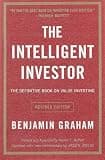
The Intelligent Investor
The value-investing bible Warren Buffett calls the best book on investing ever written. It is old-school and US-flavoured, so read it for the timeless mindset on risk and 'Mr Market', not the specific stock tips.
Girls Just Wanna Have Funds
Molly Benjamin

Girls Just Wanna Have Funds
Molly Benjamin, founder of Australia's Ladies Finance Club, makes money feel fun and doable, covering budgeting, investing and confidence in one friendly package. Perfect if you want to sort your finances without the jargon or the guilt.
Some links above are affiliate links. If you buy through them, Snowball Invest may earn a small commission at no extra cost to you. We only recommend books we'd suggest anyway.
Sources
Was this article useful?
Put it to your own numbers
Every calculator runs entirely in your browser, with nothing stored. See what these numbers look like for your own situation.
Try the Capital Gains Tax calculator →General information only. This article is educational and does not constitute personal financial advice. It does not account for your circumstances. Consider your own situation and seek advice from a licensed adviser before acting. Read our full disclaimer.

Timothy Hirou Gaschereau
Founder of Snowball Invest, not a financial adviser.
I write about what I'm learning myself, because nobody ever taught us how to take control of our own money. It's a skill, not a mystery, and it's never too late to learn it. The best day to start was yesterday, the second best is today.
LinkedIn →Related articles

Ex-Dividend Date Explained
What is the ex-dividend date in Australia? How it works, why the share price drops, and exactly what you need to do to receive your dividend.

Dividend Yield Explained: The Complete Australian Guide
What dividend yield means, how to calculate it, and the crucial Australian grossed-up yield (with franking). Plus the yield trap and what counts as a good yield.

Blue Chip Shares Australia: The Beginner's Honest Guide
What are blue chip shares in Australia? What they are, why investors like them, their real risks, franking credits, and whether a broad ASX ETF might suit you better.