

Best Dividend ETFs and Stocks in Australia: The Income Guide
The best dividend ETFs and stocks in Australia, honestly: franking credits, the yield trap, VHY vs a broad ETF like VAS, and the mistakes income investors make.
 By Timothy Hirou GaschereauPublished
 14 min read
Try it yourself
If you are an Australian investor hunting for income, you are in a genuinely good position. The combination of regular dividends and franking credits makes Australian shares among the most tax-efficient income sources on the planet. But the space is full of traps, and the highest yield is rarely the best choice.
This guide covers the most popular dividend ETFs and stocks Australians hold for income, how to judge them honestly, and the mistakes that catch even experienced income investors. These are popular, widely-held options, not recommendations. General information only, not financial advice.
🎯 The essential: Australia's franking (dividend imputation) system is unusually generous, worth the most to retirees, low brackets and super in accumulation. But a high yield is not a better investment: total return (income plus capital growth) is what matters, and a high yield often signals a falling price or a coming cut. The popular dividend ETFs are VHY, IHD, SYI and RDV, all concentrated in banks and resources. A broad ETF like VAS or A200 also pays a strong grossed-up yield, with far better diversification and lower fees, worth comparing before defaulting to a dedicated dividend fund.
Why Australians love dividend investing
Australia has something almost no other country offers: dividend imputation, better known as franking credits. A company pays 30% tax on its profit, then attaches a credit for that tax to the dividend. You include both the cash and the credit in your income, then use the credit to offset your own tax bill, and if the credit exceeds your tax, the ATO refunds the difference in cash.
On $1,000 of fully franked dividends, the grossed-up amount is about $1,429 and the franking credit is about $429. It is worth the most to retirees and low-income earners (who can get a full cash refund) and super funds in accumulation (taxed at 15%). Our guide to franking credits walks through it. This is why so many Australians gravitate to dividends, and why ASX companies pay out a higher share of earnings than most overseas peers.
Yield vs total return: the trap that costs the most
Read this bit carefully. Dividend yield is the annual dividend divided by the share price. Total return is yield plus capital growth (or minus capital loss), and it is what you actually make.
The yield trap: when a share price falls, the yield rises mechanically even though the dividend hasn't changed. A very high yield is often a warning that the market expects a cut, not a bargain. Always look at total return and whether the dividend is sustainable. More on the metric itself in our what is a dividend guide.
How to judge a dividend ETF
| What to check | Why it matters |
|---|---|
| Grossed-up yield | Compare yields including franking, since franking levels differ between funds. |
| Franking level | A 100%-franked fund is worth much more to a low-tax investor than a 60%-franked one. |
| Dividend sustainability | Some indices chase the highest current yield and load up on companies about to cut. |
| Fee (MER) | Lower is better; even 0.10% compounds over decades. |
| Diversification | 40 holdings concentrated in banks and miners is not as diversified as it looks. |
Popular dividend ETFs in Australia
The most widely-discussed dividend-focused ETFs, with their honest trade-offs. Verify current yields and fees before investing.
| ETF | Tracks | MER | Trade-off |
|---|---|---|---|
| VHY (Vanguard) | FTSE Australia High Dividend Yield | ~0.25% | Most popular and liquid, but concentrated in banks and resources |
| IHD (iShares) | S&P/ASX Dividend Opportunities | ~0.23% | Screens for sustainability, but smaller and less liquid |
| SYI (SPDR) | MSCI Australia Select High Div Yield | ~0.20% | Lowest fee here, but smaller and less well-known |
| RDV (Russell) | Russell Australia High Dividend | ~0.34% | Quality tilt, but smallest, least liquid, highest fee |
VHY is the most-held: solid, largely-franked income, but a real sector bet on banks and miners (single industry capped at 40%, single company at 10%). The others add sustainability or quality screens at the cost of size and liquidity.
Wait, VAS and A200 pay a strong yield too
Before defaulting to a dedicated dividend ETF, run this comparison. VAS (~0.07%) and A200 (~0.04%) are broad-market ETFs whose grossed-up yield (including franking) has historically sat around 4% to 5%. That is not far behind the dedicated dividend funds, and you get far better diversification, much lower fees, and full exposure to the market's capital growth. For many income investors, especially long-term ones, a broad ETF delivers most of the dividend benefit without the concentration risk.
Blue-chip dividend stocks Australians hold
Many Australians also hold individual shares for income. These are among the most widely held, with their caveats. Not a recommendation: individual stock picking concentrates risk in ways ETFs do not.
| Stock | Sector | The catch |
|---|---|---|
| Big four banks (CBA, NAB, WBC, ANZ) | Financials | Highly correlated, all move together, rate-sensitive |
| BHP | Resources | Dividend driven by commodity prices, cyclical |
| Telstra (TLS) | Telecoms | Only partially franked, has cut its dividend before |
| Woolworths / Wesfarmers | Consumer staples | Lower yield, but steadier earnings |
| Fortescue (FMG) | Resources | Yield swings sharply with the iron ore price |
The recurring theme: Australian income is heavily concentrated in banks and resources. Holding a broad ETF, a dividend ETF, and individual bank shares can leave you far more exposed to the banks than you realise.
Dividend ETFs vs individual stocks
| Factor | Dividend ETF | Individual stocks |
|---|---|---|
| Diversification | High (many holdings) | Low (concentrated) |
| Research needed | Low (index does it) | High (ongoing monitoring) |
| Tax admin | Simpler (one statement) | More complex (many holdings) |
| Risk | Lower (spread out) | Higher (concentrated) |
For most investors a dividend ETF is simpler and lower risk. Individual stocks suit those who want a specific income portfolio and accept the research and concentration risk.
Tax, DRP and the 45-day rule
Dividends are assessable income: you declare them (plus franking credits) in the year they are paid, and the credits reduce your tax dollar for dollar, with any excess refunded. See how dividends are taxed. Two things to know: the 45-day rule (you generally must hold shares at risk for at least 45 days around the ex-dividend date to claim franking, with a small-shareholder exemption up to $5,000 of credits), and DRPs (dividend reinvestment plans compound automatically with no brokerage, but each reinvestment is still a taxable event and creates a new CGT parcel to track, great for accumulators, less so for retirees who need the cash).
Common mistakes dividend investors make
- Chasing yield. A 9% yield on a declining business is not a bargain. Check sustainability and the price trend.
- Ignoring total return. 7% yield with a 5% capital loss is about 2% total. A savings account might beat it.
- Over-concentrating in banks. The ASX is already bank-heavy. Broad ETF + dividend ETF + bank shares can triple your exposure.
- Comparing yields without grossing up. A fully franked 4% can beat an unfranked 5% after tax. Always compare grossed-up.
- Forgetting franking changes with your tax rate. Worth the most in retirement; less so if you return to a high income.
❓ Frequently asked questions
What is the best dividend ETF in Australia?
+
There is no single answer. VHY is the most popular and liquid dedicated dividend ETF, but the best depends on your tax situation, how much concentration risk you accept, and whether you prioritise yield, sustainability or low fees. For many investors, comparing VHY against a broad-market ETF like VAS is a worthwhile exercise before deciding.
Are dividends from ETFs franked?
+
It depends on the ETF and its holdings. Australian equity ETFs like VHY, VAS and A200 typically pass through franking credits from their underlying shares, though the franking level varies. Check the fund's distribution statements or PDS for the franking percentage.
What is a good dividend yield in Australia?
+
A grossed-up yield (including franking) of roughly 4% to 6% has historically been considered solid for Australian shares, though it varies with markets. Be cautious of yields well above that range on individual stocks, they often signal elevated risk. Verify current yields on the ASX or the fund manager's site.
How do franking credits work for retirees?
+
If a retiree's tax liability is less than their franking credits, the ATO refunds the difference in cash. A retiree with no other taxable income receiving $1,000 in fully franked dividends has about $428 in franking credits, and after offsetting any tax owed (which may be zero), the excess is refunded. That makes fully franked dividends especially powerful in retirement.
Should I choose a dividend ETF or individual stocks?
+
For most investors a dividend ETF is simpler, more diversified and lower risk. Individual stocks suit those who want to build a specific income portfolio and are comfortable with the research and concentration risk. Many investors use both.
Is a high yield always better?
+
No. A high yield can be a warning sign. If a share price has fallen sharply, the yield rises mechanically even though the dividend hasn't changed, and the market may be pricing in a cut. Always check total return and dividend sustainability alongside the yield.
Can I live off dividends in Australia?
+
Many retirees do. The key is a portfolio large enough that the income (including franking refunds) covers your expenses, with enough diversification that one company's dividend cut doesn't derail you. The required size depends on your expenses, tax situation and the yield of your holdings.
Keep reading
📚 Recommended reading
The Barefoot Investor
Scott Pape
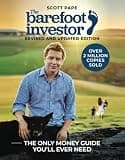
The Barefoot Investor
Australia's best-selling money book ever. A simple system for accounts, budgeting, debt and a real emergency fund in one.
The Barefoot Investor for Families
Scott Pape
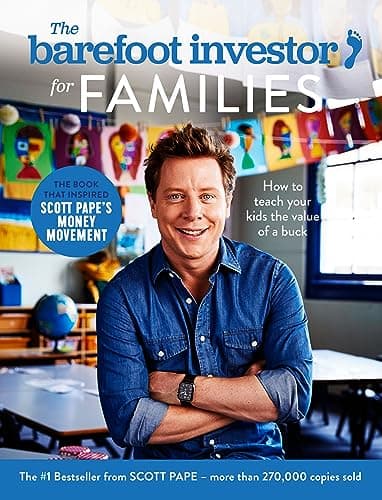
The Barefoot Investor for Families
Scott Pape takes his mega-selling Barefoot system and points it at raising money-smart kids, with age-by-age jobs, pocket money and jam-jar tricks. If you want your kids to grow up good with money, this is the Aussie classic.
Girls That Invest
Simran Kaur
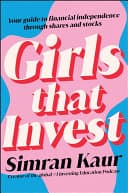
Girls That Invest
A no-jargon crash course from the podcaster behind Girls That Invest that makes the sharemarket feel doable, written especially for women starting out. The perfect first step before you buy your first ETF.
Some links above are affiliate links. If you buy through them, Snowball Invest may earn a small commission at no extra cost to you. We only recommend books we'd suggest anyway.
Sources
This article is general information only, not financial or tax advice, and is not a recommendation to buy any security. It does not take your circumstances into account. Yields, fees, franking levels and tax rules change, and examples here are illustrative round numbers as of mid-2026. Verify current data with the fund manager or the ASX, check the ATO, and consider a licensed adviser before investing. Past performance is not a reliable indicator of future performance.
Was this article useful?
Put it to your own numbers
Every calculator runs entirely in your browser, with nothing stored. See what these numbers look like for your own situation.
Try the Compound Interest calculator →General information only. This article is educational and does not constitute personal financial advice. It does not account for your circumstances. Consider your own situation and seek advice from a licensed adviser before acting. Read our full disclaimer.

Timothy Hirou Gaschereau
Founder of Snowball Invest, not a financial adviser.
I write about what I'm learning myself, because nobody ever taught us how to take control of our own money. It's a skill, not a mystery, and it's never too late to learn it. The best day to start was yesterday, the second best is today.
LinkedIn →Related articles

VHY ETF Australia: Vanguard's High Yield Fund Explained
VHY is Vanguard's high-yield Australian shares ETF. What it holds, the fees, the franking credits, and how it stacks up against VAS for income investors.
Franking Credits Inside ETFs (Australia)
Australian-shares ETFs pass franking credits to investors via your AMMA statement. Here is how ETF franking works, what your statement shows, how to claim.

VAS ETF: The Complete Australian Investor's Guide
A plain-English deep dive into VAS, Vanguard's Australian shares ETF: what it holds, the 0.07% fee, franking credits, and how it compares to A200 and VGS.