

Franking Credits Inside ETFs (Australia)
Australian-shares ETFs pass franking credits to investors via your AMMA statement. Here is how ETF franking works, what your statement shows, how to claim.
 By Timothy Hirou GaschereauPublished
 8 min read
Australian-shares ETFs pass franking credits through to investors via their annual tax statement. Global-shares ETFs generally do not carry them at all. Here is exactly how the mechanism works, what your statement shows, and how to claim what you are owed. This is part of our wider getting started with investing guide on Snowball Invest. General information only, not personal tax advice; speak to a registered tax agent for your situation.
Quick answer
Australian-shares ETFs collect franked dividends from the companies they hold and pass the franking credits through to you on your annual AMMA statement. You include both the cash distribution and the franking credit in your assessable income, then claim the credit as a tax offset to reduce your tax bill. Global-shares ETFs like VGS generally do not carry franking credits, because the underlying companies do not pay Australian company tax.
In this guide
- →A quick refresher on what franking credits are
- →The actual mechanism of how they flow through an ETF
- →Where they appear on your AMMA statement
- →A worked example you can follow
- →Why Australian-shares and global-shares ETFs differ
🔁 Franking credits: a quick refresher
🎯 The essential: Franking credits, also called imputation credits, represent company tax already paid by an Australian company before it pays a dividend to shareholders. The ATO lets eligible shareholders claim that tax back as an offset against their own tax liability.
That is the short version. If you want the full picture, see our guide to what franking credits are and how they fit into how dividends are taxed in Australia. Now, on to how this works specifically inside an ETF.
⚙️ How franking credits flow through an ETF
This is where most explainers go vague. Here is the actual mechanism. An Australian-shares ETF like VAS holds dozens or hundreds of ASX-listed companies. When those companies pay franked dividends, the ETF collects both the cash dividend and the attached franking credits, pooling all of them across its entire portfolio.
At distribution time, the ETF passes both the cash and the franking credits through to investors. You receive what is called a franked distribution rather than a franked dividend. The distinction matters: the payment comes from the fund, not directly from the company. The franking credit is not paid in cash. It does not hit your bank account. Instead, it appears as a tax offset on your AMMA statement, which you then use in your tax return.
- The amount of franking credits you receive depends on how many of the ETF's underlying holdings paid franked dividends during the period.
- Not all distributions from an Australian-shares ETF will be fully franked. The franking percentage varies year to year.
- The ETF manager handles all the pooling and allocation. You do not need to track individual company dividends yourself.
🧾 Your AMMA statement
AMMA stands for Attribution Managed Investment Trust Member Annual statement. Most major Australian ETFs operate under the AMIT tax regime, which is why you get an AMMA statement rather than a simple distribution summary. It breaks your distribution down into components. Typically you will see:
- Cash income (the actual dollars deposited)
- Capital gains (if the fund realised any during the year)
- Franking credits (the tax offset amount)
- Cost base adjustments (relevant for CGT purposes)
You include the grossed-up amount (cash distribution plus franking credit) in your assessable income, then claim the franking credit as a tax offset in your tax return. The ATO pre-fills some of this in myTax, but always check it against your AMMA statement. For the full picture of ETF tax, see our guide to how ETFs are taxed in Australia.
🔢 A worked example
This is a hypothetical example for illustration purposes only. The numbers are rounded and do not represent any actual ETF. Assume you hold 1,000 units in an Australian-shares ETF. The ETF pays a distribution of $0.40 per unit for the period. Of that, $0.30 is cash and $0.10 is an attached franking credit, representing company tax already paid at 30%.
| Item | Amount |
|---|---|
| Cash distribution received | $300 (1,000 x $0.30) |
| Franking credit | $100 (1,000 x $0.10) |
| Grossed-up assessable income | $400 |
| Tax at 32% marginal rate on $400 | $128 |
| Less franking credit offset | ($100) |
| Net tax payable on this distribution | $28 |
The franking credit reduces the tax you would otherwise owe on the distribution from $128 down to $28. If your marginal tax rate is below the company tax rate (currently 30% for large companies, as per the ATO, subject to change), you may receive a refund of the excess franking credit. This is common for low-income earners and super funds in pension phase. Speak to a registered tax agent for your specific situation.
🌍 Australian-shares vs global-shares ETFs
This is the single most important distinction when it comes to ETF franking.
| Australian-shares ETFs | Global-shares ETFs | |
|---|---|---|
| Underlying holdings | ASX-listed companies paying Australian tax | Overseas companies, no Australian tax |
| Franking credits | Generally passed through | Generally none |
| Examples | VAS, A200, STW, IOZ | VGS, BGBL, IVV |
Does VGS have franking credits? No. Because VGS holds international companies, there is no Australian company tax paid on those earnings, so no franking credits flow through to investors. Some ETFs hold a mix of Australian and international shares, such as DHHF and VDHG. These may pass partial franking credits through, depending on their Australian allocation in any given year. This is a factual difference, not a recommendation. Both types have a legitimate role in a diversified portfolio.
📅 The 45-day holding rule
The ATO's 45-day holding rule is an integrity measure designed to prevent investors from buying shares purely to grab a franking credit and then selling immediately. The rule requires that shares be held at risk for at least 45 days, not counting the day of purchase or the day of sale, around the ex-dividend date to be eligible for the franking credit offset.
For ETF investors, the good news is that the rule applies at the fund level. The ETF manager must satisfy the 45-day rule on your behalf for each underlying holding. Major Australian ETF managers, including Vanguard, BetaShares and iShares, apply this rule internally as part of normal fund management, so long-term ETF holders are generally unaffected.
Where it can matter for you personally: if you buy and then sell an ETF very quickly around a distribution date, you may be affected. The ATO also notes a $5,000 threshold; if your total franking credit entitlement is below $5,000, the rule generally does not apply to you as an individual taxpayer (subject to change, check the ATO's current guidance). If you trade around distribution dates, speak to a registered tax agent.
🧭 What this means for your ETF choice
A few factual points worth keeping in mind. This is context, not advice. Franking credits add to the after-tax return of Australian-shares ETFs for investors who can use them. They are particularly valuable for investors on lower marginal tax rates, retirees, and super funds in pension phase, because the credit can reduce tax to zero or generate a refund.
Global-shares ETFs do not carry franking credits, but they offer broader diversification and exposure to global growth that Australian-shares ETFs simply cannot replicate. Neither type is inherently better. The right mix depends on your individual tax situation, investment goals, and time horizon. If you want to understand how franking credits interact with your overall tax position, a registered tax agent or financial adviser is the right person to ask.
📈 Compound Interest Calculator
Model how reinvested, franked distributions can compound over the long run alongside your capital growth.
SnowLetter
Australia's money news and our best reads, once a week.
❓ Frequently asked questions
Do ETFs pay franking credits?
+
Australian-shares ETFs can pass franking credits through to investors as part of their distributions. Global-shares ETFs generally do not, because the underlying companies do not pay Australian company tax. Whether a specific ETF carries franking credits depends on what it holds. Check your AMMA statement or the ETF provider's distribution history.
Does VGS have franking credits?
+
No. VGS (Vanguard MSCI Index International Shares ETF) holds international companies that do not pay Australian company tax. As a result, VGS does not carry franking credits and your VGS distributions will not include a franking credit component.
How do I claim franking credits from an ETF?
+
Your ETF manager sends you an AMMA statement after 30 June each year. It shows your cash distribution, any capital gains, and your franking credits for the period. You or your tax agent include the grossed-up amount in your tax return and claim the franking credit as a tax offset. The ATO pre-fills some of this data in myTax, but always verify it against your AMMA statement.
Are ETF distributions franked?
+
It depends on the ETF. Australian-shares ETFs that hold ASX-listed companies paying franked dividends will generally pass franking credits through to investors as part of their distributions. Global-shares ETFs will not. Check your AMMA statement or the ETF provider's distribution history to see the franking percentage for any given period.
What is the 45-day rule for ETFs?
+
The ATO's 45-day holding rule requires that shares be held at risk for at least 45 days around the ex-dividend date to qualify for the franking credit offset. For ETFs, the fund manager applies this rule at the fund level on behalf of investors. Long-term investors are generally unaffected. If you trade around distribution dates, speak to a registered tax agent.
Can I get a refund of franking credits from an ETF?
+
Yes. If your marginal tax rate is lower than the company tax rate (currently 30% for large companies, as per the ATO, subject to change), you may receive a refund of the excess franking credit. This is common for low-income earners and super funds in pension phase. The ATO processes this through your tax return.
📚 Recommended reading
The Barefoot Investor
Scott Pape

The Barefoot Investor
Australia's best-selling money book ever. A simple system for accounts, budgeting, debt and a real emergency fund in one.
The Little Book of Common Sense Investing
John C. Bogle
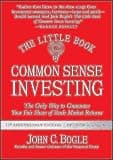
The Little Book of Common Sense Investing
From the man who invented the index fund, this is the short, sharp case for low-cost investing that has aged like fine wine. The maths on fees is universal, just think ETFs and super instead of his US funds.
The Intelligent Investor
Benjamin Graham
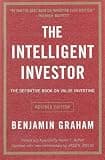
The Intelligent Investor
The value-investing bible Warren Buffett calls the best book on investing ever written. It is old-school and US-flavoured, so read it for the timeless mindset on risk and 'Mr Market', not the specific stock tips.
Some links above are affiliate links. If you buy through them, Snowball Invest may earn a small commission at no extra cost to you. We only recommend books we'd suggest anyway.
Sources
Was this article useful?
Put it to your own numbers
Every calculator runs entirely in your browser, with nothing stored. See what these numbers look like for your own situation.
Explore the calculators →General information only. This article is educational and does not constitute personal financial advice. It does not account for your circumstances. Consider your own situation and seek advice from a licensed adviser before acting. Read our full disclaimer.

Timothy Hirou Gaschereau
Founder of Snowball Invest, not a financial adviser.
I write about what I'm learning myself, because nobody ever taught us how to take control of our own money. It's a skill, not a mystery, and it's never too late to learn it. The best day to start was yesterday, the second best is today.
LinkedIn →Related articles
What Are Franking Credits? A Plain-English Explanation
How Australia's dividend imputation system actually works, with a worked example, and how franking credits flow through to you from Australian share ETFs.
VHY ETF Australia: Vanguard's High Yield Fund Explained
VHY is Vanguard's high-yield Australian shares ETF. What it holds, the fees, the franking credits, and how it stacks up against VAS for income investors.
How ETFs Are Taxed in Australia
How ETFs are taxed in Australia: yearly distributions, capital gains, the AMIT regime, AMMA statements, franking credits and foreign income tax offsets.