

The Intelligent Investor Review: Is Graham's Classic Worth It?
Our honest Intelligent Investor review: what Benjamin Graham's classic teaches, its real strengths and weaknesses, and what Australian investors should know first.
 By Timothy Hirou GaschereauPublished
 11 min read
The Intelligent Investor gets called the greatest investing book ever written, largely on the strength of Warren Buffett's endorsement. It's also dense, old, and very American, and it gets recommended to beginners who then bounce straight off it. Here's an honest look at what it teaches, who it's actually for, and what an Australian reader needs to know first. It's part of our personal finance book reviews on Snowball Invest.
Quick answer
One of the most important finance books ever written, and the ideas at its core (the margin of safety and the Mr Market allegory) are genuinely timeless. But it's dense, deeply US-centric, and not a beginner book despite what the internet says. Our rating: 4 out of 5 for serious, experienced investors, and closer to 2 out of 5 as a first book for beginners.
Want to read The Intelligent Investor?
Get the 2003 revised edition with Jason Zweig's commentary, it's far more readable than the original.
In this guide
- →What the book is actually about: Mr Market, margin of safety and the two investor types
- →Genuine strengths and the real criticisms, side by side
- →Who it's for, and who should skip it (for now)
- →What Buffett and modern critics say, and what readers say
- →The Australian angle: franking, the concentrated ASX, and why beginners start elsewhere
📖 What The Intelligent Investor is actually about
First published in 1949, the edition most people pick up today is the 2003 revision with commentary from financial journalist Jason Zweig. It's not really a stock-picking manual. It's a book about investor psychology and discipline, and Graham's central argument is that the biggest risk in investing is not the market. It's you.
| Idea | What it means |
|---|---|
| Mr Market | Imagine a partner who offers you a price every day, sometimes euphoric, sometimes terrified. You're never obliged to trade. Use his mood swings, don't be swept along by them. |
| Margin of safety | Only buy when the price is well below your estimate of intrinsic value. That gap protects you when your analysis is wrong or the market stays irrational. |
| Defensive vs enterprising | Most people should be defensive investors (diversify, rebalance, leave it alone). The enterprising path to beating the market takes real work, not just enthusiasm. |
Zweig's chapter-by-chapter commentary updates Graham's examples and connects the original text to modern events like the dot-com crash. If you're going to read this book, get that edition. The original alone is a harder slog.
Pay well below what it's worth. That gap is your cushion when you're wrong.
⚖️ Strengths and weaknesses
A genuinely important book, and a genuinely demanding one. Both are true.
What it gets right
- ✓The core philosophy is timeless: Mr Market, margin of safety, investing vs speculation.
- ✓It teaches you to think like an owner valuing a business, not a trader watching a chart.
- ✓It's refreshingly honest that beating the market is hard and most people shouldn't try.
- ✓Zweig's 2003 commentary makes the lessons concrete with modern examples.
- ✓Read properly, it builds real financial literacy, not just tips.
- ✓It's the intellectual foundation behind some of the best investors alive.
Where it falls short
- ✕It's genuinely dense: chapters on bond and preferred-stock analysis are slow going.
- ✕The examples are dated, from the 1940s to 1970s, so you do a lot of mental translation.
- ✕US tax law and market structure are baked in throughout and don't map to Australia.
- ✕It is not a beginner book, despite constantly being recommended as one.
- ✕The stock-screening framework is much harder to apply in today's efficient markets.
👤 Who should read it, and who should skip it?
Read it if you
- ✓Already understand the basics and want to go deeper.
- ✓Are genuinely interested in value investing as a long-term approach.
- ✓Are willing to read slowly and think, not just skim for tips.
- ✓Want to understand the intellectual foundations of modern investing.
Skip it (for now) if you
- ✕Are a complete beginner who hasn't started investing yet.
- ✕Want a quick, practical guide to ETFs or super.
- ✕Want Australian-specific advice on tax, franking credits or ASX stocks.
- ✕Plan to hold index funds long term, the stock-picking framework is largely irrelevant to you.
🔍 What do critics say about The Intelligent Investor?
Warren Buffett has called it "by far the best book on investing ever written," and that's not a throwaway line: he studied under Graham at Columbia and credits the book as the foundation of his entire philosophy. Professional investors widely regard it as essential reading.
The main modern critique is that the stock-picking framework Graham outlines is increasingly hard to apply in an era of passive investing and efficient markets. If most professional fund managers can't consistently beat the index after fees, the idea that an individual can reliably find undervalued stocks with Graham's screens is optimistic. That's less a knock on the philosophy than a reflection of how markets have changed since 1949. The mindset is still valuable, the specific formulas are harder to execute profitably today.
💬 What do readers say? Goodreads and Reddit
On Goodreads the book holds an average of around 4.23 out of 5 from a very large number of ratings, a strong result for a book many reviewers openly call difficult.
On r/AusFinance and r/investing it's respected, but experienced members regularly warn beginners it's a hard read and that index funds are a more practical starting point. The common advice: read it for the mindset (especially Mr Market and margin of safety), but don't feel obligated to run Graham's stock screens if you're a passive investor.
🇦🇺 The Australian angle
The core principles apply on the ASX just fine. Mr Market doesn't care whether you're trading in New York or Sydney, and the discipline Graham describes, staying rational when markets panic, is just as relevant watching the ASX 200 drop 5% in a week. The practical details are a different story.
The book is deeply US-centric: every tax calculation and market-structure reference is built around the US system. There's no mention of franking credits or Australia's dividend imputation system, which changes the after-tax maths of dividend investing considerably (the ATO has the clearest guidance). The ASX is also small and concentrated, with the top handful of stocks making up close to half the index, a very different diversification landscape from the thousands of liquid US stocks Graham wrote for. And for most people in their 20s and 30s building a first portfolio, low-cost index funds are a simpler, lower-risk starting point than applying Graham's stock-picking framework. That's not a criticism of Graham, just an honest read of where most beginners get the best outcome for the least complexity. Start with our guide to passive investing in Australia if that's you.
💰 The verdict
The Intelligent Investor deserves its reputation. The ideas at its core, the Mr Market allegory and the margin of safety, are worth understanding regardless of how you invest, and Graham's insistence on temperament over intelligence is as useful in 2026 as it was in 1949. But be honest about where you are. If you're new, our guide to starting investing is a more practical and Australian first step, build your foundation, then come back to Graham with context to hang the ideas on. If you're already comfortable with the basics and want to understand how serious investors think, this is one of the best value investing books you'll read. Just get the 2003 edition, read it slowly, and don't expect it to hand you a list of ASX stocks.
Want to read The Intelligent Investor?
Ready for the deep end? Grab the Zweig-annotated edition and take your time with it.
SnowLetter
Australia's money news and our best reads, once a week.
❓ Frequently asked questions
Is The Intelligent Investor good for beginners?
+
Honestly, no, not as a first book. Despite being recommended constantly to beginners, Graham assumes you already understand financial statements and how markets work. If you're just starting out, look for something more accessible and Australia-specific first, then come back to Graham once you have the basics down.
What is the main message of The Intelligent Investor?
+
Successful investing is more about temperament than intelligence. The market isn't your enemy or your guide, it's a mechanism that offers you prices you can accept or ignore. Buying assets at a significant discount to their intrinsic value (the margin of safety) and staying rational when others panic are the two habits that separate intelligent investors from the rest.
What's the difference between a defensive and an enterprising investor?
+
The defensive investor wants a reasonable return with minimal effort: a diversified mix of quality stocks and bonds, rebalanced occasionally, and otherwise left alone. The enterprising investor puts in serious time and research to find undervalued securities. Graham is clear that most people are better suited to the defensive approach.
Is the book still relevant today?
+
The mindset and philosophy absolutely are. The specific stock-screening formulas are harder to apply profitably in modern markets, where information moves faster and algorithmic trading has reduced many of the obvious inefficiencies Graham exploited. But the core ideas about investor psychology and the margin of safety remain as useful as ever.
How does The Intelligent Investor apply to Australian investors?
+
The philosophical principles apply directly. The practical details don't. The book is built around the US tax system, US market structure and US examples. Australian investors need to account for franking credits, the concentrated nature of the ASX and a different diversification landscape. For most Australian beginners, low-cost index funds are a more practical starting point.
Which edition should I read?
+
Get the 2003 revised edition with Jason Zweig's commentary. Zweig adds chapter-by-chapter updates that connect Graham's original text to modern markets and events. The original 1949 text without that commentary is a significantly harder read, and the 2003 edition is the one most people mean when they recommend the book.
📚 Get the book (and two lighter next reads)
The Intelligent Investor
Benjamin Graham
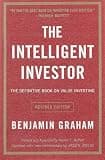
The Intelligent Investor
The value-investing bible Warren Buffett calls the best book on investing ever written. It is old-school and US-flavoured, so read it for the timeless mindset on risk and 'Mr Market', not the specific stock tips.
The Little Book That Still Beats the Market
Joel Greenblatt
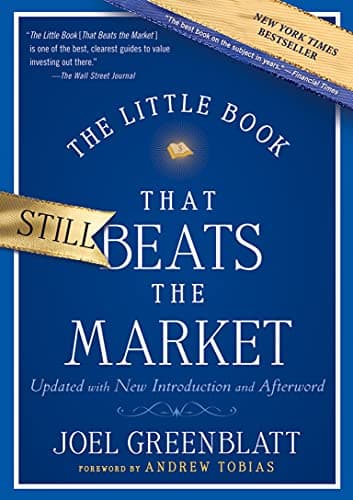
The Little Book That Still Beats the Market
Joel Greenblatt boils value investing down to a plain formula: buy good companies when they are cheap. It is short, cheeky, and a great primer before you go anywhere near picking your own shares.
One Up On Wall Street
Peter Lynch
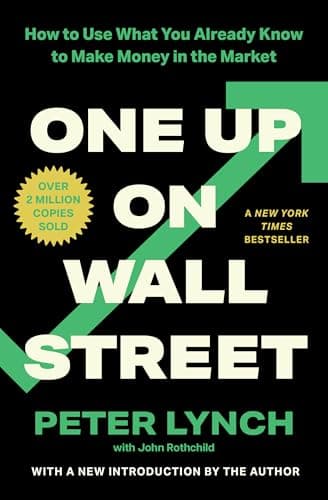
One Up On Wall Street
Peter Lynch ran one of the greatest funds ever, and his big idea is simple: invest in what you actually understand from everyday life. A timeless nudge to do your homework before you buy a single share.
Some links above are affiliate links. If you buy through them, Snowball Invest may earn a small commission at no extra cost to you. We only recommend books we'd suggest anyway.
Sources
Was this article useful?
Put it to your own numbers
Every calculator runs entirely in your browser, with nothing stored. See what these numbers look like for your own situation.
Explore the calculators →General information only. This article is educational and does not constitute personal financial advice. It does not account for your circumstances. Consider your own situation and seek advice from a licensed adviser before acting. Read our full disclaimer.

Timothy Hirou Gaschereau
Founder of Snowball Invest, not a financial adviser.
I write about what I'm learning myself, because nobody ever taught us how to take control of our own money. It's a skill, not a mystery, and it's never too late to learn it. The best day to start was yesterday, the second best is today.
LinkedIn →Related articles

Think and Grow Rich by Napoleon Hill: An Honest Review
Our honest Think and Grow Rich review: the mindset wins, the law-of-attraction baggage, the credibility questions around Napoleon Hill, and who it's for.

Your Money or Your Life Review: The FIRE Classic, Aussie Take
Our honest Your Money or Your Life review: the life energy concept, the 9-step program, and exactly what Australian readers need to know before buying.

The Millionaire Next Door Review: Timeless or Dated?
Our honest Millionaire Next Door review: the PAW vs UAW framework, the real strengths, the survivorship-bias criticism, and what it means for Australians.