

Think and Grow Rich by Napoleon Hill: An Honest Review
Our honest Think and Grow Rich review: the mindset wins, the law-of-attraction baggage, the credibility questions around Napoleon Hill, and who it's for.
 By Timothy Hirou GaschereauPublished
 9 min read
Worth reading once, critically, with your sceptic hat firmly on. Napoleon Hill's 1937 self-help classic has sold tens of millions of copies and inspired generations of entrepreneurs. It has also attracted serious credibility questions, a disputed origin story and a fair amount of law-of-attraction pseudoscience. Here's the full picture, part of our personal finance book reviews on Snowball Invest.
Quick answer
Genuinely influential and historically important, and the goal-setting framework has real psychological backing. But treat the "thoughts become riches" claims as motivational framing, not evidence-based strategy, and read it critically. Best for mindset and motivation, especially early in your financial journey. Not for practical investing mechanics, of which there are none. Our rating: 3.5 out of 5.
Want to read Think and Grow Rich?
The 1937 granddaddy of success books. Motivating and historically huge, best read critically as mindset, not a money plan.
In this guide
- →What the book is about: the 13 principles and the 'success mindset'
- →The genuine strengths and the honest weaknesses
- →Who it's for, and who should skip it
- →What critics say, including the serious credibility questions about Hill
- →The Australian angle: motivation, not an investing strategy
📖 What is Think and Grow Rich about?
The book is built around one central idea: that a burning desire, combined with a clear plan and relentless persistence, can be turned into wealth. Napoleon Hill called this the "success mindset" and structured it across 13 principles. The core ideas include:
- Desire and a definite chief aim: a specific goal, not a vague wish, written down with a deadline and read aloud daily.
- Faith and autosuggestion: repeating affirmations to "reprogram" the subconscious, the most law-of-attraction-adjacent part of the book.
- Specialised knowledge and imagination: develop real expertise, and recombine ideas into new ones.
- Organised planning, decision and persistence: desire without a concrete plan is daydreaming; decide quickly, change your mind slowly, and outlast setbacks.
- The Master Mind principle: surround yourself with people whose knowledge complements yours, essentially a 1937 accountability group.
- "Thoughts are things": the most famous and most contested claim, that a thought held with enough intensity and backed by a plan can manifest as physical reality.
A few things to know upfront: this is a mindset and motivation book, not a personal finance how-to. No budgets, no investment strategies, no compound interest tables. The writing is very much of its era: formal, occasionally grandiose, and full of anecdotes about early 20th-century American industrialists. Expect a practical finance guide and you'll be disappointed.
⚖️ Strengths and weaknesses
What it gets right
- ✓Genuinely motivating: it has a way of making your goals feel achievable, which is not nothing if you're stuck in a rut.
- ✓The goal-setting framework has real backing: written goals with deadlines, regular review and persistence align with modern goal-setting research (Locke and Latham). The 'definite chief aim' is basically SMART goals before SMART goals.
- ✓The Master Mind concept is legitimate: accountability partners, mentors and peer groups are well-documented drivers of success.
- ✓Accessible to beginners: a simple starting framework if you've never thought about your money mindset.
- ✓Historically influential: it shaped an entire genre, from The Secret to countless business coaches.
Where it falls short
- ✕The language is dated: long-winded, archaic, and a very American, very male, early-20th-century worldview.
- ✕No concrete financial mechanics whatsoever: not a single chapter on budgeting, investing or saving.
- ✕Pseudo-scientific claims: 'thoughts become things' is law-of-attraction territory, not supported by credible evidence.
- ✕Survivorship bias runs through every page: Hill profiles the winners, not the many who desired just as hard and still failed.
- ✕Hill's own credibility is seriously contested (more below).
👤 Who should read it, and who should skip it?
Read it if you
- ✓Want a mindset and motivation boost and are open to reading critically.
- ✓Are at the very start of your financial journey and need something to kick you into gear.
- ✓Enjoy classic self-help and are curious where a lot of modern success thinking originated.
- ✓Can separate the useful goal-setting ideas from the more dubious metaphysical claims.
Skip it if you
- ✕Want practical Australian financial advice (super, ETFs, tax, franking credits, HECS: none of it is here).
- ✕Are put off by dated language and unverifiable anecdotes.
- ✕Already have a solid growth mindset and just need a financial plan.
- ✕Are looking for evidence-based investing strategy.
🔍 What do critics say?
The criticism that gets the most attention isn't about the ideas, it's about the man behind them. Hill's entire origin story rests on a claimed 1908 meeting with steel magnate Andrew Carnegie, who supposedly tasked him with interviewing hundreds of successful people. The problem: Carnegie died in 1919, Hill only started making the claim long afterwards, and Carnegie's biographer found no evidence the two ever met. Even Hill's authorised biographers conceded the book supposedly drawn from those conversations used a contrived conversational format.
Beyond that, biographical investigations document a long history of fraud allegations and embellished claims across Hill's life, including securities charges, mail-fraud allegations, a string of failed ventures, and false claims about being an attorney and a presidential advisor. And the "thoughts become reality" framework simply isn't science: visualisation and positive thinking can support motivation, but they don't on their own produce wealth. And yet the book has still sold tens of millions of copies and holds an approximate Goodreads rating around 4.2 out of 5, which tells you something about the power of the core ideas even when the messenger was deeply flawed.
💬 What do readers say?
On Goodreads it holds around 4.2 out of 5 from hundreds of thousands of ratings, suggesting most readers get something meaningful from it even if they wouldn't recommend it uncritically. Reader sentiment is genuinely mixed, which is useful: on r/books the dominant note is scepticism about the anecdotes and Hill's credibility, while on r/getdisciplined readers strip out the metaphysical claims and keep the goal-setting and autosuggestion techniques as daily self-discipline tools.
On r/personalfinance the book shows up in broad "books that changed my relationship with money" lists, but it's not treated as a core beginner resource for practical finance, more a mindset primer people mention alongside the actual how-to books. The common thread: read it once, take the goal-setting ideas seriously, and apply a healthy dose of scepticism to everything else.
🇦🇺 The Australian angle
The mindset and persistence ideas are universal. Setting specific goals, building accountability networks and developing persistence aren't culturally specific, and Australians in their 20s and 30s building wealth from scratch can take something from the goal-setting framework. But there isn't a single Australian financial mechanic in this book: no super, no franking credits, no negative gearing, no HECS, no low-cost index funds like VGS or A200. It was written for Depression-era Americans, and it shows.
The "thoughts become riches" framing is also not an investing strategy. Thinking hard about wealth won't grow your super balance; contributing regularly to a diversified portfolio of low-cost ETFs will. Treat this book as the mindset warm-up, not the workout, then do the actual financial work with evidence-based resources. Our Psychology of Money review and Little Book of Common Sense Investing review are far better starting points for the practical side.
💰 The verdict
Yes, read it once, critically, with realistic expectations. If you want a mindset reframe and a structured way to think about goals, there's genuine value: the goal-setting framework, the persistence emphasis and the Master Mind concept have stood up reasonably well over nearly 90 years, even if the scientific framing around them is shaky. If you want practical financial guidance, look elsewhere, because it will never tell you how to build an emergency fund, choose an ETF or optimise your super. The credibility questions around Napoleon Hill are real and worth knowing; reading the book with that context doesn't ruin it, it just means you engage honestly rather than treating it as revealed truth. Extract the useful bits, leave the rest. Our rating: 3.5 out of 5.
Want to read Think and Grow Rich?
Curious about the source text behind modern success thinking? Grab a copy, and keep your sceptic hat on.
SnowLetter
Australia's money news and our best reads, once a week.
❓ Frequently asked questions
Is Think and Grow Rich still relevant today?
+
Some of it is. The goal-setting framework (written goals, specific deadlines, daily review, persistence) aligns with what modern psychology supports. The law-of-attraction and 'thoughts become things' claims are not evidence-based and should be treated as motivational framing rather than strategy. Read it critically and it still has something to offer.
Is it suitable for Australians?
+
The mindset and goal-setting ideas are universal. But the book contains zero Australian financial content: no super, no ETFs, no tax guidance. Treat it as a mindset primer and pair it with practical Australian resources for the actual mechanics.
What is the main message?
+
That a specific, burning desire combined with a written plan, persistent action and the right people around you can be turned into wealth. Hill argues your mindset and clarity of purpose are the starting point for financial success. The more controversial claim is that thoughts themselves have a kind of physical power to attract outcomes, which is where it crosses into law-of-attraction territory.
Did Napoleon Hill actually meet Andrew Carnegie?
+
Almost certainly not. Hill claimed a 1908 meeting with Carnegie inspired the whole book, but Carnegie died in 1919 and Hill only began making the claim years later. Carnegie's biographer found no evidence the two ever met, and even Hill's own authorised biographers described the book supposedly based on those conversations as a contrived conversational format. Historians widely regard the meeting as unverified at best.
Is it worth reading if I already have a growth mindset?
+
Probably not essential. If you already set specific goals, review them regularly, build accountability networks and persist through setbacks, you've already absorbed the book's most useful ideas. Your time is better spent on practical resources: understanding your investment options, optimising your super and building a solid plan.
What should I read after it?
+
For practical personal finance, The Psychology of Money by Morgan Housel is the most readable modern option. For investing specifically, The Little Book of Common Sense Investing by John Bogle makes the case for low-cost index funds clearly. These give you the practical tools Think and Grow Rich deliberately leaves out.
📚 Get the book (and two practical companions)
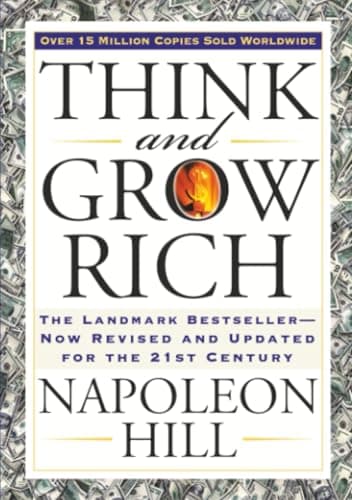
Think and Grow Rich
Napoleon Hill
Think and Grow Rich
The 1937 granddaddy of success books: desire, a definite plan and dogged persistence. Motivating and historically huge, but read it critically, it's mindset, not a money plan.
The Psychology of Money
Morgan Housel
The Psychology of Money
19 short stories on how people actually think and feel about money, not just the maths of it.
Atomic Habits
James Clear
Atomic Habits
Tiny changes, remarkable results. Clear shows how 1 percent improvements compound, and the same system that fixes your gym routine works on your saving habits too.
Some links above are affiliate links. If you buy through them, Snowball Invest may earn a small commission at no extra cost to you. We only recommend books we'd suggest anyway.
Sources
Was this article useful?
Put it to your own numbers
Every calculator runs entirely in your browser, with nothing stored. See what these numbers look like for your own situation.
Explore the calculators →General information only. This article is educational and does not constitute personal financial advice. It does not account for your circumstances. Consider your own situation and seek advice from a licensed adviser before acting. Read our full disclaimer.

Timothy Hirou Gaschereau
Founder of Snowball Invest, not a financial adviser.
I write about what I'm learning myself, because nobody ever taught us how to take control of our own money. It's a skill, not a mystery, and it's never too late to learn it. The best day to start was yesterday, the second best is today.
LinkedIn →Related articles

Atomic Habits Summary: The Four Laws, Explained Properly
The four laws of behaviour change, habit stacking, the two minute rule and identity based habits, distilled. Plus what each one looks like applied to your money.

Never Split the Difference Review: Does It Work in Australia?
Chris Voss's negotiation book is genuinely useful for pay rises, rent and car yards. The catch is that his most theatrical tactics land badly in an Australian room.

Rich Dad's Guide to Investing Review: Read It Critically
The reframe is genuinely useful: investing is a plan, not a product. The structures, the tax and the investor categories are American, and a lot of it does not cross the Pacific.