

Atomic Habits Review: Is James Clear's Book Worth It?
Our honest Atomic Habits review: what James Clear gets right, where it falls short, and how to apply the habit system to saving and investing as an Australian.
 By Timothy Hirou GaschereauPublished
 11 min read
Atomic Habits is one of the best-selling non-fiction books of the last decade, and it turns up in every "how do I actually stick to good habits" conversation going. It isn't a money book, but the framework maps onto saving and investing almost perfectly. Here's an honest review, plus exactly how to apply it to your finances. It's part of our personal finance book reviews on Snowball Invest.
Quick answer
A genuinely useful framework for building better routines. It's not a science textbook, it does repeat itself, and it won't tell you anything about money specifically. But if you're new to habit science or struggling to make good financial behaviours stick, it's one of the most practical reads you'll find. Our rating: 4 out of 5.
Want to read Atomic Habits?
The clearest playbook for making good habits automatic, including your money habits. A few hours very well spent.
In this guide
- →What the book is actually about: the four laws, habit stacking and identity
- →Genuine strengths and the real criticisms, side by side
- →Who it's for, and who should skip it
- →What critics and readers say, on Goodreads and Reddit
- →The money angle: how to apply the habit system to saving and investing
📖 What is Atomic Habits about?
The core argument is simple: you don't rise to the level of your goals, you fall to the level of your systems. Lasting change comes from better daily processes, not from chasing bigger outcomes. The book is built around four laws of behaviour change, mapped to the habit loop of cue, craving, response and reward. If you want those four laws set out in full rather than judged, read our Atomic Habits summary.
| To build a good habit | To break a bad one |
|---|---|
| Make it obvious (clear cue) | Make it invisible (hide the cue) |
| Make it attractive | Make it unattractive |
| Make it easy (low friction) | Make it difficult (add friction) |
| Make it satisfying | Make it unsatisfying |
Around those laws sit the book's most quoted ideas: habit stacking ("after I do X, I will do Y"), identity-based habits (shift who you believe you are, not just what you want, so "I am someone who invests every month" beats "I want to save more"), the two-minute rule (scale a new habit down until it takes under two minutes), and the 1% better concept (small improvements compound). The one-sentence summary: small, consistent behaviours compound into remarkable results when you design your environment and identity to support them.
⚖️ Strengths and weaknesses
A lot holds up, and a few things genuinely don't. Being honest about both is the point.
What it gets right
- ✓Identity-based framing (tie behaviour to who you are) is one of the more durable ideas in pop psychology.
- ✓Environment design is practical, evidence-backed and underused by most people.
- ✓Habit stacking is simple, memorable and it works.
- ✓The two-minute rule removes the 'starting is the hardest part' problem.
- ✓Systems over goals is a genuinely useful reframe for chronic goal-setters.
- ✓Almost every chapter ends with something you can actually try today.
Where it falls short
- ✕It's not a money book: the examples are mostly sport, health and productivity.
- ✕It repeats itself, the core ideas could fit in a long essay ('could've been a blog post').
- ✕It repackages earlier research (Duhigg's The Power of Habit) without always crediting the lineage.
- ✕The '1% better' curve is a metaphor, not science, real change is non-linear.
- ✕Some critics call it pseudoscientific, presenting motivational framing as rigorous science.
- ✕The model assumes a stable, low-stress life, and can feel thin for people under real stress.
👤 Who should read it, and who can skip it?
Read it if you
- ✓Are new to habit science and want a clear, practical starting framework.
- ✓Set goals but struggle to build the daily routines that support them.
- ✓Are early in your money journey and want good financial behaviours to become automatic.
- ✓Like accessible non-fiction that gives you something to act on immediately.
Skip it if you
- ✕Are already across Duhigg's The Power of Habit or BJ Fogg's Tiny Habits, you'll recognise most of it.
- ✕Want a book specifically about money, investing or financial planning.
- ✕Need deep psychological nuance around behaviour change, the model is intentionally simple.
🔍 What do critics say about Atomic Habits?
The critical reception is genuinely mixed, and it's worth knowing what the sceptics argue. The Guardian ran a piece describing the book as pseudoscientific, arguing it presents feel-good philosophy as settled science. The If Books Could Kill podcast argued it repackages familiar self-help ideas with a science-y coat of paint and that the 1% concept is oversimplified. Behavioural scientist Dr Gina Cleo has written specifically about what it gets wrong: the 1% framing is a metaphor not a literal description, real change is non-linear, and the popular "21 days to form a habit" idea is a myth (research puts it anywhere from 18 to 254 days). None of these critics say the book is worthless. The consistent thread: it's more useful as a practical guide than as a scientific text, and its popularity has outrun its rigour.
💬 What do readers say? Goodreads and Reddit
On Goodreads the book has around 1.4 million ratings at 4.31 out of 5, with 51% five stars, a remarkably positive distribution for a book this widely read. Common praise: practical and immediately actionable, and the identity-based framing resonates ("every action is a vote for the type of person you wish to become").
The recurring criticism, on both Goodreads and Reddit, is repetition: "could have been a blog post" shows up often enough to be a pattern. The honest read: genuinely useful for beginners, less so for people already deep in the habit and behavioural-economics literature.
💸 The money angle: applying Atomic Habits to your finances
The book never talks about money directly, but the framework maps onto personal finance almost perfectly. Here's how to use it as an Australian trying to build better money habits.
- Make it easy, automate your savings. Set up an automatic transfer to savings or investments on payday, before you can spend it. That's willpower removed and friction taken to zero.
- Identity-based investing. Swap "I want to invest more" for "I am someone who invests every month." If you haven't actually started yet, our guide to getting started is the obvious first step. A small recurring contribution is a vote for that identity, and consistency matters more than the amount early on.
- Habit-stack your money check. "After I make my Sunday coffee, I'll review my accounts and spending for the week." You borrow the cue from a habit that's already automatic. It's also a good moment to revisit your financial goals and check you're still on track.
- Make good habits obvious. Put a simple net worth or savings tracker somewhere you'll actually see it. Out of sight is out of mind with money.
- Apply 1% better to your savings rate. Nudging your savings rate up a percentage point every few months is far more sustainable than a dramatic cut you abandon in a fortnight.
- Make bad money habits difficult. Delete saved card details, move money to an account that takes a day to transfer back, or put a 24-hour rule on any purchase over a set amount.
If you want a ready-made version of that "make it easy" idea, our 52-week savings challenge is a habit you can start this week.
💰 The verdict
Atomic Habits is a good book, not a great one and not a science textbook, but a genuinely useful guide to building better daily systems. The four laws are memorable, the identity-based framing is one of the more durable ideas in popular non-fiction, and the practical tools hold up in real life. The weaknesses are real too: it's repetitive and it overstates the scientific precision of some claims. For a personal finance audience the value is indirect but genuine: it won't tell you where to put your money, but it'll help you build the routines that make good money decisions automatic. Our rating is 4 out of 5, and it's well worth the few hours if you're new to this space.
Want to read Atomic Habits?
Ready to make your good money habits automatic? Grab a copy and start with the two-minute rule.
SnowLetter
Australia's money news and our best reads, once a week.
❓ Frequently asked questions
Is Atomic Habits worth reading?
+
For most people, yes. It's one of the clearest and most practical introductions to habit science available, and the framework is memorable and immediately applicable. If you're already across the habit literature you'll find it familiar, but if you're not, it's a strong starting point.
Is it good for beginners?
+
Absolutely. Clear writes accessibly and doesn't assume prior knowledge. The book is structured so you can start applying ideas from the first few chapters without finishing the whole thing first.
How long does it take to read?
+
The book is around 320 pages, so most people finish it in four to six hours. The audiobook runs about five and a half hours.
Is Atomic Habits relevant to Australians?
+
The principles are universal. The examples skew American (a lot of sport and corporate references), but the framework applies anywhere. The money angle in particular translates directly to Australian habits like automating super contributions, setting up regular ETF buys, or building a weekly budget review.
What's the difference between Atomic Habits and The Power of Habit?
+
Charles Duhigg's The Power of Habit focuses more on the neuroscience and psychology of the habit loop, with deep case studies. Atomic Habits is more prescriptive and practical, giving you a step-by-step framework for building and breaking habits. Duhigg explains why habits work; Clear focuses on how to change them.
Is Atomic Habits scientifically accurate?
+
Partly. The core habit-loop model, environment design and identity-based framing are well-supported. The weaker claims are the specifics: the '1% better' compounding model is a motivational metaphor, not a literal description of behaviour change, and the idea that habits form in a set number of days isn't supported by research. Best read as a practical guide, not a scientific text.
📚 Get the book (and two money-brain next reads)
Atomic Habits
James Clear
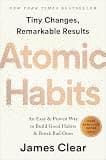
Atomic Habits
Tiny changes, remarkable results. Clear shows how 1 percent improvements compound, and the same system that fixes your gym routine works on your saving habits too.
The Psychology of Money
Morgan Housel
The Psychology of Money
19 short stories on how people actually think and feel about money, not just the maths of it.
The Barefoot Investor
Scott Pape
The Barefoot Investor
Australia's best-selling money book ever. A simple system for accounts, budgeting, debt and a real emergency fund in one.
Some links above are affiliate links. If you buy through them, Snowball Invest may earn a small commission at no extra cost to you. We only recommend books we'd suggest anyway.
Sources
Was this article useful?
Put it to your own numbers
Every calculator runs entirely in your browser, with nothing stored. See what these numbers look like for your own situation.
Explore the calculators →General information only. This article is educational and does not constitute personal financial advice. It does not account for your circumstances. Consider your own situation and seek advice from a licensed adviser before acting. Read our full disclaimer.

Timothy Hirou Gaschereau
Founder of Snowball Invest, not a financial adviser.
I write about what I'm learning myself, because nobody ever taught us how to take control of our own money. It's a skill, not a mystery, and it's never too late to learn it. The best day to start was yesterday, the second best is today.
LinkedIn →Related articles

Atomic Habits Summary: The Four Laws, Explained Properly
The four laws of behaviour change, habit stacking, the two minute rule and identity based habits, distilled. Plus what each one looks like applied to your money.

Never Split the Difference Review: Does It Work in Australia?
Chris Voss's negotiation book is genuinely useful for pay rises, rent and car yards. The catch is that his most theatrical tactics land badly in an Australian room.

Rich Dad's Guide to Investing Review: Read It Critically
The reframe is genuinely useful: investing is a plan, not a product. The structures, the tax and the investor categories are American, and a lot of it does not cross the Pacific.