

Rich Dad's Guide to Investing Review: Read It Critically
The reframe is genuinely useful: investing is a plan, not a product. The structures, the tax and the investor categories are American, and a lot of it does not cross the Pacific.
 By Timothy Hirou GaschereauPublished
 11 min read
This is the third major book in the Rich Dad series, sitting after Rich Dad Poor Dad and Cashflow Quadrant. It promises to show how the wealthy actually invest rather than merely what they invest in. If you have read the first two and you are wondering whether this one adds anything, that is precisely the right question.
General information only, not personal financial, tax or legal advice. Consider your own circumstances and seek licensed advice before acting.
Quick answer
One genuinely useful idea, buried under repetition and self promotion. Investing is a plan you build, not a product you pick, and that reframe is worth having. But the structures, the investor categories and the tax assumptions are all American, and the strategies assume capital and deal access most readers do not have. Read it for the mindset, not the method.
Want to read Rich Dad's Guide to Investing?
Worth owning if you already liked the first two and want the investing philosophy. Read it with a sceptical pen in hand.
In this guide
- →The one idea that justifies the book
- →Why it repeats the earlier titles more than it admits
- →What transfers to Australia and what plainly does not
- →Who it suits, and who should spend the time elsewhere
📖 What the book is actually about
The central argument is that investing is not a thing you buy. It is a plan. Kiyosaki spends a great deal of time on that distinction, and it is the most valuable thing in the book.
Around it he builds a hierarchy of investors. At the base, people investing as employees, putting money into products chosen by someone else. Above them, business owner investors who build or buy businesses and use the income to acquire more assets. At the top, those he calls sophisticated or inside investors, who create investments rather than buying into existing ones.
He also leans on the American concept of the accredited investor, a regulatory status tied to income or net worth thresholds set by the US Securities and Exchange Commission. His point is that accreditation is a legal floor, and that real sophistication comes from education and experience rather than a number on a balance sheet.
The practical focus is on building or acquiring businesses and income producing assets, chiefly property and private deals. It is not a guide to picking shares or funds, and if that is what you came for, this is the wrong book.
⚖️ Strengths and weaknesses
What it gets right
- ✓The mindset shift is real. Assets put money in your pocket, liabilities take it out, and that reframe genuinely changes how some readers read their own balance sheet.
- ✓Treating investing as a written plan rather than a series of product purchases is underrated advice, and most people do the opposite.
- ✓The business-first framing is missing from almost every other book in the genre, and it is a legitimate way to think about building wealth.
Where it falls short
- ✕Heavy repetition. If you have read the first two books you will recognise large stretches of this one, and you will work to find what is new.
- ✕Anecdote presented as evidence. Unnamed people, unnamed deals, unnamed markets. That is illustration, not proof, and the difference matters.
- ✕Persistent self promotion toward seminars, courses and games, which makes parts of it function as a marketing document.
- ✕The strategies assume capital and deal access most readers do not have, and the book never really admits that gap.
- ✕The investor hierarchy flatters. It is built so readers want to place themselves near the top, which can encourage risk they are not equipped for.
🎯 Who should read it
Read it if you have already worked through the earlier books, you are seriously considering starting or buying a business, and you want a way to think about investing as an active, planned activity. It works as a mindset book.
Skip it if you are starting out, if you have not read the earlier titles, or if you want steps you can act on this month. You will find it frustratingly abstract, and something built for Australian conditions will serve you better.
📰 What critics say
Kiyosaki is among the most polarising figures in personal finance and the reception reflects that. Journalists and consumer advocates have repeatedly questioned how verifiable his claimed results are. The stories are compelling and largely impossible to check.
A second criticism is structural: the book is long on philosophy and short on detail, so you finish it understanding how Kiyosaki thinks without knowing what to do on Monday. A third is that it operates partly as a sales funnel toward paid products.
There is also his own record. One of his companies sought bankruptcy protection after a court ordered it to pay a substantial sum in a business dispute. Critics find that awkward for someone selling wealth building advice. Kiyosaki has answered publicly, arguing that using corporate structures to limit personal liability is itself a Rich Dad lesson. Make of that what you will.
💬 What readers say
The praise clusters tightly: it changed how people think about money, the assets and liabilities distinction finally landed, and it prompted them to be more deliberate about the future. For readers meeting these ideas for the first time, the effect is real.
The complaints cluster just as tightly. Too vague to act on. Too repetitive if you have read the series. Reads like an advertisement for the author’s other products. And, most tellingly, readers in ordinary situations, salaried with a mortgage and some savings, report that the strategies bear little resemblance to their actual lives.
🇦🇺 How much of it applies in Australia?
This is the part that decides whether the book is useful to you here.
What transfers. The assets and liabilities framing is universal: something that generates income is an asset anywhere. Treating investing as a deliberate written plan rather than a sequence of purchases is sound regardless of jurisdiction. And the idea that building a business counts as an investing strategy applies here as much as anywhere.
What does not. This is the longer list, and it matters.
- Entity structures. He recommends American vehicles that simply do not exist here. Australia has its own structures with their own rules, costs and tax consequences. Do not assume a mapping exists.
- Investor categories. The accredited investor concept is a US regulatory category. Australia defines wholesale and sophisticated investors differently, under different law, with different thresholds and consequences.
- Tax treatment. Every tax assumption in the book is built on the US code. Something efficient there may be inefficient here, or unavailable entirely.
- The deals themselves. The property and private deal examples come from American markets, with American pricing, financing and legal frameworks.
The working rule for an Australian reader: if something in this book sounds like a tax strategy or a legal structure, treat it as a question to ask rather than an answer to act on. Check it against Australian rules first. Our guide to building a simple portfolio is a more useful starting point if you want something you can actually do here.
🏁 The verdict
The most ambitious book in the series and also the most frustrating. It makes a genuinely useful argument, then buries it under repetition, self promotion, and strategies that assume a starting position most readers do not occupy. For Australians, a significant portion needs translation before it is usable, and some of it does not translate at all.
Read it for the mindset, not the method, and read it knowing exactly who is doing the telling.
Want to read Rich Dad's Guide to Investing?
If the plan-not-product idea is what you are after, this is where he argues it at length.
❓ Frequently asked questions
Is it suitable for beginners?+
Not as a first book. Kiyosaki assumes you already know his assets versus liabilities framework and the Cashflow Quadrant, so without that background parts of it read as abstract. Start with Rich Dad Poor Dad, then come back if you want the investing philosophy, and pair it with something grounded in Australian conditions.
How does it compare to Rich Dad Poor Dad?+
Rich Dad Poor Dad introduces the framework. This one tries to apply it to investing specifically, with more on business structures and investor types. In practice a lot is repeated. If the first book changed how you think, this will feel familiar. If it left you wanting concrete steps, this one will disappoint you for the same reason.
Does the advice work in Australia?+
Partly. The mindset ideas travel: investing as a plan, the assets versus liabilities distinction, treating a business as an investing strategy. The specifics do not, because the entity structures, the investor categories and the tax treatment are all American. Check anything structural or tax related against Australian rules before acting on it.
Is Kiyosaki a credible source?+
He is genuinely influential and some of his frameworks are useful. He is also polarising: critics question how verifiable his claimed results are, one of his companies sought bankruptcy protection, and the books function partly as a funnel toward paid seminars and products. Engage with the ideas critically rather than taking them wholesale.
What is the single main takeaway?+
That investing is a plan rather than a product. Most people invest reactively, picking whatever performed well recently. Kiyosaki argues for deciding your goal first and building deliberately toward it, ideally around an asset or business you understand properly. That idea survives the book's weaknesses.
Should I read it if I just want to buy ETFs?+
Probably not. This book is about building and buying businesses and private deals, not about selecting listed funds. If a simple, low cost portfolio is what you are after, your time is better spent elsewhere and the strategies here will not match the situation you are in.
🔗 Sources
📚 Recommended reading
Rich Dad's Guide to Investing
Robert T. Kiyosaki
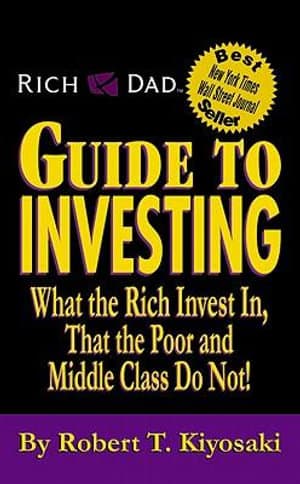
Rich Dad's Guide to Investing
The third Rich Dad book, arguing that investing is a plan you build rather than a product you pick. Worth reading for that reframe, and worth reading critically: the structures and tax assumptions are American, and the strategies assume capital most readers do not have.
Rich Dad Poor Dad
Robert Kiyosaki
Rich Dad Poor Dad
The book that got millions of people thinking differently about assets, income and building wealth.
Rich Dad's Cashflow Quadrant
Robert Kiyosaki
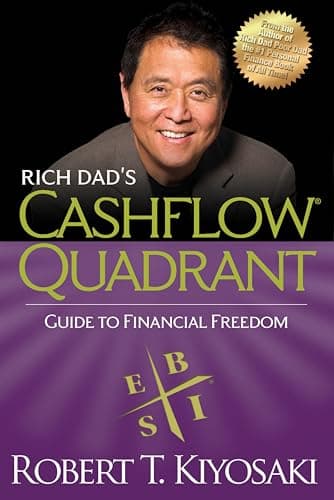
Rich Dad's Cashflow Quadrant
The Rich Dad Poor Dad follow-up built around the E-S-B-I quadrant: the four ways people earn, and why real freedom lives on the business-and-investor side. A useful mental model, read critically.
Some links above are affiliate links. If you buy through them, Snowball Invest may earn a small commission at no extra cost to you. We only recommend books we'd suggest anyway.
SnowLetter
Australia's money news and our best reads, once a week.
Was this article useful?
Put it to your own numbers
Every calculator runs entirely in your browser, with nothing stored. See what these numbers look like for your own situation.
Explore the calculators →General information only. This article is educational and does not constitute personal financial advice. It does not account for your circumstances. Consider your own situation and seek advice from a licensed adviser before acting. Read our full disclaimer.

Timothy Hirou Gaschereau
Founder of Snowball Invest, not a financial adviser.
I write about what I'm learning myself, because nobody ever taught us how to take control of our own money. It's a skill, not a mystery, and it's never too late to learn it. The best day to start was yesterday, the second best is today.
LinkedIn →Related articles

Atomic Habits Summary: The Four Laws, Explained Properly
The four laws of behaviour change, habit stacking, the two minute rule and identity based habits, distilled. Plus what each one looks like applied to your money.

Never Split the Difference Review: Does It Work in Australia?
Chris Voss's negotiation book is genuinely useful for pay rises, rent and car yards. The catch is that his most theatrical tactics land badly in an Australian room.

The Big Short Review: What It Teaches an Australian Reader
Michael Lewis on the people who saw it coming. Read for the incentives, the complexity that hid the risk, and what happens when everyone agrees prices cannot fall.