

The Big Short Review: What It Teaches an Australian Reader
Michael Lewis on the people who saw it coming. Read for the incentives, the complexity that hid the risk, and what happens when everyone agrees prices cannot fall.
 By Timothy Hirou GaschereauPublished
 11 min read
Michael Lewis published this in 2010 and it has aged better than most finance books, largely because it is not really a post mortem. It is a story about a handful of awkward, stubborn people who worked out years early that the American housing market was built on something untrue, bet against it, and turned out to be right while everyone else paid for it.
General information only, not personal financial advice. Nothing here is a comment on current conditions in any market. Consider your own circumstances.
Quick answer
Worth reading, and not for the reason people assume. It will teach you nothing about picking investments. What it will do is permanently change how you read a financial product you cannot explain in plain English, and how you treat an asset class everyone agrees can only go one way.
Want to read The Big Short?
The most readable book ever written about a financial disaster. Worth owning, and worth lending out.
In this guide
- →What subprime, CDOs and credit default swaps actually were
- →Why the storytelling works and where the book runs thin
- →The three mechanisms that transfer to any market
- →Why it will not help you pick a single investment
📖 What the book is actually about
The setting is the American subprime mortgage collapse. Subprime simply means lending to borrowers with poor credit histories, people who in a more careful system would not have qualified. Through the early 2000s American lenders wrote these loans at enormous scale, then bundled thousands of them into a single tradeable product.
Those bundles were then sliced and recombined into what were effectively bundles of bundles. Ratings agencies marked much of the result as low risk. The structure was opaque enough that almost nobody, including the people selling it, could say with confidence what was inside.
The instrument Lewis’s characters use to bet against all this works rather like insurance: you pay a regular premium, and if the underlying bonds fail, you collect. They bought that protection on mortgage bonds they were convinced would collapse, and they were right.
None of this is delivered as an economics lecture. It arrives through people: a fund manager who read the actual loan documents when nobody else would, an analyst who could not contain his fury at what he was finding, and two men running a tiny fund who stumbled into one of the largest trades in financial history.
⚖️ Strengths and weaknesses
What it does well
- ✓The storytelling is genuinely gripping, and you understand the crisis through people rather than through charts.
- ✓It makes genuinely complex instruments readable by letting you learn as the characters learn.
- ✓The characters are not heroes. Lewis is clear that their profit came directly from other people's ruin.
- ✓The structural insight is the lasting part: everyone in the chain was paid to keep it moving, nobody was paid to ask if the loans would be repaid.
Where it falls short
- ✕It is almost entirely American, and barely touches how the damage spread elsewhere.
- ✕The attention is unevenly distributed. Two characters are richly drawn, others who mattered get very little.
- ✕The ending is abrupt. The aftermath, the bailouts and what actually changed are compressed into very few pages.
- ✕A few passages on the more synthetic products stay dense however hard Lewis works at them.
🎯 Who should read it
Read it if you want to understand how a crisis gets built rather than merely how it detonates, if you are interested in incentives and systemic risk, or if you liked the film and want the fuller version.
Leave it if you want something Australian and practical, if you are after a how to on building wealth, or if you want a complete history of 2008 rather than one very good slice of it.
📰 What critics say
The critical reception has been strong and remarkably consistent: this is widely regarded as one of the best pieces of financial journalism written for a general audience, precisely because it makes the instruments comprehensible without hollowing them out.
The substantive criticism is about scope. By building the story around a small group of contrarians who got it right, Lewis explains one corner of the crisis extremely well and leaves the rest comparatively unexamined. The regulatory failures and the political decisions that let the machine run receive far less attention than the personalities. That is fair. It is an excellent book about part of the story, not the definitive account of all of it.
💬 What readers say
Ordinary readers tend to land somewhere between fascinated and furious. The most common reaction is that it is gripping, that it made them angry, and that it is the first finance book they actually finished.
The complaints repeat too. Some find the detail hard going despite Lewis’s efforts. A number think the film explains the instruments more clearly. And many wanted more on what happened afterwards: who faced consequences, what was reformed, and whether any of it changed behaviour.
🇦🇺 What an Australian reader takes from it
The honest answer is: more than you would expect, but not in the ways the book describes. Every instrument in it is a product of a particular American regulatory moment. Three mechanisms underneath them are not.
Lending standards follow incentives. When the people writing loans are paid on volume and can sell the loan onward immediately, the incentive to check whether the borrower can repay simply evaporates. Lewis documents that process in granular detail, and the logic holds wherever volume incentives dominate.
Complexity is sometimes the point. The opacity was not purely accidental. When a product is complicated enough, everyone in the chain can plausibly claim not to have understood it, and responsibility becomes almost impossible to assign. Worth remembering whenever you meet a financial product you cannot explain in a sentence.
Consensus plus borrowed money is the dangerous combination. What is striking is how many intelligent, well resourced people were completely wrong, not through stupidity but because the asset class had behaved one way for long enough that questioning it looked eccentric. Lewis’s characters were mocked and pressured to close their positions for years before being proved right.
None of that is a claim about current conditions in any particular market, here or anywhere else. It is a way of thinking, which is the most a book like this can honestly offer. If you want something you can actually act on, building a simple portfolio is the better use of an afternoon.
🏁 The verdict
Essential if you want to understand how these things get built rather than merely how they end. It will not teach you to pick an investment, manage a portfolio or think about your super. It will permanently change how you read financial institutions, incentive structures, and the distance between what a complex product claims to be and what it is.
Read it alongside something practical and you get the best of both.
Want to read The Big Short?
If the mechanics of how it all got built is what interests you, this is the one to read.
❓ Frequently asked questions
Do I need a finance background to follow it?+
No. Lewis writes for a general reader and explains the instruments as he goes, largely by letting you learn alongside characters who are working it out themselves. A few passages on synthetic products are genuinely dense and you may reread them, but the narrative carries you through.
Is the film as good as the book?+
Different rather than better. The film is funnier and faster, and its direct to camera explanations make the instruments unusually accessible. The book gives you more of the characters, more of the mechanics, and a much stronger sense of the slow build before anything broke. Either order works.
What is the main lesson?+
That incentives matter more than individual ethics. The crisis was not built by a few people deciding to be villains. It was built by a chain in which everyone was paid to keep it moving and nobody was paid to ask whether the underlying loans would be repaid. That is a more useful lens than looking for someone to blame.
Does it say anything about Australian housing?+
Nothing at all. It is entirely about the United States. What travels is the mechanism: how lending standards loosen when originators are paid on volume and can sell the loan on, and how complexity makes responsibility hard to assign. Treat it as a framework rather than a forecast about any particular market.
Will it teach me how to invest?+
No, and it does not try. There is no portfolio advice here, no guidance on funds or super, nothing you can act on this month. What it changes is how you read financial news and how you react to a product you cannot explain in plain English. Pair it with something practical.
Is it still relevant so long after the crisis?+
The specific instruments are of their moment. The behaviour is not. Packaging risk until nobody can see it, and treating an asset class as a one way bet because it has been one for a while, are recurring patterns rather than historical curiosities.
🔗 Sources
📚 Recommended reading
The Big Short
Michael Lewis
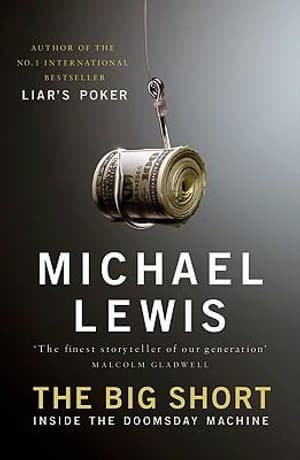
The Big Short
The story of the handful of people who saw the US housing collapse coming and bet against it. Read it for what it teaches about incentives, complexity hiding risk, and the danger of everyone agreeing that prices cannot fall.
Misbehaving
Richard H. Thaler
Misbehaving
Nobel winner Richard Thaler shows why real humans are messy, emotional money-spenders, not the cool robots economics assumes. Understanding your own bias is the first step to calmer decisions with your cash and your super.
One Up On Wall Street
Peter Lynch
One Up On Wall Street
Peter Lynch ran one of the greatest funds ever, and his big idea is simple: invest in what you actually understand from everyday life. A timeless nudge to do your homework before you buy a single share.
Some links above are affiliate links. If you buy through them, Snowball Invest may earn a small commission at no extra cost to you. We only recommend books we'd suggest anyway.
SnowLetter
Australia's money news and our best reads, once a week.
Was this article useful?
Put it to your own numbers
Every calculator runs entirely in your browser, with nothing stored. See what these numbers look like for your own situation.
Explore the calculators →General information only. This article is educational and does not constitute personal financial advice. It does not account for your circumstances. Consider your own situation and seek advice from a licensed adviser before acting. Read our full disclaimer.

Timothy Hirou Gaschereau
Founder of Snowball Invest, not a financial adviser.
I write about what I'm learning myself, because nobody ever taught us how to take control of our own money. It's a skill, not a mystery, and it's never too late to learn it. The best day to start was yesterday, the second best is today.
LinkedIn →Related articles

Rich Dad's Guide to Investing Review: Read It Critically
The reframe is genuinely useful: investing is a plan, not a product. The structures, the tax and the investor categories are American, and a lot of it does not cross the Pacific.

Atomic Habits Summary: The Four Laws, Explained Properly
The four laws of behaviour change, habit stacking, the two minute rule and identity based habits, distilled. Plus what each one looks like applied to your money.

Never Split the Difference Review: Does It Work in Australia?
Chris Voss's negotiation book is genuinely useful for pay rises, rent and car yards. The catch is that his most theatrical tactics land badly in an Australian room.