

Never Split the Difference Review: Does It Work in Australia?
Chris Voss's negotiation book is genuinely useful for pay rises, rent and car yards. The catch is that his most theatrical tactics land badly in an Australian room.
 By Timothy Hirou GaschereauPublished
 10 min read
Chris Voss spent years as the FBI’s lead international kidnapping negotiator, which is either the best possible credential for a negotiation book or a warning that the stakes in his examples have nothing to do with yours. Both, as it turns out. If you have ever fumbled a pay conversation or driven off a car yard feeling faintly robbed, this book is aimed squarely at you.
General information only, not personal financial, legal or employment advice. Consider your own circumstances.
Quick answer
A genuinely useful book with one caveat for Australian readers. The empathy based tools, labelling, open questions, actually listening, work here and work well. The theatrical American moves do not. Take the logic, leave the performance, and it will earn its place on your shelf.
Want to read Never Split the Difference?
The negotiation book worth owning if you ever discuss money with another human. Keep the method, drop the theatre.
In this guide
- →The method in plain English, without the FBI packaging
- →Where it genuinely helps and where it grates
- →Pay rises, rent and car yards, specifically
- →Why tall poppy syndrome changes how you should use it
📖 What the book is actually about
The title is the argument. Voss rejects the idea that a good negotiation ends in the middle, because splitting the difference usually means both sides walk away with something neither wanted. What he offers instead is a set of tools for understanding what the other person actually needs and fears.
- Tactical empathy. Understand their position and show that you have. Not because you agree, but because people who feel understood become far easier to deal with.
- Mirroring. Repeat their last few words. It sounds too simple to work, and it keeps people talking, often past the point they meant to stop.
- Labelling. Name the emotion in the room. “It sounds like the timing is the problem here.” Tension drops when someone says the quiet thing out loud.
- Calibrated questions. Ask how and what rather than yes or no. It hands the problem back without aggression.
- The accusation audit. Say the negative thing they are thinking before they do, and it loses most of its force.
- No as a starting point. Voss treats a no as the beginning of the real conversation, on the basis that people relax once they feel able to refuse.
Underneath all of it sits one claim: people are emotional first and rational second, and a method that assumes otherwise will keep failing in ways you cannot explain.
⚖️ Strengths and weaknesses
What it gets right
- ✓It is readable, which most negotiation books are not. The ideas stick because the stories carry them.
- ✓The techniques are concrete. You get actual phrasing, not an instruction to communicate better.
- ✓It reframes conflict as an emotional problem rather than a factual one, and that reframe is hard to unsee.
- ✓It works outside work. A flatmate, a service charge, a difficult relative: the tools travel.
Where it falls short
- ✕The FBI framing is oversold. The distance between a kidnapping and a rent renewal is enormous, and the book rarely admits it.
- ✕Used clumsily, several techniques feel like a script being run on someone. In close relationships, people notice.
- ✕It is almost entirely anecdotal. If you want research rather than practitioner stories, this is not that book.
- ✕The frame is adversarial. Fine at a car yard, less useful when the other person's outcome genuinely matters to you.
🎯 Who should read it
Read it if you negotiate anything with any regularity, and especially if you suspect you fold too early. The people who get the most from it are the ones who go quiet when someone pushes back.
Skip it if you want a collaborative framework where both sides genuinely win, in which case Getting to Yes is the better fit. Skip it too if anecdote heavy writing irritates you, because there is a great deal of and then I said, and then they said.
📰 What critics say
Reception has been warm without being uncritical. The common view is that it is entertaining, practical, and a real improvement on older frameworks that assumed people behave rationally. The recurring reservation is the one you would expect: the hostage context is so extreme that readers struggle to trust the tools will hold up in ordinary rooms. A secondary complaint is length, since the core ideas arrive early and then circulate.
💬 What readers say
The praise is remarkably consistent on one point: it made people better listeners, not better talkers, and many say that shift alone justified the read. Readers also report trying mirroring or labelling within days and being slightly startled that it worked, which says something about how low the barrier to entry is.
The complaints are equally consistent. Too many FBI stories. Repetitive by the halfway mark. And, from the people who tried it on their partner rather than their landlord, the uncomfortable discovery that it can read as a technique being deployed rather than a conversation being had.
🇦🇺 Does it work in an Australian room?
This is the section that decides whether the book is worth your time here, because it was written by an American for American workplaces.
A pay rise. The calibrated question is the most useful thing in the book for this. Rather than stating that you want more, ask what would need to change for the role to be paid at the next level. That turns a demand into a plan. Labelling helps too: naming the budget constraint out loud acknowledges reality without conceding anything. None of it substitutes for arriving with evidence of what you have actually delivered.
Rent or a lease renewal. Mirroring and labelling do the work here. A property manager who feels heard is far more workable than one who feels ambushed, and asking what a workable arrangement looks like from their side often surfaces flexibility that was never advertised.
A car yard. You are negotiating against a trained professional, so structure matters more than charm. Know your walk away number before you arrive and hold it. This is where the book’s more mechanical advice earns its keep.
A dispute with a provider. The accusation audit is well suited to this. Acknowledging the constraints the person on the phone is working under, before you make your ask, costs you nothing and changes the temperature. Knowing your consumer rights first changes it more.
The cultural catch, and it is a real one. Hard edged American self advocacy tends to be read here as arrogance rather than confidence. The good news is that Voss’s best tools are not aggressive at all, they are the opposite, and used well they make you look thoughtful. It is the performance, the dramatic pause and the extreme opening number, that lands badly. Keep the method, drop the theatre.
🏁 The verdict
Worth reading, and worth keeping. It is not the only negotiation book you will ever need and it is longer than it needs to be, but if you have never thought seriously about how you handle these conversations, it is the best place to start. Go back to the chapters on calibrated questions and labelling before anything difficult.
Just do not walk into your next performance review talking like you are defusing something.
Want to read Never Split the Difference?
Got a pay conversation or a lease renewal coming up? Worth reading the calibrated questions chapter first.
❓ Frequently asked questions
Is it worth reading if you are not in sales?+
Yes, and that is rather the point. The book is about any situation where two people want different things, which covers pay conversations, rent renewals, a disputed invoice and most awkward family discussions. You do not need to sell anything professionally to get value from it.
Do the techniques work in Australian workplaces?+
The empathy based ones do, because they read as thoughtful rather than pushy. Labelling what you sense, asking open questions, letting silence sit. The more theatrical American moves land worse here, where visible self promotion tends to be read as arrogance rather than confidence. Keep the logic, soften the delivery.
Is it manipulative?+
It can be, and that is the fairest criticism of it. Mirroring and labelling used clumsily feel like a script being run on someone, and people notice, particularly people who know you well. Used as a way to actually understand the other side rather than to steer them, it is just good listening with names attached.
How is it different from Getting to Yes?+
Getting to Yes is built around finding a solution that works for both sides. Voss argues that compromise usually leaves both parties worse off, and focuses on understanding the other person well enough to get what you want. If your goal is a long partnership, the collaborative framing may suit you better.
Can I use this for a pay rise conversation?+
It is one of the best applications. Asking what would need to change for the role to be paid at the next level opens a discussion, where announcing that you want more money closes one. Just bring evidence of what you have contributed, because no phrasing rescues an unprepared case.
Is it useful for buying a car or renting?+
Yes, and possibly more than at work, because those are one off negotiations with a professional on the other side. Knowing your walk away number before you arrive, and being willing to let a silence sit, does more than any particular phrase.
🔗 Sources
📚 Recommended reading
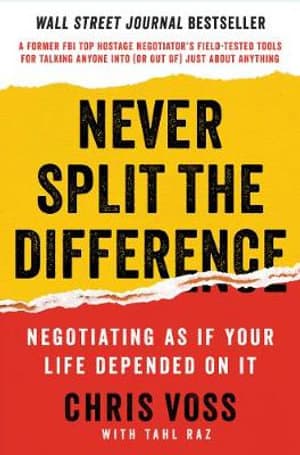
Never Split the Difference
Chris Voss with Tahl Raz
Never Split the Difference
An FBI hostage negotiator argues that meeting in the middle leaves both sides worse off. The tools are surprisingly useful for a pay conversation, a lease renewal or a car yard, as long as you keep the method and drop the theatre.
Thinking, Fast and Slow
Daniel Kahneman
Thinking, Fast and Slow
The Nobel laureate's classic on the two systems driving how we think, and why our fast, intuitive brain makes such expensive money mistakes. It explains the behavioural traps behind nearly every bad investing decision.
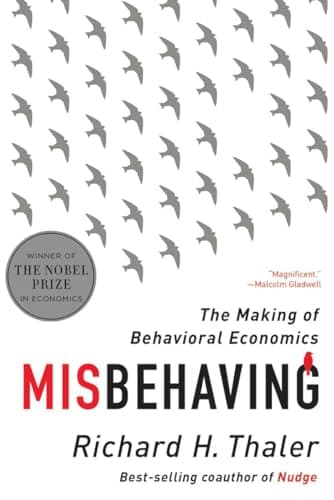
Misbehaving
Richard H. Thaler
Misbehaving
Nobel winner Richard Thaler shows why real humans are messy, emotional money-spenders, not the cool robots economics assumes. Understanding your own bias is the first step to calmer decisions with your cash and your super.
Some links above are affiliate links. If you buy through them, Snowball Invest may earn a small commission at no extra cost to you. We only recommend books we'd suggest anyway.
SnowLetter
Australia's money news and our best reads, once a week.
Was this article useful?
Put it to your own numbers
Every calculator runs entirely in your browser, with nothing stored. See what these numbers look like for your own situation.
Explore the calculators →General information only. This article is educational and does not constitute personal financial advice. It does not account for your circumstances. Consider your own situation and seek advice from a licensed adviser before acting. Read our full disclaimer.

Timothy Hirou Gaschereau
Founder of Snowball Invest, not a financial adviser.
I write about what I'm learning myself, because nobody ever taught us how to take control of our own money. It's a skill, not a mystery, and it's never too late to learn it. The best day to start was yesterday, the second best is today.
LinkedIn →Related articles

Atomic Habits Summary: The Four Laws, Explained Properly
The four laws of behaviour change, habit stacking, the two minute rule and identity based habits, distilled. Plus what each one looks like applied to your money.

Rich Dad's Guide to Investing Review: Read It Critically
The reframe is genuinely useful: investing is a plan, not a product. The structures, the tax and the investor categories are American, and a lot of it does not cross the Pacific.

The Compound Effect by Darren Hardy: An Honest Review
Our honest Compound Effect review for Australians: Darren Hardy's small-habits-compound idea, how it maps to super and index investing, and whether it's worth your time.