

The Compound Effect by Darren Hardy: An Honest Review
Our honest Compound Effect review for Australians: Darren Hardy's small-habits-compound idea, how it maps to super and index investing, and whether it's worth your time.
 By Timothy Hirou GaschereauPublished
 9 min read
Good idea, thin book. That's the short version. The Compound Effect has been circulating since 2010, showing up on every "must-read" list next to titles far more rigorous than it deserves to sit beside. The core principle is genuinely powerful, and it maps directly onto how wealth actually gets built in Australia. The book itself is more of a mixed bag. Here's the honest take, part of our personal finance book reviews on Snowball Invest.
Quick answer
A short, punchy motivational read built around one genuinely important idea: small, consistent choices compound into massive results over time. Best for people new to self-improvement or personal finance who need a kick-start. Skip it if you've already read Atomic Habits, want research-backed depth, or find hustle-culture messaging grating. Our rating: 3.5 out of 5.
Want to read The Compound Effect?
One powerful idea, delivered fast: small consistent actions compound into big outcomes. The mindset behind super and index investing, in a weekend read.
In this guide
- →What the book is about: compounding choices, habits and 'Big Mo'
- →The genuine strengths and the honest weaknesses
- →Who it's for, and who's already past it
- →What critics and Reddit readers say
- →The Australian angle: the same maths behind super and index investing
📖 What is The Compound Effect about?
Published in 2010, the book is Darren Hardy's distillation of success principles he gathered as publisher of SUCCESS magazine. He's open about his debt to Jim Rohn and the classic success literature, and that lineage shows: it's more motivational primer than original research. The central premise is simple and correct: small, seemingly insignificant choices, made consistently over time, compound into massive results, for better or worse. The same mechanism that grows a super balance also turns a small bad habit into a serious problem. The key ideas:
- Daily habits beat dramatic one-off moves. There's no magic moment, just daily choices, stacked.
- Track your behaviour. Spending, eating, habits. You can't improve what you don't measure.
- Momentum ("Big Mo"). Starting is the hard part; once you get going, keep going.
- Environment and associations matter. The people around you shape your outcomes more than you'd think.
- Take full personal responsibility. Your choices, your results, no blaming circumstances.
It's a short book, around 160 pages, readable in a sitting or two. That's both a strength and a limitation.
⚖️ Strengths and weaknesses
What it gets right
- ✓Genuinely motivating: Hardy writes with conviction, and the compounding principle lands hard the first time you meet it.
- ✓The central idea is directly applicable to money: save a little regularly, invest consistently, avoid lifestyle creep.
- ✓The tracking and habit advice is practical: log your behaviour, build awareness before change.
- ✓Short enough that you actually finish it, which is rarer than it should be in this genre.
Where it falls short
- ✕Not especially original: Hardy openly leans on Jim Rohn and classic success literature.
- ✕Motivational rather than analytical: anecdote and conviction, not evidence or behavioural science.
- ✕Repetitive: the same point hammered across chapters, when a long essay would do.
- ✕Self-promotional, with more than a few nods to Hardy's other products and brand.
- ✕If you've read Atomic Habits, James Clear covers this ground with far more depth and rigour.
👤 Who should read it, and who can skip it?
Read it if you
- ✓Are new to self-improvement or personal finance and want a quick, motivating entry point.
- ✓Haven't yet read Atomic Habits or similar habit-formation books.
- ✓Need a kick-start, not a deep dive, and want something you can finish on a weekend.
- ✓Are drawn to the idea of compounding applied to life choices, not just money.
You can probably skip it if you
- ✕Have already read Atomic Habits, The Power of Habit or similar titles.
- ✕Want research-backed content with evidence behind the claims.
- ✕Find hustle-culture messaging grating or reductive.
- ✕Are a seasoned self-help reader; this is entry-level material.
🔍 What do critics say?
The Compound Effect hasn't attracted much attention from mainstream literary critics. It's not that kind of book. It sits squarely in the airport-business-book genre, and that's where most of the reviewing happens: blogs, productivity forums and independent review sites. The general consensus among independent reviewers is that it's a clear, readable primer on habit formation built around a correct but not especially original idea. The criticism that surfaces most consistently: it repeats a simple concept across too many pages, Hardy's tone can read as self-congratulatory, and the self-promotional elements undercut the message. It's not a book that has won glowing critical praise. It sells well because the core idea resonates.
💬 What do readers say? Goodreads and Reddit
On Goodreads it holds a strong rating of around 4.2 out of 5 from tens of thousands of ratings, which is a strong score for a book that attracts genuine criticism. Readers praise the powerful, memorable core idea, the easy and motivating read, and the practical tracking advice. The criticism clusters on the same points we've raised: lack of originality, repetition, and a tone that some find self-promotional.
On Reddit (r/productivity, r/books) opinion is mixed. Plenty find it a useful basic habits framework, but a recurring point is that newer books, especially Atomic Habits, have made The Compound Effect feel dated and less essential. The high Goodreads score probably reflects its audience: readers new to self-improvement, for whom the core idea genuinely lands the first time.
🇦🇺 The Australian angle
Here's where the book becomes genuinely relevant for Australians, even though it contains zero Australian-specific content. The compounding principle is exactly what drives long-term wealth building here. Think about superannuation: every dollar you contribute today (through employer contributions, salary sacrificing or voluntary top-ups) earns returns, and those returns then earn returns. Over 20 or 30 years the maths becomes extraordinary. ASIC's MoneySmart calls compound interest "interest on interest", and it's the single most powerful force available to ordinary investors with time on their side. The same principle applies to low-cost index funds and diversified ETFs: dollar-cost averaging (putting in a regular fixed amount regardless of what markets are doing) is the compound effect in action. Hardy's message, translated to money:
- Small regular contributions beat waiting for a lump sum you may never have.
- Avoiding lifestyle creep is a compounding decision: the money you don't spend can be invested and grow.
- Consistency beats timing. Stopping contributions when markets wobble is the opposite of the compound effect.
- Track your spending, because you can't fix what you haven't measured.
The book won't tell you how to set up a super account or which ETF to buy (for that, do your own research, and for personalised guidance speak to a licensed adviser). If you want the more rigorous version of the habits argument, our Atomic Habits review is the natural next step, and for the money-mindset side, our Psychology of Money review pairs well. Nothing here is financial advice.
💰 The verdict
The Compound Effect is a decent book with a great idea at its centre. If you're new to thinking about habits, consistency and the long game, whether in life or money, it's worth the few hours it takes to read: the core principle is correct, the writing is accessible, and actually finishing it matters more than it sounds. If you're already across Atomic Habits or well-read in this space, you can safely skip it. For Australians in their 20s and 30s just starting to think seriously about wealth, the compound effect isn't only a self-help concept, it's the actual mechanism behind super growth, index fund returns, and the gap between people who start investing at 25 and those who start at 40. A fine introduction to that idea, as long as you don't expect it to be more than that. Our rating: 3.5 out of 5.
Want to read The Compound Effect?
Want the mindset behind long-term wealth in one weekend? Grab a copy, then put the idea to work in your super and investing.
SnowLetter
Australia's money news and our best reads, once a week.
❓ Frequently asked questions
Is The Compound Effect worth reading?
+
Yes, with conditions. If you're new to self-improvement or personal finance and haven't read Atomic Habits, it's worth a few hours: the core idea is powerful and directly applicable to money and habits. If you're a seasoned reader in this space, it's skippable.
How long does it take to read?
+
Most people finish it in two to four hours. At around 160 pages it's one of the shorter books in the self-help genre, comfortably a weekend read. That brevity is one of its genuine virtues.
Is it good for beginners?
+
Yes. It's one of the better entry points into the habits and personal development space precisely because it's short, clear and doesn't assume prior knowledge. Just know you'll want to graduate to more rigorous books from there.
What is the main message of The Compound Effect?
+
Small, consistent choices made daily over a long period compound into massive results. No shortcut, no magic moment, just daily decisions stacked over time. Good habits compound positively, bad ones compound negatively, and the same principle applies to money, health and career.
How does it relate to investing and personal finance?
+
Directly. The compounding Hardy describes is the same mechanism behind compound returns in super and share investing. Regular contributions, time in the market, and the discipline to stay consistent when markets wobble are all expressions of the compound effect. The book doesn't cover Australian vehicles, but the mindset it builds is foundational.
Is there an Australian edition?
+
No. It was published in the US in 2010 and has no Australian-specific edition, so there's nothing on super, Australian tax, the ASX or local products. The principles translate, but you'll need to apply them to the Australian context yourself.
📚 Get the book (and two companions)
The Compound Effect
Darren Hardy
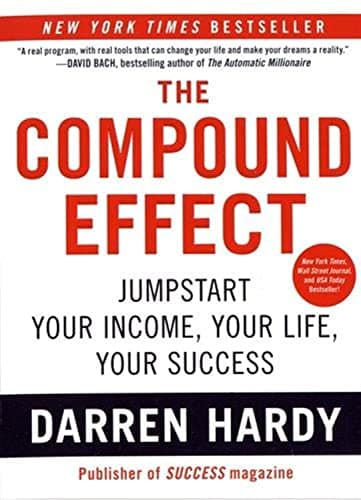
The Compound Effect
A short, punchy primer on one powerful idea: small consistent choices compound into big results over time. The exact mechanism behind super and index investing, just don't expect the depth of Atomic Habits.
Atomic Habits
James Clear
Atomic Habits
Tiny changes, remarkable results. Clear shows how 1 percent improvements compound, and the same system that fixes your gym routine works on your saving habits too.
The Psychology of Money
Morgan Housel
The Psychology of Money
19 short stories on how people actually think and feel about money, not just the maths of it.
Some links above are affiliate links. If you buy through them, Snowball Invest may earn a small commission at no extra cost to you. We only recommend books we'd suggest anyway.
Sources
Was this article useful?
Put it to your own numbers
Every calculator runs entirely in your browser, with nothing stored. See what these numbers look like for your own situation.
Explore the calculators →General information only. This article is educational and does not constitute personal financial advice. It does not account for your circumstances. Consider your own situation and seek advice from a licensed adviser before acting. Read our full disclaimer.

Timothy Hirou Gaschereau
Founder of Snowball Invest, not a financial adviser.
I write about what I'm learning myself, because nobody ever taught us how to take control of our own money. It's a skill, not a mystery, and it's never too late to learn it. The best day to start was yesterday, the second best is today.
LinkedIn →Related articles

Atomic Habits Summary: The Four Laws, Explained Properly
The four laws of behaviour change, habit stacking, the two minute rule and identity based habits, distilled. Plus what each one looks like applied to your money.

Never Split the Difference Review: Does It Work in Australia?
Chris Voss's negotiation book is genuinely useful for pay rises, rent and car yards. The catch is that his most theatrical tactics land badly in an Australian room.

Rich Dad's Guide to Investing Review: Read It Critically
The reframe is genuinely useful: investing is a plan, not a product. The structures, the tax and the investor categories are American, and a lot of it does not cross the Pacific.