

The 4-Hour Work Week by Tim Ferriss: An Honest Review
Our honest 4-Hour Work Week review for Australians: Tim Ferriss's DEAL framework and mini-retirements, what's dated, and how the mindset applies here.
 By Timothy Hirou GaschereauPublished
 10 min read
Few personal finance books have launched more side hustles, and more disappointment, than Tim Ferriss's The 4-Hour Work Week. It's one of the most influential lifestyle books of the last two decades and one of the most polarising. The honest take: the title is a marketing hook, some of the tactics are properly dated, and yet there are ideas in here that will stick with you for years. Here's our full review, part of our personal finance book reviews on Snowball Invest.
Quick answer
Worth reading for the mindset shift, not the tactical playbook. The core ideas on time, prioritisation and questioning the work-till-65 default are genuinely valuable. Best for people rethinking the 9-5, freelancers, side hustlers and the FIRE-curious. Skip it if you want a realistic, step-by-step guide to building an online business today, because the specific tactics are nearly 20 years old. Our rating: 4 out of 5.
Want to read The 4-Hour Work Week?
The lifestyle-design cult classic. Read it for the 80/20 thinking and the mini-retirement idea, not the dated 2007 business tactics.
In this guide
- →What the book is about: the New Rich and the DEAL framework
- →The genuine strengths and the honest weaknesses
- →Who it's for, and who's already past it
- →What critics and Reddit readers say
- →The Australian angle: mindset yes, tactics no, plus ABN and GST reality
📖 What is The 4-Hour Work Week about?
First published in 2007, the book argues you don't have to defer your best years to a distant retirement. You can redesign your life around time and mobility right now. Ferriss calls the people who do this the "New Rich": those who measure wealth in time and freedom rather than in a giant nest egg. The goal isn't to accumulate for 40 years and then start living, it's to design a life worth living immediately. The whole thing hangs off the DEAL framework:
- Definition: get clear on what you actually want. Price out your ideal lifestyle instead of chasing a vague "more money".
- Elimination: cut ruthlessly. Apply the 80/20 rule to find the 20% of activities driving 80% of results, and use Parkinson's Law (work expands to fill the time available) with tight deadlines and batching.
- Automation: build systems and income streams that don't need you every day. This is where the "muse" (an automated, outsourced business) lives.
- Liberation: decouple income from location. Negotiate remote work and take "mini-retirements" rather than one big retirement at 65.
A few caveats upfront. The book was written in 2007 and it shows: the specific examples, drop-shipping tactics and Google AdWords strategies read like a time capsule of the mid-2000s internet. The tone is aspirational and heavily self-promotional, and the whole thing is very US-centric. Keep that in mind as you read.
⚖️ Strengths and weaknesses
What it gets right
- ✓The mindset around time is genuinely powerful: time is the one resource you can't earn back, and most people trade it too cheaply.
- ✓The 80/20 and Parkinson's Law sections are timeless and clearly explained, useful in any year.
- ✓It challenges the default path and makes you ask why you work the way you do.
- ✓The mini-retirement idea (breaks throughout life, not just at 65) is genuinely interesting.
- ✓It helped popularise remote work and location independence long before they were mainstream.
Where it falls short
- ✕The '4 hour' promise is oversold: it's a marketing hook, and Ferriss spent years grinding before his claimed lifestyle.
- ✕The specific tactics (drop-shipping, arbitrage, the exact platforms) are products of 2007 and not a realistic playbook now.
- ✕The 'outsource to cheap overseas VAs' framing reads awkwardly today.
- ✕Heavy on self-promotion, and the muse-business examples are survivorship-heavy and hard to replicate.
- ✕Despite the title, it's about lifestyle design while still working, not a FIRE or early-retirement roadmap.
👤 Who should read it, and who can skip it?
Read it if you
- ✓Are questioning whether the default 9-5 path is right for you.
- ✓Are a freelancer, side hustler or aspiring entrepreneur.
- ✓Are interested in productivity, time management or the DEAL framework.
- ✓Are FIRE-adjacent and curious about lifestyle design as an alternative to the usual retirement plan.
You can probably skip it if you
- ✕Want a realistic, current guide to building an online business.
- ✕Need up-to-date tactics on e-commerce, content or digital marketing.
- ✕Find hustle-culture self-promotion grating (there's a fair bit here).
- ✕Already know the core productivity concepts and want something more advanced.
🔍 What do critics say?
The critical consensus is nuanced, and treats the book as inspirational rather than prescriptive, which is the right framing. Reviewers repeatedly point out that Ferriss spent years building a supplements company and working conventional jobs before achieving the lifestyle he describes, which contradicts the breezy implication that a four-hour work week is easily attainable for anyone who reads it. Critics also note the book inadvertently inspired a cottage industry of dubious "escape the 9-5" courses aimed at hopeful readers, which isn't entirely Ferriss's fault but is part of its legacy. The productivity sections (the Pareto Principle, Parkinson's Law and batching) get consistent praise as genuinely useful and well-explained. The "4 hour" framing, though, is widely called a hook rather than a literal promise.
💬 What do readers say? Goodreads and Reddit
On Goodreads it sits at around 3.9 out of 5 from hundreds of thousands of ratings, a solid score for a book this divisive. Reddit sentiment is more mixed and splits by community: r/financialindependence finds it inspirational but not a realistic promise, r/Entrepreneur widely calls the title a marketing hook, r/productivity genuinely rates the DEAL framework and batching ideas, and r/Fire is blunt that Ferriss doesn't actually support true early retirement (the book is about lifestyle design while still working).
The pattern is consistent: readers who go in expecting a literal blueprint end up disappointed, while readers who treat it as a mindset book get real value from it. Read it for the way it makes you think about time, not for a step-by-step business plan.
🇦🇺 The Australian angle
The lifestyle-design and mini-retirement ideas resonate strongly with the Australian FIRE and remote-work crowd. The mindset travels well. The specific tactics, less so. A few things worth knowing before you try to apply any of it here:
- A "muse" has real tax implications. Any side business or automated income stream in Australia means registering an ABN and declaring the income to the ATO. Once turnover passes $75,000 a year, you have to register for GST. This is general information, not personalised advice, so talk to a registered tax agent for your situation.
- Remote work is more achievable now. Location independence was a fringe idea in 2007. Post-COVID, millions of Australians work remotely at least part of the time, so the "liberation" step is genuinely more accessible than when the book came out.
- "Escape the 9-5" is harder than the book suggests. Australia is expensive, and Sydney and Melbourne regularly rank among the world's priciest cities. The geoarbitrage angle (earning in one currency, spending in a cheaper one) really only works if you're willing to relocate, which the book treats far too casually.
If the side-business side interests you, our $100 Startup review is a more grounded companion, and for building a business that runs without you, see our E-Myth Revisited review.
💰 The verdict
Read it with clear eyes. The best of this book (the 80/20 thinking, Parkinson's Law and the mini-retirement concept) is worth the cover price on its own, and the core challenge, "why are you living the way you're living?", is one worth sitting with. But go in knowing the title is marketing, the specific tactics are nearly 20 years old, and Ferriss's own path involved years of hard work he mostly glosses over. Pair it with something more grounded (Cal Newport's Deep Work is the natural companion for the productivity side), treat it as a mindset book rather than a blueprint, and you'll get real value from it. Is it worth reading? Yes. Just don't take the title literally. Our rating: 4 out of 5.
Want to read The 4-Hour Work Week?
Rethinking the 9-5? Grab a copy for the mindset shift, and keep your expectations about the title realistic.
SnowLetter
Australia's money news and our best reads, once a week.
❓ Frequently asked questions
Is The 4-Hour Work Week still relevant?
+
The core mindset ideas, particularly around time, prioritisation and questioning the default work-till-65 path, are still relevant. The specific tactics (drop-shipping, Google AdWords, the exact outsourcing platforms) are dated. Treat it as a mindset book, not a business manual.
What is the DEAL framework?
+
DEAL stands for Definition, Elimination, Automation and Liberation. It's the book's four-step framework for redesigning work and life: get clear on what you actually want, cut low-value work using the 80/20 rule, build automated income systems, and decouple your income from your location.
What is a 'muse' in The 4-Hour Work Week?
+
A muse is Ferriss's term for an automated income stream, usually a small online business that generates cash without needing your constant daily attention. The concept is sound, but the specific examples (drop-shipping, information products circa 2007) are very much products of their time.
Is it suitable for Australian readers?
+
The mindset translates well. The specific tactics are US-centric and dated. Australians should also know that any side business or 'muse' means registering an ABN, declaring the income to the ATO, and registering for GST once turnover passes $75,000. Speak to a registered tax agent for advice specific to your situation.
What is a 'mini-retirement'?
+
A mini-retirement is an extended break or sabbatical taken during your working years, rather than deferring all your leisure to a single retirement at 65. Ferriss argues for taking several throughout life, often by living somewhere cheaper for a few months. It's one of the book's more genuinely interesting ideas.
Is it worth reading if I have a full-time job?
+
Probably yes. The most useful ideas (the 80/20 principle, Parkinson's Law, batching, and the broader question of what you actually want from work) apply whether you're employed, freelancing or running a business. The 'liberation' step is harder to apply straight away, but the mindset shift is valuable regardless.
📚 Get the book (and two companions)
The 4-Hour Work Week
Tim Ferriss
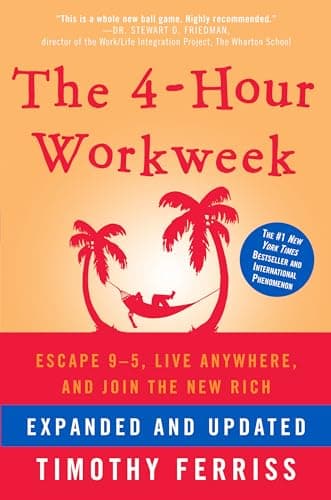
The 4-Hour Work Week
The lifestyle-design cult classic: question the work-till-65 default, cut low-value work with 80/20, and design freedom around time. Read it for the mindset, not the dated 2007 tactics.
The $100 Startup
Chris Guillebeau
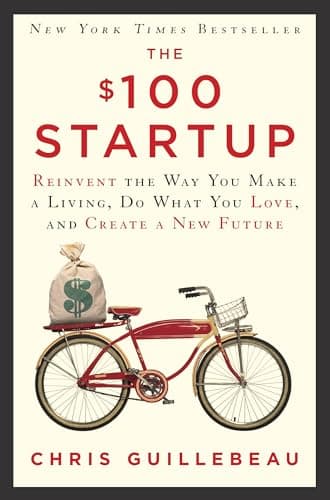
The $100 Startup
A motivating, case-study-driven push to start a lean side hustle without a fortune or a business degree. Great for getting off the couch, just sort the Aussie tax and structure separately.
The E-Myth Revisited
Michael E. Gerber
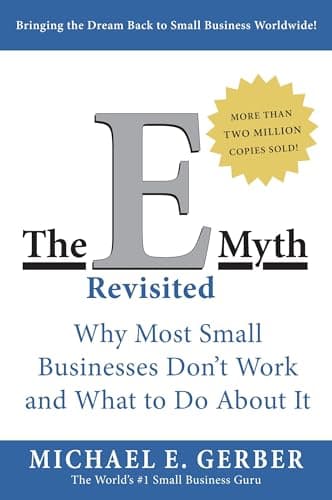
The E-Myth Revisited
The small-business classic on why being great at your craft doesn't mean you can run a business built on it. Work on it, not in it. Repetitive, but the systems lesson is timeless.
Some links above are affiliate links. If you buy through them, Snowball Invest may earn a small commission at no extra cost to you. We only recommend books we'd suggest anyway.
Sources
Was this article useful?
Put it to your own numbers
Every calculator runs entirely in your browser, with nothing stored. See what these numbers look like for your own situation.
Explore the calculators →General information only. This article is educational and does not constitute personal financial advice. It does not account for your circumstances. Consider your own situation and seek advice from a licensed adviser before acting. Read our full disclaimer.

Timothy Hirou Gaschereau
Founder of Snowball Invest, not a financial adviser.
I write about what I'm learning myself, because nobody ever taught us how to take control of our own money. It's a skill, not a mystery, and it's never too late to learn it. The best day to start was yesterday, the second best is today.
LinkedIn →Related articles

Buy Back Your Time by Dan Martell: An Honest Review
Our honest Buy Back Your Time review for Australians: Dan Martell's Buyback Rate, DRIP Matrix and delegation playbook, and what to know before you hire here.

Profit First by Mike Michalowicz: An Honest Review
Our honest Profit First review for Australians: Mike Michalowicz's take-profit-first bank-account system, what it skips, and how to adapt it for GST and the ATO.

The $100 Startup by Chris Guillebeau: An Honest Review
Our honest $100 Startup review for Australians: Chris Guillebeau's lean side-hustle playbook and 'convergence' idea, what it skips, and how it applies here.